

Worried about food safety scandals and losing customer trust? You need a system that guarantees transparency from farm to fork, starting right at the slaughterhouse.
The core of meat traceability in slaughterhouses is a "one-item, one-code" system. Each carcass or cut piece is assigned a unique code. This code is then scanned at key points to record data like weight, time, and operator, ensuring every piece's history is trackable.
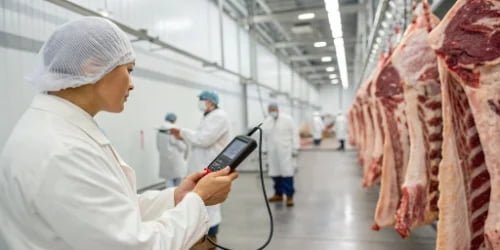
Implementing such a system seems complex, but it's a vital step for any modern slaughterhouse. In my 19 years in this industry, I've seen how traceability has shifted from a "nice-to-have" feature to a fundamental requirement. It's not just about compliance with regulations; it’s about building a brand that customers trust and are willing to pay a premium for. But where do you even start? Let's break down the process and explore the technology, challenges, and amazing benefits.
What Are the Key Steps to Implement a Meat Traceability System in Slaughterhouses?
Starting a traceability project feels overwhelming, and you don't know where to begin. A clear, step-by-step plan is essential to avoid chaos and costly mistakes down the line.
To implement traceability, you first assign unique IDs to animals. Then, link these IDs to carcasses after slaughter. Next, you apply unique labels with barcodes or QR codes to all cuts. Finally, all data is integrated into a central software system for complete end-to-end tracking.
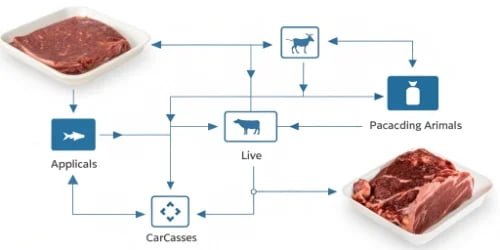
Based on my experience helping countless clients, breaking the project into manageable steps makes it much less daunting. The goal is to create a seamless digital trail that follows the product.
Step 1: Identification at Entry
The process begins the moment the live animals arrive at the facility.1 Each animal should already have an identification marker, like an ear tag with a number or an RFID chip. We use a handheld scanner to capture this existing ID and log the animal into our system. This is the first link in the chain, connecting the physical animal to its farm of origin.
Step 2: Carcass Tagging and Weighing
After slaughter, the next critical step is to link the carcass to the original animal's ID. We attach a new, durable, and waterproof tag directly onto the carcass. This tag has a unique barcode or QR code. The carcass then moves onto a weighing station, often a rail scale. Our Weigherps scales integrate directly into this process. They capture the exact weight and automatically send this data, along with a timestamp, to the central system, linking it to the carcass's new unique ID. This eliminates human error from manual data entry.
Step 3: Cutting and Piece-level Tracking
When the carcass is broken down into primal cuts, sub-primal cuts, and other pieces, the traceability must continue. At the cutting station, as each new piece is created, a new label is printed. The system is smart enough to know that these new piece IDs are all "children" of the original carcass ID. This maintains the chain of custody. An operator can scan any box of meat and instantly know which animal it came from.
How Do Slaughterhouses Use Technology to Ensure Meat Traceability?
Using outdated manual tracking with pen and paper is slow and full of errors. These mistakes can lead to major compliance failures and costly product recalls. Modern technology offers a much more reliable solution.
Slaughterhouses use technology like RFID tags, barcode scanners, and integrated weighing scales to capture data at every stage. This hardware automatically feeds information into a central software platform, like an ERP system, creating a digital and tamper-proof record for every piece of meat.
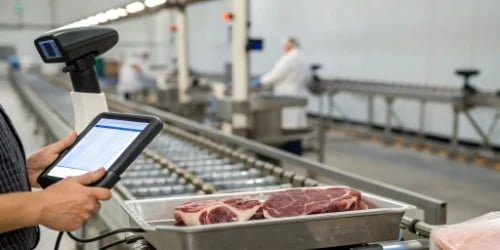
The right technology is the backbone of any successful traceability system.2 It’s about creating a powerful combination of durable hardware and intelligent software that can withstand the tough environment of a slaughterhouse. Here’s a breakdown of the typical tech stack we recommend and provide.
The Core Technology for Traceability
| Technology Component | Role in Traceability | Weigherps' Contribution |
|---|---|---|
| Identification Systems | Assigns and reads unique IDs. This includes barcode labels, QR codes, and RFID tags. | We ensure our systems can integrate with any scanner to capture data seamlessly. |
| Industrial Weighing Scales | Captures precise weight data at critical points (carcass, cuts, boxing). | Our scales are IP68-rated for harsh washdowns and send weight data directly to your software, eliminating manual entry errors. |
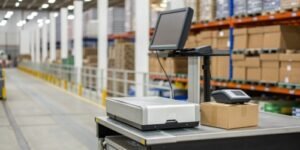
| Industrial Hardware | Includes waterproof touch-screen terminals and automated label printers for the factory floor. | We know hardware must be tough. Our products are designed for durability in wet and cold environments. |
| Central Software (ERP/MES) | The "brain" that connects all hardware, stores data, and creates the traceability records. | As a hardware provider, we work closely with software vendors. We provide SDKs and support to make integration with your software platform easy. |
This integration between hardware and software is everything. For our software vendor clients, we focus on being a reliable hardware partner. Your software is only as good as the data it receives. We make sure our scales and systems provide accurate, real-time data that you can trust. Our goal is to make the hardware part easy for you, so you can focus on delivering a great software solution to the end-user.
What Challenges Do Slaughterhouses Face When Setting Up Traceability Systems?
You might be eager to upgrade your facility but are worried about the hurdles. Implementing a new system has real challenges. The cost, the training, and resistance to change can stop a project before it even starts.
The biggest challenges are the high initial investment in hardware and software, integrating new technology with existing systems, and training staff. The harsh, wet environment of a slaughterhouse also demands extremely durable and waterproof equipment, adding another layer of complexity to the project.

Overcoming these challenges is about smart planning and choosing the right partner. In my career, I've seen projects succeed and fail. The successful ones always anticipate these issues and address them head-on.
Environmental and Operational Hurdles
A slaughterhouse is one of the toughest environments for electronics.3 Constant moisture, temperature swings, and high-pressure chemical washdowns can destroy standard equipment in weeks. I've seen clients buy cheaper, non-industrial-grade hardware only to have it fail immediately, costing them more in the long run. This is why all our equipment, from scales to terminals, has a high IP rating (like IP68/IP69K), which means it's fully waterproof and durable. Every product we ship has already passed extensive waterproof and performance tests in our quality control department.
Financial and Technical Barriers
The upfront cost for a full traceability system can seem high.4 However, it's crucial to view it as an investment, not an expense. The return comes from reduced recall costs, increased efficiency, and higher brand value.5 Another major headache is integration. Many facilities have existing software or machinery. Getting new technology to communicate with old systems can be a nightmare. This is why we focus on providing flexible solutions. We offer robust support and SDKs for software developers, ensuring our hardware can be integrated smoothly into your client's existing workflow. We strive to be the most reliable link in your solution.
The Human Factor
Technology is only half the battle. People have to use it. Many workers are used to doing things a certain way and may resist change. The key is to involve them early and provide thorough training. Furthermore, the system's interface must be simple and intuitive. If it's too complicated, workers will find workarounds or make mistakes, defeating the purpose of the system. We design our equipment with the end-user in mind, focusing on clear displays and easy operation.
How Does Meat Traceability Improve Safety and Transparency in the Supply Chain?
Product recalls are a business nightmare. They damage your brand, destroy profits, and can even shut you down. A lack of transparency makes it impossible to quickly find and isolate problems.
Traceability allows for rapid and precise recalls. Instead of recalling all products from a certain timeframe, you can isolate the specific affected batch. It also provides transparent information to consumers and partners, building trust and verifying claims like "organic" or "local."
The benefits of a good traceability system go far beyond simple compliance. It fundamentally transforms how you manage safety, quality, and your relationship with customers. It's a powerful tool for building a modern, resilient, and profitable business.
Enhancing Food Safety with Precision
The biggest safety benefit is the ability to conduct surgical recalls. Imagine a health inspector finds an issue. Without traceability, you might have to recall an entire week's production—a devastating financial blow. With a traceability system, you can scan the code on the contaminated product. Within seconds, the system tells you exactly which animal it came from, the time it was processed, and every other box that was part of that same small batch. You can recall 50 boxes instead of 50,000. This capability not only saves money but also protects your brand's reputation by showing you have control over your process. It also helps pinpoint the root cause of any issue, allowing you to fix it permanently.
Building Brand Value and Trust
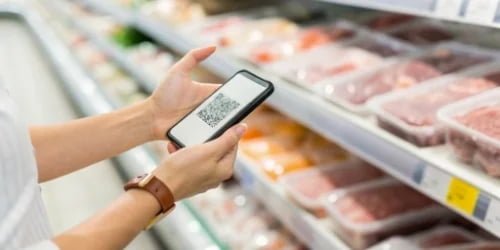
In today's market, trust is your most valuable asset. The "one item, one code" system we help implement allows you to share your product's story. A consumer in a supermarket can scan a QR code on a steak package with their phone. They can see the farm it came from, the date it was processed, and other quality information. This transparency builds incredible trust and loyalty. It turns your product from a simple commodity into a premium item with a verifiable story. This allows you to stand out from the competition and often command a higher price. It's no longer just a piece of meat; it's a piece of meat with a guarantee of quality and safety. Furthermore, many large retailers and export markets now require this level of traceability as a condition of doing business, so it opens doors to new opportunities.
Conclusion
Implementing meat traceability is a crucial investment. It enhances safety, builds consumer trust, and secures your brand's future in the competitive global food market.
- "Piloting a livestock identification and traceability system in the ... - PMC", https://pmc.ncbi.nlm.nih.gov/articles/PMC5780531/. This source describes the initial steps in traceability systems, starting with animal identification upon arrival at facilities. Evidence role: mechanism; source type: education. Supports: Traceability begins with identifying live animals upon their arrival at the facility.. ↩
- "Innovative Technologies Reshaping Meat Industrialization", https://pmc.ncbi.nlm.nih.gov/articles/PMC12248625/. This source emphasizes the critical role of technology in the success of traceability systems. Evidence role: expert_consensus; source type: research. Supports: Technology is essential for the success of traceability systems.. ↩
- "The Effects of Processing and Preservation Technologies on ...", https://pmc.ncbi.nlm.nih.gov/articles/PMC7601710/. This source discusses the environmental challenges faced by electronic equipment in slaughterhouses, such as moisture and temperature extremes. Evidence role: general_support; source type: research. Supports: Slaughterhouses present challenging environments for electronic equipment.. ↩
- "Recent advancements in meat traceability, authenticity verification ...", https://pmc.ncbi.nlm.nih.gov/articles/PMC11788888/. This source outlines the financial considerations and initial costs associated with implementing traceability systems. Evidence role: statistic; source type: research. Supports: The initial investment for a traceability system is often high.. ↩
- "Recent advancements in meat traceability, authenticity verification ...", https://pmc.ncbi.nlm.nih.gov/articles/PMC11788888/. This source explains how traceability systems can lead to financial benefits such as reduced recall costs and improved efficiency. Evidence role: general_support; source type: research. Supports: Traceability systems provide financial returns through reduced recall costs, efficiency, and brand value.. ↩


Comments (0)