
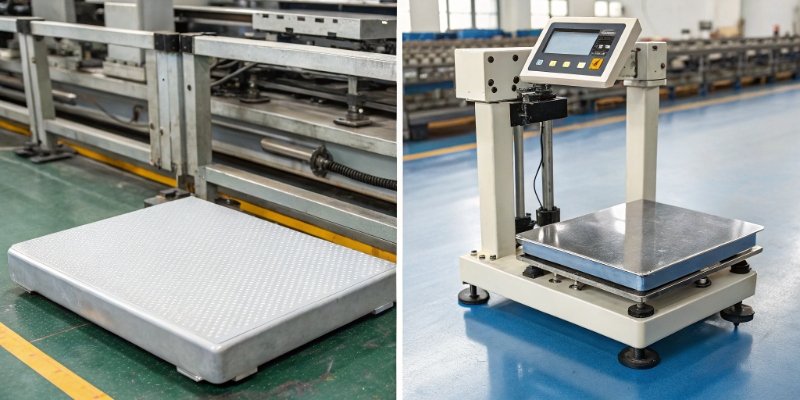
Struggling to choose the right scale for your factory? You might worry about overspending on features you don't use or buying a scale that can't keep up with your needs.
A smart PC scale is best for data-heavy factories needing full traceability and integration with ERP or MES systems. [1] A regular printing scale is perfect for simpler tasks like basic weighing and label printing, especially when working with a limited budget and no need for complex data management. [2]
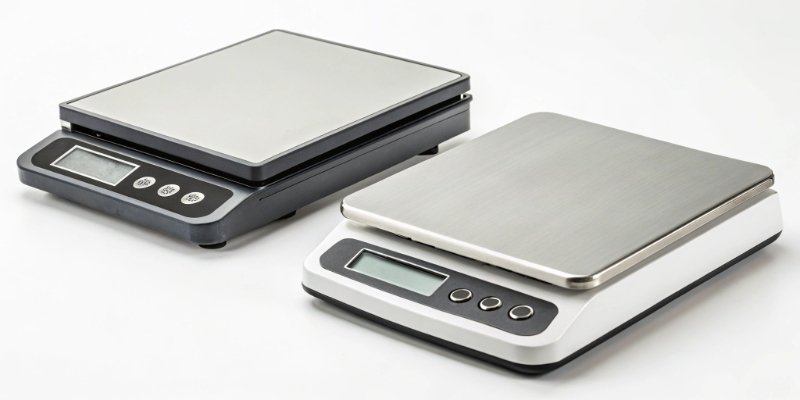
The decision between these two types of scales isn't always simple. The investment is significant, and the impact on your daily operations can be huge. To make the right choice, you need to look beyond the price tag and really understand how each one works. Let's break down the key differences to help you see exactly which scale fits your factory's workflow and future goals.
What Are the Key Differences Between a Smart PC Scale and a Regular Printing Scale?
Do they just look different, or is there more going on under the surface? The technical sheets can be confusing, filled with terms that don't always explain the real-world impact.
The main difference is the "brain" inside. [13] A smart PC scale runs on an operating system like Windows or Android, making it a powerful computer for data management and integration. [12] A regular printing scale has a simple, dedicated system just for weighing and printing basic labels. [3]
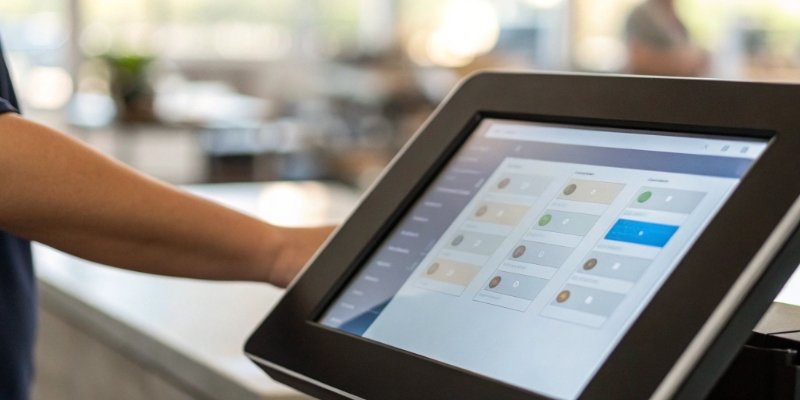
To truly understand which one is right for you, we need to compare their core capabilities directly. A smart scale is not just a scale with a fancy screen; it's a data hub. It can run custom software, connect to your network wirelessly, and communicate directly with other business systems. [1] This makes it a central piece of a modern, automated factory. A printing scale, on the other hand, is a workhorse designed for one job: weighing an item and producing a label. [2] It’s a B, but it does it reliably every single time. Here is a table to make the differences clearer:
| Feature | Smart PC Scale | Regular Printing Scale |
|---|---|---|
| Operating System | Windows / Android | Embedded Microcontroller |
| Core Function | Data processing, integration, management | Weighing and basic label printing [3] |
| Data Handling | Real-time database & ERP/MES sync [1] | Prints data on a label, limited storage [5] |
| Connectivity | Wi-Fi, Ethernet, API, USB | RS-232, limited or no network |
| User Interface | Full-color touchscreen, graphical UI [11] | Keypad, simple digital display |
| Customization | High (can install custom software) | Low (pre-set label formats) [2] |
How to Determine Whether Your Factory Needs a Smart PC Scale or a Printing Scale?
Are you unsure how to justify the higher cost of a smart scale? Maybe you are not even sure if your current process really needs an upgrade. This uncertainty can be paralyzing.
To decide, analyze your data requirements first. If you need real-time data tracking, integration with systems like ERP or MES, and detailed traceability, you need a smart PC scale. [7] If you just weigh items and print simple labels, a printing scale is sufficient. [2]
Making the wrong decision can lead to buyer's remorse, so it's best to follow a clear process. I always advise my clients to carefully evaluate their operational needs before looking at any hardware. Let's walk through a few questions I ask them. This simple exercise will help you clarify your own factory's requirements and point you toward the right solution without wasting money.
Analyze Your Data Workflow
The most important factor is data. Do you need to connect your weighing data to a larger system? A Manufacturing Execution System (MES) or Enterprise Resource Planning (ERP) system acts as the brain of your entire operation. [8] Integrating your scales directly into these systems eliminates manual data entry, which is a huge source of errors. [6] A smart PC scale can send weight data directly to your ERP in real time, ensuring your inventory and production records are always accurate.1 [1] If you need to track a product from raw material to finished good for compliance or quality control, a smart scale is essential. [10]
Consider Your Production Volume
Next, think about your speed and volume. In a high-volume production line, every second counts. A smart PC scale can speed things up by pulling product information and label formats from a central database automatically.2 The operator simply places the item on the scale, perhaps scans a barcode, and the correct label is printed instantly. A regular printing scale requires more manual input, which can create a bottleneck when things get busy. [5] For lower-volume tasks or individual workstations, the simpler, more direct operation of a printing scale is often more than enough.
Evaluate Your Budget vs. ROI
Finally, let's talk about cost. There is no denying that a smart PC scale has a higher upfront cost. However, it's an investment that can pay for itself over time. Think about the return on investment (ROI) from eliminating data entry errors, reducing production bottlenecks, and gaining perfect traceability. For many businesses, especially those in regulated industries like food or pharmaceuticals, the cost of a single recall or compliance failure far outweighs the cost of the scale. [7] On the other hand, if your task is simple and standalone, the lower initial cost of a regular printing scale makes it the financially smarter choice.
Is a Smart PC Scale Better Than a Printing Scale for Factory Operations?
It is tempting to think that "smarter" always means "better." But is this really true when it comes to industrial equipment that needs to be reliable day in and day out?
"Better" really depends on your factory's goals. For a networked factory focused on automation and data-driven decisions, a smart PC scale is far superior. [9] For standalone tasks where simplicity and cost-effectiveness are most important, a regular printing scale is the better choice. [13]
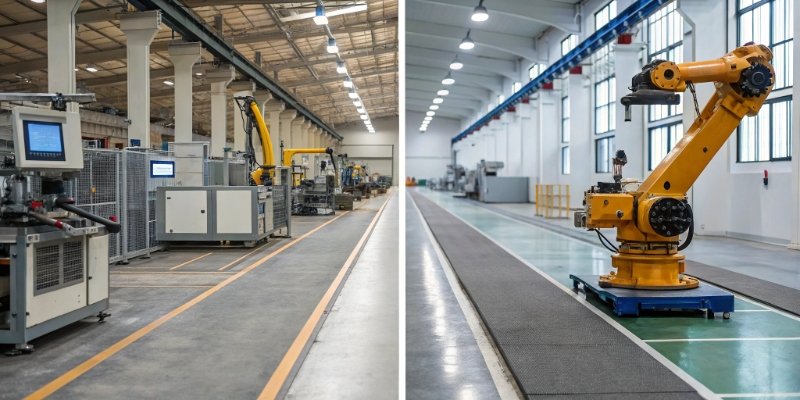
As someone who has been manufacturing scales for nearly two decades, I’ve seen companies make both good and bad decisions. The happiest customers are those who match the tool to the job. A smart PC scale is a key component in a modern, "Industry 4.0" factory.3 Its ability to connect to the Internet of Things (IoT) means it doesn't just weigh things; it provides data that helps you make smarter decisions. [10] For my clients who are software vendors, this is a huge advantage. They can create their own applications to run on the scale, integrate it with their cloud services, and offer a complete, customized solution to their end-users. This level of flexibility is simply not possible with a basic printing scale. However, there's an elegance to simplicity. A printing scale is a robust and dedicated device.4 It’s easy to use, training is minimal, and with fewer complex software components, there are fewer potential points of failure. In a tough environment where you just need to weigh and label, that reliability is incredibly valuable. [3]
When Should You Choose a Regular Printing Scale Over a Smart PC Scale?
Are you worried about being upsold on technology you don't actually need? You want to make a smart, fiscally responsible choice that solves your problem without adding unnecessary complexity.
You should choose a regular printing scale when your main job is to weigh a product and print a basic label with weight, date, or a barcode. [3] It is the best choice for standalone workstations, operations with tight budgets, or when network integration is not required. [2]
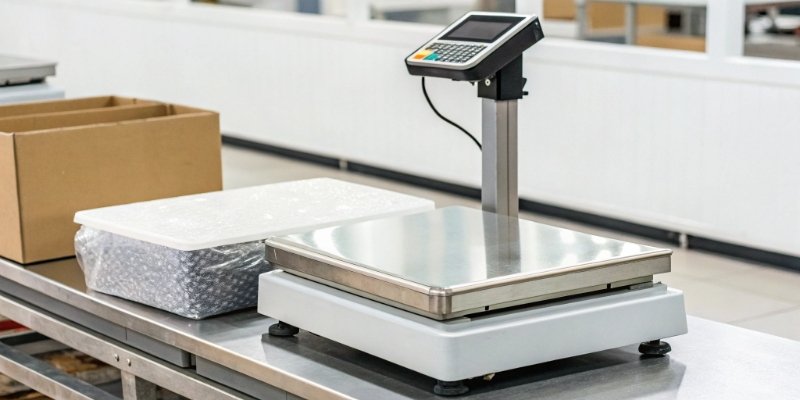
The push to digitize everything can sometimes make us forget that simpler solutions are often the most effective. I remember a client in the seafood processing industry. Their facility was cold, wet, and constantly busy. They didn’t need to sync data with an ERP; they just needed to weigh boxes of fish and print a durable, waterproof label with the weight and date. A tough, stainless steel printing scale was the perfect solution. It was affordable, reliable, and did exactly what they needed it to do without any fuss. There are several clear situations where a regular printing scale is the undisputed champion.
For Standalone Weighing Stations
Think about a shipping and receiving department or a quality control checkpoint. [2, 5] Often, the only task is to check the weight of an incoming or outgoing package and attach a simple label. In this case, the advanced data processing capabilities of a smart PC scale would be completely wasted.
When Your Budget is the Primary Concern
For a startup, a small business, or a new production line, managing upfront costs is critical. A regular printing scale provides essential functionality at a much lower price point, allowing you to get your operation running without a major capital investment. [2]
If You Need Ultimate Simplicity and Reliability
Fewer features mean fewer things to go wrong. For a mission-critical but straightforward task, a dedicated device is often more robust than a complex one. The training is faster, the operation is more intuitive, and there are no software updates or network security issues to worry about. This "plug-and-play" nature is a powerful advantage in many industrial settings. [6]
Conclusion
The best scale for your factory depends entirely on your needs. For complex, data-driven operations needing system integration, a smart PC scale is the clear winner. For simple, cost-effective weighing and labeling, a printing scale is the right tool.
-
"ScaleLink Smart Scale Integration for ERP | Navisiontech", https://www.navisiontech.com/solutions/scalelink-smart-scale/. This source explains how smart PC scales enable real-time data transfer to ERP systems, improving inventory accuracy. Evidence role: mechanism; source type: research. Supports: Smart PC scales enable real-time data transfer to ERP systems, improving inventory accuracy.. ↩
-
"Enable Data-Driven Manufacturing", https://www.mt.com/us/en/home/library/know-how/industrial-scales/enable-data-driven-manufacturing.html. This source describes how smart PC scales automate label printing by accessing central databases. Evidence role: mechanism; source type: research. Supports: Smart PC scales automate label printing by accessing central databases.. ↩
-
"What is Industry 4.0?", https://www.ibm.com/think/topics/industry-4-0. This source explains the role of smart PC scales in Industry 4.0 factories, emphasizing their connectivity and data capabilities. Evidence role: historical_context; source type: institution. Supports: Smart PC scales are integral to Industry 4.0 factories due to their connectivity and data capabilities.. Scope note: The role of smart PC scales may vary depending on the specific Industry 4.0 implementation. ↩
-
"Advancements and Limitations in 3D Printing Materials and Technologies", https://pmc.ncbi.nlm.nih.gov/articles/PMC10255598/. This source describes the reliability and simplicity of printing scales in industrial settings. Evidence role: general_support; source type: education. Supports: Printing scales are reliable and dedicated devices for industrial use.. Scope note: The reliability may depend on the specific model and usage conditions. ↩



Comments (0)