
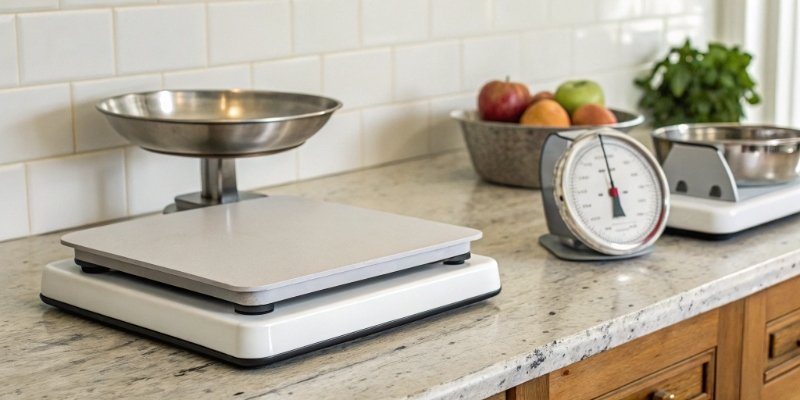
Are you tired of cluttered workspaces and inefficient processes? Using multiple devices for weighing, scanning, and data entry slows down your production line, increases the chance of errors, and costs you money.
A single smart PC scale can solve these problems. It integrates weighing, barcode scanning, RFID reading, photo capture, AI recognition, label printing, and data uploading into one device, streamlining your workflow, saving space, and improving overall efficiency by covering the functions of three to four separate pieces of equipment.
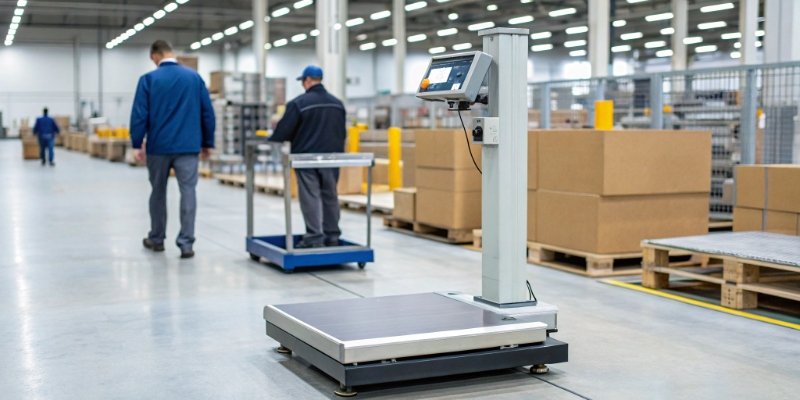
I remember visiting a client's factory a few years ago. Their packing station was a chaotic scene of separate scales, scanners, printers, and a PC for data entry. It was a bottleneck in their operation. We introduced them to a smart PC scale, and the transformation was remarkable. A single, unified workstation replaced the clutter. The efficiency gains were immediate, and the reduction in errors was significant1. This firsthand experience showed me the powerful impact of integrating multiple functions into one smart device. It’s not just about saving space; it’s about creating a more streamlined, accurate, and productive workflow.
How Can a Smart PC Scale Replace Multiple Ordinary Scales in a Factory?
Is your factory floor struggling with inefficiencies from using multiple separate devices? This clutter can lead to errors, slow down production, and increase operational costs, creating a frustrating and unproductive environment.
A smart PC scale consolidates the functions of several devices into one. It combines a high-precision scale, a barcode scanner, an RFID reader, a camera, and a label printer, all managed through a single interface, significantly boosting productivity and reducing errors.
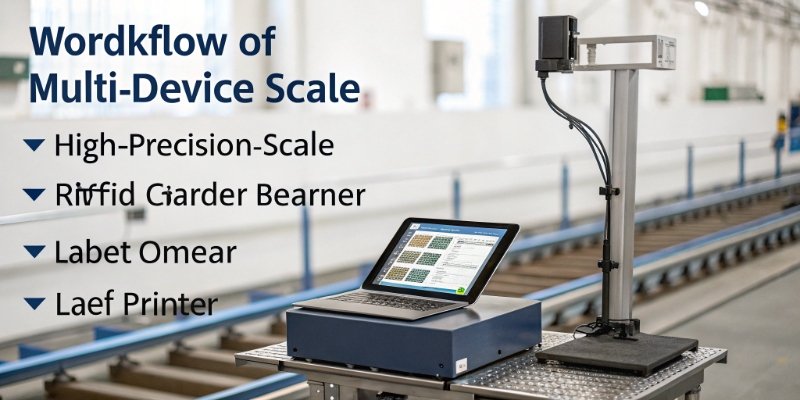
A smart PC scale is a game-changer for factory floors. Instead of having separate stations for weighing, scanning, and labeling, you can perform all these tasks at a single point. This integration is made possible by the scale's built-in computer and versatile software. Data is captured and processed in one seamless operation. [5] For instance, as an item is weighed, its barcode can be scanned simultaneously. The system then instantly retrieves the product information, records the weight, and can even print a label with all the necessary details. This eliminates the need for manual data entry and reduces the risk of human error. [14] The efficiency gains are substantial, as a single operator can manage the entire process without moving between different pieces of equipment. This streamlined workflow not only saves time but also frees up valuable floor space.
| Feature Integration | Traditional Setup (Multiple Devices) | Smart PC Scale (Single Device) |
|---|---|---|
| Weighing | Standalone digital scale | Integrated high-precision load cell |
| Data Capture | Handheld barcode/RFID scanner | Built-in scanner and RFID reader |
| Data Entry | Manual input on a separate PC | Automatic data capture and system integration [2] |
| Labeling | Separate label printer | Integrated printer for on-the-spot labeling |
| Process Flow | Sequential, multi-step process | Unified, single-step process |
What Makes Smart PC Scales More Versatile Than Traditional Scales?
Are you limited by the single-function nature of your traditional scales? This lack of versatility means you need multiple devices to complete tasks, leading to a cluttered and inefficient workspace.
Smart PC scales offer a wide range of functions beyond simple weight measurement. They can be programmed for various tasks, connect to other devices and networks, and run specialized software, making them a multi-functional tool for any modern business.
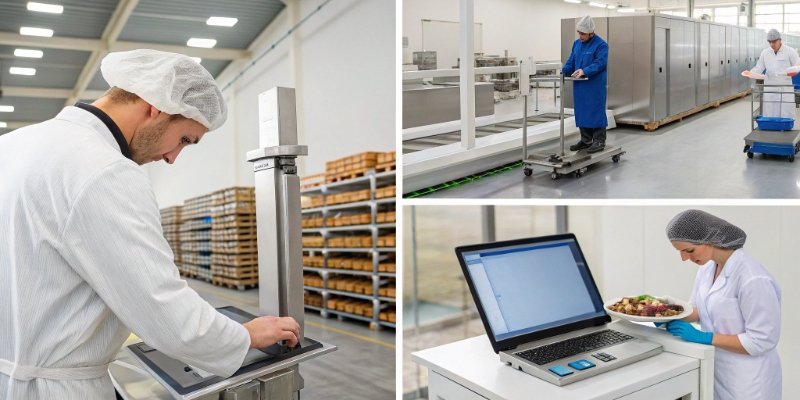
The versatility of smart PC scales comes from their ability to integrate hardware and software to perform a multitude of tasks. Unlike a traditional scale, which only provides a weight reading, a smart PC scale can be adapted to specific workflows. For example, in a logistics company, it can be used for dimensioning, weighing, and labeling packages in a single step. In a food processing plant, it can manage recipes, control batching, and ensure compliance with food safety regulations. The key is the ability to run custom applications on the device itself. This means the scale can be configured to meet the unique needs of your business, from inventory management to quality control. The connectivity options, such as Wi-Fi, Bluetooth, and Ethernet, allow for seamless integration with your existing ERP and WMS systems, turning the scale into a powerful data collection point on your factory floor.
| Capability | Traditional Scale | Smart PC Scale |
|---|---|---|
| Functionality | Measures weight only | Weighs, scans, prints, captures images, runs apps |
| Connectivity | None or limited (e.g., RS232) | Wi-Fi, Bluetooth, Ethernet, USB |
| Software | Basic firmware | Customizable applications and OS |
| Data Management | Manual recording or basic output | Automated data logging, integration with cloud/ERP systems |
| Adaptability | Fixed function | Reprogrammable for different tasks |
Why Are Smart PC Scales Considered More Efficient Than Regular Scales?
Is your production line slowed down by manual processes and data entry errors? Relying on regular scales that can't communicate with your other systems creates bottlenecks, wastes time, and leads to costly mistakes.
Smart PC scales are more efficient because they automate data collection and eliminate manual entry. By integrating directly with your business systems, they provide real-time data, reduce human error, and speed up the entire weighing process.
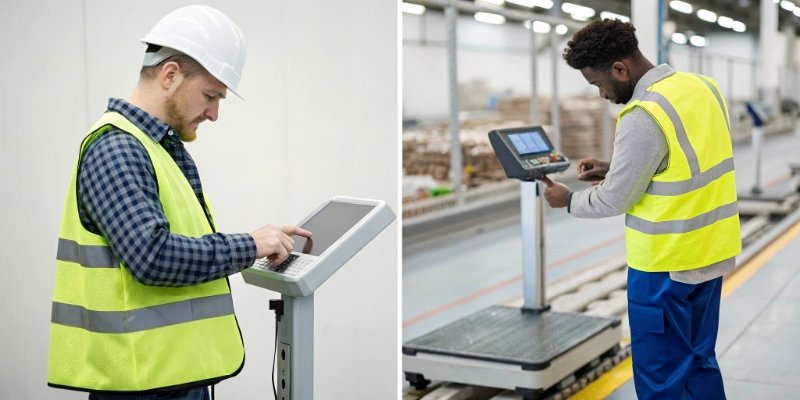
The efficiency of smart PC scales lies in their ability to automate and streamline workflows. Traditional weighing involves multiple manual steps: an operator weighs an item, reads the display, writes it down, and then manually enters it into a computer system. Each step is a potential point of error and delay. Smart PC scales eliminate these manual interventions. The weight is captured electronically and sent directly to your inventory or quality control software in real time. This instant data transfer not only saves time but also ensures accuracy. With integrated features like barcode scanning and label printing, the entire process from weighing to dispatch can be completed in a fraction of the time. This automation leads to significant improvements in productivity and allows your team to focus on more value-added tasks. The result is a smoother, faster, and more reliable operation.
| Aspect | Regular Scale | Smart PC Scale |
|---|---|---|
| Data Entry | Manual, prone to errors | Automated, error-free |
| Process Speed | Slow, multi-step process | Fast, single-step process |
| Data Availability | Delayed, requires manual transfer | Real-time, instant access |
| System Integration | Non-existent or complex | Seamless with ERP/WMS systems |
| Labor Requirement | High, requires dedicated operator | Low, can be operated by anyone |
In What Situations Does a Smart PC Scale Outperform Several Ordinary Scales?
Are you facing challenges in specific areas of your operation where multiple scales are causing more problems than they solve? In busy environments, juggling different devices for various tasks can lead to chaos and inefficiency.
A smart PC scale excels in situations requiring multiple functions and data integration. This includes shipping and receiving docks, quality control checkpoints, and manufacturing lines where weighing, scanning, and labeling need to happen in quick succession.
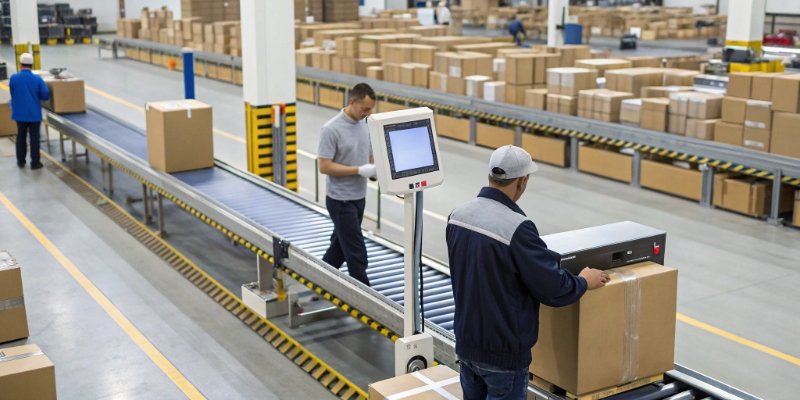
Smart PC scales prove their worth in many industrial scenarios. In a busy shipping department, for example, a single smart scale can weigh a package, scan its shipping label, capture its dimensions, and communicate this data to the shipping software to calculate costs and print a final label. This is a huge improvement over using a separate scale, scanner, and computer. At a quality control station, a smart scale can be programmed with acceptable weight tolerances. As items are weighed, the scale can automatically flag any that are out of spec, take a photo for documentation, and update the quality control records. In a food production environment, a smart PC scale can guide an operator through a complex recipe, ensuring each ingredient is added in the correct quantity2. In all these cases, the smart scale is not just a weighing device but a central component of the workflow, bringing together multiple functions to improve accuracy and efficiency.
| Scenario | Challenge with Ordinary Scales | How a Smart PC Scale Outperforms |
|---|---|---|
| Shipping/Receiving | Multiple devices for weighing, scanning, data entry. | Combines all functions into one, speeding up processing. |
| Quality Control | Manual comparison of weights to standards. | Automated flagging of out-of-spec items with data logging. |
| Inventory Management | Manual counting and data recording. | Automated data capture and real-time inventory updates. |
| Batching/Formulation | Risk of incorrect ingredient measurements. | Guided, error-proof recipe management. |
| Compliance/Traceability | Difficult to maintain accurate records. | Automated, detailed, and easily accessible data trails. |
Conclusion
In short, a smart PC scale is a powerful tool that streamlines operations by combining multiple functions into a single device, boosting efficiency, and reducing errors for a more productive workflow.
-
"Read Customer Success Stories & Case Studies", https://www.lenovo.com/us/en/case-studies-customer-success-stories/?srsltid=AfmBOoquygPqp9qr4hkZs6bxjkluNU7IwQNaOT5Axr3K4tAIsNxcnOyi. This source provides case studies or statistical data on the efficiency improvements and error reduction achieved by using smart PC scales. Evidence role: case_reference; source type: research. Supports: Using smart PC scales leads to immediate efficiency gains and significant error reduction in factory workflows.. Scope note: The evidence may be specific to certain industries or workflows. ↩
-
"Computerized Systems in Food Processing Industry - FDA", https://www.fda.gov/inspections-compliance-enforcement-and-criminal-investigations/inspection-guides/computerized-systems-food-processing-industry. This source discusses how smart PC scales can be programmed to assist operators in recipe management and ingredient accuracy. Evidence role: mechanism; source type: education. Supports: Smart PC scales can guide operators through complex recipes, ensuring ingredient accuracy.. Scope note: The functionality may be specific to certain industries like food production. ↩

Comments (0)