
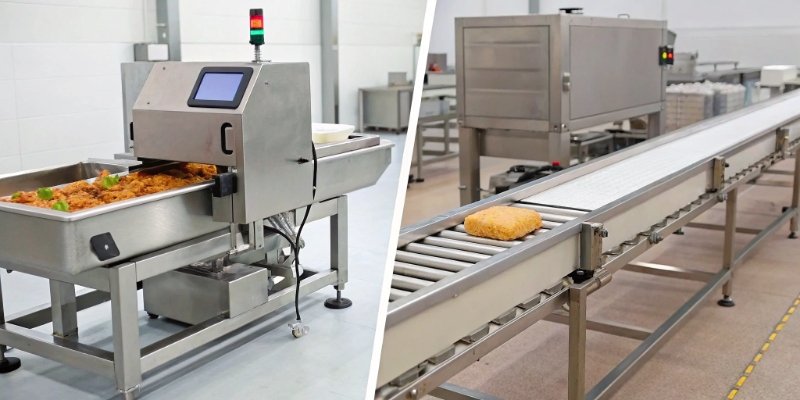
Are you struggling with product giveaways, underweight packages, or the fear of a metal contamination recall? These issues don't just hurt your bottom line; they can damage customer trust and create massive headaches for your entire operation.
A metal detector and a checkweigher are two different machines with distinct functions. A metal detector uses an electromagnetic field to find and reject products contaminated with metal. A checkweigher, on the other hand, is an automated scale that weighs products in motion to ensure they meet weight requirements. They both play critical, but separate, roles in quality control.
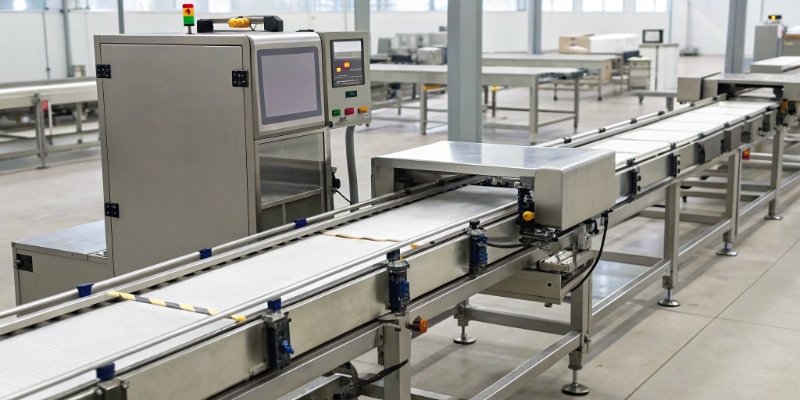
For any food company aiming for top-tier quality and international standards, both machines are essential guardians on the production line. However, many plant managers, especially those with limited budgets, often ask me if they truly need to invest in both at the same time. It’s a great question. With 19 years of experience manufacturing industrial scales, I’ve worked with clients of all sizes and understand the need to balance cost and effectiveness. Let's break down the details to help you make the right choice for your factory.
What Is the Difference Between a Metal Detector and a Checkweigher?
Have you ever been confused by the different inspection machines on a production line? Metal detectors and checkweighers can look similar, but choosing the wrong one can leave a critical gap in your quality control.
Simply put, a metal detector is a "safety guard." Its job is to detect metal contaminants, like tiny fragments from worn machinery, that have accidentally entered your product. A checkweigher is a "weight inspector." It checks every product to ensure it's not underweight, which can lead to legal issues, or overweight, which wastes ingredients and money.
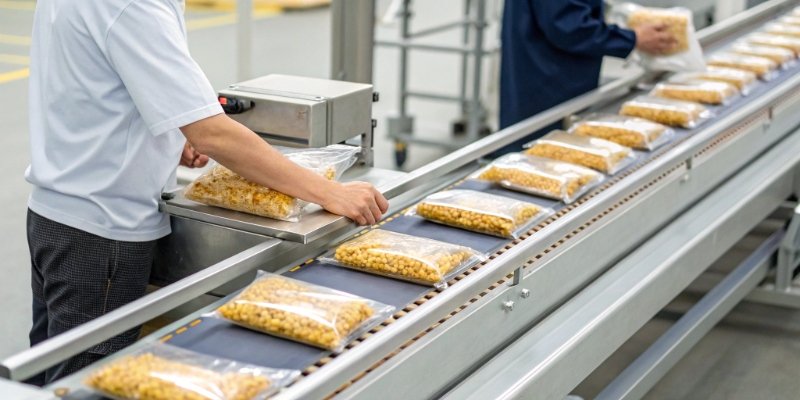
To give you a clearer picture, I'll dive deeper into their core functions, working principles, and what problems they solve. As a purchasing manager or technical director, understanding these differences is the first step toward making a smart investment. You'll see that while both machines aim to improve product quality, they address completely different risks and are more like partners than alternatives.
Core Differences at a Glance
| Feature | Metal Detector | Checkweigher |
|---|---|---|
| Primary Function | Detects and rejects products containing metal contaminants. | Weighs every product and rejects those that are over or under a set weight. |
| Working Principle | Uses an electromagnetic field; metal fragments disturb the field, triggering an alarm and rejection. | A high-precision load cell measures the force of an object's weight as it passes over a conveyor. |
| Problem Solved | Food Safety: Prevents consumer injury from metal parts and protects brand reputation from devastating recalls. | Compliance & Cost: Ensures compliance with net weight regulations, avoids fines for under-filling, and prevents profit loss from over-filling. |
| Application Point | Can be placed at raw material intake, mid-process, or after final packaging as a Critical Control Point (CCP). | Almost always placed at the end of the line, after the product is sealed, to check the final packaged weight. |
In my experience, emphasizing this distinction is key. I once worked with a cookie exporter who was only focused on a checkweigher to solve packaging accuracy issues. I explained that for their overseas buyers, food safety was paramount, and metal contamination is a leading cause of recalls. They ended up installing both, a decision that not only helped them pass strict buyer audits but also protected their brand from a potentially disastrous safety incident. This shows how they address different, yet equally important, failure modes on the same production line.
Do Food Factories Need Both Metal Detectors and Checkweighers?
"My budget is tight. Can I get by with just one?" I hear this question all the time. Many factory owners face pressure to control initial investments while upgrading their lines, and they want to make every dollar count.
The answer isn't a simple yes or no. Whether you need both depends on your primary market, customer requirements, and the most urgent problem you need to solve right now. For companies exporting or supplying to major retail chains, having both is almost always a mandatory requirement.
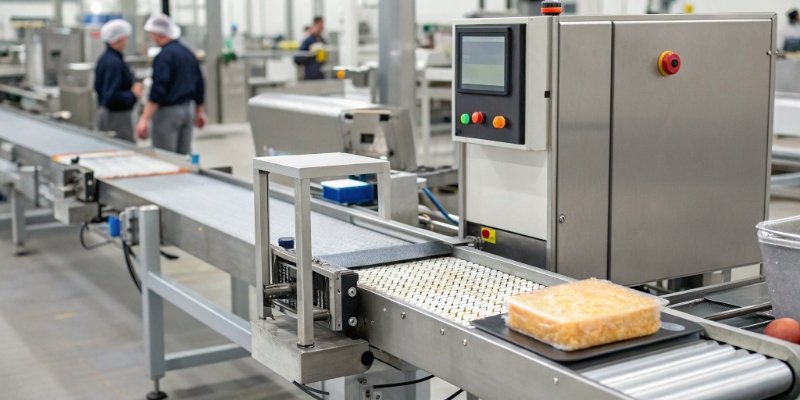
For a decision-maker, this is more than a simple equipment purchase; it's a strategic investment in risk management and long-term growth. Understanding the return on investment for different setups will help you find the sweet spot between cost and risk. Based on my experience serving global clients, let's analyze the best options for different scenarios to help you make a cost-effective and efficient decision.
Investment Decision Analysis
As a purchasing or technical manager, you need to evaluate this from the perspectives of return on investment (ROI), risk avoidance, and market access.
1. Investment ROI and Risk Assessment
| Investment Option | Core Problem Solved | Potential Risk | Best For |
|---|---|---|---|
| Checkweigher Only | Controls costs by preventing over-filling and ensures compliance with net weight laws by catching under-filled packs. | Fails to address the risk of metal contamination, leaving the business vulnerable to safety recalls and severe brand damage. | Smaller, domestic-focused companies with tight budgets where customers do not have strict metal detection mandates. |
| Metal Detector Only | Addresses critical food safety hazards, meets HACCP requirements, and protects against the most severe type of physical contamination. | Does not control product weight, leading to profit loss from giveaways or non-compliance issues from underweight products. | Companies where product value is very low and weight consistency is not a major cost driver, which is a rare scenario. |
| Both Machines | Provides comprehensive quality assurance by covering both safety and weight standards, satisfying the strictest customer requirements. | Higher initial investment cost. | Any food business that exports, serves major retailers, or is focused on building a premium, trustworthy brand. |
2. A Story from Our Experience
A few years ago, a well-known nut brand approached us during their expansion phase. They wanted to get their products into several high-end supermarket chains. At the time, they only used a checkweigher to ensure each bag had the right amount of product. We explained that premium channels care just as much about flawless safety as they do about accurate weight. Any metal fragment from their processing equipment could have catastrophic consequences. We provided them with a combination checkweigher and metal detector, a single machine that inspects for both. This combo unit saved them valuable floor space and allowed them to manage both inspection points from one screen. Their purchasing director later told me that this investment was a key reason they were able to get into those new retail channels so quickly.
How Do Metal Detectors and Checkweighers Serve Different Purposes in Food Quality Control?
Is your quality control system working like a well-coordinated team? A weak link can compromise the entire line. Metal detectors and checkweighers are two specialists on that team, each with a distinct and vital responsibility.
The metal detector is the "Safety Officer." Its sole mission is to protect consumers from harmful metal contaminants, which is a matter of business survival. The checkweigher is the "Financial Controller." By ensuring weight accuracy, it protects your profits and keeps you compliant with trade regulations.
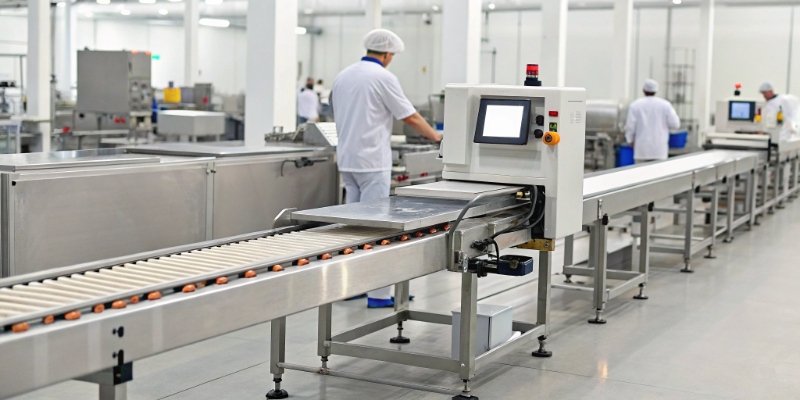
For a technical director, understanding their unique roles in the quality control (QC) process is essential for building an unbreakable quality firewall. It puts you in control of every stage of production. At Weigherps, we provide more than just hardware; we offer tools that enable smart, data-driven quality management. With our IoT weighing systems, you can monitor rejection rates and weight data in real-time, giving you the insights needed to optimize your entire production process.
Different Roles in Quality Control
To illustrate their distinct roles, let's compare them from a few different angles.
1. Difference in Focus
- Metal Detector: Focuses on detecting physical hazards. It uses electromagnetic technology to identify ferrous (iron, steel), non-ferrous (copper, aluminum), and stainless steel metals. These contaminants can come from raw materials or broken or worn-out processing equipment. Its presence is a critical defense against food safety incidents.
- Checkweigher: Focuses on ensuring measurement accuracy. It uses a sensitive weighing system to dynamically check every product and ensure its net weight is within a pre-set range. This is not only for complying with packaging laws but also for optimizing costs by eliminating product giveaway.
2. Positioning within HACCP
In the food industry's foundational safety system, HACCP (Hazard Analysis and Critical Control Points), these two machines have clearly defined roles.
- A metal detector is almost universally designated as a Critical Control Point (CCP). This is because metal contamination is identified as a hazard that poses a direct and unacceptable risk to consumer health if not controlled.
- A checkweigher is typically considered a Quality Control Point (QCP). While incorrect weight can lead to regulatory penalties and financial loss, it is not usually classified as a direct food safety hazard.
With 19 years of manufacturing experience, we know what reliable equipment means to our clients. Our metal detectors and checkweighers feature hygienic designs that are easy to clean and maintain. Furthermore, our software can record and export all inspection data, which can be integrated with your company's ERP or MES systems. This provides the traceability and documentation required to pass strict quality audits.
Should a Food Factory Invest in Both a Checkweigher and a Metal Detector for Optimal Operations?
When your goal is not just to be "compliant" but to be "excellent," the answer to this question becomes very clear. To achieve peak operational efficiency and comprehensive quality assurance, investing in both machines is the smartest move.
Yes, absolutely. Using a metal detector and a checkweigher together doesn't just add two functions; it creates a complete, closed-loop quality system that covers everything from safety to standards. This integration is the most effective way to minimize operational risks and boost your brand's value.
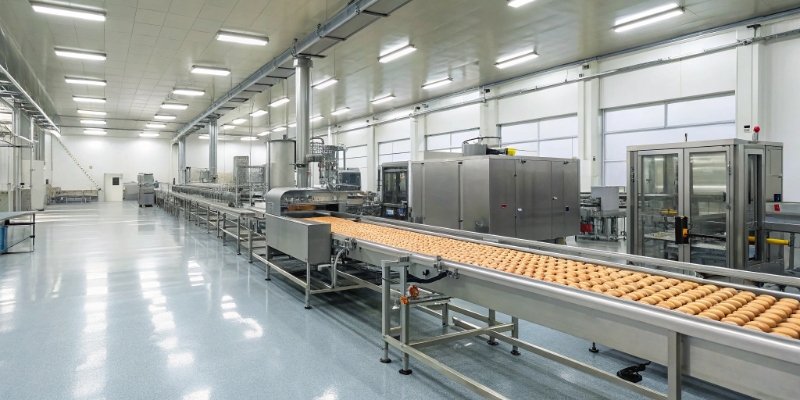
While this means a higher initial investment, it protects you from far more expensive problems down the road and enhances both efficiency and customer trust. As your partner, we at Weigherps don't just sell machines; we provide integrated solutions that drive business growth. Our combination checkweigher and metal detector systems merge both functions efficiently, saving space and cost, making them the ideal choice for optimal operations.
The Synergy of Optimal Operations
Deploying both a metal detector and a checkweigher creates a "1+1>2" effect for your production line.
1. Comprehensive Risk Coverage
- Avoid Legal and Reputational Risks: A metal detector minimizes the risk of a contamination incident, helping you avoid costly recalls and the catastrophic brand damage that follows.1
- Avoid Financial and Regulatory Risks: A checkweigher ensures you comply with weight regulations while also stopping profit loss by preventing product giveaway.2
2. Boosted Line Efficiency
Modern inspection systems, especially integrated "combo" units, are highly automated and efficient.
| Synergy Advantage | How It Works |
|---|---|
| Saves Space and Integration Cost | A combination system integrates both machines on a single frame, sharing one conveyor and reject mechanism. This significantly shortens the line and simplifies layout. |
| Simplified Operation and Management | A single user interface controls the parameters for both weight and metal inspection. All data is consolidated into one report, streamlining management and traceability. |
| Data-Driven Process Optimization | The system logs detailed data, such as the type and frequency of metal contaminants and the distribution of product weights. By analyzing this data, you can optimize upstream processes, like scheduling maintenance on wearing parts or fine-tuning filler settings. |
In my 19 years in this industry, I've seen countless clients evolve from manual spot-checks to fully automated inspection. This transition brings more than just efficiency; it represents an upgrade in management philosophy. One client producing frozen dumplings initially only used a checkweigher to control quantity. After we recommended adding a metal detector, they caught metal fragments from a broken meat grinder blade twice in the first month. That experience proved to him that investing in quality is the best investment you can make in your company's future.
Conclusion
In short, a metal detector ensures food safety, while a checkweigher controls costs and compliance. For businesses targeting export markets or large retailers, both are essential. For others, starting with one can be a practical step, but the goal should be a complete quality solution.
-
"Metal Detectors for Food Processing - Oklahoma State University Extension", https://extension.okstate.edu/fact-sheets/metal-detectors-for-food-processing. This source explains how metal detectors reduce contamination risks and prevent recalls, emphasizing their role in protecting brand reputation. Evidence role: mechanism; source type: research. Supports: A metal detector minimizes the risk of a contamination incident, helping you avoid costly recalls and the catastrophic brand damage that follows.. Scope note: The effectiveness of metal detectors depends on proper calibration and maintenance. ↩
-
"Reducing Product Give-Away with Checkweighing Solutions", https://www.scalepeople.com/reducing-product-give-away-with-checkweighing-solutions/. This source details how checkweighers help ensure compliance with weight regulations and reduce profit loss from overfilled products. Evidence role: mechanism; source type: education. Supports: A checkweigher ensures you comply with weight regulations while also stopping profit loss by preventing product giveaway.. Scope note: The effectiveness may vary depending on the precision of the checkweigher used. ↩



Comments (0)