
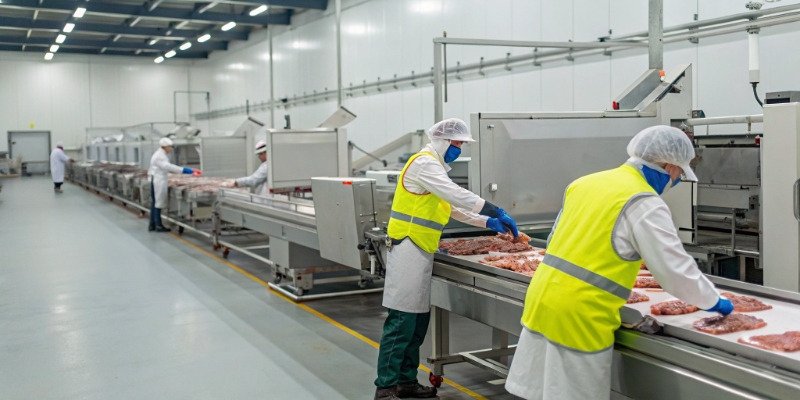
Feeling the pressure of rising costs and stricter rules? Sticking to old methods means falling behind. The next five years are all about smart automation and total supply chain control.
The meat processing industry will see deeper digitalization, widespread automation, and accelerated supply chain integration. Stricter food safety regulations will make comprehensive traceability systems a standard requirement for all major players, redefining competitiveness in the sector.
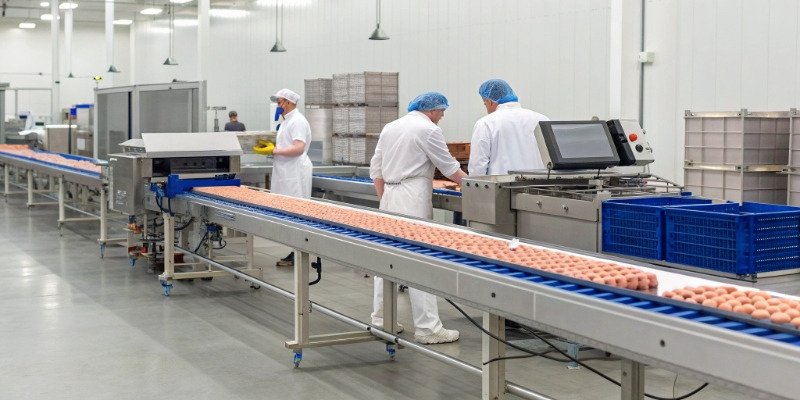
In my 19 years of manufacturing industrial weighing solutions, I’ve seen industries at a crossroads before. The meat processing sector is there right now. The pressure to modernize isn't just about chasing new technology; it’s about survival. Some of our partners are leading this change, integrating smart systems and reaping the rewards. Others are hesitant, worried about the cost and complexity. But the trend is clear. The future belongs to those who adapt. Let's break down exactly what these changes look like and what they mean for your business.
How Will Automation Reshape the Slaughter and Meat Cutting Industry?
Relying on manual labor is expensive and often inconsistent. This creates variable product quality and high operational costs. Automation offers precision, efficiency, and a way to solve labor shortages.
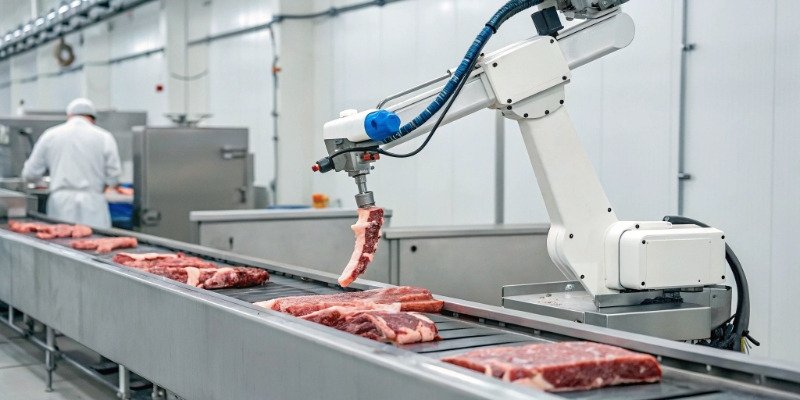
Automation will drastically reduce the reliance on manual labor in the meat industry. Technologies like smart grading, robotic cutting, and automated material handling will become common. This boosts efficiency, improves consistency, and lowers long-term operational costs.
Automation is no longer a luxury; it’s becoming a fundamental need. The constant search for skilled labor, combined with rising wages, puts a strain on any processing plant's budget. Automation directly addresses this. I remember visiting a partner’s facility that was struggling with inconsistent cut sizes, which impacted their packaging and profit margins. After they implemented an automated system, their product consistency shot up, and waste went down. This is the kind of tangible result we're talking about. The shift is happening across several key areas.
Smart Carcass Grading
Manual grading is subjective and can vary from person to person. New systems use vision technology and sensors to grade carcasses with incredible accuracy based on weight, fat content, and muscle distribution. This data is captured instantly, providing an objective basis for sorting and pricing.
Automated Cutting and Deboning
Robots are now capable of performing complex cutting and deboning tasks that once required skilled butchers. These machines work tirelessly, 24/7, with a level of precision that humans can't match. This an only increases throughput but also improves yield, getting more value from each carcass.
Robotic Material Handling
From moving heavy carcasses along the line to packing and palletizing finished products, robotics is streamlining the entire workflow. Our own integrated weighing systems often connect directly with these robots. For example, a product is weighed, labeled, and then a robotic arm instantly moves it to the correct pallet based on its weight and destination. This removes bottlenecks and reduces the risk of workplace injuries.
What Digital and Supply Chain Factors Will Drive Future Growth?
Disconnected data and a fragmented supply chain create inefficiency and risk. You can't optimize what you can't see. Leaders who fail to connect their operations will be left behind.
The key drivers will be digitalization and vertical integration. Leading companies will use data as a core asset to control their entire supply chain, from farm to fork. This allows for better forecasting, waste reduction, and a huge competitive advantage.
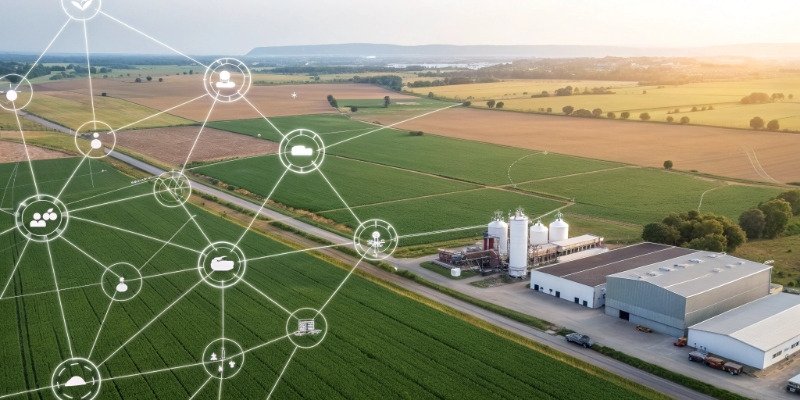
For years, we've helped companies capture weight data. But today, that's just the starting point. The real power comes from what you do with that data. Digitalization means connecting every point in your operation. When one of our IoT-enabled scales weighs a batch of raw material, that information shouldn't just stay on a local display. It should instantly update your inventory, inform your production schedule, and be visible to your purchasing department. This is how you move from being reactive to being proactive. It also allows for much tighter control over the supply chain.
Data as a Core Asset
Every action in a processing plant generates data. The weight of an incoming animal, the temperature of a storage unit, the yield from a cutting line. In the past, this data was often lost or siloed. Now, it's a valuable asset. By collecting and analyzing this information, companies can spot trends, predict maintenance needs, and optimize resource use. This is where software providers become critical partners, helping to build the platforms that turn raw data into actionable insights.
Accelerating Vertical Integration
Top companies are no longer just processors. They are managing the entire value chain. They use digital tools to link the farm, the slaughterhouse, the processing plant, and the final retailer. This integration gives them unmatched control over quality, cost, and supply.
| Aspect | Traditional Supply Chain | Digitally Integrated Supply Chain |
|---|---|---|
| Data Flow | Manual, delayed, in silos | Real-time, centralized, transparent |
| Inventory | Estimates, high buffer stocks | Accurate, just-in-time levels |
| Traceability | Paper-based, slow, difficult | Instant, batch-level, easy |
| Efficiency | Low, with many bottlenecks | High, optimized workflow |
What Innovations Will Enhance Food Safety and Traceability?
A food safety recall can destroy a brand's reputation overnight. Proving where your product came from is no longer optional. It's a non-negotiable demand from both regulators and consumers.
Innovations will center on creating a transparent and verifiable food chain. Technologies like blockchain, alongside our IoT sensors and advanced weighing systems, will combine to create end-to-end traceability. This makes recalls precise and builds critical consumer trust.
Food safety is the bedrock of the entire industry. With regulations getting stricter worldwide, having a robust traceability system is non-negotiable. I spoke with a client who faced a potential contamination scare. Because they had a modern traceability system in place, they were able to isolate the exact batch in minutes, not days. They could prove that only a small portion of their product was affected, saving them from a costly and damaging full-scale recall. This is the power of good data. These systems are evolving quickly thanks to new technology.
The Rise of End-to-End Traceability
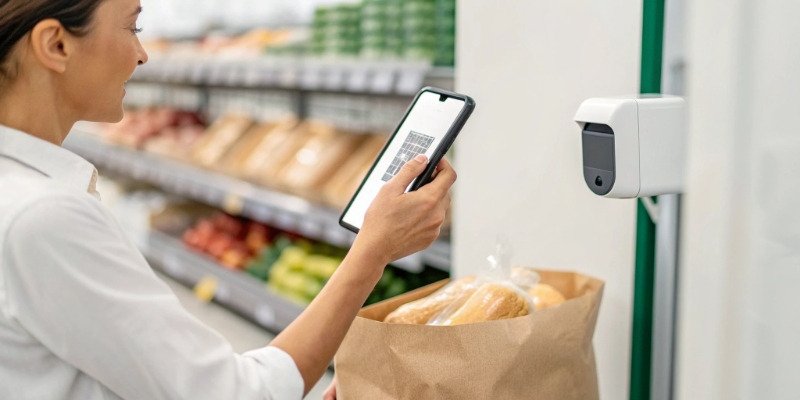
The goal is to track a piece of meat from the farm it came from all the way to the supermarket shelf.1 When an animal arrives at the plant, it's given a unique identifier. Our weighing systems can capture that initial weight and link it to the ID. Every time that product is cut, processed, or packaged, the data is updated. Anyone can scan a QR code on the final package to see the product's entire journey.
The Role of IoT and Weighing Systems
IoT is the engine that drives modern traceability.2 Our IoT-enabled scales do more than just weigh; they are data collection points. They record the weight, time, and batch number and send it directly to a central database. Other IoT sensors monitor temperature, humidity, and location. This creates an unbroken digital chain of custody. If a problem occurs, you can instantly see where and when it happened, allowing for surgical recalls instead of massive ones. This level of detail protects the business and gives consumers the confidence they demand.
How Can Businesses Prepare for These Industry Shifts?
These changes can seem overwhelming and expensive. Not knowing where to start often leads to doing nothing. But waiting too long means you will be left behind in a fast-changing market.
Businesses must act now. Start by assessing your current digital capabilities to find the gaps. Then, begin with small pilot projects to prove the return on investment before you scale up. Most importantly, choose technology partners who are experts in this field.

The most common question I get from clients is, "Where do I start?" The answer isn't to rip everything out and start over. The key is a smart, phased approach. We've guided many companies through this process, helping them transform step-by-step. The goal is to build momentum and see clear benefits at each stage. This makes it easier to get buy-in from your team and leadership for larger investments down the road. Here is a simple framework to follow.
Conduct a Digital Audit
First, take an honest look at your current operations. Where are your biggest bottlenecks? Where are you still relying on paper records? What data are you not collecting that you should be? Understanding your starting point is the most critical step. This audit will give you a clear roadmap for what to prioritize.
Start with Pilot Projects
Don't try to automate and digitize everything at once. Pick one area where you can get a quick win.3 Maybe it's installing an automated weigh-price-labeling system at the end of your packaging line. Or perhaps it's a simple IoT system to monitor your cold storage temperatures. These small projects prove the concept, help your team adapt to new technology, and demonstrate a clear return on investment.
Choose the Right Technology Partner
You don't have to be an expert in automation or IoT. But you do need a partner who is. Look for a company that doesn't just sell you a product, but provides a solution. They should understand your specific needs and be able to offer a customized system. As a manufacturer with deep experience in custom weighing solutions, we know that one size never fits all. A good partner offers reliable products, responsive technical support, and the expertise to help you grow.
Conclusion
The future of meat processing is digital, automated, and fully traceable. Embracing these trends now is not just an option—it is essential for survival and achieving long-term success.
-
"Recent advancements in meat traceability, authenticity verification ...", https://pmc.ncbi.nlm.nih.gov/articles/PMC11788888/. This source describes systems for tracking meat products from farm to supermarket shelf. Evidence role: mechanism; source type: research. Supports: The goal is to track a piece of meat from the farm it came from all the way to the supermarket shelf.. Scope note: The examples may focus on specific technologies rather than industry-wide practices. ↩
-
"Innovative Technologies Reshaping Meat Industrialization - PMC - NIH", https://pmc.ncbi.nlm.nih.gov/articles/PMC12248625/. This source explains how IoT technologies enable traceability in food processing. Evidence role: mechanism; source type: research. Supports: IoT is the engine that drives modern traceability.. Scope note: The focus may be on specific IoT applications rather than general industry trends. ↩
-
"Pilot Project: Unprocessed Fruits & Vegetables", https://www.ams.usda.gov/selling-food/pilot-project. This source discusses the strategy of starting with small pilot projects to prove ROI in automation. Evidence role: mechanism; source type: education. Supports: Pick one area where you can get a quick win.. Scope note: The examples may focus on specific technologies rather than general strategies. ↩


Comments (0)