
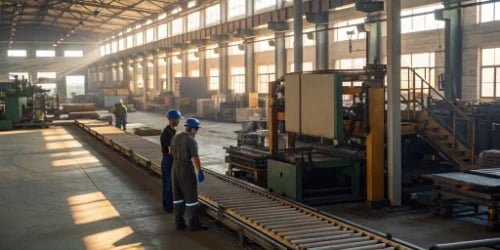
Are slow processes and human errors costing you money? Your old scales might be the hidden problem, silently draining profits and slowing down your entire operation.
Yes, outdated scales significantly hurt operational efficiency. They create bottlenecks with manual data entry, increase the risk of human error, and lack the integration needed for modern production. This leads to wasted time, materials, and labor, directly impacting your bottom line and overall productivity.

I have been in the industrial weighing business for 19 years. I have visited countless factories and workshops. A common story I hear is about managers frustrated with production delays1. After we investigate, we often find the problem starts at the weighing station2. It is an easy part of the process to overlook. But fixing it can have a huge impact. It is a critical bottleneck that, once opened, can transform your entire operation. Let's look deeper into how these simple tools can cause such big problems and what you can do about it.
How Can Outdated Scales Impact Operational Efficiency?
Manual data logging is slow and full of mistakes. This single weak point can create bottlenecks that affect your entire production line, causing delays and frustration.
Outdated scales hurt efficiency by forcing manual work. This includes writing down weights, typing them into a system, and not having real-time data. These manual steps cause delays, transcription errors, and prevent integration with other factory systems, creating major bottlenecks.

The impact of an old scale goes far beyond just getting a weight. As a manufacturer aiming to be your most reliable weighing expert, we see the real-world consequences every day. The problems stack up quickly and affect your business in very specific ways. These issues can be broken down into three main categories: time, cost, and data.
Time Delays
A traditional weighing process is slow. An operator places an item on the scale, waits for the reading to stabilize, reads the number, writes it down, and then walks to a computer to enter it. Each of these steps takes only a few seconds. But when you multiply those seconds by hundreds or thousands of weighings per day, it adds up to hours of lost productivity every week. This is time your team could be spending on more valuable tasks.
Increased Costs
Mistakes are expensive. An operator might misread a "3" as an "8" or transpose digits when typing. A small error in a single measurement can ruin an entire batch of product, leading to wasted materials and rework. In the worst cases, these errors can lead to customer complaints or even product recalls, which damage both your finances and your reputation. You are also paying an employee for a task that can be easily and cheaply automated.
Data Inaccuracy
Data that is written down manually is often inaccurate and isolated. It cannot be used for real-time inventory management3, production tracking4, or quality control analysis5. You are forced to make important business decisions based on old, potentially flawed information. In a modern, competitive market, relying on bad data is like trying to navigate a ship in a storm without a compass. It is a massive risk that can stop you from achieving the growth your business deserves.
What Are the Signs That Your Weighing Scales Are Affecting Productivity?
Do your inventory numbers never seem to match? Do employees crowd around the weighing station? These are red flags that often point directly to an outdated weighing system.
Look for signs like frequent data entry errors, production bottlenecks at weighing points, and differences between physical inventory and system records. Customer complaints about product quantity or formula consistency are also a major warning sign that your scales are failing your processes.

Over the years, I've taught our clients to become detectives in their own facilities. The evidence of an inefficient weighing process is usually hiding in plain sight. You just have to know what to look for. If you are not sure if your scales are the problem, here are the key signs to watch for.
First, just observe your workflow. Do you see operators carrying pens and clipboards around the weighing station? That is the most obvious sign of a manual process. Do you see a line of products or carts waiting to be weighed? That is a physical bottleneck, and it's costing you money every minute.
Second, examine your data. Talk to your inventory manager or accounting department. Ask them how often they have to make manual adjustments to inventory levels in your ERP or warehouse management system. If the answer is "often," it is highly likely that the initial data coming from your scales is incorrect.
Third, talk to your people on the floor. Your operators are your best source of information. Ask them if they are frustrated with the weighing process. Ask if they think it is slow or easy to make a mistake. Their honest feedback is priceless. If they are not confident in their tools, you cannot be confident in your output. We often provide clients with a simple checklist to help them spot these issues.
| Common Sign | Impact Area | What It Looks Like |
|---|---|---|
| Manual Logs | Accuracy & Efficiency | Operators using clipboards or notebooks at the scale. |
| Production Queues | Throughput & Time | A line of people or products waiting for the scale. |
| Inventory Mismatches | Finance & Operations | Your system count doesn't match the physical count. |
| Operator Complaints | Morale & Productivity | Staff express frustration with the slowness of the process. |
How Do Modern Scales Enhance Operational Efficiency?
Imagine weighing data instantly appearing in your system, completely error-free. Modern scales are not just for weighing. They are data hubs that connect your entire production floor.
Modern IoT scales boost efficiency by automating data capture and integrating directly with ERP, MES, or WMS systems. This eliminates manual entry, reduces errors to near zero, and provides real-time data for better decision-making, inventory control, and process optimization.
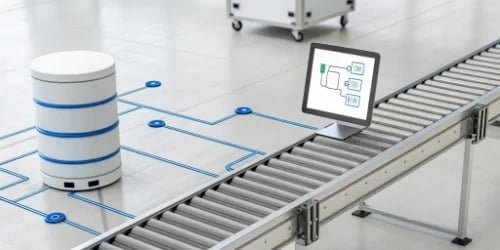
The biggest difference between an old scale and a modern one is connectivity. This is where we, as a company focused on IoT weighing, see the real revolution. A modern scale does more than just measure mass; it communicates. This communication ability is what unlocks massive gains in efficiency. It empowers our customers to leverage technology and achieve real growth.
Automation of Data Entry
This is the most immediate benefit. An IoT scale can be connected to a barcode scanner. When an operator scans an item, the scale automatically records the weight and sends it to your central database. The operator doesn't need to write anything down or type anything in. As my insight notes, even removing this one single manual step saves a huge amount of time and completely eliminates transcription errors.
Seamless System Integration
Our IoT scales6 are designed to talk to your other business systems. We provide solutions that connect directly to your ERP, Warehouse Management System (WMS), or Manufacturing Execution System (MES). This creates a seamless and automatic flow of information. When you receive raw materials, your inventory is updated instantly. When you ship a finished product, the system knows immediately. This real-time visibility allows for much tighter control over your entire operation.
Powerful Data Analytics
With a constant stream of accurate, real-time weighing data, you can do things that were impossible before. You can analyze production trends, track operator performance, and identify process inefficiencies with hard data. You can also easily generate compliance reports for quality audits. Your simple weighing station transforms from a basic tool into a powerful source of business intelligence, helping you make smarter decisions.
What Solutions Are Available If Your Current Scales Are Reducing Efficiency?
Are you worried that a full system overhaul is too expensive or complex? Modern weighing solutions are flexible. They can be tailored to fit your specific needs and budget.
The best solution is upgrading to IoT weighing scales. We offer targeted and cost-effective options, from simple scales that automate one step to fully integrated custom systems. The key is matching the technology to your production scale for the best return on investment.
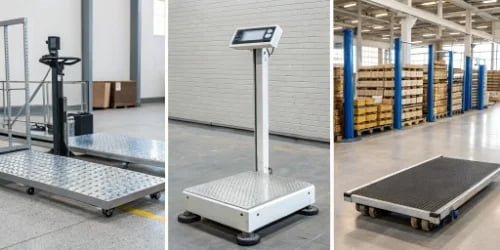
At Weigherps, our goal is to be your most professional weighing expert. We know that every business is different. A solution that works for a large multinational corporation might not be right for a small, growing business. That is why we specialize in providing targeted and cost-effective weighing solutions tailored to individual needs. Based on your production scale and goals, we can find the perfect fit.
For Small Operations or Specific Workstations
You do not need to replace everything at once. A great first step is to upgrade a single, critical workstation with a simple IoT bench scale. By connecting this scale to a local PC or tablet via USB or Bluetooth, you can immediately eliminate manual data entry7 into a spreadsheet or local program. This is an affordable and easy-to-implement solution. It provides a huge efficiency boost for a very small investment and helps you achieve step-by-step growth.
For Medium-Sized Factories
If you have multiple weighing points, we might recommend a network of scales. These scales can be connected via Wi-Fi or Ethernet to your central server. This allows for centralized monitoring, data collection, and management of all weighing processes, from receiving raw materials to shipping finished goods. It provides a complete, real-time overview of material flow throughout your facility.
For Large Enterprises or Unique Processes
For clients with complex needs, we provide fully custom weighing systems8. We bring together our team of industry experts to design a perfect solution. We can integrate scales directly into your conveyor belts, link them with barcode scanners and label printers, and build custom software that communicates directly with your unique ERP system. Our vision is to help you revolutionize your conventional weighing and achieve a quantum leap in your business.
Conclusion
Upgrading to modern scales is not just a cost. It is an investment in efficiency that pays for itself. It eliminates errors, saves time, and provides the data you need to grow your business effectively.
- Understand the common causes of production delays and how to mitigate them. ↩
- Discover the critical role of a weighing station in your production process. ↩
- Discover how modern scales can enhance your inventory management processes. ↩
- Explore the best tools for effective production tracking and management. ↩
- Understand the benefits of quality control analysis in improving manufacturing outcomes. ↩
- Learn about the advantages of IoT scales and how they can revolutionize your operations. ↩
- Learn about the risks associated with manual data entry and how it can impact your production line. ↩
- Learn about the benefits of custom weighing systems tailored to your specific needs. ↩


Comments (0)