
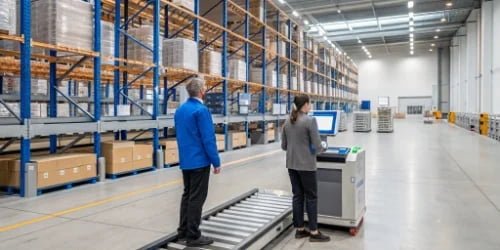
Tracking inventory manually is slow and leads to costly errors. A single mistake can cause major compliance headaches. Smart weighing systems automate data capture, ensuring complete and accurate traceability.
A smart weighing system achieves better inventory traceability by automatically capturing precise weight data at every key point. It links this data to specific items, batches, and timestamps, creating a detailed digital record that eliminates manual errors and improves accuracy from receiving to shipping.
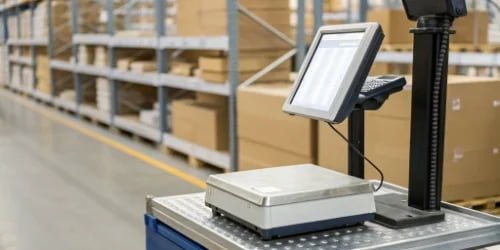
That's the core idea, but the real power is in the details. You might be wondering how these systems actually accomplish this. It isn't magic; it is a combination of specific features designed to work together without any problems. Let's break down exactly what makes these systems so effective for traceability and how they can change your operations. It’s about more than just weight; it’s about creating a chain of data that protects your business and boosts your efficiency. Let us dive into the features that make all this possible.
What Features of Smart Weighing Systems Enhance Inventory Traceability?
Is your weighing system just giving you numbers? Without integrated features, you have data gaps, not true traceability. Smart systems link weight to product IDs using barcoding and automated logging.
Features enhancing traceability include integrated barcode/RFID scanners for item identification, automated data logging for timestamping, and connectivity options (Wi-Fi, Ethernet) to sync data with your ERP or WMS. This combination creates a complete record for every item, linking it to a specific batch.
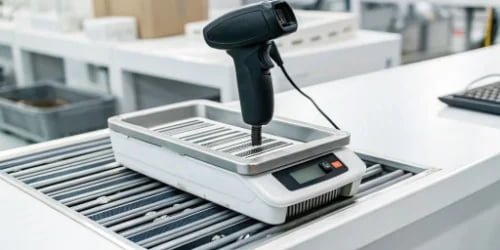
The strength of a smart weighing system comes from features that work together to create a solid traceability chain. It starts with identifying the product and ends with sharing that information where it is needed most.
Key Traceability Features
- Barcode and RFID Integration: This is the first and most important step. When you scan a product's barcode or RFID tag, the system instantly knows what it is. It pulls up the product name, lot number, supplier, and other key details. The scale then adds the precise weight to this information. This process removes the need for someone to write anything down, which is where mistakes often happen.
- Automated Data Logging: Every time something is weighed, the system automatically creates a record. This record includes the weight, the product ID, a timestamp, and sometimes even the operator's ID. This creates a secure digital trail for audits.
- Connectivity and Software: The data doesn't just stay on the scale. Through Wi-Fi, Ethernet, or other connections, it's immediately sent to your central business software, like an ERP or WMS1.
Here is a simple table showing the difference.
| Feature | Manual Weighing Process | Smart Weighing System |
|---|---|---|
| Item Identification | Visual check, writing it down | Automated via Barcode/RFID scan |
| Weight Recording | Manual entry in a logbook | Automatic digital capture |
| Data Transfer | Typing data into a computer | Instant sync via Wi-Fi/Ethernet to ERP/WMS |
| Timestamping | Manual, often not exact | Automatic and precise to the second |
| Error Potential | High due to human mistakes | Very Low due to the automated process |
How Do Smart Weighing Systems Improve Tracking Accuracy in Inventory Management?
Do small weighing errors create big inventory problems? These differences cause stockouts and overstocking, hurting profits. Smart systems remove human error, delivering precise data for accurate inventory management.
Smart weighing systems improve accuracy by replacing manual data entry with automation. They capture exact weights and link them directly to product data via scanners. This eliminates handwriting mistakes, typos, and guesswork, ensuring the data entering your inventory system is 100% correct from the start.

Accuracy is the foundation of good inventory management2. If the data you start with is wrong, every decision you make after that will also be wrong. Smart weighing systems3 fix this problem at the source. The main goal is to remove the chance of human error from the weighing process entirely.
I remember a client, a large food service provider, who was struggling with this. Their receiving team would manually log weights of incoming produce. A simple slip of the pen could turn 50kg of potatoes into 5.0kg in the system. This caused huge issues in their kitchen schedules and warehouse counts.
Once they installed our smart weighing system, this problem disappeared.
- Elimination of Human Error: The scale captured the exact weight of the potatoes. The integrated scanner identified the product and supplier from the barcode. All this data went straight to their backend warehouse management system. No one had to write or type anything. This one change made their data completely transparent and their operations much more efficient. There was no more guessing or fixing mistakes later. This accuracy is what allows true traceability to work. It ensures that the digital record4 perfectly matches the physical product, every single time.
Can Integration of Smart Weighing Systems Boost Inventory Visibility?
Is your inventory data stuck in isolated silos? This lack of connection means you never see the full picture. Integrating smart scales pushes data to your central system for total visibility.
Yes, absolutely. Integration is key. By connecting smart weighing systems to your Enterprise Resource Planning (ERP) or Warehouse Management System (WMS), weight data instantly updates inventory levels. This provides a live, accurate view of stock across all locations, from the receiving dock to the production line.
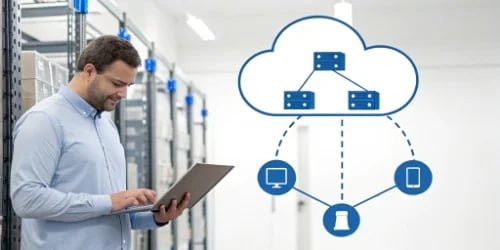
Visibility means everyone in your organization can see the same, up-to-date inventory information. Smart weighing systems make this happen by breaking down data silos5. The weight data6 becomes part of a larger, interconnected information system.
The Power of Connection
As a company that works with software providers, you understand the importance of good integration. Our systems are designed for this.
- APIs for Seamless Communication: We build our scales with robust APIs (Application Programming Interfaces). This allows your software to easily and reliably get data from our hardware. For a software vendor like you, this is a huge advantage. You can integrate our hardware directly into your smart device management platforms. This allows you to offer your clients a complete hardware-software package for inventory control.
- Creating a Single Source of Truth: When a smart scale is connected to your central system, it creates a single, reliable source of information. When a pallet is weighed at the receiving dock, the inventory level in the WMS is updated instantly. When a small component is weighed for a production kit, the stock count for that part is automatically reduced. This live data stream means you are always looking at the true state of your inventory. This complete visibility helps you make better purchasing decisions, optimize storage space, and prevent stockouts.
How Do Smart Weighing Systems Facilitate Real-Time Inventory Traceability?
Are you making decisions based on old inventory data? This delay means problems grow larger before you even see them. Smart systems give you instant data for real-time traceability and quick reactions.
They facilitate real-time traceability through immediate data transmission. The moment an item is weighed, its data—weight, ID, timestamp, and location—is sent to a central database. This allows managers to view live inventory status, track the movement of goods instantly, and pinpoint any item's location at any time.
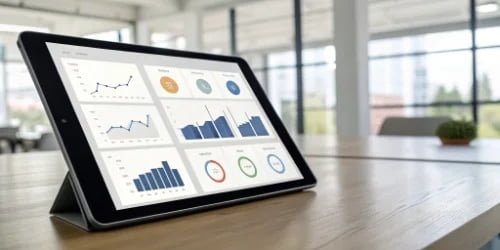
Real-time means "right now." In inventory management, making decisions on information that is even an hour old can lead to mistakes. Smart weighing systems close this time gap. The information flows from the physical world to your digital system in seconds.
Proactive Problem Solving
Let's go back to my client with the large canteen. Their story is a perfect example of real-time traceability in action. One afternoon, they received an urgent alert from a supplier about potential contamination in a specific batch of lettuce that had been delivered that morning.
With their old manual system, this would have been a disaster. They would have had to send staff into the cold storage to manually search through boxes. This would have taken hours, and in the meantime, some of the lettuce might have already been used in the kitchen.
But with their smart weighing system, the process was different.
- They searched the batch number in their system.
- Instantly, the system showed them exactly when that batch arrived, its precise weight upon delivery, and its current location in cold storage unit #3.
- They located and isolated the entire batch in less than five minutes.
This is the power of real-time data. It transformed their response from reactive panic to proactive control. They stopped a potential health crisis before it could start. This is what we want for our customers: the ability to act immediately with total confidence in your data.
Conclusion
A smart weighing system is more than a scale. It’s a vital tool for accurate, real-time inventory traceability that reduces costs, improves efficiency, and eliminates critical errors in your operations.
- Learn how ERP and WMS systems work together to optimize inventory management. ↩
- Explore the essential components that contribute to successful inventory management. ↩
- Explore how smart weighing systems can enhance your inventory management and reduce errors. ↩
- Learn about the importance of maintaining digital records for compliance and efficiency. ↩
- Understand the impact of data silos on decision-making and operational efficiency. ↩
- Understand the significance of accurate weight data in maintaining inventory integrity. ↩



Comments (0)