
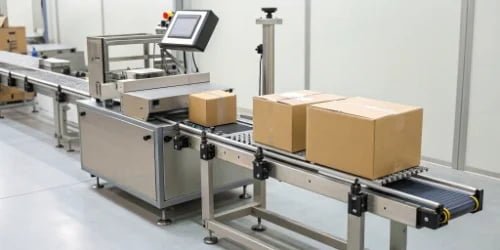
Manual weighing and labeling is slow and invites costly mistakes. These errors create waste and frustrate customers. An integrated automated system is the easiest way to solve this entire problem.
The most straightforward method is to use an integrated weigh-labeling system. This single machine combines a scale, a printer, and smart software. It automatically weighs an item, calculates the price or other data, and instantly prints and applies the correct label, ensuring speed and accuracy.
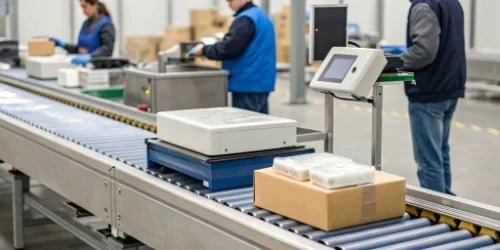
When I first started in this industry 19 years ago, so much of this work was done by hand. An operator would weigh a product, write down the number, and then another person would print a label. The potential for error was huge. Today, things are completely different. We design systems that handle all these steps in a single, fluid motion. It’s not just about adding technology; it’s about rethinking the entire workflow to make it simpler and more reliable. Let's look at how this all comes together.
How Can Weighing and Labeling Be Automated Seamlessly?
Juggling separate scales, computers, and printers is a clumsy process. This setup creates production bottlenecks and leads to mismatched data. A truly unified system makes the process smooth and error-free.
Seamless automation connects a scale directly to a label printer and uses software to control both. As soon as an item is weighed, its data instantly triggers the correct label to be printed. This completely removes the need for manual data entry and prevents mix-ups.
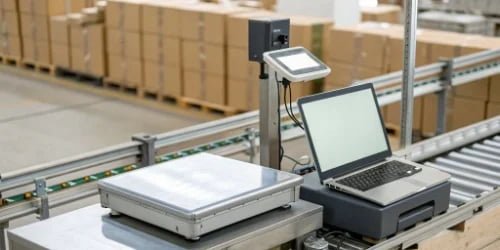
To make automation seamless, you have to synchronize the entire process. It's not enough to just link the hardware together. The real magic happens when the workflow is designed to be one continuous action. We've seen this make a huge difference for our clients, especially those in fast-paced environments like food processing.
The Automated Workflow in Action
The process is simple from the operator's point of view. They just place the product and the machine does the rest.
- Weigh: An item is placed on the scale. The high-precision load cell1 captures the exact weight.
- Process: The system software instantly receives the weight. It can pull product information (like name, price per kilo, or batch number) from a database.
- Print: All this information is sent to the printer, which creates a label with the correct weight, price, barcodes, and expiry dates.
- Apply: The label is either dispensed for manual application or applied automatically by an applicator arm.
This is especially effective for one-person workstations. In a meat processing plant or fruit sorting facility, one operator can manage weighing, labeling, and packing at a single station, which boosts individual accountability and overall efficiency.
| Feature | Manual Process | Seamless Automation |
|---|---|---|
| Speed | Slow, limited by human pace | Very fast, limited only by machine speed |
| Accuracy | High chance of human error2 | Nearly 100% accurate |
| Data Entry | Manual input required | Fully automated, no input needed |
| Traceability | Difficult, requires paper logs | Easy, all data is logged digitally |
What Technologies Enable One-Step Automation for Weighing and Labeling?
Using old technology means you can't keep up with modern demands. You risk falling behind competitors who are faster, more accurate, and more efficient because they use better tools.
The key technologies are high-precision load cell sensors for accurate weighing, thermal printers for fast labeling, and IoT connectivity for data integration. An embedded software controller acts as the brain, coordinating all the components to work as one cohesive unit.
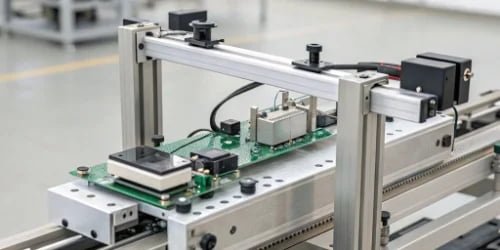
As a manufacturer, we are always focused on bringing the best technologies together. It's like building a high-performance team; each component must be excellent on its own, but what really matters is how they work together. Our R&D department spends a lot of time testing different combinations to find the most reliable and efficient solutions for our customers.
The Core Hardware Components
The foundation of any good system is its hardware.
- Load Cells: These are the sensors that measure weight. We use high-quality, industrial-grade load cells to ensure our scales are both sensitive and durable enough for factory environments.
- Printers: Most automated system3s use thermal printers4. They are fast, reliable, and don't require ink or toner, which simplifies maintenance5. They can print everything from simple text to complex barcodes and graphics.
The Software "Brain"
This is what your team, the software vendors, will appreciate the most. The software is the system's central nervous system. It can be a program running on a connected PC, or it can be embedded directly into the weighing terminal itself, which is what our IoT scales do. This software manages product lookup files6 (PLUs), label formats7, and communication protocols. For software providers, our systems offer APIs for easy integration. This allows you to connect our hardware to your own management software, creating a powerful, customized solution for the end-user.
How Do Integrated Systems Simplify the Process of Weighing and Labeling?
Managing multiple different devices from various vendors is a huge headache. Training is complex, maintenance is a puzzle, and when something breaks, vendors often blame each other.
Integrated systems simplify operations by combining multiple functions into one user-friendly device. Operators only need to learn one interface, which drastically reduces training time. Centralized control also makes installation, maintenance, and troubleshooting much faster and easier for everyone involved.
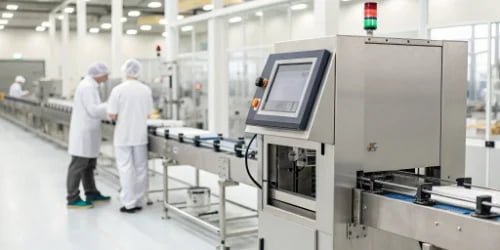
We design our products with simplicity in mind. I believe that powerful technology should not be complicated to use. A few years ago, we worked with a vegetable packing house. They had a team of ten people in their labeling area, all using different scales and printers. It was chaotic. We replaced their setup with five of our integrated IoT label scales. The manager later told me that the best part was how easy they were to use. His team was fully trained in less than a day.
One System, One Interface
The biggest simplification comes from having a single point of control8. Instead of looking at a scale display, then typing on a keyboard, then checking a printer, the operator does everything on one screen. They select the product, the machine weighs it, and the label comes out. This intuitive workflow reduces mental load and almost completely eliminates the risk of an operator entering the wrong data.
Comparison: Separate vs. Integrated
| Aspect | Separate Components | Integrated System |
|---|---|---|
| Footprint | Large, requires space for each device | Compact, a single unit saves space |
| Installation | Complex, requires connecting multiple devices | Simple, often plug-and-play |
| Training | Long, must learn multiple interfaces | Fast, one intuitive system to learn |
| Maintenance | Difficult, multiple vendors to contact | Easy, one point of contact for service |
| Data Integrity | At risk due to manual transfer | Secure, automated data flow |
What Are the Benefits of Automating Weighing and Labeling in Manufacturing?
You might be asking if the investment in automation is really worth it. But your current manual processes are likely costing you more than you realize in hidden labor, waste, and error costs.
The main benefits are a huge increase in speed, nearly perfect accuracy, lower labor costs, and complete data capture for traceability9. It gets rid of human errors like misreading weights or applying the wrong labels, which leads to a massive boost in overall operational efficiency.

One of our clients, a meat processing factory, is a perfect example. They specialize in high-value cuts of meat, and accuracy is everything. Before they came to us, they were losing thousands of dollars each month due to giveaway—packing slightly more weight than stated on the label—and the occasional mislabeled package that resulted in a customer complaint. After installing our integrated weighing and labeling stations, they saw an immediate change. Their giveaway dropped by over 80%, and labeling errors became a thing of the past. The system paid for itself in less than six months.
The Quantum Leap in Performance
The benefits are not just small improvements; they represent a major step forward for a manufacturing operation.
- Efficiency and Throughput: An automated system can weigh and label products much faster than a person. This means you can process more items per hour with the same number of staff.
- Accuracy and Consistency: Machines don't get tired or distracted. Every label is perfect, every weight is accurate, and every product is compliant. This protects your brand reputation and avoids costly fines or chargebacks from retailers.
- Labor Optimization: By automating repetitive tasks, you can reassign your skilled workers to more valuable jobs like quality control or machine supervision.
- Data for Days: Every transaction is captured digitally. This data is invaluable for inventory management, production planning, and compliance. If there's ever a product recall, you can instantly trace every affected package.
Conclusion
Automating weighing and labeling in one step is simple with integrated systems. This investment will immediately boost your factory's efficiency, accuracy, and profitability, giving you a real competitive edge.
- Discover the technology behind load cells and their role in accurate weighing. ↩
- Discover methods to reduce human error and improve accuracy in operations. ↩
- Learn how automated systems can streamline operations and reduce errors in manufacturing. ↩
- Find out why thermal printers are preferred for automated labeling solutions. ↩
- Discover maintenance tips to ensure the longevity and reliability of automated systems. ↩
- Learn how PLUs facilitate accurate data retrieval in automated systems. ↩
- Explore the importance of label formats in ensuring accurate product information. ↩
- Understand the advantages of having a single control interface for streamlined operations. ↩
- Understand the significance of traceability for compliance and quality assurance. ↩



Comments (0)