
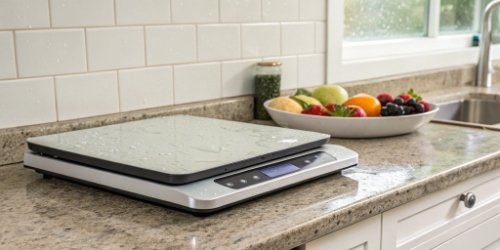
Your current process is likely fragmented. A scale for weighing, a separate printer for labeling, and manual steps to get data online. This complexity is inefficient and invites errors.
Yes, a modern Smart PC Scale combines these functions into one device. It integrates high-precision weighing, durable waterproof label printing, and seamless cloud synchronization, serving as a powerful, all-in-one terminal to dramatically boost your operational efficiency and data accuracy.
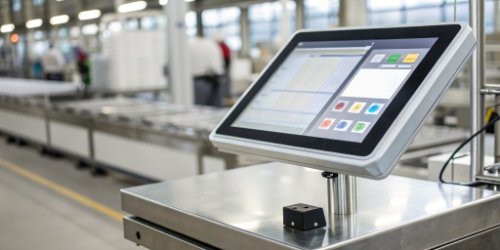
This sounds great in theory, but as a technical professional, you need to know how it actually works. You're likely wondering about the precision of the weighing, the reliability of the printing, and the security of the data transfer. In my 19 years of manufacturing industrial scales, I’ve seen how integrating these functions correctly can transform a business. Let’s break down each component, so you can see exactly how a single device can handle these critical tasks and become the perfect hardware partner for your software.
How Does a Smart PC Scale Handle Weight Measurement and Data Management?
Inaccurate weight data can corrupt your entire software system. This leads to billing errors, wrong inventory counts, and a loss of trust from your clients, which ultimately reflects poorly on you. But what if one device could guarantee accuracy?
A Smart PC Scale uses high-precision load cells for exact weight measurement. Its integrated PC instantly processes this data, displaying it on-screen and storing it locally. This automated capture eliminates manual entry errors and ensures your system receives clean, reliable data every time.
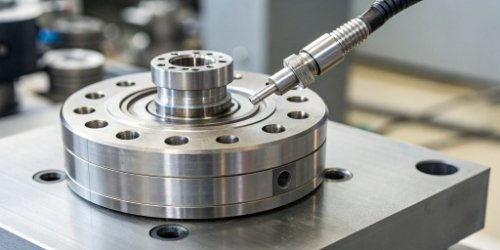
At its core, the scale's weighing function is powered by extremely sensitive and durable load cells1. When a weight is placed on the platform, these sensors convert the physical force into a precise electrical signal. This signal then goes through an Analog-to-Digital (A/D) converter and is processed by the built-in PC. This isn't just a simple display; it’s a full computer, often running on familiar operating systems like Windows or Linux. This is crucial for you as a software vendor because it means your applications can run directly on the scale itself.
Data management becomes incredibly streamlined. Instead of someone writing down a number and typing it into a separate computer, the data is captured instantly. We design our scales to manage this data intelligently. It can be stored locally on the device's internal memory for offline use or be formatted and prepared for immediate transmission. At Weigherps, every unit undergoes rigorous testing to ensure its accuracy and reliability before it ever leaves our factory. This guarantees that the data points feeding into your software are trustworthy from the very start.
Data Capture Methods: Old vs. New
| Feature | Manual Process | Smart PC Scale Process |
|---|---|---|
| Data Entry | Operator reads weight and manually types it | Weight is automatically captured by the system |
| Error Rate | High potential for human error (typos, misreads) | Near zero; system-to-system communication |
| Speed | Slow, dependent on operator speed | Instantaneous |
| Integration | Requires separate hardware and software steps | Seamless integration via APIs2 or SDKs |
| Traceability | Difficult; relies on manual logs | Complete; every weighing event is time-stamped |
What Technology Allows a Scale to Print Waterproof Labels?
Standard paper labels are useless in wet, humid, or cold environments. They peel off, and the ink smudges, making products untraceable in critical industries like food processing or logistics. This creates compliance headaches and operational chaos.
These scales use thermal transfer printing. This technology employs a heated printhead to melt a wax or resin-based ink ribbon onto synthetic label materials. This process creates a durable, waterproof, and scratch-resistant print that remains readable in harsh conditions.
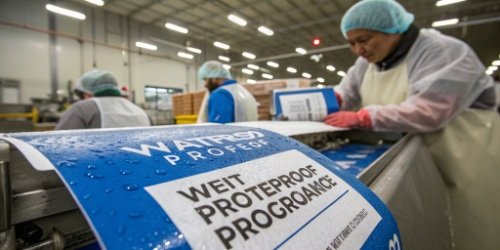
Let's get a bit more technical. The key is the combination of the printing method and the label material. Unlike direct thermal printing, which heats special paper that darkens (and can fade with time or heat), thermal transfer is a more robust process. It physically bonds the ink from a ribbon to the label's surface. This bond is incredibly strong.
The second part of the equation is the media. We don’t use paper. Instead, our scales print on synthetic materials like polypropylene (PP) or polyester (PET). These are essentially thin sheets of plastic. They don't absorb water, they resist tearing, and they can withstand extreme temperatures, oils, and chemicals. As a software provider, this gives you the power to offer your clients fully customizable, durable labels. You can design templates that include barcodes, QR codes for traceability, logos, dates, and weight data—all printed on a label that is guaranteed to last, from a humid packing facility to a refrigerated truck.
Label Printing Technology Comparison
| Feature | Direct Thermal | Thermal Transfer |
|---|---|---|
| Technology | Heats special thermosensitive paper | Melts ink ribbon onto label surface |
| Durability | Low; sensitive to light, heat, and abrasion | High; resistant to water, chemicals, and scratches |
| Longevity | Short-term (less than 1 year) | Long-term (years) |
| Material | Paper only | Paper, polypropylene, polyester |
| Ideal Use Case | Shipping labels, receipts | Product labeling, asset tracking, harsh environments |
Can a Smart Scale Efficiently Sync Data to the Cloud?
Data stuck on individual devices is a major bottleneck. You have to manually collect it, which creates delays in decision-making, leads to data silos, and introduces security risks during clumsy file transfers.
Absolutely. With built-in Wi-Fi or Ethernet connectivity, a Smart PC Scale can automatically push weight data, transaction logs, and other information to a central cloud server. This is done securely using APIs or standard IoT protocols for real-time monitoring.
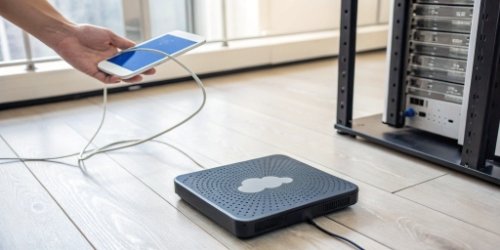
This is where our hardware truly shines for a software company like yours. A Smart PC Scale3 is fundamentally an IoT device. We equip our scales with multiple connectivity options. Standard Wi-Fi and Ethernet ports allow them to connect to any local network easily. For deployments in more remote areas, we can even integrate 4G/5G modules.
Once connected, the data transfer is seamless. As a technical director, you'll appreciate that we don't use proprietary, locked-down methods. Our scales can communicate using standard web protocols like HTTP/S requests to your API endpoints. For true real-time applications, they support IoT-native protocols like MQTT, which is highly efficient for sending small packets of data instantly. This allows your backend to receive information the moment a product is weighed. All this communication is secured with modern encryption standards4, ensuring your client's data is safe. This turns the scale from a simple measuring tool into a live data node for your software platform, enabling real-time inventory management5, production analytics, and remote diagnostics6.
Connectivity Options and Their Applications
| Method | Best For | Speed | Security |
|---|---|---|---|
| Ethernet | Stable, fixed locations (factories, warehouses) | Very High | High (Wired) |
| Wi-Fi | Flexible placement within a facility | High | High (WPA2/3) |
| 4G/5G | Remote or mobile operations (field work, logistics) | Medium-High | High (Cellular) |
| MQTT | Real-time data streaming (IoT platforms) | Varies | High (TLS) |
How Can a Single Scale Integrate Multiple Functions for Business Efficiency?
Trying to piece together different hardware from multiple vendors is an integration nightmare. It’s expensive, time-consuming, and when something breaks, the vendors just point fingers at each other, leaving you to solve the problem.
By combining a high-precision scale, a powerful PC, a durable printer, and robust connectivity into a single unit, the device streamlines your entire workflow. It provides a single, reliable point of control for your software to manage weighing, printing, and data syncing.
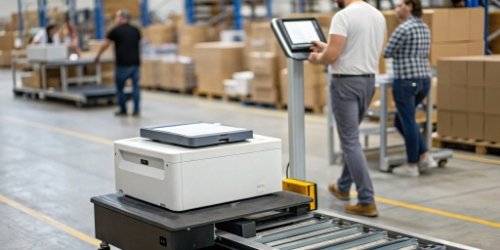
This is the central point I want to make. An all-in-one device eliminates the points of failure between separate machines. There are no cables to come loose between the scale and the PC, no driver conflicts between the PC and the printer. It’s one cohesive system. This is where we at Weigherps become more than just a hardware provider—we become your partner. Based on our 19 years of OEM/ODM experience, we understand that your software is the brain of the operation. Our scale is the body.
Here’s how we work with software vendors: we provide you with a comprehensive SDK (Software Development Kit) and clear API documentation. This allows your development team to easily integrate our hardware's functions into your application. Even better, we can work with you to develop a custom front-end program that runs directly on the scale's PC. This program can be branded as yours and tailored to your client's specific workflow. It captures the weight, sends it to your cloud, and prints the exact label you designed. For your customers who don’t have a backend system, we can even provide a complete solution, from the scale to the cloud software. This flexibility reduces your development time and lets you focus on your core software, while we handle the hardware integration.
The "Before and After" of Workflow Integration
| Workflow Stage | Before: Multiple Devices | After: Single Smart PC Scale |
|---|---|---|
| Weighing | Place item on scale. | Place item on scale. |
| Data Capture | Operator reads and writes down weight. | Weight is captured automatically. |
| Data Entry | Operator walks to PC and types in weight. | Data is sent directly to your software. |
| Labeling | Operator enters data into label software. | Your software triggers printing automatically. |
| Final Result | Slow, error-prone, multiple failure points. | Fast, accurate, one seamless process. |
Conclusion
A Smart PC Scale is more than a tool; it's a complete solution that centralizes weighing, waterproof labeling, and cloud syncing to drive efficiency and empower your software integration.
-
Gain insights into load cells and their critical role in ensuring accurate weight measurements. ↩
-
Understand the role of APIs in facilitating software integration and data exchange. ↩
-
Explore how a Smart PC Scale integrates multiple functions to enhance operational efficiency. ↩
-
Learn about the importance of encryption standards in protecting sensitive data. ↩
-
Explore how technology can streamline inventory management for better accuracy and efficiency. ↩
-
Explore the advantages of remote diagnostics for proactive maintenance and troubleshooting. ↩



Comments (0)