

Are you tired of production bottlenecks caused by slow, inconsistent manual sorting? These delays directly impact your output and profitability. An automated grading scale offers a powerful solution to this persistent problem.
Yes, a grading scale is significantly faster than manual labor. An intelligent grading scale is three to five times more efficient than manual sorting, capable of processing up to 320 items per minute with an accuracy far greater than visual judgment, making it ideal for sorting products like produce, seafood, and meat.
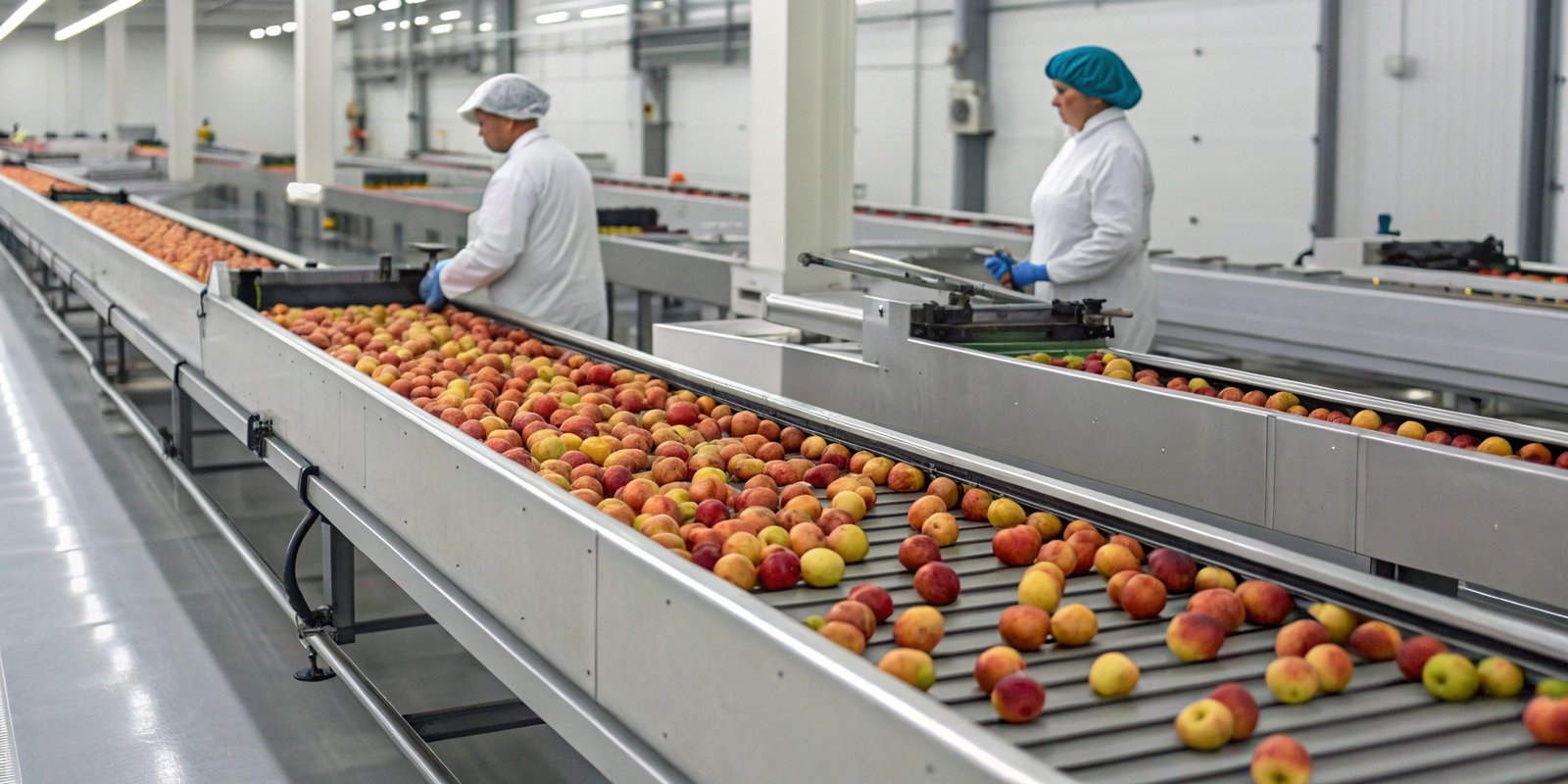
Upgrading your production line can feel like a major leap, but the data speaks for itself. The difference in speed and efficiency between a machine and a team of manual sorters is night and day. Let's break down exactly how these systems compare and explore the practical benefits they bring to a factory floor. This will help you understand if making the switch is the right move for your business.
Is a Grading Scale Really Faster Than Manual Sorting in Practice?
Struggling to meet production quotas because of manual sorting holdups? This common bottleneck is frustrating for any manager. Imagine effortlessly exceeding your targets and maintaining a consistent workflow every single day.
Yes. In a real-world factory setting, a grading scale consistently and significantly outperforms manual sorting in speed. It handles high volumes without needing breaks or succumbing to fatigue, sorting hundreds of items per minute—a pace that is simply not sustainable for a human workforce.
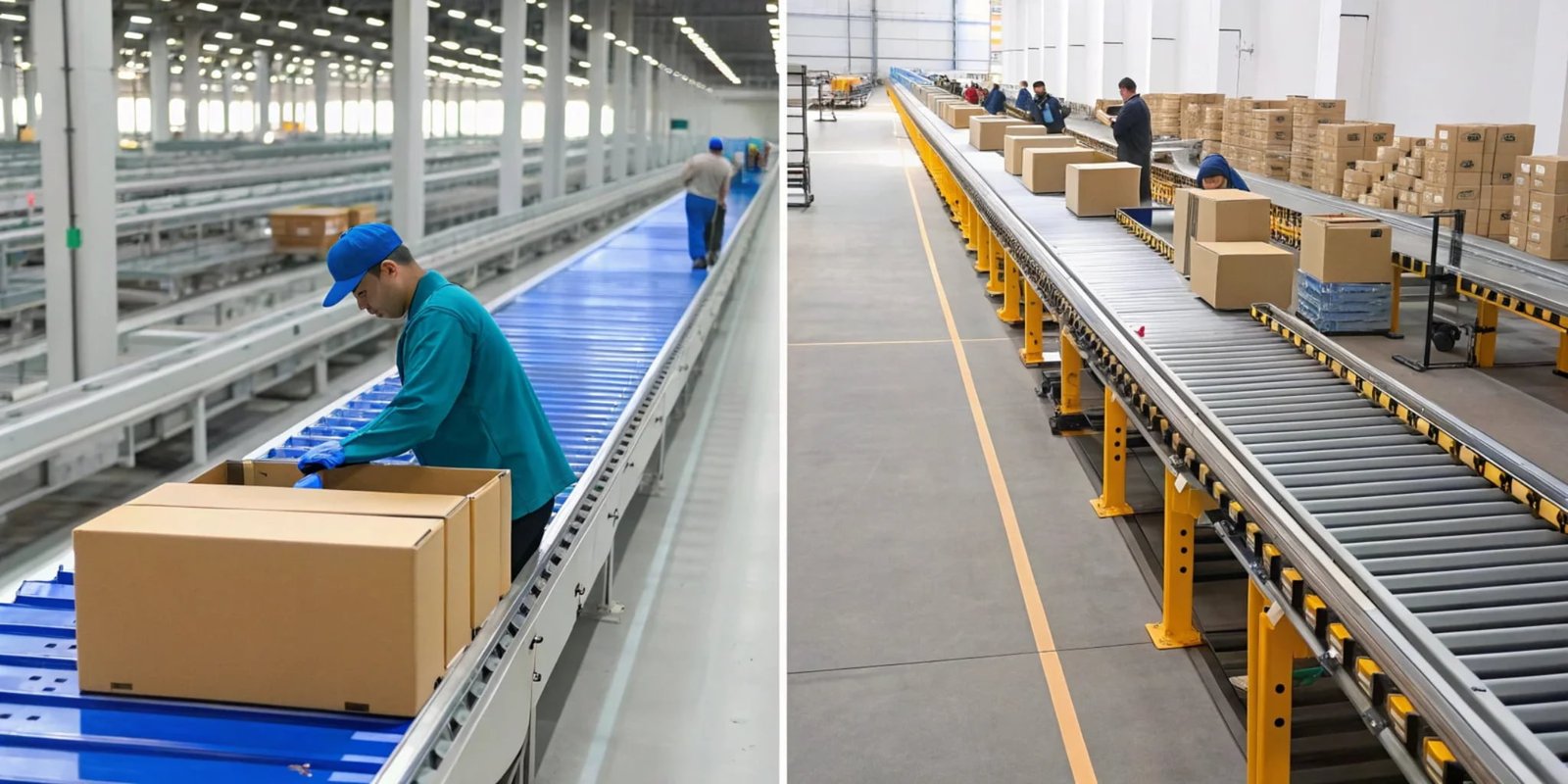
When we move beyond theory and into practical application, the advantages of automation become even clearer. Manual labor is subject to human limitations that don't affect a machine. I remember visiting a client's seafood processing plant where their sorting team was highly skilled. However, by the end of an eight-hour shift, their sorting speed would drop by nearly 40% due to fatigue1. After we installed a grading system, their output remained constant from the first hour to the last. This consistency is a game-changer. Manual sorting speed is variable, but a machine offers predictable and dependable throughput, allowing for better production planning and forecasting.
Here's a breakdown of practical differences:
| Factor | Manual Sorting | Automated Grading Scale |
|---|---|---|
| Consistency | Varies by worker and time of day. | 100% consistent speed and accuracy.2 |
| Endurance | Requires breaks, subject to fatigue. | Can operate 24/7 with no performance drop.3 |
| Training | Requires time to train new sorters. | Minimal training needed for operators. |
| Human Error | Prone to misjudgments and errors. | Eliminates human sorting errors. |
How Does a Grading Scale Compare to Manual Labor in Terms of Speed and Efficiency?
Are small inaccuracies in weight classification adding up and costing you money? In manual sorting, these errors often lead to product giveaway or dissatisfied customers. What if you could achieve near-perfect accuracy on every item?
A grading scale is profoundly more efficient. It marries high speed with exceptional accuracy, sorting up to 320 items per minute while ensuring weight precision. This dual advantage drastically cuts down on product giveaway and enforces consistent quality, which boosts overall operational efficiency far beyond human capability.
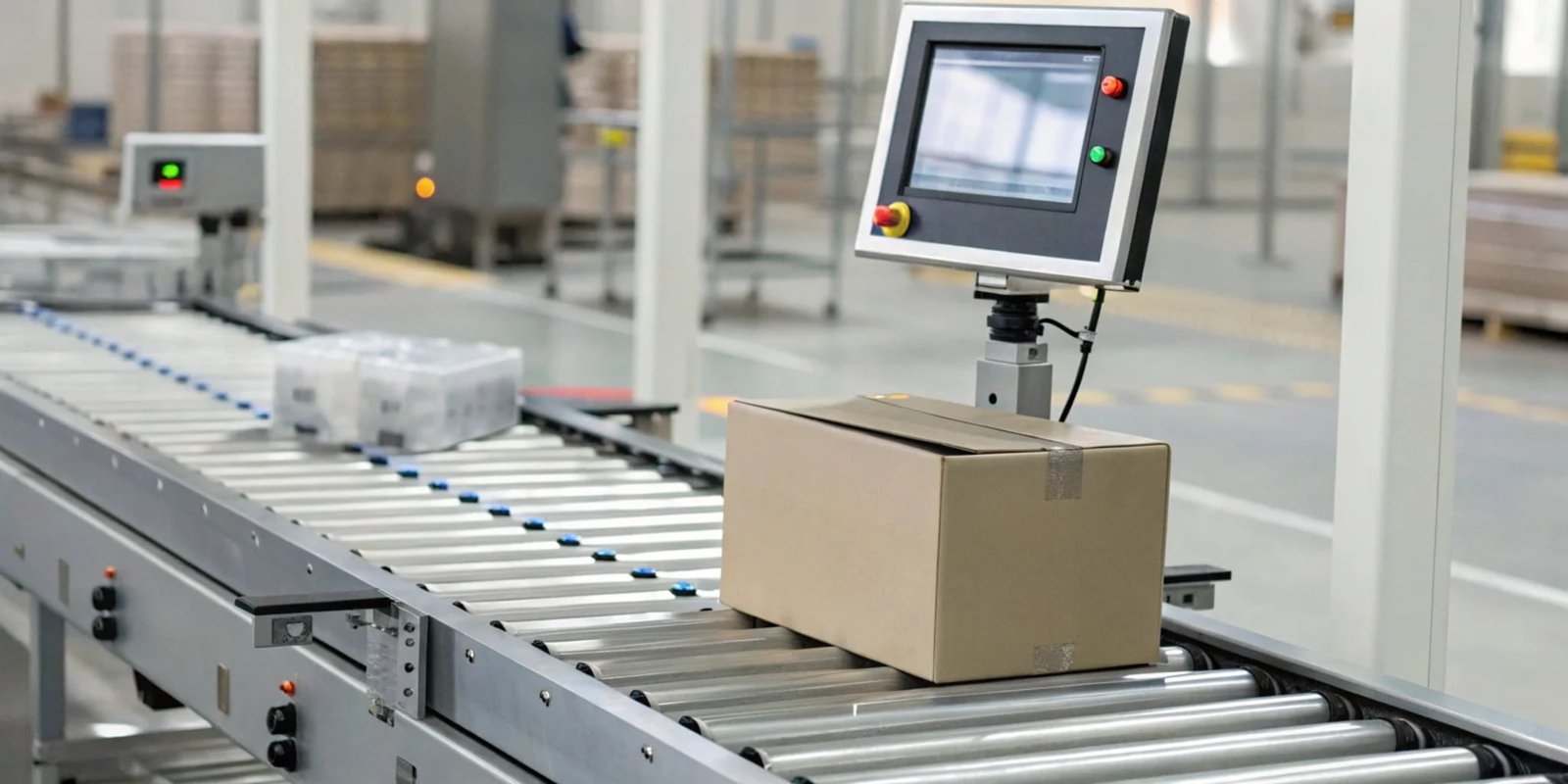
Efficiency in this context is about more than just speed; it's about optimizing resource use. Manual sorting often involves a two-step process: visual assessment and then separate weighing. A grading scale integrates these into a single, fluid motion on a conveyor, instantly weighing and sorting items. This eliminates waste in both time and product. For example, consistently over-packing products by just a few grams per pack can result in thousands of dollars in lost revenue over a year4. A grading scale prevents this. Furthermore, it enhances labor efficiency. A single operator can oversee an automated system that accomplishes the work of several manual sorters5, freeing up your valuable team members for more complex, value-added tasks. This reallocation of human capital is a significant boost to productivity.
Here is a direct comparison:
| Metric | Manual Labor | Automated Grading Scale |
|---|---|---|
| Speed | 30-60 items/minute (variable) | 120-320 items/minute (consistent) |
| Accuracy | Prone to estimation errors | High precision (e.g., ±0.2g)6 |
| Product Giveaway | High risk due to inconsistency | Minimized, leading to cost savings |
| Labor Required | Multiple sorters for high volume | One operator to supervise |
Are Grading Scales More Practical and Time-Saving Than Human Sorting?
Do you worry about the complexities of integrating new technology? The initial setup and employee training for advanced equipment can seem like a significant hurdle. But what if the technology was engineered for a seamless transition?
Yes, they are exceptionally practical and save a great deal of time. Modern grading scales are built with user-friendly interfaces, which dramatically cuts down on the training time needed for employees. They completely replace the multi-step manual sorting process, delivering immediate time savings from day one.

As a company that has specialized in industrial weighing for 19 years, we understand that practicality is key for our clients, especially those in software and tech. It’s not just about the machine, but how it fits into your entire operation. This is why our grading scales are designed for easy integration with existing factory management systems like ERP and MES. This allows you to transfer real-time weighing data automatically, which is a major pain point for managers relying on manual data entry. The time saved on data management alone is substantial. Another practical aspect is the physical design. Our machines are built with food-grade materials and designed for easy cleaning and maintenance, which is a critical requirement in industries like food processing7. Ultimately, the time-saving benefits extend far beyond the sorting line itself; they reduce management overhead, simplify quality control reporting, and automate data collection.
Does Using a Grading Scale Truly Improve Sorting Efficiency in Factories?
Is your production data a "black box"? Without clear, real-time insights, you are unable to effectively optimize your processes. What if you could have a transparent view of your entire sorting operation at your fingertips?
Absolutely. A grading scale serves as a cornerstone for improving overall factory efficiency because it generates precise, real-time data on product weight distribution. This information is invaluable for optimizing production yields, reducing waste, and empowering you to make data-driven business decisions.

For a purchasing manager or technical director, the value of a grading scale goes beyond mechanical sorting; it lies in the data it unlocks. Every item that passes over the scale is a data point. As a company focused on IoT weighing solutions, this is where we see our clients achieve a quantum leap. You can analyze this data to understand the weight distribution of your raw materials, which can help you negotiate better terms with suppliers. You can monitor the throughput and yield of different production lines to identify and resolve inefficiencies. This is the power of turning a physical process into a source of business intelligence. Furthermore, this data provides complete traceability, which is crucial for quality assurance and regulatory compliance. In the event of a product recall, you can pinpoint specific batches with precision, saving time and minimizing risk.
Efficiency Gains Beyond Simple Speed:
- Process Optimization: Use data to fine-tune upstream and downstream processes.
- Yield Management: Analyze weight data to maximize the output from raw materials.
- Quality Control: Automatically flag and remove items outside of specification.
- Data-Driven Decisions: Gain insights into production trends to inform strategy.
- Enhanced Traceability: Maintain a detailed digital record for every item sorted.
Conclusion
A grading scale is not just faster, but also more accurate and efficient than manual sorting. It boosts productivity, reduces costs, and provides critical data for smarter, more profitable operations.
-
"Fatigue Hazards in Seafood Processing | Maritime | CDC", https://www.cdc.gov/niosh/maritime/about/fatigue-hazards-in-seafood-processing.html. Occupational fatigue research describes associations between sustained work, reduced alertness, and impaired task performance. Evidence role: general_support; source type: paper. Supports: Fatigue reduced a seafood plant's manual sorting speed by nearly 40% over an eight-hour shift.. Scope note: General fatigue research cannot verify the reported plant-specific 40% decline or establish fatigue as its sole cause; contemporaneous plant records would be needed. ↩
-
"Vibration and Noise Analysis and Experimental Study of Rail ...", https://pmc.ncbi.nlm.nih.gov/articles/PMC10223835/. OIML R 51 evaluates automatic catchweighing instruments using specified operating conditions, accuracy classes, and permissible errors rather than a guarantee of invariant performance. Evidence role: definition; source type: institution. Supports: Automated grading scales maintain completely consistent speed and accuracy.. Scope note: The standard provides a framework for assessing accuracy, not support for 100% consistency in either accuracy or speed. ↩
-
"Enhancing Overall Equipment Effectiveness (OEE) in a ...", https://indigo.uic.edu/articles/thesis/Enhancing_Overall_Equipment_Effectiveness_OEE_in_a_Specific_Food_Manufacturing_Process/29048645. Overall equipment effectiveness distinguishes availability, performance, and quality, accounting for downtime and operating losses in production equipment. Evidence role: definition; source type: paper. Supports: Automated grading scales can operate continuously without performance degradation.. Scope note: This framework does not demonstrate uninterrupted operation or the absence of performance degradation for a particular grading scale. ↩
-
"Setting a Fill Weight Target and Control Limits for Drug ...", https://pubmed.ncbi.nlm.nih.gov/42731871/. Packaging process-control analyses quantify giveaway from average excess fill and production volume, with its monetary value determined by the product valuation used. Evidence role: mechanism; source type: paper. Supports: A few grams of systematic overfill per package can create thousands of dollars in annual losses.. Scope note: The stated annual loss requires explicit production and cost assumptions; excess product cost is not necessarily equivalent to lost revenue. ↩
-
"A Comprehensive Review on Automatic Fruit Sorting and ...", https://www.academia.edu/144284623/A_Comprehensive_Review_on_Automatic_Fruit_Sorting_and_Grading_Techniques_with_Emphasis_on_Weightbased_Classification. Labor-productivity comparisons in processing automation relate output to worker-hours and depend on which operating and support tasks are included. Evidence role: general_support; source type: paper. Supports: One operator supervising an automated grading system can replace the sorting work of several manual workers.. Scope note: A one-to-several staffing substitution requires task-level evidence from a comparable installation rather than general automation findings. ↩
-
"Dynamic Checkweighers for Precision Weighing", https://www.mt.com/us/en/home/products/Product-Inspection_1/checkweighing/dynamic-checkweigher.html. Automatic catchweigher accuracy is evaluated against load-dependent error limits and test conditions; display resolution alone does not establish measurement accuracy. Evidence role: definition; source type: institution. Supports: An automated grading scale can achieve weighing precision of ±0.2 g.. Scope note: A ±0.2 g specification requires model-specific validation over the claimed load and speed ranges. ↩
-
"21 CFR 117.40 -- Equipment and utensils. - eCFR", https://www.ecfr.gov/current/title-21/chapter-I/subchapter-B/part-117/subpart-B/section-117.40. U.S. food manufacturing requirements in 21 CFR § 117.40 address equipment cleanability, maintenance, and food-contact materials, including corrosion resistance and nontoxicity. Evidence role: general_support; source type: government. Supports: Food-processing equipment must use suitable materials and be designed for cleaning and maintenance.. Scope note: These requirements establish relevant design obligations in the United States but do not certify the manufacturer's equipment or establish compliance elsewhere. ↩



Comments (0)