
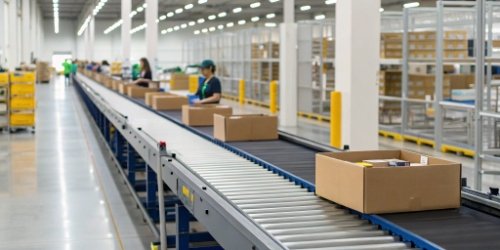
Struggling with slow, manual sorting and costly errors? These mistakes hurt your bottom line. An integrated sorting machine with real-time sync is the powerful solution you need.
An integrated sorting machine combines scanning, weighing, and labeling into one step. By deeply integrating with a system like ours, WeigherPS, it automatically syncs orders, verifies weights, and prints labels. This removes manual data entry, ensuring perfect accuracy and speed.
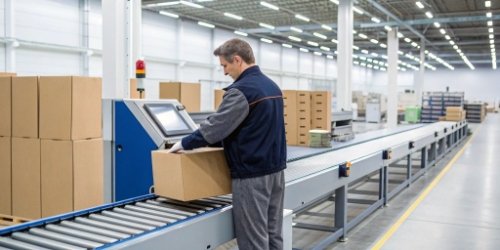
I've seen countless warehouses struggle with the same old problems. Workers are juggling scanners, separate scales, and label printers. It’s a recipe for chaos and mistakes. But when we introduced our integrated solution to clients, the change was immediate and dramatic. The efficiency of their entire operation transformed overnight. The question is, how exactly does this technology achieve such significant improvements? Let's break down the mechanics and the benefits you can expect.
How Can Real-Time Synchronization Improve Sorting Task Efficiency?
Are your sorters working from outdated task lists? This confusion leads to massive bottlenecks and delays. Real-time synchronization puts the correct task in their hands, instantly improving efficiency.
Real-time synchronization eliminates the delay between order placement and fulfillment. It pushes tasks directly to the sorting machine, removing manual assignments and paperwork. This ensures sorters always work on the highest priority jobs, dramatically increasing throughput and accuracy without any wasted motion or time.
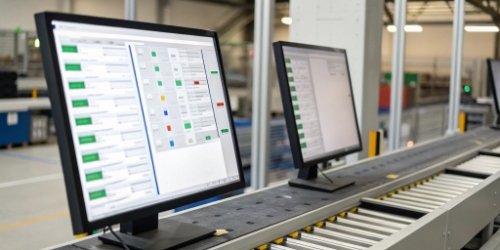
I remember visiting a client's warehouse where sorters were shuffling through piles of paper printouts that were hours old. It was organized chaos at best. Real-time synchronization completely changes this dynamic by creating a seamless flow of information.
Breaking Down the Bottlenecks
In a traditional setup, information moves slowly. A manager prints a batch of orders, hands them out, and by the time a sorter gets to a specific task, that information might be outdated. This "information lag" is a huge source of inefficiency.1 Workers might sort an order that a customer just canceled, or a high-priority shipment gets buried at the bottom of the pile. This is not a problem with your people; it's a problem with the system they are forced to use.
The Power of Instant Flow
With a system like our WeigherPS, the moment an order is confirmed in your commerce platform or ERP, it is pushed directly to an available sorting station. There is no paper and zero delay. This enables dynamic reprioritization. If a VIP customer places an urgent order, the system can instantly make it the very next task for the sorter. It transforms your operation from a rigid, slow-moving process to a responsive and agile one.
Let's look at a direct comparison:
| Feature | Manual Batch System | Real-Time Sync System |
|---|---|---|
| Speed | Slow, prone to information delays | Instantaneous task updates on screen |
| Accuracy | High risk of human and process error | System-verified tasks ensure correctness |
| Flexibility | Very low, difficult to change priorities | Highly dynamic task prioritization |
| Labor Focus | High, spent on admin and paper management | Low, focused on value-added sorting |
This clean comparison shows how moving to a real-time sync system is not just a small improvement. It is a fundamental and necessary shift in how you manage your warehouse workflow.
What Is the Step-by-Step Guide to Using an Integrated Sorting Machine?
Does new warehouse technology seem complicated and intimidating for your staff? This learning curve can slow down your entire operation. Thankfully, our integrated sorting machine is designed for simplicity.
Using the machine is simple. First, the sorter scans the product barcode, and the machine instantly displays the order details. Second, they place the item on the integrated scale. The system automatically weighs it and flags any issues. Finally, a correct label is printed automatically.
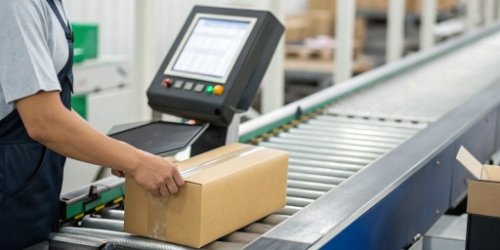
We designed the user interface and workflow with the operator in mind. Our goal was to create a system so intuitive that a new employee could be trained and productive in just a few minutes. We have broken a complex, multi-step process into three simple, guided actions.
Step 1: Scan the Product
The process begins when the sorter picks an item and scans its barcode with the built-in scanner. The moment the scan is complete, our WeigherPS software instantly identifies the product and links it to the active sorting task displayed on the machine's screen. The operator doesn't have to search through lists or manually confirm the item. The system does all the heavy lifting, presenting the right information at the right time. This single action eliminates any ambiguity about what needs to be sorted next.
Step 2: Weigh for Perfect Accuracy
Next, the sorter places the item directly onto the integrated weighing scale. The scale captures the precise weight in milliseconds.2 Behind the scenes, our software compares this actual weight to the standard weight for that product, which is already stored in the system. This is the most critical step for quality control. It's where you catch mistakes like a missing component in a kit or the wrong product variant being picked before it ever gets to the customer.
Step 3: Verify and Print
The system provides immediate feedback. If the weight is within the acceptable tolerance, a green light or a positive sound confirms it's correct, and the machine automatically prints the required sorting or shipping label. If there's a weight discrepancy, the screen displays a clear alert, telling the sorter to double-check the item. This simple check-gate prevents costly errors from ever leaving the sorting station. The sorter corrects the issue, re-weighs, and only then is a label printed.
How to Set Up and Operate a Sorting System with Instant Task Updates?
Worried about the headache of integrating new systems? The fear of long downtime and technical issues can be paralyzing. We've designed our setup process to be fast, and our experts are there to ensure it's seamless.
Setup involves two main parts. First, our technical team helps integrate the WeigherPS software with your existing ERP or WMS using APIs. Second, we connect the integrated sorting machines to your network. We provide full training so your team can operate confidently from day one.
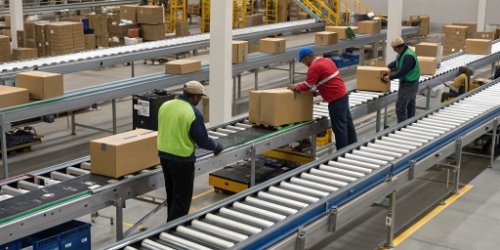
As a manufacturer with 19 years of experience, we know that technology is only as good as its implementation. A bumpy rollout can sour your team on a new system before they even experience its benefits. That's why we've refined our deployment into a clear, three-phase process where we act as your partner, not just a vendor.
Phase 1: Software Integration
This is the heart of the system. Our technical team works closely with your IT department. Using modern, flexible APIs, we connect our WeigherPS software to your existing platforms, whether it's an ERP like SAP or Oracle, a custom-built WMS, or an e-commerce backend like Shopify. The goal is to establish a frictionless, two-way flow of data: orders come into our system automatically, and real-time fulfillment data is sent back just as easily.
Phase 2: Hardware Deployment
Once the software is talking, we move to the physical setup. Our integrated sorting machines are essentially plug-and-play.3 They require a standard power source and a network connection, which can be wired Ethernet or Wi-Fi, depending on your facility's infrastructure. Our technicians don't just plug them in. We run a full suite of diagnostics on-site to ensure every scale is perfectly calibrated and every scanner performs optimally before the system goes live.
Phase 3: Training and Go-Live Support
We are committed to your success. We provide comprehensive training for both warehouse managers, who will oversee the system, and the operators who will use it daily.4 We make sure everyone is comfortable and confident. Crucially, our team provides on-site or remote support during the "go-live" phase to ensure a smooth transition and troubleshoot any initial questions. Our partnership continues long after, with a 12-month warranty and responsive after-sales service.
What Are the Benefits of Using Real-Time Sorting Machines in Warehouse Operations?
Need to prove the ROI of new technology? Committing budget without clear benefits is a big risk. Real-time sorting machines deliver measurable gains in speed, accuracy, and cost savings.
The key benefits are massive efficiency gains and error reduction. You get faster order throughput, near-perfect sorting accuracy, and lower labor costs. This also leads to improved inventory tracking, fewer customer complaints, and a more streamlined, data-driven operation.
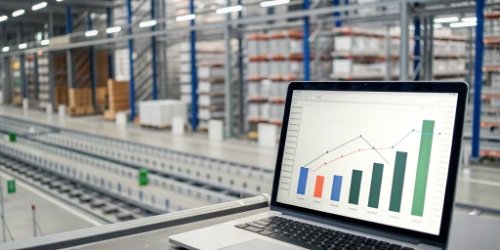
When you talk to your purchasing manager or CEO, they want to know the bottom-line impact. A new machine is nice, but how does it grow the business? In my experience, the benefits of this technology are direct, measurable, and compelling.
Increased Throughput and Speed
By combining scanning, weighing, and labeling into a single, fluid action that takes seconds, you eliminate wasted motion and decision-making time. An operator no longer has to walk between a workstation, a scale, and a printer. This consolidation of tasks dramatically increases the number of orders a single employee can process per hour. This allows you to handle more volume without increasing your headcount.
Near-Perfect Accuracy
As a company rooted in industrial weighing, we believe accuracy is everything. The automatic weight verification is the system's most powerful feature.5 It acts as an infallible quality control check at the most critical point in your fulfillment process. This simple step catches errors before they are packed and shipped, which nearly eliminates the high costs associated with returns, reprocessing, and customer service for incorrect orders.
Quantifiable Business Impact
These operational improvements translate directly into financial and strategic advantages.6 It's not just about a faster warehouse; it's about building a more resilient and profitable business. Let's map benefits to their business outcomes.
| Benefit | Direct Impact | Business Outcome |
|---|---|---|
| Faster Sorting | Higher orders processed per hour | Increased revenue capacity and scalability |
| Fewer Errors | Reduced costs on returns and shipping | Higher profit margins and customer satisfaction |
| Real-Time Data | Better inventory and labor visibility | Improved forecasting and resource planning |
| Simple Operation | Reduced training time for new staff | Lower labor costs and faster scaling |
Conclusion
Integrated sorting machines with real-time sync are no longer a luxury. They are a vital tool for creating a fast, accurate, and profitable modern warehouse operation, achieving a win-win situation.
-
"5 Hidden Factors Killing Your Warehouse Efficiency (And How to Fix ...", https://cognitops.com/hidden-factors-killing-warehouse-efficiency/. This source identifies information lag as a common inefficiency in traditional warehouse systems. Evidence role: expert_consensus; source type: education. Supports: This "information lag" is a huge source of inefficiency.. ↩
-
"High Precision Weighing - Mettler Toledo", https://www.mt.com/us/en/home/applications/industrial_weighing/high-precision-weighing.html. This source explains the technical capabilities of modern industrial scales, including their speed and precision. Evidence role: mechanism; source type: research. Supports: The scale captures the precise weight in milliseconds.. ↩
-
"Plug-and-Play Recycling Robots Bring Automation to Any MRF", https://www.recyclingproductnews.com/article/43786/compact-recycling-robots-bring-automation-to-tight-mrf-spaces. This source describes the plug-and-play nature of modern sorting machines and their ease of deployment. Evidence role: definition; source type: research. Supports: Our integrated sorting machines are essentially plug-and-play.. ↩
-
"[PDF] Training In Innovation and Emerging Technology Adoption", https://acqirc.org/wp-content/uploads/2024/05/AIRC-1065_Report-v2.pdf. This source discusses the importance of training in the successful implementation of warehouse technologies. Evidence role: expert_consensus; source type: education. Supports: We provide comprehensive training for both warehouse managers, who will oversee the system, and the operators who will use it daily.. ↩
-
"Weighing everyday matters: Daily weighing improves weight loss ...", https://pmc.ncbi.nlm.nih.gov/articles/PMC4380831/. This source highlights the role of automatic weight verification in improving accuracy in warehouse operations. Evidence role: mechanism; source type: research. Supports: The automatic weight verification is the system's most powerful feature.. ↩
-
"Sortation Systems Uses, Types, Benefits | Maveneer", https://maveneer.com/sortation-systems. This source connects operational improvements in warehouses to measurable financial and strategic benefits. Evidence role: general_support; source type: institution. Supports: These operational improvements translate directly into financial and strategic advantages.. ↩



Comments (0)