
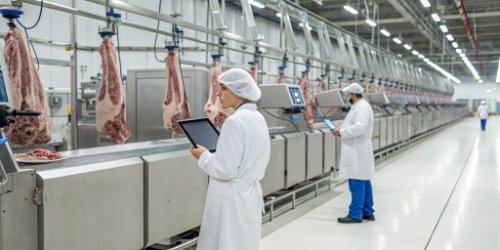
Are you struggling with disorganized paperwork and costly data errors? These old methods waste valuable time and money. A digital system is the solution to boost your overall efficiency.
Digital slaughterhouse management uses integrated software and hardware, like scales and PDAs, to automate data collection from receiving to sales. This approach improves accuracy, streamlines workflows, guarantees traceability, and connects with financial systems for a complete, real-time view of your business.
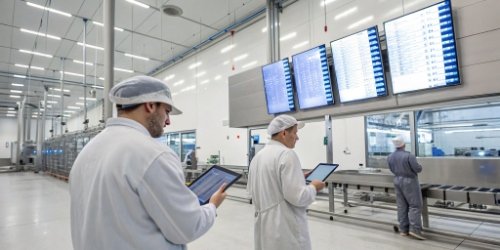
It is one thing to know that digital management is better, but it's another to understand how it actually works. You are probably thinking about the specific tools you might need and how they can really change your daily operations. We should look closer at the parts that make up a strong digital system. Getting this right is key to reaching new levels of efficiency and profit.
What Are the Best Digital Tools for Efficient Slaughterhouse Management?
Are you tired of using different systems that do not communicate with each other? This creates separate data pools and serious inefficiencies. The right integrated tools can connect every part of your operation.
The best digital tools combine specialized software with integrated hardware. This involves ERP systems for meat processing, rail scales, truck scales, PDAs for mobile data entry, and barcode/RFID scanners. A complete solution connects these tools for seamless data flow from start to finish.
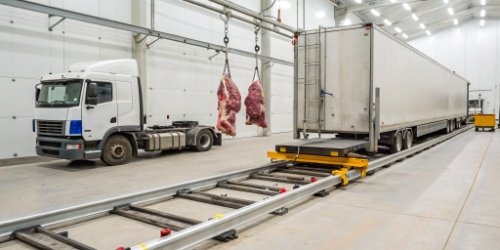
To build a truly efficient system, you need tools that work together. It's not just about having a scale here and a computer there. It is all about deep integration. Based on my 19 years of experience in this industry, a successful digital setup is built on a core software platform that connects deeply with key hardware components. The software acts as the central brain, while the hardware provides the real-time data from the plant floor. For example, our WeigherPS system integrates directly with financial software like Kingdee EAS and Yonyou NC. This means when a carcass is weighed and graded, the financial data is updated instantly without any manual entry.
Essential Hardware for Integration
Here’s a look at the essential hardware and how it fits into the system:
| Hardware | Function in Slaughterhouse | Data Captured |
|---|---|---|
| Truck Scales | Weighing live animals upon arrival. | Gross weight, tare weight |
| Rail Scales | Weighing carcasses as they move along the production line. | Carcass weight, grade data |
| PDAs/Tablets | Mobile data entry for grading, inventory, and shipping. | Quality grades, location |
| Barcode/RFID Scanners | Tracking individual animals and products. | Unique ID, batch information |
This end-to-end integration is what separates a basic setup from a high-performance digital ecosystem.1 It is this connection that drives real business results and gives you a powerful competitive advantage.
How Can Digital Solutions Streamline Operations in Slaughterhouses?
Are manual processes constantly slowing down your production line? These bottlenecks and the risk of human error reduce your total output and hurt your profits. Automation is the surest way to a smoother, faster workflow.
Digital solutions streamline operations by automating data collection at every single stage. This eliminates manual paperwork, reduces costly errors, and provides real-time information. From receiving livestock to shipping finished products, every step becomes faster, more accurate, and more efficient, boosting overall productivity.
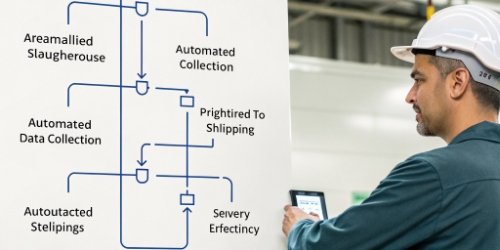
Streamlining your operations is all about eliminating wasted time and wasteful effort. In a traditional slaughterhouse, a lot of time is lost recording data by hand and then entering it into a separate computer system. This process is not only slow but it also frequently leads to expensive mistakes. A fully digital solution changes everything about your workflow.2 At WeigherPS, we have identified 18 core business nodes in a typical slaughterhouse process. Our system is designed to digitize and connect each one of them.
Automating the Business-Finance Connection
Think about this: when a truck of hogs arrives, it is weighed on a digital truck scale. That data, including the supplier information, is automatically logged directly into the system. There are no more clipboards and no more manual data entry. This automatic process continues through every step: grading, carcass splitting, and packaging. Each piece is weighed and tracked automatically. Because our system connects with financial software, invoices can be generated instantly and accurately based on the exact weight that has been shipped. This direct connection between operations and finance, what we call 'business-finance integration,' is where you will see the biggest gains.3 It removes delays and gives managers a clear, up-to-the-minute view of the business's financial health.
What Are the Steps to Implementing a Digital Management System in Slaughterhouses?
Does the thought of going digital feel overwhelming? The fear of a complex and disruptive installation process can stop you from moving forward. But a clear, step-by-step process makes it much more manageable.
Implementation involves four main steps. First, assess your current workflow and identify all your pain points. Second, choose a solution provider that understands your needs. Third, plan a phased rollout, starting with one critical area. Finally, train your team thoroughly and ensure there is ongoing support.

A successful implementation is not about flipping a switch and hoping for the best overnight. It requires very careful planning. I have guided many of my clients through this exact process, and a structured approach always proves to be the best way. We always start with a deep analysis of the client's current operations. We sit down with them and map out every single process, from receiving to sales, to find the biggest and most costly bottlenecks. Then, based on that analysis, we design a solution that is tailored specifically for them. For example, some clients might need to focus on integrating their rail scales first to improve yield data. Others might need to prioritize the sales and shipping process to speed up invoicing.
A Clear and Structured Roadmap
Here’s a look at a typical project roadmap that we use:
| Phase | Key Activities | Goal |
|---|---|---|
| 1. Assess | Workflow analysis, identify pain points, define goals. | Create a clear and detailed project scope. |
| 2. Design | Customize software, plan hardware integration. | Build a solution that is tailored to you. |
| 3. Deploy | Install hardware & software, pilot test in one area. | Ensure the system works exactly as expected. |
| 4. Train & Scale | Train all users, roll out to other departments, provide support. | Achieve full user adoption and benefits. |
This phased approach minimizes disruption to your daily business.4 It also ensures your team feels confident and comfortable using the new system. Our goal is to make the change as smooth and successful as possible for everyone involved.
How Does Digitization Improve Traceability and Compliance in Slaughterhouse Operations?
Are you worried about a potential product recall or failing a compliance audit? Inadequate and incomplete tracking systems put your entire business at serious risk. Digital traceability provides the security and proof you need to operate with confidence.
Digitization improves traceability by assigning a unique digital identity to each animal or batch at entry. This identity is then tracked electronically through every process step. This creates an unchangeable digital record, making it easy to prove compliance and perform rapid, precise recalls if needed.
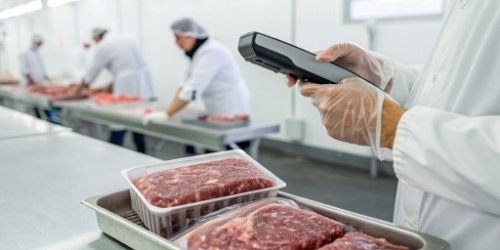
In today's market, traceability is not just a nice-to-have feature. It is a strict requirement. Both consumers and regulators demand it. A digital system is the only way to provide this level of detail reliably and accurately. From the moment an animal is weighed on the truck scale, our system creates a permanent digital record. This record follows the animal through the entire process. We use barcodes or RFID tags that are scanned at each station—grading, splitting, and packaging. Every single piece of data, like the weight, the assigned grade, and the time, is added to that animal's unique record.
The Power of an Instant Digital Trail
This detailed tracking creates a complete and unbreakable history for every single product that leaves your facility. So, if a regulator asks for your compliance documentation, you can generate a full and detailed report in just a few seconds. If there is ever a problem discovered with a specific batch, you can instantly identify every product from that batch, where it went, and who bought it. This is simply impossible with outdated paper-based systems. This level of control not only protects you from legal and financial risks but also builds deep trust with your customers.5 You can prove the quality and safety of your products with hard, undeniable data.
Conclusion
In short, digital management is essential for a modern slaughterhouse. It enhances efficiency, ensures compliance, and provides the clear data you need to grow your business and profits effectively.
-
"Innovative Technologies Reshaping Meat Industrialization - PMC - NIH", https://pmc.ncbi.nlm.nih.gov/articles/PMC12248625/. This source highlights the importance of end-to-end integration in creating high-performance digital ecosystems for slaughterhouses. Evidence role: general_support; source type: research. Supports: This end-to-end integration is what separates a basic setup from a high-performance digital ecosystem.. ↩
-
"Robot Technology for Pork and Beef Meat Slaughtering Process", https://pmc.ncbi.nlm.nih.gov/articles/PMC9951719/. This source explains how fully digital solutions transform workflows in slaughterhouse operations, improving efficiency and reducing errors. Evidence role: general_support; source type: research. Supports: A fully digital solution changes everything about your workflow.. ↩
-
"Electronic data collection to enhance disease surveillance at ... - PMC", https://pmc.ncbi.nlm.nih.gov/articles/PMC8484591/. This source discusses the concept of business-finance integration in digital systems and its impact on operational efficiency and financial accuracy. Evidence role: mechanism; source type: research. Supports: This direct connection between operations and finance, what we call 'business-finance integration,' is where you will see the biggest gains.. ↩
-
"Why Manufacturers Need a Phased Approach to Digital ...", https://sloanreview.mit.edu/article/why-manufacturers-need-a-phased-approach-to-digital-transformation/. This source explains how a phased approach to digital system implementation minimizes business disruption and ensures smoother transitions. Evidence role: general_support; source type: education. Supports: This phased approach minimizes disruption to your daily business.. ↩
-
"Lenses of security: Preventing and mitigating digital security risks ...", https://www.ftc.gov/policy/advocacy-research/tech-at-ftc/2024/12/lenses-security-preventing-mitigating-digital-security-risks-through-data-management-software. This source discusses how digital traceability systems protect against legal risks and enhance customer trust in slaughterhouse operations. Evidence role: general_support; source type: research. Supports: This level of control not only protects you from legal and financial risks but also builds deep trust with your customers.. ↩



Comments (0)