

Struggling with messy paperwork and costly errors in your slaughterhouse? These manual tracking issues risk your compliance, traceability, and profits, leaving you falling behind in a modern industry.
The best way for a slaughterhouse to transition to smart management is through a phased approach. Start by digitizing basic records, then standardize your processes, use data for decisions, and finally, integrate advanced tech like IoT and AI. This step-by-step method reduces risk and ensures success.

Transitioning from pen and paper to a fully digital system can feel like a huge leap. Many managers worry about the cost, the disruption, and whether their team can adapt. But it doesn't have to be an all-or-nothing shock to your operations. The key is to see it as a journey, not a single event. By breaking the process down into manageable stages, you can build a solid foundation for growth, improve efficiency at every step, and stay in full control of your investment. We will explore these steps together to make your digital transformation smooth and successful.
What Are the Key Steps for Digital Transformation in Slaughterhouse Operations?
You want to digitize your operations but are not sure where to begin. Making the wrong first move can be expensive and disruptive. A clear, structured plan is essential.
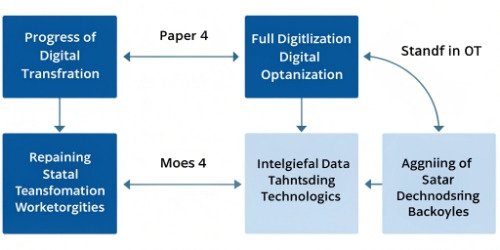
The key steps involve a four-stage journey. First, basic digitization to replace paper. Second, standardizing core workflows. Third, using data analysis for smarter management. Finally, adopting intelligent technologies like IoT and AI for full optimization.
As a company that has guided many partners through this process for 19 years, we believe a phased approach is the only way to guarantee success without overwhelming your budget or your team. I remember a client who tried to implement a massive, complex system all at once. His team was resistant, the software had integration bugs, and the project stalled. He later came to us, and we started over with a simple, step-by-step plan. The change was incredible.
Phase 1: Basic Digitization
The first goal is simple: replace manual records with a digital system. This means capturing weights, carcass information, and processing data using electronic scales and basic software instead of clipboards. This single change immediately reduces handwriting errors and makes data instantly accessible.
Phase 2: Process Standardization
Once your data is digital, you can see your core processes clearly. In this stage, we help you map out your key workflows, from animal receival to final dispatch. We identify bottlenecks and standardize procedures within the system. This ensures everyone follows the same best practices, improving consistency and quality.
Phase 3: Refined Management
With standardized processes and reliable data, you can start making data-driven decisions. Your system can generate reports on yield, efficiency, and costs. You can track performance by shift, by supplier, or by product. This is where management becomes proactive instead of reactive.
Phase 4: Intelligent Operation
This is the ultimate goal. We integrate advanced technologies like IoT-enabled weighing systems and AI analytics1. Your scales can communicate directly with your management platform, equipment can predict its own maintenance needs, and AI can help you optimize cut plans for maximum profitability.
| Stage | Key Action | Main Benefit |
|---|---|---|
| 1. Digitization | Replace paper records with software | Reduce errors, instant data access |
| 2. Standardization | Lock in core business workflows | Improve consistency and quality |
| 3. Refinement | Use data analytics for decisions | Proactive management, cost control |
| 4. Intelligence | Integrate IoT, AI, and automation2 | Peak efficiency and profitability |
How Does Digitization Improve Efficiency and Management in Slaughterhouses?
Are you tired of chasing paperwork and correcting manual entry mistakes? This lost time directly impacts your bottom line and creates compliance risks. Digitization offers a direct solution to these problems.
Digitization boosts efficiency by providing real-time, accurate data, which eliminates manual errors and speeds up every process. It enhances management by offering clear analytics for full traceability, better cost control, and instant compliance reporting, turning data into profitable decisions.
We often see the "aha!" moment with our clients when they run their first digital report. For years, they relied on gut feelings to make decisions. Suddenly, they have hard numbers showing them exactly where their profit is coming from and where it's being lost. Digitization isn't just about going paperless; it's about gaining the vision to steer your business with precision. It replaces guesswork with certainty, which is the foundation of modern, competitive management. Let's look at the specific improvements.
Real-Time Traceability and Compliance
In a manual system, tracing a product back to its source can take hours or even days of searching through paper files. With a digital system, every animal and product is tracked with a unique identifier from entry to exit. Our IoT scales can automatically log this data. This means you can pull a complete traceability report in seconds, satisfying auditors and ensuring food safety with confidence.
Increased Operational Efficiency
Manual weighing, labeling, and data entry are slow and prone to human error3. Digitization automates these tasks. An operator can weigh a carcass, and the system instantly records the weight, calculates the yield, and prints a compliant label. This cuts down on labor costs, eliminates costly data errors, and increases throughput on the processing line.
Data-Driven Decision Making
Good management relies on good information4. A digital system acts as your central source of truth. You can easily analyze key performance indicators (KPIs) like kill-to-chill time, yield per supplier, and giveaway percentage. This allows you to identify your most profitable products, negotiate better terms with suppliers, and optimize your operations for maximum financial return.
| Metric | Manual Process | Digital Process |
|---|---|---|
| Data Entry Time | 5-10 minutes per batch | Instantaneous (automated) |
| Error Rate | 3-5% (common) | <0.1% |
| Traceability Report | Hours or days | Seconds |
| Yield Analysis | Monthly (estimated) | Real-time (accurate) |
What Are the Challenges and Solutions for Slaughterhouses Adopting Smart Management Systems?
The thought of a major system upgrade is daunting. You're worried about the high upfront costs, getting your employees to adopt new technology, and making it work with your existing equipment.
The biggest challenges are initial investment costs, employee resistance to new workflows, and technical integration problems. The solutions are a phased rollout to manage costs, thorough hands-on training for staff, and partnering with an expert who provides customized integration and reliable support.

These concerns are completely valid. We've built our entire service model around solving them. For over 19 years, we've learned that technology is only as good as the people who use it and the support behind it. That's why we don't just sell a product; we provide a complete solution. We start by understanding your specific operation, budget, and team. Then, we build a plan with you, not for you. This partnership approach turns challenges into manageable steps toward success.
Challenge 1: High Initial Cost
A full-scale smart system can seem expensive. Many businesses hesitate to make such a large capital investment, especially with uncertain returns.
Our Solution: Phased Implementation & Clear ROI
We address this by breaking the project into the phases we discussed earlier. You can start with just basic digital weighing and data capture. This requires a smaller initial investment and delivers immediate returns by reducing errors and saving labor. As you see the benefits and achieve ROI, you can reinvest those savings into the next phase. We provide clear cost-benefit analyses for each stage.
Challenge 2: Employee Resistance and Training
Your team is used to doing things a certain way. A new system can be intimidating, leading to pushback and slow adoption.
Our Solution: On-Site Training & User-Friendly Systems
We design our systems to be intuitive. More importantly, we provide comprehensive, on-site training. Our technical team works alongside your employees, showing them how the new system makes their jobs easier, not harder. When people feel confident and supported, they embrace change.
Challenge 3: System Integration and Compatibility
You may have existing equipment or software that needs to communicate with the new system. Ensuring everything works together seamlessly is a major technical hurdle.
Our Solution: Customization and Expert Support
This is where our expertise in OEM/ODM and custom solutions becomes critical. Our R&D and technical teams are experts in industrial automation and IoT weighing. We don’t offer a one-size-fits-all box. Instead, we analyze your existing infrastructure and create custom interfaces and software modifications to ensure smooth integration. Our 12-month after-sales guarantee ensures we are there to support you long after installation.
| Challenge | Our Weigherps Solution |
|---|---|
| Cost Concerns | Phased financial rollout; start small and grow. |
| Employee Training | Simple interfaces and hands-on, on-site training. |
| Integration Issues | Custom software development and expert technical team5. |
| After-Sales Support | Dedicated support and a 12-month service guarantee. |
Conclusion
Digital transformation is a journey of clear, manageable steps. With a phased approach and an expert partner, you can move from manual records to smart, data-driven management efficiently and profitably.
-
"IoT And AI Industrial Automation | ITI Technical College", https://iticollege.edu/blog/iot-and-ai-on-industrial-automation/. IoT-enabled systems and AI analytics are increasingly used in industrial automation to optimize processes and improve efficiency, as documented in recent technological reviews. Evidence role: expert_consensus; source type: research. Supports: Advanced technologies like IoT-enabled weighing systems and AI analytics can optimize slaughterhouse operations.. Scope note: The evidence may not directly address slaughterhouse operations but applies broadly to industrial automation. ↩
-
"Integration of IoT-Enabled Technologies and Artificial ... - PMC", https://pmc.ncbi.nlm.nih.gov/articles/PMC10256108/. Integrating IoT, AI, and automation is increasingly recognized for achieving peak efficiency and profitability, as documented in industrial technology reviews. Evidence role: expert_consensus; source type: research. Supports: Integrating IoT, AI, and automation achieves peak efficiency and profitability.. Scope note: The evidence may not directly address slaughterhouse operations but applies broadly to industrial automation. ↩
-
"A Comparison of Existing Methods to Detect Weight Data Errors in ... - PMC", https://pmc.ncbi.nlm.nih.gov/articles/PMC6371361/. Manual processes such as weighing and labeling are prone to errors and inefficiencies, as documented in studies on industrial workflow optimization. Evidence role: statistic; source type: research. Supports: Manual weighing, labeling, and data entry are slow and prone to human error.. Scope note: The evidence may not focus exclusively on slaughterhouse operations. ↩
-
"The Advantages of Data-Driven Decision-Making | HBS Online", https://online.hbs.edu/blog/post/data-driven-decision-making. Effective management is strongly linked to accurate and timely information, as supported by organizational behavior and management studies. Evidence role: expert_consensus; source type: education. Supports: Good management relies on good information.. Scope note: The evidence may focus on general management principles rather than slaughterhouse-specific contexts. ↩
-
"Case Studies | Rockwell Automation | US", https://www.rockwellautomation.com/en-us/company/news/case-studies.html. Custom software development and technical expertise are critical for successful system integration, as highlighted in industrial automation case studies. Evidence role: case_reference; source type: research. Supports: Custom software development and technical expertise are critical for successful system integration.. Scope note: The evidence may not directly address slaughterhouse operations but applies broadly to industrial settings. ↩



Comments (0)