
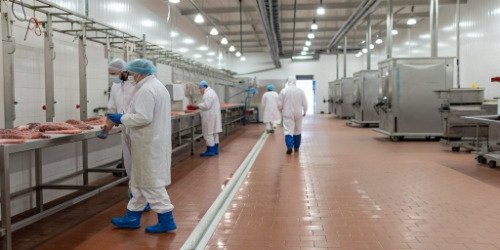
Struggling with messy paperwork and lost profits in your slaughterhouse? These manual errors risk compliance and eat into your margins, making growth seem impossible. A targeted system can solve this.
For small and medium slaughterhouses, the best systems are lightweight and affordable. They should cover core functions like purchasing, slaughtering, sales, and basic costing. Quick implementation and user-friendly interfaces are key, avoiding the complexity and high cost of enterprise-level software designed for massive operations.

Over my 19 years in the industrial weighing industry, I've seen many small operators get paralyzed by choice. They often see the massive, complex systems used by giant corporations and think it's an all-or-nothing investment. But that's simply not true. The key is to find a solution that fits your specific scale and budget, one that solves today's problems without creating new ones. In the sections below, I will break down exactly what to look for, how to choose the right software, and what solutions work best for businesses just like yours. Let's start with how you can pick the right software for your needs.
How to Choose the Right Management Software for Small-Scale Slaughterhouses?
Choosing software feels risky. A wrong decision wastes your tight budget and frustrates your team, leaving you stuck with a system that doesn't actually help your business grow.
To choose the right software, prioritize core functions: purchasing, processing, sales, and inventory. Match the system's cost to your budget. Ensure it's easy for your current staff to learn and use. A system with a short implementation time gets you results faster.
When I talk with owners of smaller slaughterhouses, the fear of making a bad tech investment is a constant theme. They see the value in digitalization but worry about the cost and complexity. Based on my experience helping clients navigate this, the selection process should be straightforward and grounded in reality. You need to break down your choice into practical criteria that matter for your daily operations.
Focus on Core Needs, Not 'Nice-to-Haves'
Many software platforms are loaded with features designed for huge enterprises. For a facility processing 500-2000 head per day1, these are often unnecessary distractions. I have seen clients pay for advanced financial modeling they never touch. Your focus should be on functions that solve your biggest daily headaches: tracking livestock from purchase2, managing the slaughter and cutting process, handling sales orders, and maintaining accurate inventory. Everything else is secondary.
Budget and Total Cost of Ownership
Look beyond the initial price tag. Ask about the total cost, which includes setup fees, staff training, and ongoing technical support3. A cheaper system with high hidden costs is no bargain. A good provider will be transparent about these expenses from the start.
User-Friendliness and Your Team
Your team on the floor are experts in their trade, not necessarily in IT4. The best system is one they will actually use. It needs a simple, intuitive interface that doesn't require extensive technical knowledge.
Here is a simple table to guide your thinking:
| Factor | Why It's Important for Small Slaughterhouses |
|---|---|
| Core Functionality | Solves immediate problems like tracking and inventory without overwhelming staff. |
| Affordable Price | Fits within a limited budget, providing a clear return on investment. |
| Ease of Use | Ensures high adoption rates among staff, leading to real efficiency gains. |
| Quick Implementation | Delivers value within weeks, not months, minimizing business disruption. |
| Reliable Support | Provides peace of mind that help is available when you need it. |
What Are the Best Management Solutions for Medium-Sized Slaughterhouse Operations?
Your medium-sized operation is growing, but so is the chaos. Spreadsheets are breaking, inventory is a mess, and you lack the data to make smart, profitable decisions for your business.
The best solutions are scalable systems that build on core functions. They offer better cost analysis, sales order management, and detailed production reporting. Look for providers, like us at Weigherps, who offer lightweight versions that can grow with you, adding modules as your needs evolve.
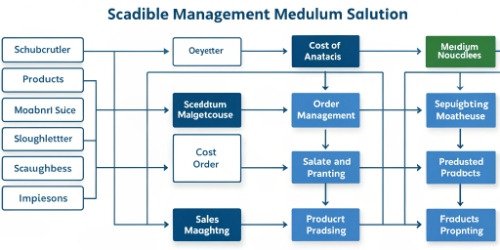
As a slaughterhouse grows into a medium-sized operation, its needs become more sophisticated. You're no longer just trying to survive; you're looking to optimize and increase profitability. This requires more than just basic tracking. It demands a system that can provide deeper business insights and handle increased operational complexity without breaking the bank.
From Basic Tracking to Profit Analysis
At this stage, your questions change. You're not just asking, "How many carcasses did we process?" You're asking, "Which cuts are our most profitable5?" or "Which customer provides the best margin?" The right management system should help you answer this. It should include simple cost accounting features that let you assign costs to different stages of production and analyze the profitability of individual products.
The Power of a 'Lightweight' System
This is where I believe our approach at Weigherps truly shines. We recognized that many medium-sized operators were caught in the middle. They had outgrown simple software but couldn't justify the expense and long implementation time of a full-scale Enterprise Resource Planning (ERP) system. I remember a client with a 1,000-head-a-day facility who was about to spend a fortune on a complex ERP. We showed them our lightweight system. It covered their core needs for purchasing, processing, and sales, with just enough cost analysis to give them real insights. We had them live in ten days for a fraction of the cost. This is the ideal solution: a system that is powerful enough for today and scalable for tomorrow. Our system offers an implementation cycle of just 1-2 weeks6, making it a competitive and practical choice for businesses ready to take their next step in digitalization.
Which Tools Can Help Small Slaughterhouses Streamline Their Processes?
Are your daily operations slow and inefficient? Manual processes create bottlenecks in production, waste valuable staff time, and limit how many orders you can actually fulfill each day.
A combination of tools is most effective. This includes user-friendly management software for tracking, integrated industrial scales for accurate data capture, and simple barcode scanners for inventory control. Together, these tools automate data entry and provide a real-time view of your operations.
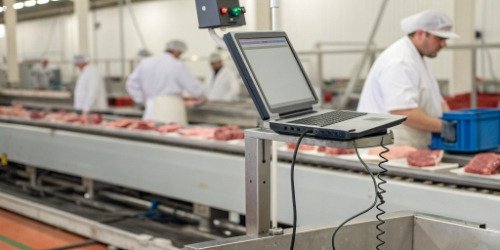
To truly streamline your process, you need to think of it as an ecosystem of tools working together. Software alone can't solve all your problems if the data going into it is slow and inaccurate. As a manufacturer of industrial scales for nearly two decades, I've seen firsthand that the biggest efficiency gains come from connecting reliable hardware directly to smart software. This synergy eliminates manual errors and creates a smooth flow of information from the receiving dock to the shipping truck.
The Foundation: Integrated Weighing Scales
Everything in a slaughterhouse is measured by weight. It's the basis for what you pay suppliers and what you charge customers. Manually writing down weights and entering them into a spreadsheet is slow and prone to costly errors. By integrating our industrial scales directly with a management system, every weight is captured automatically and accurately. We place our CE-certified scales at critical points: at animal receiving, on the overhead track for carcass weighing, and in the cutting room for portioning. Each measurement is instantly sent to the central system, creating a reliable digital record.
Software as the Central Brain
The management software acts as the brain of the operation. It takes all the weight data from the scales and combines it with other information, like supplier details or customer orders. It turns this raw data into useful reports on yield, efficiency, and inventory. This central system gives you a complete, real-time picture of your entire business on one screen.
Simple Tools, Big Gains: Barcodes
The final piece of the puzzle is a simple barcode system. When a carcass is weighed, the system can print a barcode label. This label follows the product through cutting, packaging, and storage. A quick scan with a handheld device can instantly update inventory, trace a product's origin, or assign it to a sales order. This simple tool eliminates guesswork and manual searches.
| Tool | How It Streamlines the Process |
|---|---|
| Integrated Scales | Automates weight capture, eliminates manual entry errors, and ensures accurate data from start to finish. |
| Management Software | Centralizes all data, provides real-time inventory and production visibility, and simplifies reporting. |
| Barcode System | Enables fast and accurate product tracking, simplifies inventory counts, and improves traceability. |
Conclusion
Choosing the right system is about finding a practical, affordable solution. Focus on core needs and a fast start to transform your small or medium-sized slaughterhouse for future growth.
-
"Slaughterhouse Water Use and Wastewater Characteristics", https://extension.okstate.edu/fact-sheets/slaughterhouse-water-use-and-wastewater-characteristics-fapc-240. Facilities processing 500-2000 head per day are typically classified as small to medium-sized slaughterhouses in industry standards. Evidence role: definition; source type: government. Supports: Facilities processing 500-2000 head per day are considered small to medium-sized slaughterhouses.. Scope note: The classification may vary depending on regional or industry-specific definitions. ↩
-
"The Importance of the Slaughterhouse in Surveilling Animal and Public ...", https://pmc.ncbi.nlm.nih.gov/articles/PMC9959654/. Tracking livestock from purchase is a standard practice in slaughterhouse operations to ensure traceability and compliance. Evidence role: mechanism; source type: institution. Supports: Tracking livestock from purchase is essential for traceability and compliance in slaughterhouse operations.. Scope note: The evidence may focus on general practices without detailing specific software implementations. ↩
-
"Financial Potential for Livestock Slaughter and Processing in Nevada", https://naes.unr.edu/publication.aspx?PubID=2299. Total cost considerations, including setup fees, training, and support, are critical for evaluating software investments in small businesses. Evidence role: expert_consensus; source type: education. Supports: Evaluating total cost, including setup fees, training, and support, is essential for software investments in small slaughterhouses.. Scope note: The evidence may generalize cost factors without specific examples from slaughterhouse software. ↩
-
"Innovative Technologies Reshaping Meat Industrialization", https://pmc.ncbi.nlm.nih.gov/articles/PMC12248625/. Slaughterhouse staff often lack IT expertise, making user-friendly software interfaces crucial for adoption. Evidence role: expert_consensus; source type: education. Supports: Slaughterhouse staff often lack IT expertise, emphasizing the need for user-friendly software interfaces.. Scope note: The evidence may focus on general workforce trends rather than slaughterhouse-specific cases. ↩
-
"Slaughterhouse facilities in developing nations: sanitation and ...", https://pmc.ncbi.nlm.nih.gov/articles/PMC10805746/. Profitability analysis of meat cuts is a common feature in advanced slaughterhouse management systems. Evidence role: mechanism; source type: research. Supports: Profitability analysis of meat cuts is a valuable feature in slaughterhouse management systems.. Scope note: The evidence may focus on general software capabilities rather than specific slaughterhouse examples. ↩
-
"slaughter house management information system - Academia.edu", https://www.academia.edu/35108759/SLAUGHTER_HOUSE_MANAGEMENT_INFORMATION_SYSTEM. Implementation cycles of 1-2 weeks are achievable for lightweight slaughterhouse management systems, as noted in industry case studies. Evidence role: case_reference; source type: research. Supports: Lightweight slaughterhouse management systems can be implemented within 1-2 weeks.. Scope note: The evidence may focus on specific case studies rather than general industry trends. ↩


Comments (0)