
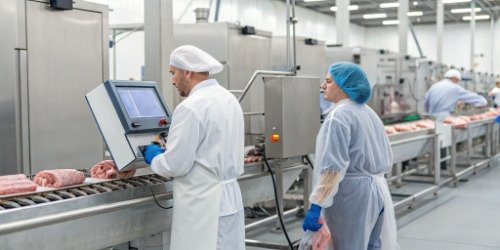
Are you tired of manual data entry causing errors and profit loss in your slaughterhouse operations? The constant double-checking and paperwork drain resources. A fully digital system creates a seamless flow from livestock arrival to final sale, eliminating these costly mistakes.
The best way to digitalize the entire slaughter process is to adopt a "enter data once, share it everywhere" system. This involves using smart IoT scales at procurement to automatically log weights, collecting production data in real-time during processing, and using scanners at shipping to instantly update inventory.
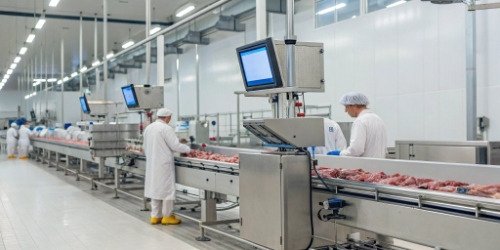
This sounds like a huge project, but it's simpler than you might think when you break it down. Over my 19 years in the industrial weighing industry, I've seen firsthand how an integrated approach transforms businesses. It’s not just about buying new software; it's about connecting every step with reliable data. We help our clients, many of whom are software vendors like you, provide a complete solution by grounding their systems with accurate hardware. Let's explore what that journey looks like and how to make it a reality.
What Is a Comprehensive Digitalization Solution for the Slaughtering and Sales Workflow?
You know a digital solution is necessary, but what does a good one actually look like? It's frustrating when different systems don't talk to each other, creating more problems than they solve. A truly comprehensive solution integrates hardware and software seamlessly.
A comprehensive solution uses IoT weighing scales to automatically capture data at every critical point: procurement, processing, and sales. This data feeds directly into a central management system, giving you real-time visibility of inventory, production efficiency, and costs, all without needing someone to type it in.
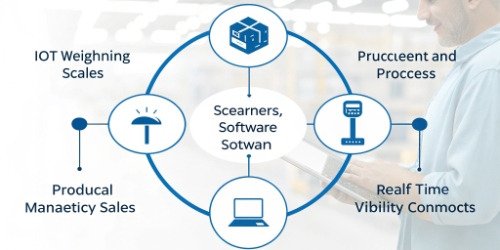
To dive deeper, a complete solution has three main pillars: hardware, software, and integration. For software vendors, understanding this is key to offering a powerful package to your slaughterhouse clients. The hardware provides the raw, accurate data that makes your software shine. At Weigherps, we design our scales with this in mind. They are the foundational layer.
The Components of a Digital Solution
| Component | Role in the Workflow | Key Features for Software Vendors |
|---|---|---|
| IoT Weighing Scales | Capture accurate weight data at procurement, slaughter, cutting, and packaging. | Easy-to-use APIs for seamless integration; stable and reliable data transmission; durable for industrial environments. |
| Scanners & Readers | Read barcodes or RFID tags to track each carcass and product through the facility. | Fast read speeds; compatibility with various tag formats; robust hardware. |
| Central Software (ERP) | Acts as the brain of the operation, managing orders, inventory, production, and financials. | Your software! It needs to process the real-time data from the hardware to provide valuable insights. |
| Data Integration | The connection that allows hardware and software to communicate instantly and automatically. | This is where we excel. Our scales are built to communicate, making your job of integrating them into your system much easier. |
We empower our software partners by providing hardware that serves as a reliable data source, allowing you to focus on building powerful analytics and management features for the end-user.
How to Implement End-to-End Digital Transformation in Livestock Slaughtering and Distribution?
The idea of a full digital transformation can feel overwhelming. Where do you even begin? A wrong first step can lead to wasted money and operational chaos. However, a structured, step-by-step approach makes the process manageable and ensures a successful outcome.
To implement this transformation, start with the most critical pain point, which for most slaughterhouses is procurement weighing. By integrating IoT scales there first, you ensure all incoming data is accurate from the very start. From there, you can expand digitalization to slaughtering, cutting, and sales.
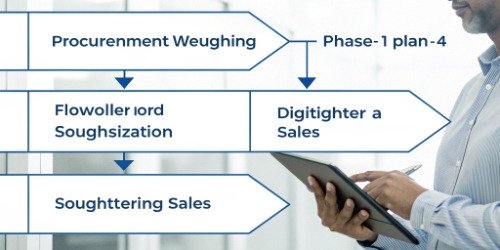
Here’s a practical roadmap we often recommend to our partners. Thinking in phases helps you manage the project and show value to your client at every stage.
Phase 1: Assessment and Foundation
Before you do anything, you need to understand the current process. Walk the floor of the slaughterhouse. Where is data written down by hand? Where are the bottlenecks? As a software provider, your goal is to map their physical workflow to a digital one. This is also when you plan the foundation: the central software system. You need to ensure your software can handle real-time inputs.
Phase 2: Secure the Source (Procurement)
The first and most important hardware integration is at the receiving dock. This is where the money trail begins. By replacing old scales with our smart IoT scales, weight data for live animals is captured automatically and sent directly to your system alongside supplier information. This single step eliminates entry errors, prevents fraud, and creates an accurate starting point1 for all future calculations. It's a quick win that immediately demonstrates a return on investment.
Phase 3: Digitize Production
Next, move along the production line. Data collection points are added to track the carcass after slaughter (hot weight) and after chilling (cold weight). As the carcass is broken down into primal and sub-primal cuts, each station can be equipped with a smaller scale. All this data is linked to the original animal's ID, giving you precise yield calculations and production efficiency metrics in real time.
Phase 4: Automate Sales and Shipping
The final step is connecting production to sales. When products are boxed, they are weighed one last time, and a barcode is printed with the exact weight. When an order is picked, a worker simply scans the box. Your software then automatically deducts it from inventory and adds it to the shipping manifest. This eliminates shipping errors and gives sales teams an always-accurate view of available stock2.
What Are the Key Steps for Creating a Digital Supply Chain for Livestock Processing and Sales?
You may have digital tools, but if data is stuck in silos between departments, your supply chain still feels broken. You see this happen all the time. The goal is to create a single thread of data that follows the product from farm to customer.
The key steps are: first, give each animal a unique digital identity at procurement. Second, use IoT scales and scanners to continuously track this identity and its associated data through the entire process. Third, link this complete data history to sales orders for automated fulfillment and end-to-end traceability.
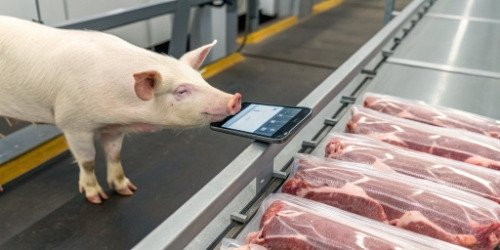
Creating a true digital supply chain is about creating an unbroken chain of information. I often tell my clients to think of it not as separate steps, but as links in a single chain. Your software acts as the chain itself, and our hardware forges each link.
Step 1: Forge the First Link - Digital Identity
Everything starts the moment the livestock arrives. When an animal is weighed on one of our connected scales, the system doesn't just record the weight. It also generates a unique ID, often linked to an RFID ear tag or a printed barcode tag. This ID is the birth of the digital record. From this point on, every piece of data collected about that animal will be attached to this single identity. This is the most crucial step, as it provides the foundation for all traceability3.
Step 2: Strengthen the Chain - In-Process Tracking
As the animal moves from a live weight to a carcass and then to individual cuts, this "digital chain" gets stronger. At each processing station, a simple scan of the tag brings up its history. When a new weight is recorded (e.g., weighing a specific cut of meat), that information is added to the record. This creates a rich, detailed history4.
| Stage | Action | Data Captured & Added to Chain |
|---|---|---|
| Procurement | Weigh live animal, assign ID. | Live weight, supplier, timestamp, an unique ID. |
| Slaughter | Weigh carcass after slaughter. | Hot carcass weight, grade, timestamp. |
| Chilling | Weigh carcass after chilling. | Cold carcass weight, shrinkage calculation. |
| Cutting | Weigh individual product cuts. | Cut type, piece weight, packer ID, timestamp. |
Step 3: Complete the Chain - Sales & Traceability
The final link connects the finished product to the customer. When a box of pork chops is prepared for an order, the barcode is scanned. Your software instantly knows the entire history of that product—which animal it came from, its weight at every stage, and who processed it. This automates inventory, ensures order accuracy, and provides complete traceability, a feature that is becoming non-negotiable in the food industry5.
Conclusion
Full digitalization, built on the "enter once, share everywhere" principle, is essential for modern slaughterhouses. With reliable IoT weighing hardware as the foundation, you can achieve a truly efficient, data-driven, and profitable operation.
-
"Accuracy of Smart Scales on Weight and Body Composition - PMC - NIH", https://pmc.ncbi.nlm.nih.gov/articles/PMC8122302/. This source discusses how automated weighing systems reduce human error and fraud in industrial processes. Evidence role: mechanism; source type: research. Supports: By replacing old scales with our smart IoT scales, weight data for live animals is captured automatically and sent directly to your system alongside supplier information. This single step eliminates entry errors, prevents fraud, and creates an accurate starting point for all future calculations.. ↩
-
"Digital Inventory Management System vs. Traditional ... - Service Channel", https://servicechannel.com/blog/what-is-digital-inventory-management/. This source explains how automated systems reduce shipping errors and improve inventory accuracy. Evidence role: mechanism; source type: research. Supports: This eliminates shipping errors and gives sales teams an always-accurate view of available stock.. ↩
-
"Traceability solutions for supply chains in 2023 - Scantrust", https://www.scantrust.com/traceability-solutions-supply-chains/. This source discusses the role of unique IDs in establishing traceability in supply chains. Evidence role: mechanism; source type: research. Supports: This is the most crucial step, as it provides the foundation for all traceability.. ↩
-
"Tracking system - Wikipedia", https://en.wikipedia.org/wiki/Tracking_system. This source explains how digital tracking systems compile detailed histories for products in industrial workflows. Evidence role: mechanism; source type: research. Supports: As the animal moves from a live weight to a carcass and then to individual cuts, this "digital chain" gets stronger. At each processing station, a simple scan of the tag brings up its history. When a new weight is recorded (e.g., weighing a specific cut of meat), that information is added to the record. This creates a rich, detailed history.. ↩
-
"FSMA Final Rule on Requirements for Additional Traceability Records - FDA", https://www.fda.gov/food/food-safety-modernization-act-fsma/fsma-final-rule-requirements-additional-traceability-records-certain-foods. This source highlights the growing importance of traceability in food supply chains and regulatory requirements. Evidence role: expert_consensus; source type: institution. Supports: Traceability is becoming non-negotiable in the food industry.. ↩

Comments (0)