
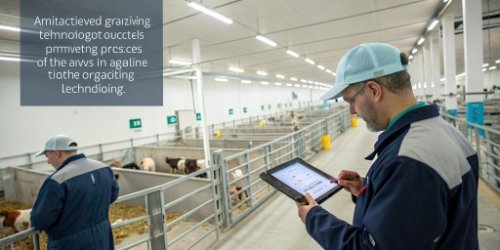
Inconsistent manual grading hurts your bottom line. Subjective judgments lead to profit loss and quality issues. Our automated system provides the objective data you need for accurate, consistent grading.
Fully automatic intelligent grading uses dynamic scales for weight, visual sensors for body shape, and ultrasound for back fat. An integrated system then analyzes these three data points against preset rules to assign a precise, objective grade, eliminating human error and maximizing value from every carcass.
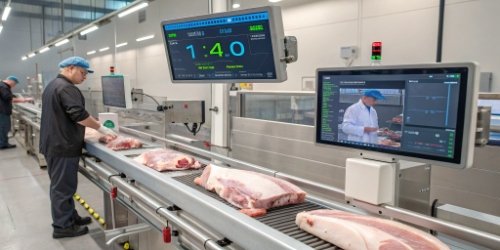
This might sound complex, but the technology is fundamentally changing the industry for the better. After 19 years of manufacturing industrial weighing solutions, I’ve seen many incremental improvements. This, however, is a true leap forward. It's a system designed to solve the age-old problem of subjectivity in a high-stakes environment. Let's break down exactly how this system works, how it directly benefits your operation, and what it takes to implement it. This is more than just a new machine; it's a new way of thinking about value and quality control.
How Does Fully Automatic Intelligent Grading Work with Weight, Body Shape, and Back Fat Analysis?
Manual measurement is slow and invites error. Relying on just one metric like weight gives an incomplete picture of value. Our system combines three key data points for unmatched accuracy.
The process is seamless. A dynamic rail scale captures weight in motion. Simultaneously, advanced visual sensors scan the carcass's body shape and measure back fat thickness. This data feeds into a central system that instantly calculates the final grade based on your specific quality standards.
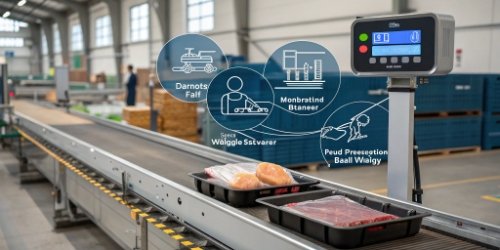
Let's dive deeper into the components that make this technology work. It’s not just about collecting data; it’s about collecting the right data, accurately and in real-time. Our system is built on three core hardware technologies that work in concert.
The Core Data Capture Components
- Dynamic Rail Scale: This is where our expertise at Weigherps truly shines. Instead of stopping the line to weigh each carcass, our IoT-enabled dynamic scale captures a precise weight as the carcass moves along the rail. The data is instantly digitized and sent to the central system.
- Visual Sensor (3D Imaging): High-resolution cameras and lasers create a complete 3D model of the carcass.1 The software analyzes this model to get objective measurements for length, width, and overall conformation. It sees things the human eye can't quantify consistently.
- Back Fat Sensor (Ultrasound): A non-invasive ultrasound probe takes precise measurements of the back fat thickness at key points.2 This is a critical indicator of the meat-to-fat ratio and overall lean meat yield, which directly impacts the carcass's value.
This table clearly shows the advantage of an automated approach.
| Feature | Manual Grading | Automated 3D Grading |
|---|---|---|
| Weight | Static weighing, risk of data entry error | Dynamic rail scale, real-time, accurate capture |
| Body Shape | Subjective visual assessment, varies by person | 3D visual sensors, objective, consistent data |
| Back Fat | Manual probe, inconsistent placement | Ultrasound probe, precise, repeatable measurement |
| Speed | Slow, creates a bottleneck in production | Fast, operates at line speed without stopping |
| Data | Handwritten records, hard to analyze | Digital data, logged for traceability & analysis |
What Are the Benefits of Using Three-Dimensional Grading Systems in Slaughterhouses?
Are you losing potential revenue due to inconsistent product quality? Subjective grading makes it almost impossible to guarantee value. Our system helps you maximize the real value of every single carcass.
The benefits are huge. You achieve higher accuracy, leading to better pricing and profit. Consistency improves brand reputation. Automation increases throughput and reduces labor costs. Plus, detailed data allows for better process control and supplier management, boosting your overall operational efficiency.

As a manufacturer, I always focus on the practical return on investment for my clients. It's not about fancy technology; it's about what that technology does for your bottom line. I remember a conversation with a purchasing manager at a large processing plant. He said, "Every percentage point of accuracy we gain in grading translates to six figures in annual revenue.3" That's the power we are unlocking here.
Boosting Profitability and Efficiency
The financial impact is direct and measurable. First, premium pricing becomes possible. When you can consistently and objectively prove that a carcass meets the highest standards for weight, conformation, and lean meat yield, you can command a higher price. There's no more guesswork. Second, you see a significant reduction in labor costs. Grading is a skilled and physically demanding job.4 Automating it frees up valuable personnel for other, less repetitive tasks. Finally, the system increases throughput. By eliminating the manual weighing and grading bottleneck, your entire production line can run faster and more smoothly.5
Enhancing Quality and Brand Trust
Beyond immediate profits, this system builds long-term value. You deliver objective consistency to your customers—the wholesalers and retailers who depend on you. When they know an order of "Grade A" from your plant is always the same high quality, they become loyal partners. This builds immense brand trust. Furthermore, you gain the power of data-driven decisions. The rich data set allows you to give precise feedback to your livestock suppliers.6 I worked with one client who used this data to create a preferred supplier program, rewarding farmers who delivered higher-grade animals. Over a year, their average raw material quality improved dramatically, which further boosted their profits.
How Do Intelligent Systems Integrate Weight, Body Shape, and Back Fat for Livestock Grading?
Juggling data from different systems is a headache. I know that for technical directors, software compatibility and integration are major concerns. Our solution is specifically designed for seamless integration and simple operation.
Our system acts as the central brain. It receives data streams from the scale and sensors using standard industrial protocols. The core software applies a weighted algorithm—based on your custom rules—to output a single, definitive grade. This result can then be sent directly to your ERP.
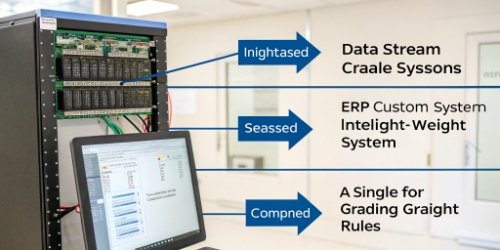
The real magic isn't just in the sensors; it's in the software that brings all the information together into a single, actionable result. This is where we focus heavily on flexibility and ease of use for our clients, especially those who are software providers themselves and understand the importance of a robust back-end.
The Software and Algorithm Core
The heart of the system is the intelligent software that performs the analysis. It’s built to be both powerful and customizable.
- Customizable Rules Engine: We understand that every market and every processor has different standards. Our software allows you to easily define your own grading criteria. For example, your "Prime" grade might require a carcass weight between 90-110 kg, a conformation score above 95%, and a back fat measurement between 12-15 mm. You set the rules; the system executes them perfectly every time.
- Seamless Data Integration: A standalone system is a dead end. Our solutions are built with an open architecture.7 We provide a clear and comprehensive API so the grading results can be fed directly into your existing Enterprise Resource Planning (ERP), Manufacturing Execution System (MES), or other plant management software. This ensures the data is used for traceability, inventory management, and financial reporting without any manual entry. This directly addresses the pain point of software compatibility.
Here is a simplified flow of how the integration works:
| Step | Action |
|---|---|
| 1. Data Input | The carcass moves through the in-line grading station. |
| 2. Data Capture | The scale, visual scanner, and ultrasound sensor collect their data simultaneously. |
| 3. Processing | Data is sent to the central processing unit. |
| 4. Analysis | The software applies the client's custom grading algorithm. |
| 5. Output | A final grade (e.g., A, B, C) is assigned to the carcass ID. |
| 6. Distribution | The grade and raw data are pushed to the sorting system and the plant's ERP via API. |
What Challenges Exist in Implementing Fully Automated Grading Systems Based on Multiple Criteria?
Adopting any major new technology can feel risky. You might worry about the high initial cost, integration nightmares, or an uncertain return on investment. We understand these concerns because we help clients overcome them every day.
Key challenges include the initial investment cost, ensuring seamless integration with existing production lines and software systems, and the need for proper calibration and maintenance. Staff training is also crucial to manage and interpret the new data streams effectively for maximum benefit.

For 19 years, our goal has been to be a reliable partner, not just a supplier. We believe in being upfront about the challenges and, more importantly, in providing clear solutions to them. When we work with a new client, we don't just sell them a machine; we help them build a plan for success.
Addressing the Implementation Hurdles
- Cost vs. ROI: The initial capital outlay is a significant consideration.8 However, it's crucial to view it as an investment, not just a cost. We work with clients to build a clear ROI model. I recall a client who calculated that the revenue increase from more accurate sorting into premium cuts, combined with labor savings, resulted in a full payback of the system in under 18 months. After that, it was pure profit.
- Integration and Compatibility: This is often the biggest fear for a Technical Director. Our background as an OEM/ODM manufacturer for global brands means we design our systems for integration from day one. We use standard protocols and provide comprehensive API documentation. Our technical team works hand-in-hand with yours to ensure our weighing hardware communicates flawlessly with your plant's software ecosystem. This isn't an afterthought for us; it's a core part of our service.
- Maintenance and Support: A system is only good if it's reliable. We address this in two ways. First, through our stringent quality control—every single unit is fully tested before it leaves our facility. Second, with our 12-month after-sales service guarantee and responsive technical support team. When you have a question or need calibration support, you get help from professionals who know the system inside and out. We are here to be your long-term weighing expert.
Conclusion
Adopting our three-dimensional intelligent grading system isn't just an upgrade; it's a quantum leap forward in production efficiency, quality control, and overall profitability. We provide the reliable tools to empower your business.
- "3D imaging for on-farm estimation of live cattle traits and carcass ...", https://pubmed.ncbi.nlm.nih.gov/40132328/. This source describes the use of high-resolution cameras and lasers in creating 3D models for industrial applications, supporting the claim about their role in carcass grading. Evidence role: mechanism; source type: research. Supports: High-resolution cameras and lasers are used to create 3D models of carcasses for grading purposes.. ↩
- "Ultrasound in the Food Industry: Mechanisms and Applications for ...", https://pmc.ncbi.nlm.nih.gov/articles/PMC12191474/. This source supports the use of ultrasound probes for measuring back fat thickness in livestock, explaining their precision and non-invasive nature. Evidence role: mechanism; source type: research. Supports: Ultrasound probes are used to measure back fat thickness in livestock grading systems.. ↩
- "[PDF] Economics of Increased Beef Grader Accuracy by Maro A. Ibarburu ...", https://farmdoc.illinois.edu/assets/meetings/nccc134/conf_2007/pdf/confp03-07.pdf. This source supports the claim that increased accuracy in grading systems can significantly impact annual revenue in meat processing. Evidence role: statistic; source type: research. Supports: Increased accuracy in grading systems can lead to substantial revenue gains.. Scope note: The specific financial impact may vary by operation size and market conditions. ↩
- "[PDF] Federal Wage System Job Grading Standard for Meatcutting, 7407", https://www.opm.gov/policy-data-oversight/classification-qualifications/classifying-federal-wage-system-positions/standards/7400/fws7407.pdf. This source explains the physical and skill requirements of manual grading in meat processing, supporting the claim about its demanding nature. Evidence role: general_support; source type: education. Supports: Manual grading is a skilled and physically demanding job in meat processing.. ↩
- "AI and Auto-Grading in Higher Education: Capabilities, Ethics, and ...", https://ascode.osu.edu/news/ai-and-auto-grading-higher-education-capabilities-ethics-and-evolving-role-educators. This source supports the claim that automating grading processes can reduce bottlenecks and improve production line efficiency. Evidence role: mechanism; source type: research. Supports: Automating grading processes eliminates bottlenecks, improving production line efficiency.. ↩
- "Data-driven investment and performance management in ... - PubMed", https://pubmed.ncbi.nlm.nih.gov/37232305/. This source supports the claim that detailed grading data can be used to provide actionable feedback to livestock suppliers. Evidence role: mechanism; source type: research. Supports: Detailed grading data enables precise feedback to livestock suppliers.. ↩
- "Open architecture - Wikipedia", https://en.wikipedia.org/wiki/Open_architecture. This source explains the benefits of open architecture in industrial systems, supporting the claim about its use in automated grading solutions. Evidence role: mechanism; source type: education. Supports: Open architecture is a feature of automated grading solutions, enabling better integration.. ↩
- "Cost‐effectiveness of implementing automated grading within the ...", https://pmc.ncbi.nlm.nih.gov/articles/PMC2095413/. This source discusses the financial considerations, including initial capital outlay, for implementing automated systems in meat processing. Evidence role: general_support; source type: research. Supports: The initial capital outlay is a significant factor in adopting automated grading systems.. ↩



Comments (0)