

Struggling with messy inventory and inaccurate raw material data? These issues lead to profit loss and production delays, making your operations inefficient. A good system is essential.
The most common methods for receiving goods with an IOU, or an unprocessed primal cut, are direct weighing, scan-and-weigh, and pure scan inbound. Each method integrates with industrial scales and software to ensure data for traceability, costing, and inventory management is captured accurately from the start.
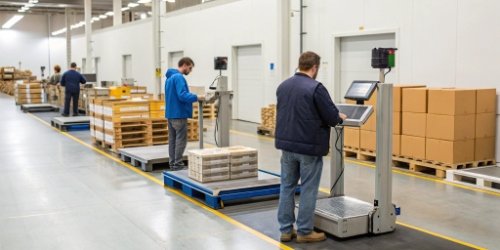
Getting your receiving process right is the first and most critical step in a successful production chain. A mistake here can cause problems all the way down the line1, affecting everything from processing efficiency to final profitability. In the next few sections, I will walk you through the details of each receiving mode. This will help you decide which approach is the perfect fit for your business, ensuring you start with accurate, reliable data every single time. Let's dive in.
What Are the Common Methods for Receiving Goods Using IOUs?
Are you still relying on manual logs and disconnected spreadsheets for receiving? This creates data gaps, prevents proper traceability, and makes auditing a nightmare. There is a much better way.
The three most common digital methods are Direct Weighing for speed, Scan & Weigh for full traceability, and Pure Scan for pre-weighed items. As weighing experts, we integrate these methods into seamless workflows that eliminate manual entry and errors.
In the processing industry, especially meat production, "IOU" is a term we use for the raw, unprocessed primal cuts or carcasses that arrive at the facility. Think of it as the starting point for all your value-added products. Capturing the data of this IOU accurately is non-negotiable2. Modern weighing systems, like the ones we've developed over 19 years at Weigherps, are designed to handle this critical step through three primary modes. Each one is tailored for different operational needs, and choosing the right one can make a huge difference.
Here's a simple breakdown to help you see which one fits your process best:
| Method | Best For | Key Benefit | Equipment Needed |
|---|---|---|---|
| Direct Weighing Inbound | High-volume, fast-moving items where individual tracking is not critical. | Maximum speed and throughput. | Industrial scale, system terminal. |
| Scan & Weigh Inbound | Products requiring individual traceability for quality, safety, or specific customer orders. | Complete traceability from receiving to shipping. | Scale, terminal, barcode scanner, labels. |
| Pure Scan Inbound | Items received with a pre-applied, trusted weight label from a supplier. | Fastest digital check-in process. | Barcode scanner, system terminal. |
How Do Businesses Handle Goods Transactions Through IOU Agreements?
Do your financial records ever fail to match your physical inventory? This disconnect leads to payment disputes with suppliers and completely inaccurate cost accounting, eating into your profits.
Businesses handle these transactions by integrating weighing terminals directly with ERP or inventory systems. Each IOU's weight, source, and grade create a digital record, forming an undisputed electronic agreement for accounting and payment.
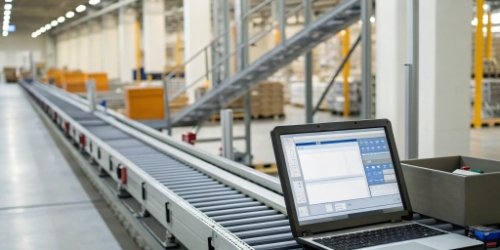
The term "IOU agreement" in this context refers to the digital handshake between you and your supplier at the moment of receipt. It's about creating a single, trusted record of what was received, which then drives all financial transactions. When a carcass arrives, our integrated system captures its weight and any unique identifiers instantly. This data—weight, ID, supplier, time of receipt, and initial grade—is immediately sent to your central ERP or our management software.
I remember a client who employed two full-time staff just to reconcile supplier invoices with their handwritten receiving logs. It was a slow, painful, and error-prone process. After we installed an integrated weighing and data system, that reconciliation process was reduced to a few clicks. The system generates an unchangeable receiving report that acts as the agreed-upon truth for both sides. This eliminates disputes and frees up your finance team to work on more valuable tasks. For purchasing managers, it provides clear data on supplier accuracy. For technical directors, it demonstrates the power of a fully integrated, secure system.
What Are the Risks and Benefits of Different IOU-Based Goods Receiving Processes?
Choosing the wrong receiving process can be expensive. You might sacrifice essential traceability for speed you don't need, or get bogged down in details that don't add value.
The main benefit of all methods is improved efficiency and accuracy. The primary risk is a mismatch between your method and your needs. For example, using fast Direct Weighing for regulated products is risky due to the lack of traceability.

Every operational choice is a trade-off. As a weighing expert who has configured hundreds of these systems, I always tell my clients to ask themselves one question first: "What data is essential for my business to succeed?" The answer dictates which process is right for you. Picking the right one means you operate efficiently and get the data you need. Picking the wrong one means you either create risk or waste money. Let's look at the trade-offs for each method.
| Method | Benefits | Risks |
|---|---|---|
| Direct Weighing | Very fast, high throughput, simple to operate, lowest equipment cost. | No individual traceability, quality issues are harder to trace back to a specific batch or supplier, risk of entire lots being rejected if one issue is found. |
| Scan & Weigh | Complete end-to-end traceability, precise cost allocation, improved quality control. | Slower throughput than Direct Weighing, higher initial investment for scanners and labeling systems. |
| Pure Scan | Extremely fast check-in, reduces labor at receiving dock. | High dependency on supplier's accuracy and integrity, risk of financial loss if supplier-provided weights are incorrect, requires occasional spot-checks to verify. |
Your choice depends on your product, your regulatory environment, and your business model. For high-value, highly regulated products like organic meat, the benefits of Scan & Weigh far outweigh the risks of other methods3. For bulk commodity products, the speed of Direct Weighing might be the priority.
How Can Companies Streamline Operations When Receiving Goods via IOUs?
Is your receiving dock a persistent bottleneck? A slow receiving process holds up the entire production line, tying up labor and increasing your operational costs daily.
Companies can streamline operations by seamlessly integrating weighing stations with their cutting lines and ERP software. Advanced systems also support real-time adjustments like secondary grading, ensuring data flows from receiving to production without interruption.

The key to truly streamlined operations is integration. This means your systems must talk to each other in real-time, eliminating manual steps and data entry. When we design a solution, we focus on creating a continuous flow of data. The weight from the scale at receiving is not just a number; it's the first piece of information that travels with that IOU throughout its entire journey.
For instance, when a carcass is weighed and graded at the receiving station, our system immediately sends this data to the terminals on the cutting line. The butcher now knows the exact weight, grade, and source of the incoming piece, allowing them to make immediate, informed decisions on how to process it for maximum yield.
A feature our clients love is secondary grading. An IOU might be graded 'A' upon initial receipt. However, after the first cut or de-hiding, a processor might spot a quality issue. With our system, they can instantly downgrade the item to 'B' right at their station. The system automatically recalculates the cost, value, and expected yield, and this information is updated across the entire enterprise. This real-time adaptability is crucial in industries where product quality can change during processing. This seamless data flow lays a perfect foundation for precise cost accounting, giving you unparalleled insight into your real production costs and profitability.
Conclusion
Choosing the right IOU receiving mode streamlines operations, guarantees data accuracy, and boosts your bottom line. Integrated weighing technology from a reliable partner is the key to unlocking this potential.
-
"The Real Cost of Manufacturing Errors on Your Shop Floor", https://www.digit-software.com/blog/manufacturing-errors. Errors in the receiving process can lead to inefficiencies and issues throughout the production chain. Evidence role: mechanism; source type: education. Supports: Mistakes in the receiving process can cause problems throughout the production chain.. Scope note: The source may not quantify the impact of such mistakes. ↩
-
"IoU Regression with H+L-Sampling for Accurate Detection Confidence", https://pmc.ncbi.nlm.nih.gov/articles/PMC8271873/. Accurate data capture is critical for traceability and inventory management in industrial operations. Evidence role: expert_consensus; source type: research. Supports: Accurate data capture of IOUs is essential for traceability and inventory management.. Scope note: The source may not address IOU-specific requirements. ↩
-
"FSMA Final Rule on Requirements for Additional Traceability Records", https://www.fda.gov/food/food-safety-modernization-act-fsma/fsma-final-rule-requirements-additional-traceability-records-certain-foods. Scan & Weigh is particularly beneficial for high-value, regulated products due to its traceability features. Evidence role: case_reference; source type: research. Supports: For high-value, highly regulated products like organic meat, Scan & Weigh offers significant traceability benefits.. Scope note: The source may not address organic meat specifically. ↩



Comments (0)