

Slaughterhouse entry is slow and full of errors. These mistakes cost you money and lead to bad data. Smart weighing technology offers a reliable, automated solution for accuracy.
To solve entry registration pain points, use a system that combines automated head counting via cameras with advanced weight filtering algorithms. This dual approach eliminates manual errors and ensures weight data is accurate, even with moving animals. This creates a fast, reliable, and transparent entry process.
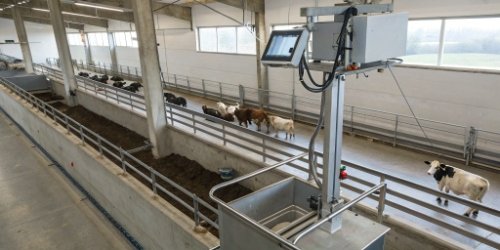
That's the high-level answer, but you're probably wondering how these pieces actually work together in a real-world slaughterhouse. We've spent years helping clients solve this exact problem. Let's break down the specific solutions and technologies that make this kind of efficiency and accuracy possible. You'll see how each component tackles a different challenge, creating a seamless and trustworthy system from the ground up.
What Are Effective Solutions for Streamlining Slaughterhouse Entry Registration?
Slow entry registration creates a major bottleneck in your operations. These delays waste time and money, causing stress throughout the supply chain. An integrated system can streamline this process effectively.
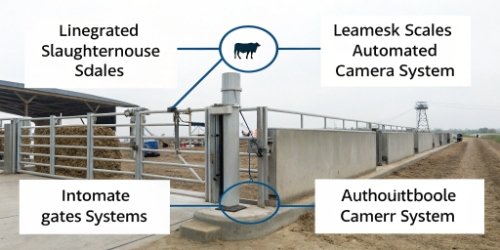
Effective solutions combine physical hardware with smart software. This includes livestock scales with automated gates and camera systems for head counting. The system integrates data, removes manual steps, and ensures information flows smoothly from the weighbridge to your records, speeding up the entire process significantly.
For years, we've seen clients struggle with outdated entry processes. It's a combination of different problems that create one big bottleneck.
The Problem with Manual Systems
The traditional method relies on people. Someone has to count the animals, often in difficult conditions. Someone else has to write down the weight, which might be jumping all over the place. Each manual step is a chance for a mistake.1 A '7' can look like a '1'. A simple miscount can throw off your entire inventory.2 These small errors add up and lead to significant financial discrepancies over time. It's a system built on unreliable processes, which leads to untrustworthy data.
The Integrated Solution
An effective solution isn't just a better scale; it's a better system. We integrate rugged hardware, like our specialized livestock scales, with intelligent software. This creates a single, streamlined workflow. The gates can be automated, the head count is captured by a camera, and the weight is stabilized by an algorithm. All this data is captured and sent to your database instantly. This integration removes the chance for human error and speeds up throughput dramatically. It transforms a chaotic process into a controlled, efficient one where every step is optimized and logged.
How Can Technology Reduce Bottlenecks in Slaughterhouse Entry Processes?
Are trucks waiting in line at your entry point? This common bottleneck costs you in wasted time, overtime pay, and strained partner relationships. Technology is the key to breaking this jam.
Technology reduces bottlenecks by automating the two most time-consuming tasks: counting and weighing. An overhead camera can count animals in seconds, while a smart scale uses algorithms to get a stable weight reading almost instantly, even with movement. This automation drastically cuts down processing time per batch.
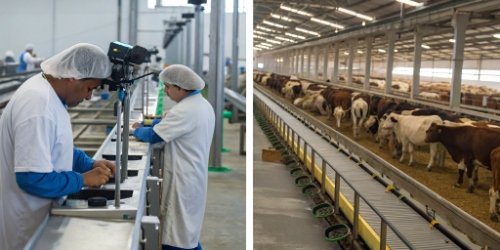
The goal is to get animals from the truck and into the system as quickly and accurately as possible. Technology achieves this by targeting the slowest parts of the manual process directly. Think about the time spent on each step. A manual count of 20 pigs might take a minute or more, especially if they are moving. Then, waiting for the scale to settle adds even more time.
Technology automates these steps. Instead of a person counting, a camera does it instantly. Instead of waiting for a stable number, an algorithm calculates it in real-time. This turns minutes into seconds.
Manual vs. Automated Entry Process
| Task | Manual Process | Automated Process | Time Savings |
|---|---|---|---|
| Animal Counting | A worker visually counts each animal. Prone to error. | Camera with image recognition counts instantly. | >90% |
| Weighing | Wait for animals to be still for a stable reading. | Algorithm filters motion to give a stable weight in seconds. | >75% |
| Data Entry | Worker manually records the count and weight on paper. | Data is automatically sent to the system. | 100% |
By automating these key tasks, the entire entry process is accelerated. This means more trucks can be processed per hour, completely eliminating the bottleneck at the gate and improving overall operational flow.
What Digital Tools Can Simplify and Automate Entry Registration for Slaughterhouses?
Your team is buried in paperwork from the weighing yard. This administrative work is slow, inefficient, and full of errors that need constant correction. Digital tools can make this entire problem disappear.
Key digital tools include image recognition software for head counting and advanced weighing indicators with filtering algorithms. These tools work together. The camera software identifies and counts animals, while the indicator's algorithm provides a precise weight. Both data points are then automatically logged into a central system.
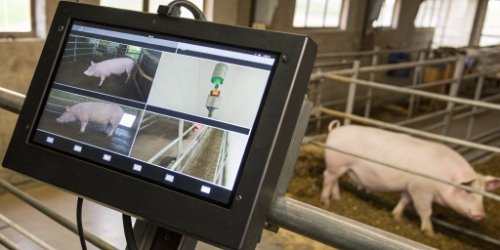
Let's get specific about the digital tools we build into our systems. It's not just about having a camera and a scale; it's about how they work together through specialized software. At Weigherps, we focus on two core innovations that solve the main pain points.
Smart Cameras for Automated Counting
The first pain point is manually counting heads, which is slow and often inaccurate. Our solution is simple but powerful. We install a wide-angle camera above the weighing pen. As the animals enter, the camera captures an image. Our image recognition software then automatically analyzes this image to get an exact head count. To ensure 100% accuracy, the system can prompt a manual confirmation, creating a double-check that guarantees the count is perfect every time.
Advanced Algorithms for Accurate Weighing
The second pain point is getting a stable weight when animals are moving. We solved this with a proprietary core algorithm. Our weighing indicator uses a real-time serial port data collection mechanism. It captures thousands of data points per second. The algorithm then intelligently filters out the weight fluctuations—the positive and negative spikes caused by movement—to calculate a true, stable weight. This ensures your entry data is both precise and reliable.
How Can Slaughterhouses Improve Accuracy and Efficiency in Entry Record Management?
Are your entry records a mix of paper logs and spreadsheets? This creates unreliable data, making inventory and compliance a constant headache. A single digital system provides perfect, trustworthy records.
Improve record management by creating a single source of truth. An automated weighing system can capture count and weight, then instantly send this verified data, along with a timestamp and photos, to a central database. This eliminates manual entry, prevents tampering, and creates a clear, auditable trail.

Accuracy and efficiency don't stop at the scale. The real value comes from how you manage the data you collect. The final step is just as important as the first.
From Manual Entry to Automatic Logging
In a traditional setup, the weigh-in data is written down and then manually entered into a computer later. This is where many errors happen. Our system closes this gap completely. Once the automated count and stabilized weight are captured, the data is logged automatically into your system. There is no manual entry. We can include timestamps, photos from the camera, and batch identifiers. This creates a complete, unchangeable digital record for every single batch that enters your facility.3 The data is clean from the very beginning.
The Value of Trustworthy Data
This clean data is incredibly valuable. It means you can trust your inventory numbers. It simplifies payments to suppliers because there are no disputes about weight or count. It also makes compliance and audits much easier because you have a clear, auditable digital trail for every animal. This level of data integrity is what transforms a simple weighing process into a powerful business management tool. It’s the foundation for making better business decisions.
Conclusion
By integrating smart cameras and advanced filtering algorithms, slaughterhouses can automate entry registration, ensuring accuracy and efficiency. This technology provides data you can finally trust for your business.
-
"Understanding Error Culture in Veterinary Medicine: A Survey ... - PMC", https://pmc.ncbi.nlm.nih.gov/articles/PMC13029886/. This source discusses how manual processes in livestock management increase the likelihood of errors, impacting data accuracy. Evidence role: mechanism; source type: research. Supports: Each manual step is a chance for a mistake.. ↩
-
"Opportunities for Regulatory Authorities to Assess Animal-Based ...", https://pmc.ncbi.nlm.nih.gov/articles/PMC10571985/. This source explains how inaccuracies in animal counting can lead to significant inventory discrepancies in livestock operations. Evidence role: mechanism; source type: research. Supports: A simple miscount can throw off your entire inventory.. ↩
-
"Livestock Identification Using Deep Learning for Traceability - PMC", https://pmc.ncbi.nlm.nih.gov/articles/PMC9655446/. This source explains how digital systems create immutable records for livestock batches, improving traceability and compliance. Evidence role: mechanism; source type: research. Supports: This creates a complete, unchangeable digital record for every single batch that enters your facility.. ↩



Comments (0)