
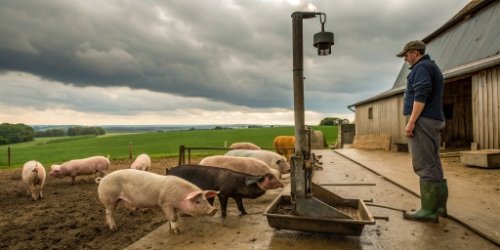
Are you losing money because of simple counting mistakes? Manual counting is stressful and often inaccurate, especially during busy times. There is a much better way to handle this.
Yes, inaccuracies in pig counts during weighing are very common. They usually happen because of human error, the constant movement of pigs, and fast-paced operations. This can cause big financial problems. Using technology like AI image recognition with reliable scales makes counting much more accurate.
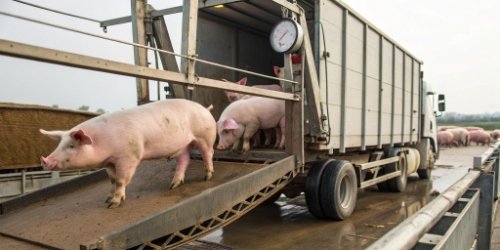
For years, I've visited processing plants and slaughterhouses, and I’ve seen the same problem over and over. A truck arrives, the pigs are weighed, and someone tries to count them manually. It's chaotic. The numbers rarely match up perfectly, leading to disputes between the driver and the plant manager. It’s a frustrating situation that wastes time and money. I knew there had to be a more reliable solution, and this is what pushed our team at Weigherps to explore how technology could solve this age-old problem. We wanted to find a way to bring certainty and efficiency to this critical first step of the process.
What Are Common Causes of Inaccurate Pig Counts During Weighing?
Do you trust your staff, but the paperwork shows counting errors? It’s frustrating when you can't find the source of the problem. Let's look at the most common reasons.
The main causes are human error from fatigue or distraction, especially during peak hours. Pigs that won't stop moving make manual counting very hard. Poor lighting, rushed procedures, and simple communication mistakes also lead to wrong counts, which directly hurts your business's profits.
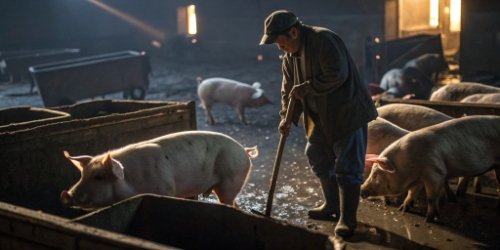
In my 19 years in the industrial scale business, I've learned that even the most dedicated employees make mistakes. It’s not about a lack of effort; it's about the challenging conditions. Imagine trying to count dozens of moving animals in a crowded, noisy truck, often early in the morning or late at night. The pressure is high. A single moment of distraction or a simple miscount can throw off the entire transaction. This isn't just a small issue; these errors add up over weeks and months, leading to significant financial losses1 or overpayments. We’ve seen clients struggle with this for years before realizing the problem wasn't their people, but their process. The manual method itself is flawed. Below is a breakdown of the typical factors that cause these inaccuracies.
| Factor Category | Specific Causes | How It Leads to Inaccuracy |
|---|---|---|
| Human Factors | Fatigue, distraction, lack of training, rushing | Leads to skipping numbers, double-counting, or simply losing track of the count. |
| Environmental Factors | Poor lighting, bad weather, crowded truck pens | Makes it physically difficult to see every animal clearly, causing pigs to be missed. |
| Process Factors | High speed of operations, lack of a verification system, inconsistent methods | Puts too much pressure on one person to be perfect without any backup or double-check. |
How Can Technology Improve Accuracy in Counting Pigs During Weighing?
Are you tired of losing money because of simple counting mistakes? You might think adopting new technology is hard and expensive. But modern solutions offer a simple, powerful fix for this.
Technology like AI image recognition is a complete game-changer. As pigs are weighed, cameras take pictures, and AI software counts them automatically with very high accuracy. This removes human error and creates a digital proof for every transaction, increasing both accuracy and trust.
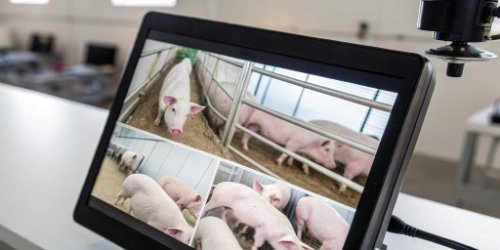
At Weigherps, our R&D team saw a clear opportunity to apply our expertise in IoT weighing and automation. The solution we developed is straightforward but incredibly effective. We install high-resolution cameras above the truck scale. As a truck full of pigs drives onto the scale for weighing, the cameras automatically capture images or video. Our specialized AI software then analyzes these images in real-time. The algorithm is trained to identify and count each pig's head, even when they are crowded and moving. Just a few years ago, this seemed like science fiction. I remember visiting one of our first pilot projects in Heyuan. The manager was skeptical. After running our system alongside his manual counters for a week, he was amazed. Our AI count was consistently more accurate and faster, and he had a photo record to prove it2. This is how we empower our customers—by using technology to solve real-world problems.
What Are the Best Practices for Ensuring Precise Pig Counts During Scale Weighing?
Even if you mean well, your counting process might have problems. You might not know where to start fixing it. Luckily, a few key practices can make a huge difference.
For the best results, combine technology with good procedures. Use an AI system for the main count, and have a person review the result for a final check. Make sure your weighing area has good lighting and your scales are calibrated regularly. Standardizing the whole process is essential.

Technology is a powerful tool, but it works best as part of a well-designed process. Just installing a camera is not enough. To get truly precise and reliable results every single time, you need to create a complete system. Over the years, we've helped hundreds of clients implement what we consider to be the gold standard for livestock counting and weighing. It’s about creating layers of security to catch any potential error. We provide more than just equipment; we provide a complete solution tailored to our clients' needs, including training and support. This ensures they can not only use the technology but also build strong, reliable operational habits around it. Here are the core practices we recommend to every single one of our partners to guarantee accuracy.
- Implement a Dual-Check System: The AI provides a fast, automated count. A staff member then quickly verifies this count on a monitor. This "tech + human" approach offers double the assurance and is the core of our successful projects in Inner Mongolia and beyond.
- Standardize the Weighing Environment: A clean, well-lit area is non-negotiable. It helps both the cameras and any human supervisors see clearly. Clear entry and exit paths also help manage the flow of animals, making the process smoother.
- Perform Regular Equipment Maintenance3: Like any precision instrument, your scales and cameras need care. We ensure our products undergo comprehensive testing before shipment, but regular on-site calibration and checks are crucial for LTM accuracy. Our products also come with a 12-month service guarantee.
- Train Your Staff Properly4: Your team needs to understand how the system works. We provide the training so they can confidently operate the equipment and perform the manual verification step, making them a key part of this enhanced, modern process.
How Can Automation Address Discrepancies in Pig Counting and Weighing?
Do disagreements over counts create arguments and operational headaches? You probably spend too much time fixing these issues. Automation can solve this problem for good.
Automation connects the whole process. It links the automated pig count directly to the weight data from the scale. This creates a single, unchangeable digital record for each shipment, gets rid of manual data entry errors, and provides a clear audit trail to instantly resolve disputes.
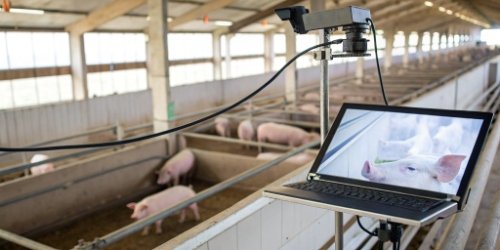
This is where everything comes together. True automation isn't just about counting pigs with a camera; it's about creating a single, seamless flow of trusted information. Our custom weighing systems are designed to do exactly this. Here is how it works: The AI camera counts the pigs. The industrial scale measures the total weight. Our IoT system instantly combines these two pieces of data, adds a timestamp, the truck’s ID, and other relevant details, and saves it all as one secure record. There is no manual entry, which means no chance of a typo or deliberate change. This digital record becomes the single source of truth for the transaction. If a supplier disputes the count or weight, you can pull up the record, complete with photos, in seconds. This level of transparency builds trust and ends arguments before they start5. It's how we help our clients achieve a quantum leap in their business, turning a point of conflict into a model of efficiency6.
Conclusion
Stop losing money and time on bad counts. By combining smart AI automation with proven best practices, you can achieve perfect accuracy and efficiency in all your pig weighing operations.
-
"Economic analysis of randomized controlled trial data - PMC - NIH", https://pmc.ncbi.nlm.nih.gov/articles/PMC12132797/. This source provides an analysis of how cumulative errors in manual processes can result in financial losses over time. Evidence role: statistic; source type: research. Supports: Errors in manual pig counting accumulate over time, causing significant financial losses.. Scope note: The data may not be specific to pig counting but applies to similar operational inefficiencies. ↩
-
"[PDF] photographic records — their importance in today's environmentally ...", https://digitalcommons.unl.edu/cgi/viewcontent.cgi?article=1049&context=vpcthirteen. This source discusses the use of photographic evidence in automated systems to enhance transparency and accountability. Evidence role: mechanism; source type: research. Supports: AI systems provide photographic records to verify pig counts, enhancing transparency and trust.. Scope note: The source may not focus exclusively on pig counting but includes similar use cases. ↩
-
"[PDF] USDA =a - Instructions for Testing Livestock and Animal Scales", https://www.ams.usda.gov/sites/default/files/media/PSDInstructionsforTestingLivestockandAnimalScales.pdf. This source emphasizes the role of regular maintenance in ensuring the accuracy and longevity of weighing and counting equipment. Evidence role: expert_consensus; source type: education. Supports: Regular maintenance of weighing and counting equipment is essential for accuracy and reliability.. Scope note: The advice may apply to general equipment maintenance, not exclusively to pig counting systems. ↩
-
"Advancing precision livestock farming: integrating artificial ... - PMC", https://pmc.ncbi.nlm.nih.gov/articles/PMC13057718/. This source highlights the importance of staff training in effectively using automated systems for livestock management. Evidence role: expert_consensus; source type: education. Supports: Proper staff training is critical for the effective use of automated pig counting systems.. Scope note: The focus may include general automation training, not exclusively for pig counting systems. ↩
-
"Research on Dynamic Pig Counting Method Based on Improved ...", https://pmc.ncbi.nlm.nih.gov/articles/PMC11047650/. This source discusses how automation and digital records reduce conflicts in operational settings by providing clear evidence. Evidence role: mechanism; source type: research. Supports: Automation and digital records reduce conflicts by providing clear evidence in livestock operations.. Scope note: The findings may apply to general operational disputes, not exclusively to pig counting. ↩
-
"Increased Cattle Feeding Precision from Automatic Feeding Systems", https://pmc.ncbi.nlm.nih.gov/articles/PMC10649016/. This source provides examples of how automation transforms inefficient processes into streamlined operations in livestock management. Evidence role: general_support; source type: research. Supports: Automation transforms inefficient pig counting processes into streamlined and efficient operations.. Scope note: The examples may include various livestock operations, not exclusively pig counting. ↩



Comments (0)