
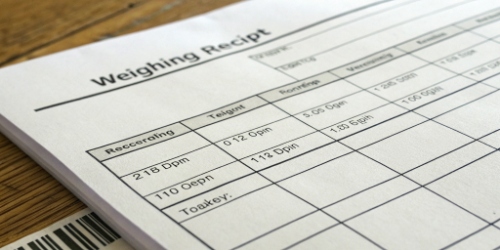
Your customers demand transparency, but your current receipts create confusion. This undermines trust and complicates audits. What if your weighing receipt could provide instant, irrefutable proof of origin with a single scan?
To design effective slaughterhouse receipts for traceability, integrate a scannable QR code on every ticket. This code must link to a secure digital record containing the product's full history, including supplier, slaughter date, and production batch, allowing customers to verify origin information instantly on their phones.

A scannable code is a great start, but it's only one piece of the puzzle. A truly effective traceability receipt requires a smart design that presents all the critical information clearly. It’s about building a system that fosters trust from the farm to the final customer. Let's explore the essential features that turn a simple piece of paper into a powerful tool for transparency and accountability.
What Features Should Be Included in Weighing Tickets for One-Click Traceability?
You're printing weighing tickets, but they are cluttered and lack key traceability data. This leads to customer questions, payment delays, and stressful audits as you manually search for information. Now, imagine a ticket that answers every question before it's even asked.
For one-click traceability, a weighing ticket must include basic data like product name and weight, plus a unique QR code. This code should provide access to deeper information like the supplier, animal ID, slaughter date, and the specific production team that handled the product.

Breaking Down the Essential Receipt Components
The goal is to create a receipt that works for everyone: your accounting department, your customer's receiving team, and the end consumer who values food safety1. I once worked with a large pork processor who was buried in support calls from their retail clients asking for origin details. After we helped them implement a QR code system on their receipts, their support calls dropped by over 70%. Their customers could instantly verify the information themselves. This is possible when you include the right components. A well-structured ticket should be organized and clear. Here is a breakdown of the must-have elements.
| Component | Why It's Critical for Traceability |
|---|---|
| Basic Information | Includes product name, net weight, and price. Essential for billing and inventory management. |
| Traceability QR Code | The key to one-click traceability. Links the physical product to its complete digital history. |
| Human-Readable Codes | Batch numbers and lot numbers serve as a backup for manual checks and internal tracking. |
| Company & Customer Details | Clearly identifies the seller and buyer, preventing mix-ups and simplifying record-keeping. |
| Timestamps | Accurate weighing and printing times are crucial for creating a reliable audit trail. |
How Can Weighing Slips Be Optimized for Tracking Information in Slaughterhouses?
Your receipts may contain all the right data, but if the layout is a mess, the information is useless. Poor design frustrates customers and auditors, making your operation seem unprofessional. A clear, optimized design can solve this problem instantly.
Optimize weighing slips with a clean, logical layout. Place the most important information, like the total weight and the traceability QR code, in prominent positions. Use clear fonts and enough white space to ensure the slip is easy to read and scan at a glance.

From Cluttered to Clear: A Layout Strategy
Thinking about the user experience is key. Your customer shouldn't have to hunt for information. We achieve this through smart design and system flexibility. The layout should have a strong visual hierarchy, guiding the reader's eye directly to the most critical data points. The QR code, for example, should be large enough to be scanned easily, even if the receipt is slightly crumpled. The net weight and total price should also stand out.
This is where customization becomes a powerful tool. In my 19 years of manufacturing industrial scales, I’ve seen that no two slaughterhouses operate exactly the same way. That's why our WeigherPS system lets you completely customize the receipt format. You can drag and drop fields, change font sizes, and add your company logo. This isn't just about making it look good; it's about making the receipt work for your specific process. We once helped a client who needed to add different compliance logos for export markets2. A rigid, off-the-shelf system couldn't handle it, but our flexible design made it a simple change.
What Are the Best Practices for Integrating Traceability Data Into Slaughterhouse Weighing Receipts?
You're ready to add traceability to your receipts, but you are worried about the technical challenge. A failed integration can cause data errors, system downtime, and a budget overrun. Following best practices will ensure a smooth, secure, and successful project.
The best practice is connecting your weighing system directly to a central traceability database using APIs for real-time data transfer. This integration should automatically generate a unique QR code for each transaction, linking the physical receipt to its complete digital history without errors.
Building a Seamless Data Bridge
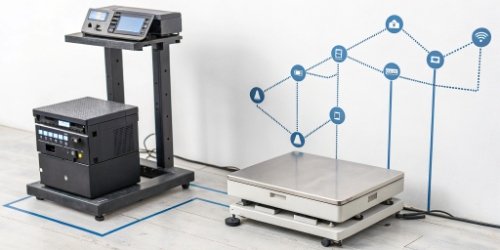
The weighing receipt is just the visible tip of the iceberg. Below the surface, you need a powerful and reliable data system. The best integrations are built on a seamless connection3 between your hardware (the scale), your software (the weighing application), and your central database or ERP system. This creates a single source of truth for all your traceability data. The key is to automate the flow of information.
As an OEM/ODM provider for global brands, we build our systems with robust API capabilities4. This allows our WeigherPS software to talk directly to your other business systems. When a product is weighed, the scale sends the data to our software. The software then requests a unique traceability ID5 from your central database, which contains the full history of that product—which supplier it came from, the slaughter date, the processing batch, and more. All of this information is then embedded into a unique QR code that is printed on the receipt. This entire process happens instantly and without any manual data entry, which eliminates the risk of human error6. For our software vendor clients, data security and compliance are paramount. We ensure these connections are secure and the data is tamper-proof7, meeting international standards8.
Conclusion
Designing effective weighing receipts with scannable traceability codes is essential for building customer trust. It transforms a simple slip into a powerful tool for transparency and food safety.
-
"Tracking and Tracing of Food - FDA", https://www.fda.gov/food/new-era-smarter-food-safety/tracking-and-tracing-food. This source discusses the role of traceability systems in enhancing food safety by providing detailed product histories. Evidence role: expert_consensus; source type: institution. Supports: Traceability systems enhance food safety by providing detailed product histories.. Scope note: The source may focus on general food safety rather than slaughterhouse-specific applications. ↩
-
"U.S. Export Controls", https://www.trade.gov/us-export-controls. This source explains the importance of compliance logos in meeting export market regulations. Evidence role: mechanism; source type: government. Supports: Compliance logos are important for meeting export market regulations.. Scope note: The source may not address compliance logos specifically in the context of slaughterhouse receipts. ↩
-
"FSMA Final Rule on Requirements for Additional ...", https://www.fda.gov/food/food-safety-modernization-act-fsma/fsma-final-rule-requirements-additional-traceability-records-certain-foods. This source explains how seamless connections between hardware and software improve traceability system efficiency. Evidence role: mechanism; source type: research. Supports: Seamless connections between hardware and software improve traceability system efficiency.. Scope note: The source may focus on general system connections rather than slaughterhouse-specific setups. ↩
-
"API integration and organisational agility outcomes in digital music ...", https://pmc.ncbi.nlm.nih.gov/articles/PMC11154632/. This source describes how APIs enable seamless data transfer between systems in traceability applications. Evidence role: mechanism; source type: research. Supports: APIs enable seamless data transfer between systems in traceability applications.. Scope note: The source may focus on general API use rather than slaughterhouse-specific systems. ↩
-
"FSMA Final Rule on Requirements for Additional Traceability Records", https://www.fda.gov/food/food-safety-modernization-act-fsma/fsma-final-rule-requirements-additional-traceability-records-certain-foods. This source explains how unique IDs are used to link physical products to their digital histories in traceability systems. Evidence role: mechanism; source type: research. Supports: Unique IDs link physical products to their digital histories in traceability systems.. Scope note: The source may not address unique IDs specifically in the context of slaughterhouse receipts. ↩
-
"Understanding human management of automation errors - PMC - NIH", https://pmc.ncbi.nlm.nih.gov/articles/PMC4221095/. This source highlights how automation reduces human error in traceability systems. Evidence role: mechanism; source type: research. Supports: Automation reduces human error in traceability systems.. Scope note: The source may not address automation specifically in the context of slaughterhouse receipts. ↩
-
"Supply Chain Traceability for Agri-Food Manufacturing | NIST", https://www.nist.gov/programs-projects/supply-chain-traceability-agri-food-manufacturing. This source discusses how tamper-proof data systems ensure the integrity of traceability information. Evidence role: mechanism; source type: research. Supports: Tamper-proof data systems ensure the integrity of traceability information.. Scope note: The source may focus on general data systems rather than slaughterhouse-specific applications. ↩
-
"FSMA Final Rule on Requirements for Additional Traceability Records", https://www.fda.gov/food/food-safety-modernization-act-fsma/fsma-final-rule-requirements-additional-traceability-records-certain-foods. This source outlines international standards for traceability systems, ensuring global compliance. Evidence role: definition; source type: institution. Supports: International standards ensure global compliance in traceability systems.. Scope note: The source may not address international standards specifically for slaughterhouse traceability systems. ↩



[…] conveyor lines, this speed is not a luxury; it's a necessity. We design our systems with open APIs to ensure this rich data flows seamlessly into your platforms1, allowing you to build more responsive and powerful features for your […]