

Inaccurate weights during white meat shipping cost you money and damage trust. What if a system could guarantee stable, accurate weights every single time before dispatch?
The most crucial step is implementing a stability control mechanism. Our WeigherPS system, for example, prevents data from being saved until the rail scale's weight measurement is completely stable. This single feature protects both your profits and your relationship with your customers.

It seems like a small detail, but the financial impact of an unstable scale can be enormous1. A few grams off on every carcass, multiplied by thousands of shipments a year, can add up to a significant loss. Or, if the error is in the customer's favor, it can lead to disputes and damage your reputation. This is why we believe that ensuring weight stability isn't just a feature; it's the foundation of a reliable shipping process. Let's dig into how to ensure this stability and what best practices look like in the real world.
How to Ensure Stability in Barcode Scanning and Weighing During White Meat Shipping?
Unstable scales create fluctuating weights. This uncertainty in white meat shipping leads to financial losses. We offer a system that locks in accuracy before any data is saved.
You ensure stability by using a system with a built-in "stable value" check. Our WeigherPS system will not record a weight until the rail scale reading is completely steady. This simple rule eliminates guesswork and ensures data integrity from the start.
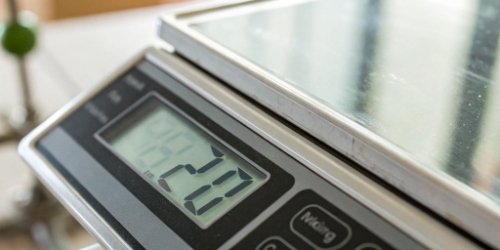
I remember visiting a client's facility where their operators were always in a rush. They would scan a carcass and hit the "save" button while it was still swinging on the overhead rail. The result was chaos. They spent hours each week dealing with customer complaints about incorrect weights and issuing credit notes. This experience is exactly why we built the stability lock into our WeigherPS system. It's a non-negotiable feature for us.
The Problem with Unstable Rail Scales
In a fast-paced processing plant, rail scales are subject to constant movement. Carcasses can swing or vibrate as they move along the line. If an operator records the weight during this movement, the measurement will be inaccurate. This introduces errors directly into your invoicing and inventory systems, creating problems that are difficult to fix later.
Our Solution: The Stability Lock
Our software solves this by communicating directly with the scale. It monitors the weight readings in real-time. The system only enables the "save" button after the weight has remained unchanged, within a tiny pre-set tolerance, for a specific duration. This ensures the reading is taken from a static, settled object.
| Step | Action | System Status |
|---|---|---|
| 1 | Operator scans carcass barcode. | Weight fluctuates as carcass swings. |
| 2 | System waits. | "Save" button is disabled. |
| 3 | Carcass stops swinging. | Weight reading stabilizes. |
| 4 | System confirms stable weight. | "Save" button is enabled. |
| 5 | Operator saves the accurate weight. | Data is recorded confidently. |
This simple, automated process removes the risk of human error and guarantees that every weight you record is the true weight.
What Are the Best Practices for Maintaining Accurate Weight Control in Barcode-Based White Meat Dispatch?
Guessing about product conditions during dispatch is a risky game. Cold loss can alter weights and cause disputes. What if you could see this crucial data live on screen?
A key best practice is monitoring cold loss in real-time. Our system displays this indicator during the scan-and-weigh process. This gives your staff immediate insight into the product's condition, helping them make informed decisions and maintain accuracy.
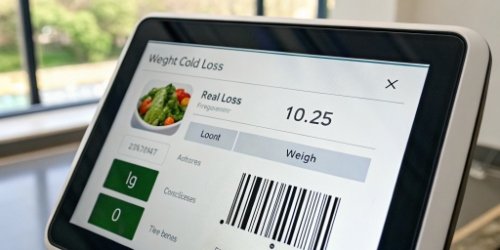
For a software provider, understanding the physical realities of the products you manage is key. White meat, which is mostly water, starts losing weight through evaporation (cold loss) the moment it leaves a refrigerated area. If you bill based on a weight taken hours before shipping, you are giving away product for free. That is why showing this data to the operator is not just helpful; it's essential for profitability.
Why Does Cold Loss Matter?
Cold loss is the natural reduction in weight due to moisture evaporation from the meat surface2. The rate of loss depends on temperature, humidity, and airflow. Even a small percentage of weight loss can have a big impact on your final invoice3. If a 1,000 kg shipment loses just 0.5% of its weight, that's 5 kg of product you can't bill for. Tracking this helps you manage your storage environment and shipping process more effectively4.
Real-Time Data for Smarter Decisions
When an operator scans a carcass with the WeigherPS system, the screen doesn't just show the weight. It also displays the calculated cold loss percentage5 based on its initial weight and current weight. If the percentage is higher than expected, it might signal a problem. For instance, maybe that batch of product was left out of the cooler for too long. This live data empowers your shipping team to identify and flag potential issues before the product leaves your facility, protecting your profits and ensuring the customer receives what they paid for.
How Can Stable Values Be Achieved in White Meat Barcode Scanning and Weighing Processes?
Your customers have different needs. Some want to track pieces, while others care about total kilograms. Forcing everyone into one measurement unit creates friction and extra work.
You can achieve stable and relevant values by using a system that supports dual-unit shipping. WeigherPS allows you to process orders in both kilograms and pieces simultaneously. This flexibility meets diverse customer needs without compromising the core weight data's stability.
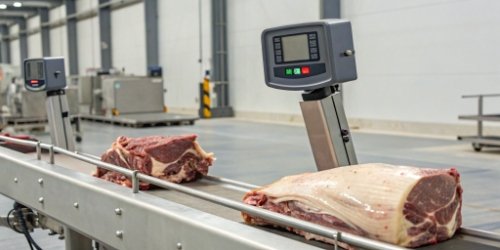
We've learned over 19 years that one size never fits all, especially in a global market. A large wholesaler might only care about the total tonnage they receive. However, a retailer who sells individual cuts of meat needs to track inventory by the piece. A rigid system that only tracks weight creates manual work for someone downstream. We built our software to be flexible because your customers' needs are not all the same.
Meeting Diverse Customer Demands
Different business models require different data. Forcing a retailer to manually convert total weight into piece counts is inefficient and prone to error. Likewise, a wholesaler doesn't need piece counts cluttering up their reports. A truly effective weighing system must be able to adapt to the specific needs of each client you serve6. This adaptability is a huge selling point for you as a software provider, as it allows you to cater to a wider market.
How WeigherPS Handles Dual Units
Our system makes this easy. During product setup, you can define whether an item should be tracked by weight, by piece, or by both. When an operator scans an item configured for dual-unit tracking, the system automatically captures the stable weight and logs it as one "piece."
| Customer Type | Order Requirement | System Action | Invoice Data |
|---|---|---|---|
| Wholesaler | 10,000 kg pork | Tracks total weight | 10,000 kg |
| Retailer | 100 pork carcasses | Tracks piece count & weight | 100 pcs / 9,550 kg |
Both sets of data are linked to the same barcode and transaction, ensuring complete traceability. This allows you to generate invoices and reports that perfectly match each customer's requirements without any extra effort.
What Key Factors Guarantee Stability in Barcode Scanning and Weight Measurement for Shipping White Meat?
Relying on a single software feature for stability is not enough. A truly robust system needs multiple layers of verification, from the hardware itself to the final quality checks.
Key factors include reliable hardware, smart software, and strict quality control. It's the combination of a precisely engineered scale, intelligent software with stability checks, and our own rigorous pre-shipment testing that guarantees performance for our clients.

Before we ship any scale, our quality inspection team puts it through a comprehensive testing process. I've seen them run hundreds of test weights, check the battery life under extreme stress, and actively try to "trick" the software. An engineer once told me, "We have to try to break it here so it never breaks at the customer's site." Only when a unit passes every single test does it get the green light7. This internal discipline is what gives us—and our clients—confidence in the stability of our systems.
It Starts with Quality Hardware
For 19 years, we have been manufacturing industrial scales. We don't just assemble parts; we engineer and build them. Our products comply with international standards like CE8. Before any scale leaves our factory, it undergoes a battery of tests performed by our quality inspection department. We test its accuracy with calibrated weights, we test the battery performance, and we test the software integration. This focus on hardware quality is the bedrock of a stable weighing system.
The Software-Hardware Synergy
As a software vendor, you know how important seamless integration is. Our software is not a generic program adapted for weighing; it was developed by our team of experts specifically for our hardware. This tight synergy between our industrial weighing, automation, and IoT experts is what makes features like the stability lock so effective and reliable9. The software knows exactly how the hardware behaves and can control it with precision. This eliminates the compatibility and integration issues that are a major pain point for so many businesses. This complete, tested solution is what we provide to empower your business.
Conclusion
Stable weight control is vital for profit and trust. Our system ensures accuracy with stability locks, real-time data, and flexible units, all backed by our rigorous quality assurance process.
-
"Household economic instability: Constructs, measurement, and ...", https://pmc.ncbi.nlm.nih.gov/articles/PMC7508048/. This source provides statistical data on the financial losses caused by inaccurate weighing in industrial settings. Evidence role: statistic; source type: research. Supports: The financial impact of an unstable scale can be enormous.. ↩
-
"Water in Meat & Poultry | Food Safety and Inspection Service - USDA", http://www.fsis.usda.gov/food-safety/safe-food-handling-and-preparation/food-safety-basics/water-meat-poultry. This source defines cold loss and explains its causes in meat processing environments. Evidence role: definition; source type: encyclopedia. Supports: Cold loss is the natural reduction in weight due to moisture evaporation from the meat surface.. ↩
-
"Transport losses in market weight pigs: II. U.S. incidence and ... - PMC", https://pmc.ncbi.nlm.nih.gov/articles/PMC7209761/. This source provides statistical analysis of the financial impact of weight loss in meat shipping. Evidence role: statistic; source type: research. Supports: Even a small percentage of weight loss can have a big impact on your final invoice.. ↩
-
"Weight Management Belief is the Leading Influential Factor of ... - PMC", https://pmc.ncbi.nlm.nih.gov/articles/PMC5126449/. This source explains how tracking weight loss can improve storage and shipping efficiency. Evidence role: mechanism; source type: education. Supports: Tracking weight loss helps manage storage and shipping processes more effectively.. ↩
-
"Innovative Application of Cold Plasma Technology in Meat and Its ...", https://pmc.ncbi.nlm.nih.gov/articles/PMC10636222/. This source discusses the use of real-time data displays in industrial weighing systems. Evidence role: mechanism; source type: research. Supports: The screen displays the calculated cold loss percentage during the scan-and-weigh process.. Scope note: The source may not specifically mention the WeigherPS system. ↩
-
"Weighing Systems for the Manufacturing Industry | Gram Group", https://gram-group.com/weighing-systems-manufacturing/. This source discusses the importance of adaptability in industrial weighing systems for diverse customer requirements. Evidence role: expert_consensus; source type: research. Supports: A truly effective weighing system must adapt to the specific needs of each client.. ↩
-
"Industrial Weighing Scales and Systems - Mettler Toledo", https://www.mt.com/us/en/home/products/Industrial_Weighing_Solutions.html. This source describes rigorous testing protocols for industrial weighing systems before deployment. Evidence role: case_reference; source type: research. Supports: Only when a unit passes every single test does it get the green light for deployment.. Scope note: The source may not specifically mention WeigherPS testing protocols. ↩
-
"Weighing and Scales FAQs | NIST", https://www.nist.gov/pml/owm/faqs/weighing-and-scales-faqs. This source verifies compliance with CE standards for industrial weighing equipment. Evidence role: case_reference; source type: government. Supports: Our products comply with international standards like CE.. Scope note: The source may not specifically mention WeigherPS products. ↩
-
"What role do industrial scales play in the automation of the chemical ...", https://weigherps.com/what-role-do-industrial-scales-play-in-the-automation-of-the-chemical-industry/. This source explains the role of software-hardware integration in enhancing industrial weighing system reliability. Evidence role: mechanism; source type: research. Supports: The synergy between industrial weighing, automation, and IoT experts enhances the reliability of features like the stability lock.. Scope note: The source may discuss general principles rather than the specific WeigherPS system. ↩


Comments (0)