

Are you losing money and customers fromshipping errors? Mixing up product grades or suppliers leads to complaints and costly returns. There is a simple, effective fix.
The best way to stop these errors is with a barcode management system. By giving each carcass a unique barcode ID, you can track its grade, supplier, and weight. This ensures every shipment is accurate before it leaves.
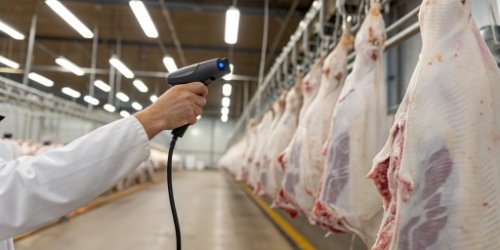
Over my 19 years in this industry, I've visited countless meat processing plants. The speed of the operation is impressive, but it's also where mistakes happen. A small mix-up on the line can result in a whole truck being loaded with the wrong products.1 This isn't just about the financial loss; it's about the damage to your reputation with a key client. But what if you could use technology to make these mistakes almost impossible? Let's look at how a simple barcode can bring total control and precision to your operation. This technology empowers you to provide a reliable foundation for your software and your clients' businesses.
How Can Barcode Management Prevent Cross-Level and Misdelivery in White Meat Sales and Shipping?
Are your manual checks failing to catch expensive shipping mistakes? Relying on the human eye to sort different grades and suppliers is risky and often leads to misdeliveries.
Barcode management makes verification automatic. Every carcass gets a unique identity barcode with its grade, supplier, and weight information. When you scan it for shipping, the system instantly checks it against the order, stopping any incorrect items from being sent.
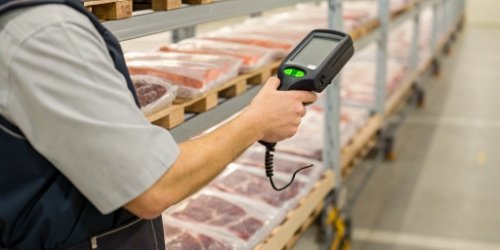
This approach works because it gives every single item a digital identity.2 Think of it as a digital twin for every carcass that enters your facility. From the moment a product arrives, our system helps you create a unique barcode label. This label isn't just a random number; it contains critical data.
Creating a Digital Footprint
The barcode links to a database entry that stores all key information. This includes its specific grade, the original supplier, the exact time it was entered into your inventory, and even its precise weight captured by our integrated industrial scales. This detailed data is the foundation for full control. For a software vendor, this means you get a clean, reliable stream of data to feed into your advanced management and analytics platforms.
The System as a Gatekeeper
Our system acts as a strict but fair gatekeeper at your loading dock. The process is simple. Your operator has the order details on a handheld scanner. They scan the barcode on the carcass or box being loaded. The software instantly compares the item's data with the order requirements.
| System Check | Scanned Item Data | Order Requirement | Outcome |
|---|---|---|---|
| Match | Grade A, Supplier X | Grade A, Supplier X | ✅ Approved for Loading |
| Mismatch | Grade B, Supplier Y | Grade A, Supplier X | ❌ Blocked, Alert Sounded |
If there's a mismatch, the system immediately flags the error with an alert, preventing the wrong item from ever making it onto the truck. This automated check removes human error and ensures 100% order accuracy, providing a solid operational base for the sophisticated software solutions you build.
What Are Effective Strategies to Avoid Misdelivery in White Meat Dispatch Using Barcode Systems?
Is your dispatch area a fast-paced bottleneck where errors happen? The pressure to ship quickly increases the chance of sending the wrong product, which frustrates customers and becomes a logistics nightmare.
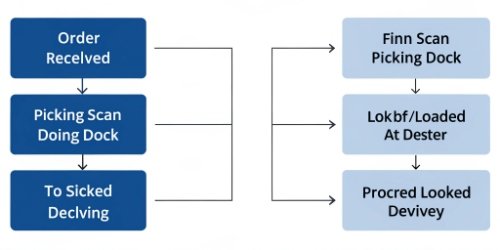
An effective strategy is a scan-to-verify workflow right at the loading dock. The system links the order directly to the scanner. It only allows items that match the order to be processed, effectively blocking misdeliveries at the final and most critical step.
Putting a system in place is one thing; making it a core part of your daily strategy is another. A barcode system becomes truly powerful when it's embedded into your standard operating procedures, especially during the chaotic final moments of dispatch.
Integrating Barcodes into the Dispatch Workflow
The most successful strategy I’ve seen involves a multi-step verification process. First, an order is loaded into the system. A worker on the floor receives a digital picklist on a handheld device. As they gather the items, they scan each one to confirm it’s correct. Then, the items are moved to the loading bay. Here, a final scan is performed as the item is loaded onto the truck. This last scan is the crucial gatekeeper. It verifies that this specific item, with its unique barcode, belongs to this specific order and this specific truck. This simple, enforced workflow closes the loop and makes it nearly impossible for a misdelivery to occur.
Real-Time Data for Better Decisions
This strategy does more than just stop errors. Every scan is a data point.3 The system doesn't just block a mistake; it logs it. This gives you valuable information. You can see if certain workers are making more errors, if mistakes happen more often with specific products, or if they occur at certain times of the day. As a software provider, you can use this raw data from our hardware to build powerful analytics dashboards for your customers. These insights help them improve training, optimize warehouse layouts, and make their entire operation more efficient. It transforms our hardware from a simple tool into a source of business intelligence.
How Does Barcode Management Ensure Accurate Tracking in White Meat Sales and Logistics?
Are you losing visibility of products once they are inside your facility? This lack of traceability creates serious risks for compliance, quality control, and recall management, which can be devastating for your business.
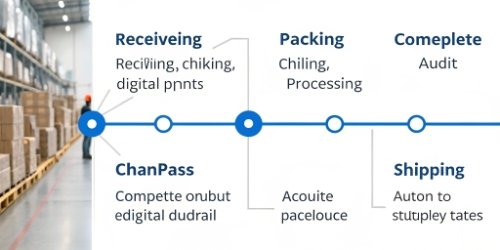
A barcode system creates a complete digital audit trail. From the moment a carcass is received to when it's processed and shipped, every scan at each checkpoint updates its location and status. This provides end-to-end traceability for every item, ensuring total accountability.
Accurate tracking is no longer a 'nice-to-have'; it's a fundamental requirement in the modern food industry. Customers and regulators demand to know the history of a product. A barcode management system provides this by building a detailed story for every single item.
Building a Chain of Custody
This digital story, or chain of custody, begins at your receiving door. As a carcass arrives, it is weighed on one of our industrial scales and assigned its unique barcode. The barcode is then scanned at every key transition point: moving into the chiller, going to the cutting line, being packaged, and finally, being loaded for shipment. Each scan adds a new chapter to its story, with a timestamp and location. If a customer has an issue, you can instantly trace that product back to its origin. Imagine a recall scenario. Instead of isolating days of production, you can pinpoint the exact batch from a specific supplier in minutes. This speed and precision protect both consumers and your bottom line.4
The Power of Integrated Data
This is where our expertise as a hardware manufacturer really shines. Our weighing solutions are designed to be an integral part of this tracking system. When a carcass is weighed, that data is not written down by hand. It is automatically captured and linked to the barcode. This eliminates transposition errors and ensures the data is perfect from the start. For you, the software vendor, this means our hardware provides a trustworthy source of data. You can then integrate this clean weight, supplier, and grade information into your larger WMS or ERP systems, creating a seamless and powerful solution for your clients.
What Is the Best Barcode Solution to Prevent Shipping Errors and Cross-Level Issues in White Meat Distribution?
Are you worried about choosing a system that is complex or won't work with your existing software? A solution that is difficult to use or integrate can create more problems than it solves.
The best solution is a customized and integrated system that combines durable hardware with flexible software. It must use unique barcodes and enforce verification at shipping. Most importantly, it should connect easily with your existing management software (ERP/WMS) for smooth, automated operation.
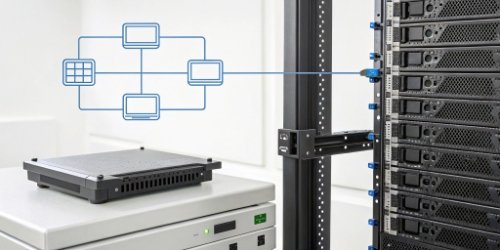
I’ve learned that there's no "one-size-fits-all" answer when it comes to technology in this industry. The "best" solution is the one that fits your specific operational needs and, crucially, integrates seamlessly with the software you already use to run your business.
Key Components of an Ideal Solution
A truly effective system is built from several key components working together. It’s not just about the scanner; it's about the entire ecosystem. Here's how we think about it:
| Component | Function | Why It's Important for You |
|---|---|---|
| Industrial Weigher | Captures precise weight data automatically. | Provides clean, error-free data to your software without manual input. |
| Durable Barcode Labels | Withstand cold, wet, and harsh environments. | Ensures the barcode is scannable throughout the entire process, maintaining data integrity. |
| Rugged Handheld Scanners | Allow mobile workers to capture data anywhere. | Offers flexibility and real-time data capture on the plant floor. |
| Software Integration Layer | Connects our hardware to your management system. | This is critical. We ensure our devices can communicate flawlessly with your software, enabling a single source of truth and automated data flow. |
Why Customization Matters
Every processing plant is different. That's why we focus on providing customized solutions. We don't force you into a rigid system. Instead, we work with you, the software vendor, to understand the needs of your end-users. We can tailor the data output from our scales and scanners to match the input requirements of your software. This partnership approach ensures that the final solution is not only robust and reliable but also perfectly aligned with your client's workflow. We provide the dependable hardware foundation, empowering you to build the innovative and flexible software solutions that your market demands.
Conclusion
In short, a barcode management system eliminates costly misdeliveries. It guarantees accuracy from receiving to shipping, protecting your profits, your reputation, and your relationships with every single order.
-
"What Are the Various Risks in Supply Chain Management?", https://www.apu.apus.edu/area-of-study/business-and-management/resources/what-are-the-various-risks-in-supply-chain-management/. This source provides examples of how operational errors in processing lines can lead to large-scale shipping mistakes. Evidence role: case_reference; source type: institution. Supports: A small mix-up on the line can result in a whole truck being loaded with the wrong products.. Scope note: The examples may not specifically address the meat industry. ↩
-
"Item-level tagging - Wikipedia", https://en.wikipedia.org/wiki/Item-level_tagging. This source discusses the concept of digital identity for items in inventory systems and its benefits. Evidence role: definition; source type: education. Supports: This approach works because it gives every single item a digital identity.. Scope note: The discussion may focus on general inventory systems rather than meat processing. ↩
-
"Why do barcode scans and photo uploads give different point values?", https://www.facebook.com/groups/1102293830698807/posts/1767062177555299/. This source discusses how barcode scans generate data points for analytics in logistics and inventory management. Evidence role: mechanism; source type: research. Supports: Every scan is a data point.. Scope note: The discussion may focus on general analytics rather than specific applications in the meat industry. ↩
-
"Consumer Trust in Food and the Food System: A Critical Review", https://pmc.ncbi.nlm.nih.gov/articles/PMC8536093/. This source discusses how traceability systems improve consumer safety and business efficiency. Evidence role: general_support; source type: institution. Supports: This speed and precision protect both consumers and your bottom line.. Scope note: The support may focus on general traceability systems rather than barcode-specific solutions. ↩



Comments (0)