

Struggling with unclear costs that eat into your profits? You make pricing decisions based on guesswork, hoping for the best. A truly integrated system can give you daily clarity.
Dayu Slaughterhouse optimized its cost accounting by implementing our integrated weighing system. This system connected every stage from procurement to sales, providing accurate, real-time gross profit data daily. This data became the foundation for their new, confident pricing strategy and transparent cost management.
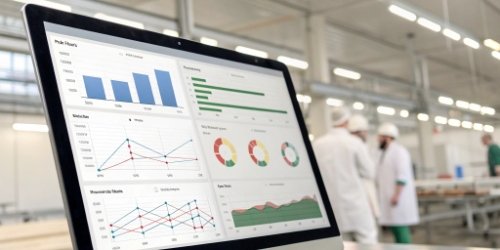
For years, we've seen companies in the food processing industry grapple with cost accounting. It's a common struggle. They have data in different places—some on paper, some in spreadsheets, and some in isolated software. Dayu Slaughterhouse was in this exact situation. They are a medium-sized operation but have very high standards for cost control. They knew they were leaving money on the table but couldn't prove where. Their story is a powerful example of how connecting the physical flow of goods with financial data can revolutionize a business.1 Let's look at how they did it and what you can learn from their journey.
What Are the Key Takeaways from Dayu’s Cost Accounting Implementation in Slaughterhouses?
You see case studies, but it's hard to find the real lessons. They often feel like just another success story without actionable advice. We can break it down for you.
The key takeaways are the need for an end-to-end system, capturing real-time data at every single stage, and linking the physical product flow with financial data. This deep integration is what delivers true cost transparency and actionable business intelligence for better decisions.
Dive Deeper into the Learnings
The success at Dayu wasn't about a single piece of software or hardware; it was about creating a single source of truth. Before our project, their departments operated in silos. Procurement had their numbers, production had their estimates, and sales had their own targets. The data didn't talk. We knew that to achieve real cost transparency, we had to break down these walls.
End-to-End Integration is Non-Negotiable
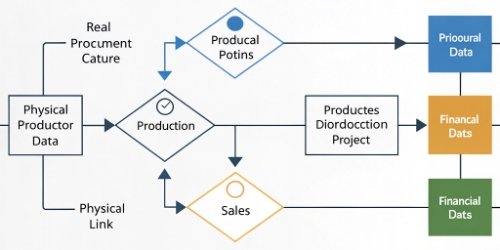
Our first goal was to connect everything. The system we implemented covered procurement settlement, slaughtering, cutting, warehousing, sales, and shipping. Our industrial scales became the critical data capture points. When a shipment of livestock arrived, its weight was captured and immediately sent to the procurement module for settlement. This eliminated manual entry errors and provided a solid baseline cost from the very beginning.2 This same principle applied through every production step.
Linking Physical and Financial Flows
This integration allowed Dayu to see how physical products transformed into financial numbers in real time. It's one thing to weigh a carcass; it's another to immediately know the cost associated with it and how that cost breaks down as it's processed into different cuts. Here’s how it changed their process:
| Stage | Old Method (Manual & Disconnected) | New Method (WeigherPS Integrated System) |
|---|---|---|
| Procurement | Paper invoices, manual weight entry, delayed payment | Scale captures weight, auto-generates settlement data |
| Production | Estimated yields, costing based on batches or averages | Real-time weight tracking (carcass, cuts), precise costing per unit |
| Sales | Invoicing based on average costs, uncertain profitability | Pricing based on real-time profit data per specific product |
This structure ensures that every gram of product is accounted for, not just physically, but financially as well.
How Can Dayu’s Case Study Improve Cost Management in Slaughterhouse Operations?
Your cost management is likely reactive, not proactive. You might find out you lost money on a product line weeks after the fact. This means you're losing money without even knowing it.
Dayu's case study proves that by using a connected weighing system, slaughterhouses can shift from historical cost analysis to real-time profit management. This allows them to instantly identify unprofitable products and adjust pricing or processes to boost margins across the board.

Dive Deeper into Proactive Management
The biggest change for the management team at Dayu was the shift in how they viewed their data. They went from looking in the rearview mirror to looking at a live map of their business. As a provider of OEM/ODM solutions, I've seen this transformation happen many times. I remember visiting a client once who thought a specific cut of meat was their star performer. After our system was installed, we ran the numbers. It turned out that due to high processing waste, it was their biggest loss-leader. They were shocked, but they were also relieved to finally know the truth.
From Post-Mortem to Real-Time Diagnosis
Before, Dayu’s team would get a cost report at the end of the month. If margins were down, it was a historical problem. They had to guess what went wrong. After our system went live in December 2022, they got a dashboard with daily updates. Now, if a specific process is yielding less than expected, they know that day. They can walk down to the production floor and investigate immediately, not a month later.
Data-Driven Pricing and Sales Strategy
This is where the client's feedback really shines: "cost accounting is finally accurate and transparent." They could now see the true gross profit on every single product category. This information is pure gold for any business. It empowers the sales and management teams to make smart, profitable decisions.
| Product | Old Belief (Avg. Costing) | New Reality (Real-Time Profit) | Action Taken by Dayu |
|---|---|---|---|
| Premium Cut A | Thought to be profitable | Discovered it was barely breaking even | Price was adjusted by 5% to reflect true cost |
| Standard Cut B | Believed to be an average performer | Revealed as a high-margin item | Became the focus of new sales promotions |
| Byproduct C | Treated as low-value waste | Found to have a consistent, healthy margin | A new sales channel was developed for it |
This level of detail turns cost management from a defensive accounting task into an offensive business strategy.
What Strategies Did Dayu Use to Enhance Cost Accounting Efficiency in Slaughterhouse Processes?
Thinking about implementing a new, company-wide system can feel overwhelming. You might worry that the project will be disruptive, expensive, and drag on forever, draining your resources without a clear return.
Dayu used a phased implementation strategy, starting with core modules like procurement and slaughter production. They focused on ensuring a seamless data flow from our industrial scales to their management software. This created a reliable data foundation from day one, ensuring efficiency.

Dive Deeper into Implementation Strategy
A key to Dayu's success was the project plan itself. The entire implementation, from our first meeting in August 2022 to the system going live in December 2022, was completed in just five months. For a system that touches every core part of the business, that is incredibly efficient. This was possible because we didn't try to do everything at once. As a partner to software providers, we understand the importance of project management and delivering value quickly.
A Phased and Focused Implementation
We worked with Dayu to identify their biggest pain points. For them, it was procurement settlement and production costing. So, we started there. By tackling these modules first, we delivered immediate value. The team at Dayu saw a positive impact within the first couple of months. This created enthusiasm and buy-in for the next phases, which included (cutting), warehousing, and sales. This approach builds momentum and reduces the risk associated with "big bang" launches.
Investing in Reliable Data Capture Points
The entire system relies on one thing: accurate data at the source. This is where our role as a hardware manufacturer is critical. A sophisticated software system is useless if the weight data it receives is wrong. Dayu understood this. They invested in our durable, certified industrial scales for every key point in their process. Before any scale leaves our facility, our quality control department puts it through comprehensive tests for weight accuracy, battery life, and software connectivity. This is our promise: the data you get from a WeigherPS scale is accurate and reliable.
Fostering Cross-Departmental Collaboration
This was not just an IT project; it was a business transformation project. Our team of experts didn't just install hardware. We sat down with Dayu's teams from finance, production, procurement, and sales. We worked with them to map their existing workflows and figure out the best way to integrate the new system. This collaborative approach ensured that the final solution was not only technically sound but also practical and user-friendly for the people who would use it every day. It builds trust and ensures the solution sticks.
Conclusion
Dayu's success story shows that accurate, real-time cost accounting is not a dream. With the right integrated system, any business can turn its data into decisive, profitable action.
-
"The Link Between Health and Financial Well-Being", https://www.cuimc.columbia.edu/news/link-between-health-and-financial-well-being. This source explains the importance of linking physical product flows with financial data for operational efficiency and profitability. Evidence role: mechanism; source type: education. Supports: Connecting the physical flow of goods with financial data can revolutionize a business.. Scope note: The source may discuss general principles rather than specific applications in slaughterhouses. ↩
-
"The Impact of Accounting Automation on Efficiency", https://digitalshowcase.lynchburg.edu/cgi/viewcontent.cgi?article=1310&context=utcp. This source discusses how automated systems reduce manual errors and establish accurate baseline costs. Evidence role: mechanism; source type: research. Supports: Automated systems eliminate manual entry errors and provide accurate baseline costs.. Scope note: The source may not address slaughterhouses directly but can provide general insights into automation benefits. ↩


Comments (0)