

Losing profits in the cutting room? Small inaccuracies in yield calculation add up to big losses. You need a clear process to stop guessing and start earning more.
To accurately measure and improve yield, you must combine calibrated weighing equipment with standardized cutting procedures and consistent staff training. This creates a baseline for tracking performance and identifying areas for improvement.

Getting a handle on your yield is the first critical step. I've seen many businesses struggle because they don't have accurate data1. They think they're doing well, but the numbers tell a different story at the end of the month. The real progress comes from diving into the details and using the right tools and strategies. Let’s break down exactly how you can transform your operation from guesswork to a precise, profit-driven system.
What Methods Can Ensure Accurate Yield Measurement in Meat Cutting Operations?
Are manual tracking errors and inconsistent weights causing chaos on your production line? These small mistakes create big problems, from incorrect inventory to lost revenue. You need a reliable system.
The best methods are using precisely calibrated scales at every key point, establishing clear Standard Operating Procedures (SOPs) for every cut, and providing ongoing training for your entire team.
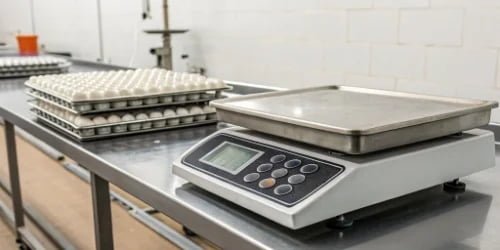
Ensuring accuracy is not about one single action. It's about building a complete system where every part supports the others. I once visited a client who had top-of-the-line knives and equipment but was still losing yield. The problem was a lack of process. Their cutters were skilled, but everyone did things slightly differently, and their scales were not consistently checked. We focused on building a reliable measurement framework first. By creating this foundation, you can trust the data you collect and make decisions that actually improve your bottom line. It all starts with consistency.
Core Components of Accurate Measurement
To truly get control over your yield, you must focus on three essential areas. Each one is a pillar that supports the entire structure of your quality and profit control.
| Component | Description | Why It's Critical |
|---|---|---|
| Calibrated Scales | Digital scales at each station are regularly checked and certified for accuracy. This includes carcass intake, individual cut stations, and final packing. | Inaccurate scales give you bad data. You can't manage what you can't measure correctly. A 1% error on a scale can translate to thousands of dollars in loss. |
| Standard Operating Procedures (SOPs)2 | Detailed, written instructions for how to perform each cut. This includes diagrams, target weights, and trim specifications. | SOPs remove guesswork and ensure every employee performs the task the same way. This consistency is the key to predictable yield and quality for your customers. |
| Staff Training | Regular training sessions for new and experienced staff on the SOPs, proper knife skills, and the importance of accurate weighing. | A well-trained team understands why accuracy matters. They become active participants in reducing waste and improving yield, rather than just going through the motions. |
How Can Technology Help Optimize Yield in a Meat Cutting Room?
Is your processing line slowed down by manual data entry and labeling mistakes? These bottlenecks reduce your throughput and eat into your profits every single day. There is a better way.
Modern technology, like smart PC scales, integrates weighing, labeling, and data management into one device. This automates data collection, eliminates human error, and provides real-time insights to optimize your entire operation.
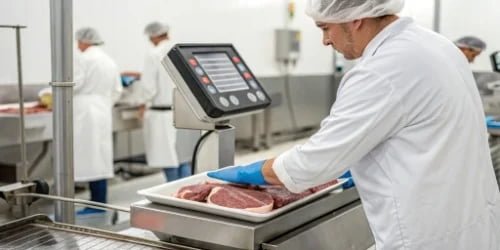
Technology is the bridge between measuring your yield and actively improving it. I remember a customer whose cutting room was a flurry of activity, but it was disorganized. They had multiple workers at different stations, each weighing, handwriting labels, and then someone else entering that data into a computer. It was slow and full of errors. We introduced them to our smart PC integrated scale (all-in-one PC scale). Suddenly, one device did the weighing, the label printing, and the data sending. The change was immediate. Their line speed increased, and their data became 100% accurate.
The Power of Integrated Weighing Systems
If your meat cutting production involves a semi-automated line with multiple workers weighing and packing, you know how chaotic it can get. An integrated system is not just a piece of hardware; it's a solution to your biggest operational headaches. It turns a series of disconnected steps into a smooth, efficient workflow. This is where you can achieve huge gains in both cost savings and efficiency. These systems are specifically designed to tackle the common pain points in a busy cutting room.
- Eliminating Manual Errors: The single biggest source of loss is often human error. A worker might misread a scale, write down the wrong number, or print the wrong label. An integrated system automates this. The weight is captured directly, the product information is selected from a menu, and the correct label is printed automatically. This simple change can save a surprising amount of money.
- Speeding Up the Process: Think about the time it takes for a worker to weigh a product, walk over to a separate printer, get the label, and then apply it. A smart scale with a built-in printer puts everything right at their fingertips. This reduces movement and time per package, which significantly increases your overall throughput.
- Providing Real-Time Data: The system instantly sends data for each weighed item to your central database. You no longer have to wait until the end of the day to see your production numbers. Managers can see live data on yield per cutter, throughput per hour, and more. This allows you to spot problems and make adjustments on the fly, not a day later.
What Are the Best Strategies to Improve Efficiency and Yield in Meat Processing?
You have accurate data, but are you using it to make real improvements? Just measuring yield is not enough. Without a clear strategy, you are leaving money on the table.
The best strategies are twofold: focus on continuous cutter training based on performance data and implement a meticulous waste analysis program. This combination enhances skill while turning potential loss into profit.

Once you trust your data, you can start making targeted improvements. The biggest impact often comes from focusing on your people and your by-products. Data from smart scales can show you which cutters are consistently achieving higher yields. You can then use your best performers to train others, lifting the skill level of the entire team. At the same time, don't just view trim as "waste." By carefully weighing and categorizing it, you can often find new revenue streams, like selling it for pet food or ground meat products.
From Skill to System: A Two-Pronged Approach
Improving efficiency is about more than just going faster. It is about being smarter with your resources, both human and material. By focusing on cutter performance and waste management, you create a cycle of continuous improvement that impacts every aspect of your operation.
- Cutter Performance Monitoring: With data from an integrated system, you can move beyond simple observation. You can track objective metrics for each cutter, such as yield percentage3 per carcass or primals processed per hour. This data isn't for punishing poor performers. It's for identifying who needs extra coaching. You can create a supportive environment where training is targeted and effective. It also allows you to reward top performers, motivating the entire team to strive for excellence.
- Strategic Waste Analysis: Every piece of meat that doesn't go into the primary package is a potential loss or a hidden opportunity. A formal program for sorting, weighing, and tracking all trimmings is essential. Categorize it (e.g., lean trim, fat, bone) and analyze the data. Are certain cutters producing more trim on specific cuts? This could signal a need for retraining. Could that trim be sold to another processor for a profit? This transforms a cost center (waste disposal) into a revenue stream.
How Do You Analyze and Enhance Productivity in a Meat Cutting Environment?
Do you feel like your team is busy, but your output doesn't always reflect it? Hidden inefficiencies can exist even in the most active cutting rooms. You need to look beyond activity to true productivity.
Analyze productivity by tracking key performance indicators (KPIs) like throughput per man-hour, yield percentage, and giveaway. Use the data from your integrated weighing system to identify bottlenecks and make data-driven decisions.

Analysis is what turns good data into great decisions. It's the final piece of the puzzle. At Weigherps, we always tell our clients that the scale is just the start. The real power comes from using the information it generates. By establishing a few key KPIs, you can get a clear, objective view of your operation's health. You can compare productivity across different shifts, track the impact of a new process, or identify which products are the most profitable to produce. This moves you from reactive problem-solving to proactive optimization.
Turning Data into Actionable Insights
Consistent tracking of the right metrics is how you enhance productivity over the long term. It provides a benchmark to measure against and highlights where your attention is needed most.
| KPI (Key Performance Indicator) | What It Measures | How to Improve It |
|---|---|---|
| Yield % | The percentage of the initial carcass weight that becomes sellable final product. | Improve cutter training on SOPs. Analyze trim to ensure only non-sellable parts are being removed. Ensure scales are accurately taring out packaging weight. |
| Throughput (kg/hour) | The total weight of processed product divided by the total hours worked. | Analyze workflow for bottlenecks. Use integrated scales to reduce time per package. Optimize the layout of the cutting room to minimize movement. |
| Giveaway % | The amount of product packed that is over the stated package weight. | Use high-precision checkweighers or scales. Set clear target weights in your system so operators can pack more accurately without going over. |
By monitoring these KPIs daily or weekly, you can spot trends, celebrate successes, and address issues before they become major problems.
Conclusion
Accurate measurement and smart technology are investments, not expenses. They give you the control and insight needed to systematically improve your meat processing yield, efficiency, and overall profitability.
-
Accurate data is the foundation for making informed decisions that can significantly improve profitability. ↩
-
SOPs standardize processes, reducing errors and improving consistency in meat cutting operations. ↩
-
Understanding yield percentage helps you identify areas for improvement and increase profitability. ↩



Comments (0)