
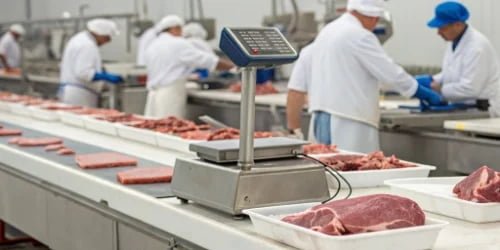
Struggling with slow, error-prone meat labeling? These mistakes cost time and money. An automated weigh-price-label system is the simple, fast solution you need to fix this process.
The fastest method is using a smart weigh-price-label scale. This device weighs the meat, calculates the price, and instantly prints a label with all necessary information. It streamlines the entire process into a single, seamless action, drastically cutting down on production time.
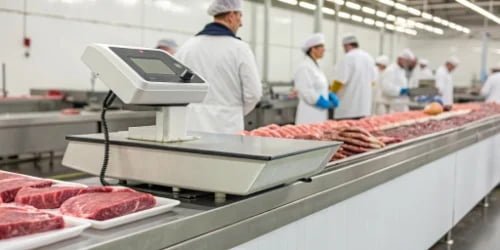
That's the quick answer, but how does this solution actually work in your facility? The real magic is in the details—the specific tools, the workflow optimization1, and the technology that drives this efficiency. Let's break down how you can transform your meat packaging line.
What Tools Can Streamline Weighing, Pricing, and Labeling in Meat Packaging?
Using separate scales, printers, and computers creates chaos. This disjointed process is slow and full of potential errors. A single, integrated weigh-price-label scale combines these tasks for ultimate efficiency.
The key tool is an intelligent weigh-price-label scale. It integrates a high-precision scale with a thermal printer and a programmable interface. This allows it to weigh a product, calculate its price based on pre-set data, and print a custom label instantly.
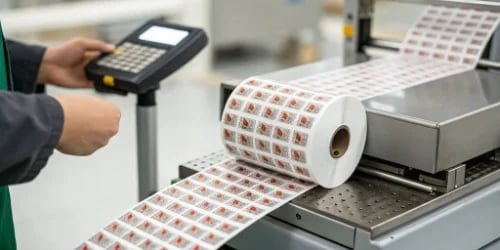
In my 19 years of experience, I've seen countless businesses struggle with messy, multi-step processes. The real breakthrough comes when they adopt a single, unified tool. This tool isn't just a scale with a printer attached; it's a smart terminal for your production line.
The Core Components of an Integrated System
An effective system combines three key parts: a precise weighing platform, a high-speed thermal printer2, and intelligent software. The software is the brain. It stores product information3, calculates prices, and designs the label format. This eliminates the need for an operator to do any manual calculations or data entry.
Connecting to Your Data
The most powerful feature, especially for semi-automated production lines, is data connectivity4. The scale doesn’t just print a label; it captures the weight and label information and uploads it directly to your back-end database or ERP system. This provides real-time inventory tracking and sales data.
| Task | The Old Way (Separate Tools) | The New Way (Integrated Scale) |
|---|---|---|
| Weighing | Place meat on scale, note weight | Place meat on scale |
| Pricing | Manually calculate price | Price automatically calculated |
| Labeling | Type details into a separate printer | Label prints automatically |
| Data Entry | Manually enter sales into a spreadsheet | Data is uploaded to the database instantly |
How Can You Optimize the Process of Weighing and Labeling Portioned Meat?
Does your meat labeling process feel sluggish and disconnected? These hidden bottlenecks kill productivity and eat into your profits. Centralizing data and automating repetitive tasks will instantly optimize your workflow.
Optimize the process by integrating weighing, pricing, and labeling into a single workstation. Connect this station to a central database for product information (PLUs). This eliminates manual data entry, reduces movement, and ensures every label is accurate and consistent with your records.
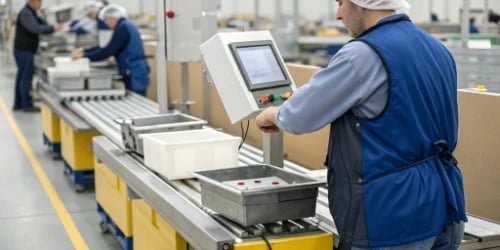
Optimization is not about making people work harder; it's about making their work smarter. I once visited a client whose team was walking back and forth between a scale and a computer station. Just by combining these into one station, we cut their processing time per package by more than half. The key is to remove unnecessary steps and decisions from the operator.
Step 1: Centralize Product Data
Before you even weigh the first item, all your product information should live in one place. This includes the product name, price per kilogram, ingredient list, and barcode information. The weigh-price-label scale pulls this data from your central database, so you only have to update it in one location. This ensures absolute consistency across all packages.
Step 2: Automate the Weigh-to-Print Workflow
The operator's job should be as simple as possible.
- Select the product on the scale's touchscreen.
- Place the portioned meat on the weighing platform.
- Take the automatically printed label and apply it to the package.
There is no manual calculation and no chance of typing the wrong price. This simple, repeatable process is easy to train and incredibly fast.
Step 3: Capture and Sync Data
Every time a label is printed, the transaction data should be sent back to your main system. This is crucial. It gives you live visibility into what's being produced, helps with inventory management5, and provides valuable data for sales analysis6. It bridges the gap between the production floor and your business management software.
What Are the Best Practices for Efficient Meat Packaging and Labeling?
Are you concerned about labeling errors and non-compliance? A single mistake can lead to product recalls and damage your reputation. Implementing clear best practices supported by technology protects your business.
Best practices include using a centralized database for all label information, automating price calculations to eliminate human error, and ensuring your labels include all required data like weight, price, date, and barcodes. Regular equipment calibration is also crucial for accuracy and compliance.
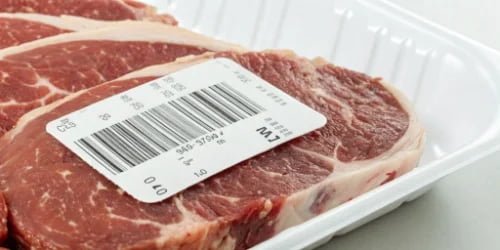
Following best practices isn't just about avoiding fines; it's about building trust with your customers. A professional, accurate, and clear label tells the consumer that you care about quality. Technology is the easiest way to enforce these practices because it makes the right way the only way. You program the rules into the system, and it executes them perfectly every time.
Data Accuracy is Non-Negotiable
Your label data must always be correct. This starts with a single source of truth—your central product database. Never allow operators to manually enter prices or product names on the fly. Configure the system to pull all information from the approved database to guarantee consistency and prevent costly pricing errors.
Workflow Ergonomics and Speed
Arrange your packaging station logically. The scale should be positioned so the operator can easily place the product, grab the printed label, and apply it in a smooth, continuous motion. The goal is to minimize physical strain and wasted movement, which directly translates to higher throughput.
Compliance and Traceability
Your labels must contain specific information to meet legal standards. An automated system makes this simple. You can design templates that automatically include all necessary fields.
| Essential Label Element | Why It's Important | How Automation Helps |
|---|---|---|
| Product Name | Clear identification for consumers | Pulled directly from the database |
| Net Weight | Required by law, ensures fairness | Captured by the high-precision scale7 |
| Price per kg/lb & Total Price | Customer information and payment | Calculated automatically, no math errors |
| Packed-on / Use-by Date | Food safety and compliance | Automatically generated by the system |
| Barcode / QR Code | For POS scanning and traceability | Generated and printed on every label |
Which Technologies Offer the Quickest Solution for Pricing and Labeling Meat Portions?
Feeling overwhelmed by all the different technology options? You worry about choosing a solution that is complex or fails to deliver. The best technology is simple, integrating seamlessly into your current workflow.
Intelligent weigh-price-label scales with integrated software are the quickest solution. These devices combine high-speed weighing sensors with powerful processors and direct database connectivity. This technology reduces a multi-step process into a single, instantaneous action for maximum throughput.
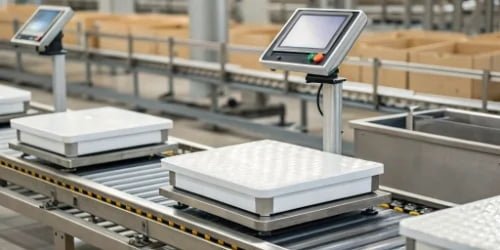
The technology that truly moves the needle is the one that simplifies complexity. We have focused our R&D on creating devices that are powerful on the inside but incredibly simple to use on the outside. This is where smart scales, or what we call IoT weighing terminals8, come in. They are designed not just to weigh, but to communicate.
The Power of Embedded Software
Modern scales run on sophisticated software right on the device. This means they don't need to be tethered to a dedicated PC. They can operate independently, pulling product information from a network server and processing transactions locally. This makes them faster, more reliable, and easier to deploy throughout your facility without adding computer hardware at every station.
Real-Time Data Integration (IoT)
The most advanced scales are IoT-enabled. This means they can communicate directly with your other business systems over the network. As soon as a package is weighed and labeled, that data can be pushed to your cloud-based inventory system, your accounting software, or your sales analytics dashboard. This provides management with a real-time view of production without any manual reporting.
Customizable Label Templates
Technology should adapt to your business, not the other way around. The quickest solutions allow you to easily design and manage label templates. You can create different layouts for different products or customers, including logos, nutritional information, and complex barcodes. This flexibility, combined with automated data population, gives you both speed and customization.
Conclusion
To summarize, smart weigh-price-label scales are the fastest solution. They integrate weighing, pricing, and data management, boosting efficiency and ensuring accuracy for any meat processing operation.
-
Discover strategies to streamline your meat processing workflow for better productivity. ↩
-
Explore the role of thermal printers in creating accurate and compliant labels. ↩
-
Understand the key information that must be included on meat labels for compliance. ↩
-
Learn about the importance of data connectivity for real-time inventory tracking. ↩
-
Explore effective inventory management strategies to optimize your operations. ↩
-
Discover how analyzing sales data can inform better business decisions. ↩
-
Understand the importance of precision in weighing for accurate pricing and labeling. ↩
-
Discover how IoT technology can revolutionize your meat processing operations. ↩


Comments (0)