
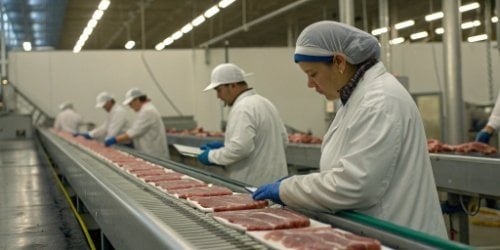
Tired of production delays and data errors? Manual weighing creates bottlenecks, wastes time, and costs you money. Automation is the simple and effective solution you need.
Automated weighing systems solve this by combining weighing, labeling, and data recording into a single, instant action. This eliminates manual entry, prevents human error, and dramatically increases the speed and accuracy of your packaging line, ensuring better efficiency and traceability.
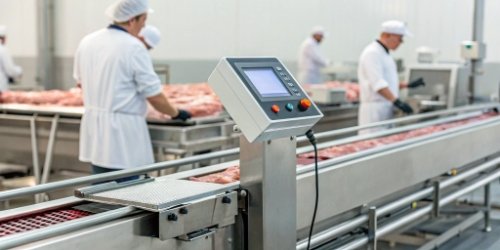
For years, I've watched companies struggle with the same frustrating problem: a fast production line that grinds to a halt at the weighing station. An operator carefully places a package on the scale, squints at the number, writes it down on a clipboard, and then moves to the next item. This tiny moment, repeated hundreds or thousands of times a day, is often the biggest hidden drain on productivity. It's a problem we've dedicated ourselves to solving. Let's dig deeper into how you can fix this weak link in your chain and unlock the true potential of your production line.
How Does Automating Weight Recording Improve Meat Packaging Line Efficiency?
Are you struggling to meet your daily production targets? Manual processes are slow and create constant interruptions. Automation streamlines the entire workflow for maximum, consistent output.
Automation combines weighing, labeling, and data logging into one swift action. This simple change removes human delay, increases throughput, and gives you real-time data to manage production more effectively and eliminate backups.
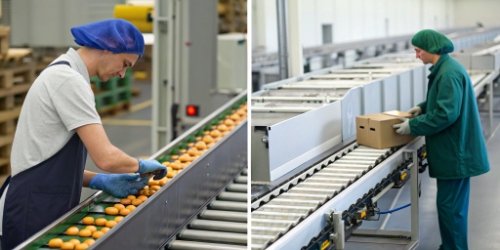
When I talk to technical directors, their main concern is always smooth integration and measurable results1. Automating weight recording delivers on both fronts. It’s not just about a faster scale; it’s about redesigning the flow of information. Intelligent weighing and printing scales are a perfect example. They weigh a product and instantly print a custom label with the weight, price, barcode, and date. At the same time, this data is sent directly to your database or ERP system2. This eliminates the need for anyone to write anything down or type it into a computer later. You create a seamless flow from the physical product to your digital records.
Streamlined Workflow
Instead of multiple steps—weigh, write, label, enter data—you have one single action. The operator simply places the item on the scale. The system does the rest. This can cut the time spent at the weighing station by more than half.
Instant Data Availability
With manual entry, you might wait hours or even until the end of a shift to get accurate production numbers. Automated systems provide that data in real-time. You can monitor output, track inventory, and make decisions based on live information, which is a huge advantage for any software-driven operation.
Reduced Human Error
A simple slip of the pen can cause big problems. Automating the process ensures the data captured is always 100% accurate, protecting your inventory records and billing integrity.
| Feature | Manual Process | Automated Process |
|---|---|---|
| Speed | Slow, operator-dependent | Instantaneous, consistent |
| Accuracy | Prone to human error3 | 100% accurate data capture |
| Data Entry | Delayed, manual input | Real-time, automatic transfer |
| Labor | Labor-intensive | Frees up operator time |
What Are the Downsides of Manual Weight Recording in Food Packaging?
Do you worry about costly mistakes in your production data? A single handwritten error can cause reject shipments, compliance issues, and direct financial loss. Understanding these risks is step one.
Manual weight recording is slow and filled with the risk of human error. It leads to inaccurate inventory, failed compliance checks, and wasted labor, directly harming your product quality and your bottom line.

I once visited a facility where a whole pallet of packaged meat was rejected by a major retailer. The reason was simple: an operator had written a "3" that looked like an "8" on the log sheet. The labels were wrong, the case weight was wrong, and the entire shipment was returned. This one small mistake cost them thousands of dollars and damaged their relationship with a key customer. This isn't a rare story. The downsides of manual recording are real and they are expensive. It's a system that introduces unnecessary risk at a critical point in your production process. Every time a person has to read a number and write it down, you open the door to errors.
The High Cost of Human Error
Mistakes in weight recording aren't just minor clerical issues. They lead to incorrect pricing, shipping charges, and inventory levels. In the food industry, accurate weight is a legal requirement for labeling, and failure can result in fines or forced recalls.
Traceability and Compliance Challenges
If there is a product recall, you need to trace every package back through the production process. Messy, incomplete, or inaccurate manual logs make this nearly impossible. A digital record, on the other hand, provides a clear, time-stamped history for every single item that passed over the scale.
Labor Inefficiency
You are paying employees to perform a low-value, repetitive task. Their time could be much better spent on quality control4 or other activities that a machine can't do. Manual recording isn't just slow; it's a poor use of your most valuable resource: your people.
How Can Digital Solutions Accelerate Weight Tracking in Meat Processing?
Is your data entry team always playing catch-up with your production line? That time lag means you are making business decisions based on old, outdated information. Digital solutions close this gap instantly.
Digital solutions use integrated scales that automatically capture weight data. This information is instantly sent to a central an ERP system or database, which gets rid of manual entry and provides immediate access for tracking and analysis.
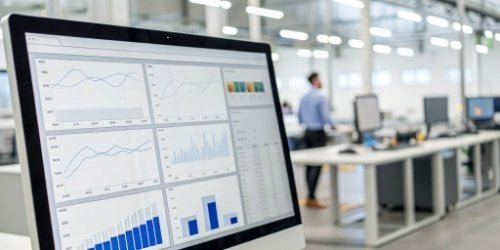
For a software vendor, the magic happens when hardware and software work together perfectly. Our scales are designed to be the starting point of your data flow. Think of them as a reliable data collection device for your system. We build them with easy integration in mind, whether through standard ports or network connections. Your software can pull weight data directly from the scale the moment it's captured. This eliminates the "air gap" that exists in manual systems, where data lives on a piece of paper before it makes it into the computer. This direct connection is what accelerates the entire process. It transforms weighing from a simple measurement into a live data point your system can use immediately for inventory management5, production reporting, and business analytics.
Direct System Integration
Our scales can communicate directly with your existing software. Using standard protocols, they can push weight data into your databases, Warehouse Management Systems (WMS), or Enterprise Resource Planning (ERP) systems without any human intervention. This is crucial for creating a truly smart factory environment.
Centralized Data Management
Instead of data being scattered across clipboards and spreadsheets, every weight record is sent to one central location. This makes it easy to access, analyze, and report on. You can see your entire production history from a single dashboard.
Enhanced Reporting and Analytics
When data is collected digitally and in real-time, you can do so much more with it. You can track yields, monitor operator performance, identify trends, and pinpoint inefficiencies. This level of insight is simply not possible with manual data collection methods.
What Technologies Can Eliminate Bottlenecks in Weight Recording for Packaging Lines?
Are you still using a separate scale, notepad, and label printer? This outdated process is the very definition of a bottleneck. Modern technology combines all these steps into one to keep your line moving.
Technologies like integrated weigh-print-label systems are the solution. They combine weighing, label creation, and data logging into a single, automated action. This completely eliminates the manual recording bottleneck and accelerates your entire packaging line.
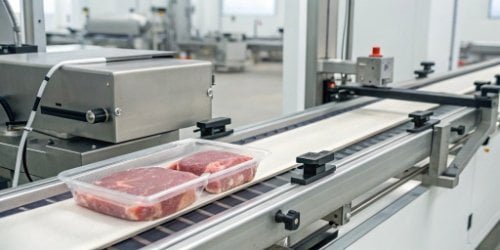
In my 19 years of manufacturing industrial scales, the biggest leap forward has been the integration of technologies. The goal is to remove every possible point of friction. The most effective way to do this is with an all-in-one system. Imagine your operator places a package of meat on the scale. The scale instantly captures the exact weight. Based on that weight, a label is printed with the price, date, a unique barcode, and any other information your customer requires. As the label is being printed, all of that data is simultaneously uploaded to your central server. The operator takes the package, applies the fresh label, and places it in the shipping container. The entire cycle takes just a few seconds.
Integrated Weigh-Labeling Systems
This is the core technology. It combines a high-precision scale, a thermal printer, and a small computer into one device. It’s designed to do one job perfectly: weigh, label, and record data as fast as possible.
Barcode and QR Code Integration
The printed label isn't just for humans. The barcode or QR code it contains allows you to track that specific package through the rest of your supply chain. It makes inventory counts and order picking fast and error-free.
IoT-Enabled Scales
Modern scales can connect directly to your network via Wi-Fi or Ethernet. This is part of the Internet of Things (IoT). It means they can be monitored remotely and can feed data directly into cloud-based software platforms, giving you visibility into your production from anywhere in the world.
Conclusion
Automating weight recording eliminates errors, boosts efficiency, and provides vital real-time data. It transforms your meat packaging line from a slow bottleneck into a high-performance, data-driven operation.
-
Learn how to define and achieve measurable results in your production processes. ↩
-
Find out how ERP systems can optimize your production workflow and data management. ↩
-
Understanding human error can help you mitigate risks in your operations. ↩
-
Explore the relationship between automation and improved quality control processes. ↩
-
Discover how automated systems can enhance your inventory management efficiency. ↩



Comments (0)