
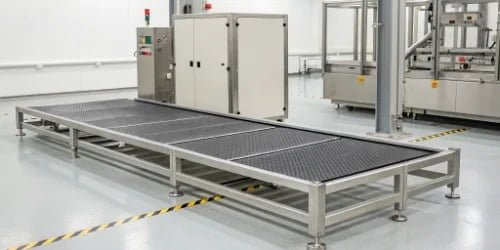
Your software is brilliant, but hardware failures can make it look bad. Getting the right, durable hardware platform is key. I can help you find a perfect match for your system.
The best washdown-ready hardware platform for your portion control software needs a high IP rating like IP68/IP69K, is built from food-grade stainless steel, and has sealed electronics. Most importantly, it must offer a flexible SDK or API for seamless integration with your software.
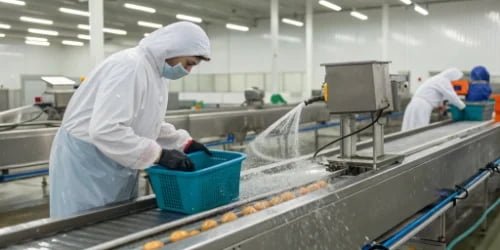
As a software provider, your reputation depends on the entire system working flawlessly. But when the hardware you pair with your software fails in a customer's harsh, wet food processing plant, you get the blame. I've seen this happen. For nearly 20 years, my team and I have been building industrial scales1, and we've learned that the hardware is the foundation of any great software solution. You need more than just a scale; you need a reliable partner2 who understands both hardware durability and software integration. Let's explore what makes a hardware platform truly ready for the challenge.
What Features Should You Look for in a Washdown-Ready Hardware Platform for Food Processing?
Not all "washdown" scales are created equal. Choosing the wrong one can lead to constant failures and expensive downtime for your client. We need to look for specific, proven features.
Key features include a high IP rating (IP68 or IP69K), construction from corrosion-resistant 304 or 316 stainless steel, and a hygienic, crevice-free design. Sealed load cells and waterproof connectors are also essential to prevent damage during high-pressure cleaning.
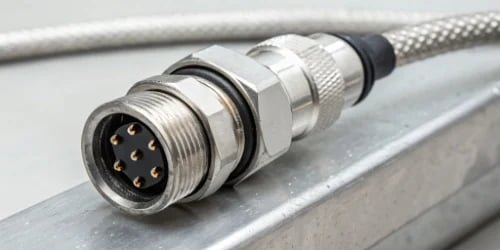
When you're trying to find the right hardware, the details really matter. We can't just look at the surface. We need to dig deeper into the specifications to understand what will actually survive on a factory floor. In my experience, focusing on three core areas—protection rating, materials, and design—is the best way to ensure the hardware will last and perform well for your customers. It's about protecting their investment and, in turn, your reputation as a trusted software provider. Let's break down these critical features so you know exactly what to ask for.
Understanding IP Ratings
The Ingress Protection (IP) rating is a standard that tells you how well a device is sealed against dust and water. It's not just marketing jargon; it's a critical spec. For a food processing environment where high-pressure hoses are used daily for cleaning, you need more than just "water-resistant." An IP68 rating means the device can be fully submerged in water. An IP69K rating is even better, as it certifies the device can withstand powerful, high-temperature water jets. This is the gold standard for food safety and equipment durability.
| IP Rating | Protection Against Solids | Protection Against Liquids |
|---|---|---|
| IP67 | Totally protected against dust. | Protected against immersion up to 1m. |
| IP68 | Totally protected against dust. | Protected against continuous immersion beyond 1m. |
| IP69K | Totally protected against dust. | Protected against high-pressure, high-temperature jets. |
Material Matters: 304 vs. 316 Stainless Steel
The type of stainless steel used is also very important. 304 stainless steel3 is the most common and is great for general-purpose corrosion resistance. It works well in many food environments. However, if your clients are working with saltwater, harsh cleaning chemicals, or acidic food products, you should look for hardware made from 316 stainless steel4. It contains molybdenum, which gives it superior resistance to chlorides and other corrosive agents. It costs a bit more, but it prevents rust and degradation that can compromise hygiene and lead to premature failure.
Design for Hygiene
A great washdown scale is designed to be cleaned easily. This means it has smooth surfaces and no hidden corners, gaps, or exposed threads where food particles and bacteria can get trapped. This is often called a "hygienic design5." Some designs even feature an open frame, so staff can easily clean underneath the weighing platform. These design choices are not just for looks; they are essential for meeting food safety standards like HACCP and preventing cross-contamination.
How Do You Choose the Best Washdown-Ready Hardware for Portion Control Software Integration?
Perfect hardware is useless if it doesn't communicate with your software. Integration problems are frustrating and can kill a project. You need to choose a hardware partner who makes connectivity easy.
Choose hardware with a comprehensive Software Development Kit (SDK) and clear API documentation. Make sure it supports standard protocols like TCP/IP and offers strong technical support from the manufacturer to help your development team during the integration process.
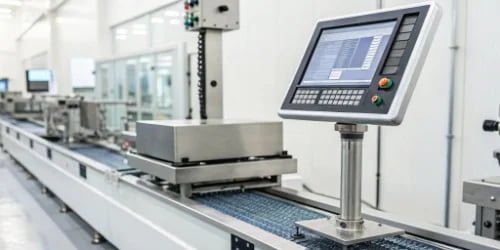
As a software company, your core value is in your code. You shouldn't have to become a hardware expert just to get a weighing scale to talk to your application. That's why the integration process is so critical. A good hardware manufacturer understands this. They don't just sell you a piece of equipment; they provide the tools and support to make your software shine. Over the years, we've learned that the most successful projects happen when there's a true partnership between the hardware and software teams. This collaboration is the key to delivering a seamless, reliable solution to the end customer.
The Power of an SDK
An SDK (Software Development Kit) is a set of tools that a hardware manufacturer provides to make a developer's life easier. Instead of you having to write complex code from scratch to control the scale, an SDK gives you pre-built functions and libraries. This can cut your development time from weeks down to just days. When evaluating hardware, always ask if they provide an SDK and sample code for your programming language. A manufacturer who invests in a good SDK is a manufacturer who cares about their software partners.
Communication Protocols
Your software needs to speak the same language as the hardware. Modern industrial scales can communicate in several ways. You should look for hardware that offers flexibility.
| Protocol | Best For | Why? |
|---|---|---|
| TCP/IP (Ethernet) | Networked environments where data is sent to a central server. | Reliable, fast, and uses standard network infrastructure. |
| Wi-Fi | Mobile carts or areas where running cables is difficult. | Offers flexibility, but signal strength can be an issue. |
| RS-232 | Direct connection to a single computer or terminal nearby. | Simple and reliable for point-to-point connections. |
| Modbus | Integrating with other industrial PLCs and automation systems. | A widely adopted standard protocol in manufacturing. |
The Value of a True Partnership
This is where the 1+1>2 idea comes in. You are an expert in software. We are experts in weighing hardware. When we work together, we create a solution that is far better than what either of us could do alone. A true hardware partner will have an engineering team ready to answer your developers' questions. They will help you troubleshoot issues and even customize firmware if needed. Don't choose a supplier who just sends you a box and a manual. Choose a partner who is invested in your success.
What Are the Benefits of Using Washdown-Compatible Devices in Food Manufacturing?
Food plants are tough on equipment. Constant moisture and harsh chemicals destroy standard electronics. This leads to downtime and contamination risks. Washdown devices are built to survive this environment.
The primary benefits are improved food safety through effective sanitation and reduced contamination risk. They also dramatically increase equipment lifespan and uptime by withstanding harsh cleaning, which leads to a much lower total cost of ownership.
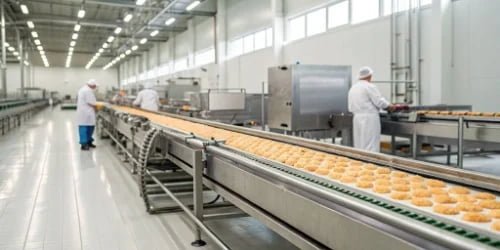
I always tell my partners and clients that buying the right equipment isn't an expense; it's an investment. In food manufacturing, that investment pays off in several powerful ways. You get peace of mind knowing you are protecting consumers, you see real savings from equipment that doesn't need constant repair, and your clients can run their operations more efficiently. It creates a positive cycle. Reliable hardware allows your software to perform at its best, which makes for a happy customer who sees a clear return on their investment. Let's look at these benefits more closely.
Enhancing Food Safety and Compliance
Food safety is non-negotiable. Regulations like HACCP (Hazard Analysis and Critical Control Points) require that all equipment on a production line can be thoroughly cleaned and sanitized. Washdown-compatible scales are designed specifically for this. Their sealed enclosures and stainless steel construction mean they can be sprayed down with high-pressure water and cleaning agents without being damaged. This allows your customers to eliminate bacteria and allergens effectively, pass audits easily, and protect their brand from a costly recall. Your software can track the portions, but the hardware ensures the process is being done in a safe, compliant environment.
Maximizing Uptime and ROI
When a scale on a production line goes down, the entire line can stop. This downtime is incredibly expensive. Washdown-ready scales are built to be robust, so they fail far less often in wet environments. This reliability directly translates to more uptime and higher productivity for your customer. We can think about this in terms of Total Cost of Ownership (TCO)6.
| Factor | Standard Scale (Not Washdown) | Washdown Scale (IP68) |
|---|---|---|
| Initial Purchase Cost | Lower | Higher |
| Repair Costs (3 years) | High (frequent failures) | Low (rare failures) |
| Downtime Costs (3 years) | Very High | Minimal |
| Total Cost | High | Lower |
As you can see, investing a little more upfront in proper washdown hardware saves a lot of money in the long run.
Improving Operational Efficiency
A clean plant is an efficient plant. With washdown-ready hardware, the cleaning process is much faster and more effective. Staff don't have to waste time carefully covering equipment with plastic bags or gingerly wiping it down. They can clean the entire area quickly and move on to the next production run. This means less labor spent on sanitation and more time spent making products. When your portion control software is running on hardware that supports this efficient workflow, your overall solution provides even more value to the customer.
Which Hardware Options Are Ideal for Hygienic Environments in Portion Control Systems?
There are many types of scales out there. But for hygienic portion control, you need to be selective. Choosing the wrong type can compromise sanitation, accuracy, or speed.
For hygienic environments, ideal hardware includes IP69K-rated stainless steel bench scales for manual portioning and robust washdown floor scales for bulk ingredients. For automated lines, fully washdown-compatible checkweighers with open-frame designs are the best choice.
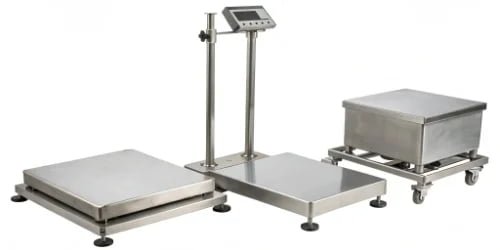
The right hardware depends on the specific job. Portioning out small amounts of expensive spices requires a different tool than weighing a 500 kg batch of dough. As a hardware manufacturer, we've developed specialized solutions for each of these tasks, but they all share the same core principles: they must be accurate, reliable, and easy to clean. As a software provider, understanding these different hardware types allows you to recommend the perfect complete system to your clients, making your solution more valuable and tailored to their specific operational needs. Let's look at the most common options for portion control.
Bench Scales for Precision Tasks
Bench scales are the workhorses of manual portioning stations. They sit on a tabletop and are used for tasks where operators need to weigh ingredients accurately and quickly. In a hygienic environment, you should look for bench scales made entirely of 304 or 316 stainless steel with an IP68 or IP69K rating. The indicator (the digital display) should also be fully sealed. A great feature to look for is a fast stabilization time. This means the scale shows a stable weight almost instantly, allowing operators to work faster without sacrificing accuracy. Your software can use this quick data feed to guide the operator to the perfect portion weight every time.
Floor Scales for Bulk Handling
When dealing with large containers, bins, or pallets of ingredients, you need a floor scale. These scales are built to handle heavy loads, often up to several thousand kilograms. Washdown floor scales are essential in food production. They should have a stainless steel platform, preferably with a slip-resistant textured surface. The load cells underneath must be hermetically sealed to protect them from constant moisture. Some of the best hygienic designs are pit-mounted, so they sit flush with the floor. This eliminates trip hazards and makes it easy to roll carts on and off.
Checkweighers for Automated Lines
For high-speed, automated production lines, a checkweigher is the ideal solution. It's a scale built into a conveyor belt. As packages move down the line, the checkweigher weighs each one in motion. Your software can connect to the checkweigher to track data. The system can then use a reject mechanism, like an air jet or a pusher arm, to automatically remove any packages that are over or under the target weight. In a food plant, these checkweighers must be fully washdown-ready, often with open-frame construction so that the area under the conveyor can be easily cleaned.
Conclusion
Finding the right washdown hardware is about more than just a spec sheet. It is about finding a reliable partner who will help create a solution that makes your software shine.
-
Explore the various applications of industrial scales in different industries. ↩
-
Discover tips for selecting a trustworthy partner for your integration needs. ↩
-
Discover why 304 stainless steel is commonly used in food processing equipment. ↩
-
Explore the advantages of 316 stainless steel in harsh food processing environments. ↩
-
Learn about hygienic design principles that help maintain food safety standards. ↩
-
Understand how TCO can influence your decision when buying industrial equipment. ↩



Comments (0)