

Your current product labels feel outdated and disconnected. Customers want transparency, but your labels offer none, creating a gap in trust and a missed opportunity to showcase your product's quality journey.
The best way to design a segment label for one-scan traceability is by embedding a unique QR code that links to a complete digital record. This approach combines essential printed information like weight and batch number with a scannable gateway to the product's full history, from origin to production.
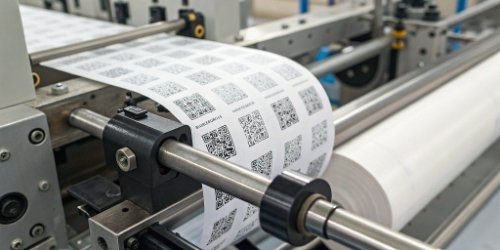
This process might seem complex, but it's really about turning your label from a simple sticker into a powerful communication tool1. It's the "ID card" for your product. Over my 19 years in this industry, I've seen companies transform their brand perception simply by making this information accessible. It's not just about compliance; it's about building a story around your product that resonates with today's informed consumer. Let's break down how you can implement this step by step.
How do you design segment labels with one-scan traceability features?
You want to add full traceability to your products. But the design process seems overwhelming and potentially expensive. We help our partners navigate this by focusing on core design principles first.
To design labels with this feature, you must first define what information is critical and then integrate a system that can generate a unique QR code for each item. This involves software that connects production data to the code and hardware that prints it clearly on a well-designed label.
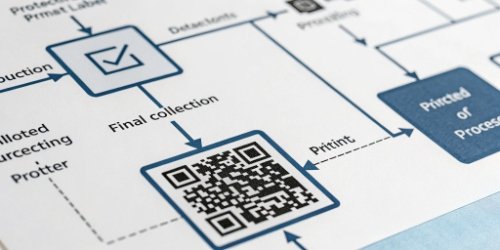
In my experience, the biggest mistake companies make is treating the label design as an afterthought2. It's not just about graphics; it's about data integrity. The label is the physical key to a rich set of digital information. A successful design process acknowledges this from the start.
The Purpose of a Traceability Label
A traceability label serves two masters: your internal operations and your external customers3. Internally, it's essential for tracking, inventory management, and quality control. If there's a problem, a quick scan of the batch number or QR code can help you isolate the issue in minutes, not days. Externally, it's a tool for transparency and marketing. It tells the customer, "We stand behind our product, and here is its story."
The Role of Customization
Not all labels are created equal because not all sales channels are the same4. A label for a bulk package sold to a wholesaler has different requirements than one for a retail product on a supermarket shelf.
| Feature | Wholesale Label Requirement | Retail Label Requirement |
|---|---|---|
| Information | Focus on batch, weight, supplier code | Focus on brand, expiry, nutrition |
| QR Code Link | Links to compliance/logistics data | Links to farm story, recipes, brand |
| Design | Functional, clear, large fonts | Aesthetically pleasing, branded |
| Size | Often larger, for warehouse scanning | Compact, fits on packaging |
At WeigherPS, we work with clients to create custom templates for each specific need. Our systems can then automatically select and print the right label format based on the product and its destination, ensuring consistency and efficiency.
What are the best practices for label design to enable easy traceability via QR codes?
Your labels are cluttered and hard to read. Important information gets lost, and the QR code is too small to scan easily. This frustrates customers and weakens your brand's image.
Focus on a clean layout with a clear information hierarchy. Place the QR code in a prominent, easy-to-scan location. Use high-contrast colors for the code and ensure there's enough "quiet zone" or white space around it. The goal is function first, then aesthetics.
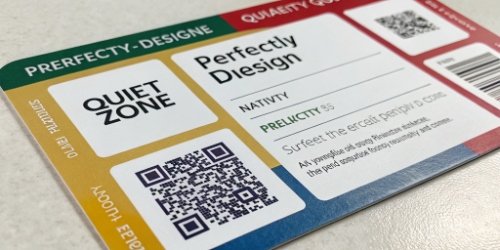
I've seen beautiful labels that were completely useless because a designer put a dark QR code on a dark background. Or they made it so small that only a high-end camera could read it. Remember, your customer is likely using their phone in a busy store. You have about three seconds to make the scan work. Good design is about removing friction, not adding it.
Prioritize Information Hierarchy
Think about what the user needs to see first. The product name and weight are usually primary. Then, the expiry date and batch number. The QR code should be treated as a primary "call to action." Don't hide it.
A good structure follows a visual flow:
- Brand & Product Name: Top and center.
- Key Data: Weight, price, expiry date. Often grouped together.
- Traceability Block: The QR code, often with a simple instruction like "Scan for Story."
- Secondary Data: Batch number, production line, compliance logos.
Optimize QR Code Scanability
The QR code is the star of the show. If it fails, the entire system fails. We always advise clients on a few non-negotiable rules for the code itself.
| Best Practice | Description | Why It's Important |
|---|---|---|
| High Contrast | Use a dark code on a light background. Black on white is the gold standard. | Ensures most phone cameras can easily distinguish the pattern. |
| Sufficient Size | A minimum of 1x1 inch (2.5x2.5 cm) is a safe bet for most applications. | Small codes are difficult to scan, especially if the surface is curved or uneven. |
| Quiet Zone | Maintain a clear, empty margin around all four sides of the QR code. | Scanners need this space to differentiate the code from surrounding elements. |
| Error Correction | Generate the code with a medium to high error correction level5 (Levels M or Q). | Allows the code to be scanned even if part of it is scratched, smudged, or torn. |
Following these technical rules ensures that the elegant system you build on the back end is actually accessible to the end user.
How do you implement one-click scanning for viewing traceability information on product labels?
You have all the product data, but linking it to a unique QR code on every single item seems like a huge technical challenge. This hurdle often stops businesses before they even start.
Implementation involves three core steps. First, aggregate your data. Second, use software to generate a unique ID and QR code for each item. Third, integrate this with hardware like a WeigherPS system that prints the unique label accurately at the point of production.
We act as the bridge between the data and the physical product. Think of our weighing and labeling systems as the final, crucial step in the data chain. I often explain to our software vendor partners that our hardware is what makes their elegant software solutions tangible. The system works because the software knows what to say, and our hardware knows how to print it on the right product, at the right time.
The Data and Software Link
Before a label is printed, the system needs to know everything about that specific product. This is where the integration comes in.
The data flow looks like this:
- Data Input: Information about the raw materials is entered into your ERP or MES. For example, which farm a pig came from, the supplier ID, and the slaughter date.
- Production Data: As the product is processed and weighed on our scale, we capture that dynamic data—the exact weight, the production time, and the team responsible.
- Unique ID Generation: The software combines this static and dynamic data, assigns a unique serial number, and generates a QR code that points to a specific URL or database entry for that number.
- Printing: Our system receives this complete data packet and prints the final, unique label for that specific cut of meat.
The Hardware Integration
This entire process happens in seconds. The key is seamless communication between the software and the hardware.
| Component | Role | Our Contribution (WeigherPS) |
|---|---|---|
| Software/ERP | Manages the central database and generates the unique ID. | We provide APIs and support for easy integration with your system. |
| Weighing Scale | Captures the precise weight of each individual item. | Our industrial scales are accurate and built for fast-paced lines. |
| Label Printer | Prints the final label with all text, barcodes, and the unique QR code. | Our integrated weighing-labeling machines do this in a single step. |
| Scanners | Used for internal verification and by customers for traceability. | We ensure our printed codes meet universal scanning standards. |
This tight integration is what enables "one-click" or, more accurately, "one-scan" traceability. It's a system built on reliability, from the data entry to the final printed label.
What are the key elements of an effective segment label for product tracking and traceability?
Missing just one piece of critical information on your labels can cause major headaches, from supply chain confusion to regulatory fines. What information is truly essential?
An effective label must contain both static and dynamic data. Static elements include the product name and your company logo. Dynamic, item-specific elements include the exact weight, production date, batch number, and most importantly, the unique traceability QR code that ties it all together.
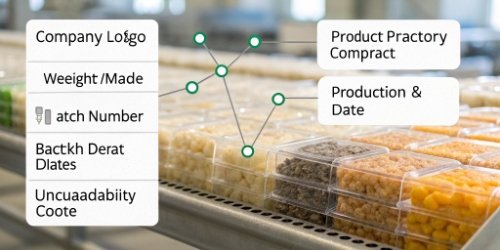
I consider the label to be a product's official "ID card." Just like your own ID, it needs a specific set of information to be considered valid and useful. For over a decade, we've helped clients refine this "ID card" to perfection, ensuring it meets the demands of regulators, retailers, and consumers. It's a balance of including everything you need without creating a cluttered mess.
Anatomy of a Perfect Traceability Label
To be truly effective for both internal tracking and external transparency, a label must contain several key pieces of information. Each element has a distinct purpose.
| Element | Description | Why It Is Critical |
|---|---|---|
| Product Name | The common name of the item (e.g., "Pork Loin Chop"). | The most basic identifier for consumers and retailers. |
| Net Weight | The exact weight of the individual package, captured by the scale. | Essential for pricing, inventory management, and regulatory compliance. |
| Production Date | The date the product was processed and packaged. | A key data point for shelf-life calculation and internal tracking (FIFO). |
| Use-By/Expiry Date | The recommended last day for consumption. | A critical piece of information for food safety and consumer trust. |
| Batch/Lot Number | A code identifying a specific group of products made on the same day, with the same materials. | Absolutely essential for quick and effective product recalls if an issue arises. |
| Traceability QR Code | A unique code that links to the product's full history. | The gateway to the full story: supplier, origin, processing team, and more. This builds ultimate brand trust. |
This structured information ensures that with a single glance or a single scan, anyone in the supply chain—from your QC manager to the end consumer—has access to the information they need.
Conclusion
Ultimately, designing a segment label with one-scan traceability transforms it from a simple tag into a powerful asset that builds trust, ensures compliance, and strengthens your brand with every product.
-
"Consumer Trust in Food and the Food System: A Critical Review", https://pmc.ncbi.nlm.nih.gov/articles/PMC8536093/. Labels can serve as communication tools by providing essential product information and enhancing transparency, as discussed in studies on consumer behavior and labeling. Evidence role: expert_consensus; source type: education. Supports: Labels can be transformed into communication tools that enhance transparency and consumer trust.. Scope note: The citation supports the general role of labels but may not address specific industries or traceability systems. ↩
-
"How Custom Labels Can Help Drive Product Sales", https://ehg.net/the-ultimate-guide-to-using-custom-labels-to-drive-product-sales/. Neglecting label design can lead to inefficiencies and reduced consumer engagement, as highlighted in industry reports on packaging and labeling. Evidence role: expert_consensus; source type: research. Supports: Treating label design as an afterthought can negatively impact efficiency and consumer engagement.. Scope note: The citation supports the importance of label design but may not address specific traceability features. ↩
-
"FSMA Final Rule on Requirements for Additional Traceability Records", https://www.fda.gov/food/food-safety-modernization-act-fsma/fsma-final-rule-requirements-additional-traceability-records-certain-foods. Traceability labels are used for both internal tracking and external transparency, as outlined in supply chain management literature. Evidence role: definition; source type: education. Supports: Traceability labels serve both internal operations and external customers by providing tracking and transparency.. Scope note: The citation supports the dual purpose of traceability labels but may not cover specific examples or industries. ↩
-
"A Guide to Market Segmentation - Fitchburg State University Online", https://online.fitchburgstate.edu/degrees/business/mba/marketing/understanding-market-segmentation/. Different sales channels require tailored labeling strategies, as supported by market segmentation studies. Evidence role: expert_consensus; source type: research. Supports: Labels need to be customized for different sales channels to meet varying requirements.. Scope note: The citation supports the need for tailored labels but may not address specific traceability features. ↩
-
"QR code - Wikipedia", https://en.wikipedia.org/wiki/QR_code. Medium to high error correction levels improve QR code reliability, as specified in QR code technical standards. Evidence role: mechanism; source type: institution. Supports: Medium to high error correction levels improve QR code reliability for traceability systems.. Scope note: The citation supports error correction levels but does not address specific use cases in traceability. ↩



Comments (0)