
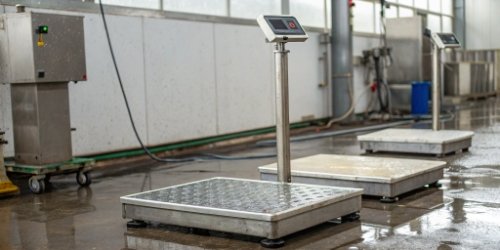
Are your scales failing under constant, heavy cleaning? This leads to costly downtime and inaccurate measurements. We build our scales to endure these harsh conditions, ensuring your operations never stop.
The ability of washdown scales to withstand daily high-pressure cleaning comes from their specific design. This includes high Ingress Protection (IP) ratings like IP68 and IP69K, full stainless steel construction, and hermetically sealed electronic components, particularly the load cells, to prevent water damage.
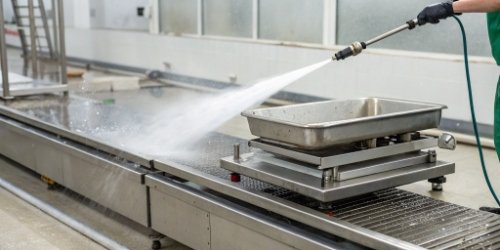
When you integrate your software with weighing hardware, you expect it to just work. The last thing you and your customers need is for the hardware to fail because of the operating environment. A scale that can't handle a simple washdown becomes a weak link in your whole system. We understand this challenge deeply because we've seen it happen many times. That’s why we engineer our scales differently. We focus on creating equipment that is not just a tool, but a reliable foundation for your technology. Let's explore the key design elements that make a washdown scale truly robust and dependable for daily use.
What Makes Washdown Scales Resistant to High-Pressure Cleaning?
Your scales stop working after a few washes. This disrupts production and costs you money. You need a scale that is built from the ground up for wet environments.
Washdown scales resist high-pressure cleaning because they are made with water-impermeable materials, like 304/316 stainless steel. They also have high IP-rated enclosures and hermetically sealed load cells that completely block water from entering and damaging sensitive electronics. This ensures long-term reliability.
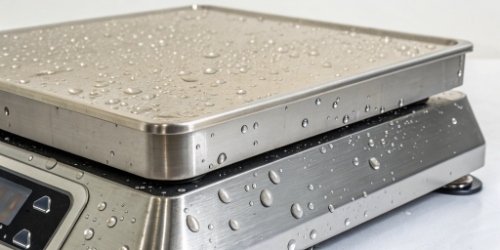
The core of a washdown scale's resistance lies in its protection against water and dust. This is where an Ingress Protection (IP) rating becomes critical. A standard scale might have a low IP rating, making it unsuitable for anything more than a damp cloth wipe. For true washdown environments, you need something much more robust.
Understanding IP Ratings
The IP rating system is a standard that classifies the degree of protection provided by an enclosure. The first digit represents protection against solid particles (like dust), and the second digit represents protection against liquids (like water). For high-pressure cleaning1, you should look for scales with IP682 or IP69K3 ratings.
| IP Rating | Solids Protection (First Digit) | Liquids Protection (Second Digit) | Ideal Use Case |
|---|---|---|---|
| IP67 | 6: Totally dust-tight | 7: Protected against immersion up to 1m | Light washdowns, temporary immersion |
| IP68 | 6: Totally dust-tight | 8: Protected against long-term immersion | Heavy washdowns, prolonged wetness |
| IP69K | 6: Totally dust-tight | 9K: Protected against high-pressure, high-temp jets | Harsh sanitation procedures4 |
A scale with an IP69K rating offers the highest level of protection, making it ideal for food processing or pharmaceutical environments where high-pressure steam cleaning is common.
How Are Washdown Scales Designed for Durability Under Daily Cleaning?
Are your scales breaking down from the physical stress of daily cleaning? Frequent replacements are expensive and frustrating. We design our scales with structural integrity to withstand this constant abuse.
The durability of washdown scales comes from a design that minimizes weak points. This includes using fully welded stainless steel frames instead of bolted ones, protecting cables with conduits, and designing smooth surfaces that prevent water and bacteria from accumulating.
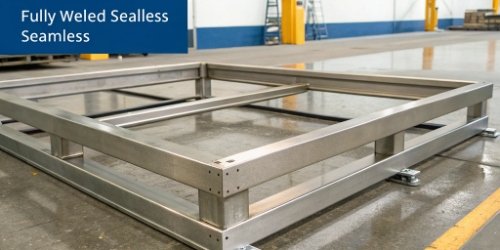
Beyond just being waterproof, a washdown scale must be physically tough. The daily routine of being moved, scrubbed, and sprayed with high-pressure jets takes a toll. Over my 19 years in this industry, I've seen many companies make the mistake of buying low-priced scales from regions like Zhejiang and Jiangsu. They quickly find out that these commercial-grade scales are not built for industrial life.
Built for a Tough Life
The physical design is what separates an industrial-grade scale from a standard one. Here’s what we focus on:
- Frame Construction: We use thick, heavy-gauge stainless steel. More importantly, we use continuous welds5 on our seams. Bolted frames have gaps and crevices where water can seep in and bacteria can grow. Welded frames are a single, solid piece, making them stronger and more hygienic.
- Surface Finish: Surfaces are polished to be smooth and free of pits or cracks. This is not just for looks. A smooth surface is easier to clean and prevents sanitizing agents from pooling, which can lead to corrosion over time. It also ensures there are no hiding places for bacteria.
- Component Protection: The load cell and indicator cables are the most vulnerable parts. We run them through stainless steel conduits or protective sheathing to prevent them from being cut or damaged during cleaning.
These choices create a scale that doesn't just survive but thrives in harsh environments.
What Features Enable Scales to Withstand Harsh Sanitation Procedures?
Are harsh cleaning chemicals corroding your scales? This leads to equipment failure and potential contamination. You need scales made from materials that resist chemical damage.
The key feature is the type of stainless steel used. 316-grade stainless steel offers superior resistance to corrosive chemicals and sanitizers compared to the standard 304 grade. Combined with sealed indicators, it ensures the scale's electronics are safe from chemical damage.
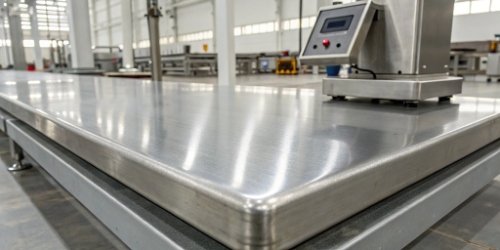
In many industries, sanitation involves more than just water. It involves strong detergents, sanitizers, and other chemicals that can be highly corrosive. Standard materials will quickly degrade, compromising both the scale's function and the hygiene of your facility. This is why material choice is non-negotiable for us.
Choosing the Right Materials
Not all stainless steel is created equal. The two most common types used in industrial scales are 304 and 316.
- 304 Stainless Steel: This is a great all-around choice. It has excellent resistance to rust and is suitable for most food processing environments where water and mild detergents are used. It's often the standard for general-purpose washdown scales6.
- 316 Stainless Steel: This grade contains an element called molybdenum. This addition dramatically increases its resistance to corrosion from chlorides, salts, and harsh industrial chemicals. If your sanitation process involves strong acidic or alkaline cleaners, 316 stainless steel is the only reliable option.
Making the right choice depends entirely on your specific cleaning protocol. We always consult with our clients to understand their environment before recommending a material. This ensures they get a scale that will last, providing a much lower total cost of ownership7. It is this targeted approach that makes a reliable partner.
How Do Washdown Scales Maintain Accuracy After Frequent Cleaning?
Your scales lose accuracy after just a few washes. This forces you into constant recalibration, costing time and causing product giveaway. Our scales are designed to protect the core weighing technology.
Washdown scales maintain accuracy by using hermetically sealed load cells. This sealing process completely isolates the internal strain gauges from moisture, humidity, and temperature changes caused by cleaning. This protects the sensitive components, ensuring consistent and precise measurements over time.
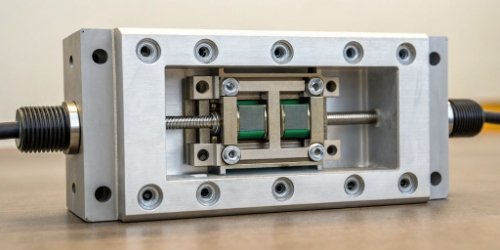
A scale can be perfectly waterproof and physically robust, but if it doesn't weigh accurately, it's useless. The biggest enemy of accuracy in a washdown environment is moisture getting into the load cell. A load cell is an incredibly sensitive transducer that measures force. Even microscopic changes caused by humidity or condensation can throw off its readings.
The Heart of the Scale: The Load Cell
This is where true industrial-grade quality shines. Many low-cost scales use load cells8 with simple potting or gasket seals. These might work for a while, but they will eventually fail under daily high-pressure cleaning. The constant changes in temperature and pressure will break the seal.
We exclusively use hermetically sealed load cells9 in our washdown scales.
- What is Hermetic Sealing? This means the load cell is sealed in a way that makes it completely airtight. A thin piece of metal is welded around the strain gauge area, creating a permanent barrier. This prevents any air, gas, or moisture from ever reaching the sensitive electronic components inside.
- Why It Matters: This design ensures that no matter how many times you spray the scale with hot or cold water, the internal environment of the load cell remains stable. This stability is the key to long-term, repeatable accuracy. It's an investment upfront that saves you from the massive headaches of inaccurate batches, compliance failures, and constant service calls.
Conclusion
Our washdown scales endure daily cleaning through high IP ratings, durable stainless steel construction, and hermetically sealed load cells. This robust design guarantees both longevity and accuracy for your operations.
-
Find out how to effectively clean equipment without causing damage. ↩
-
Discover the benefits of IP68 ratings for equipment exposed to water and dust. ↩
-
Find out how IP69K ratings protect equipment in high-pressure cleaning scenarios. ↩
-
Discover best practices for maintaining hygiene in industrial settings. ↩
-
Learn how continuous welds enhance the strength and hygiene of equipment. ↩
-
Explore how washdown scales are designed to withstand harsh cleaning environments, ensuring durability and reliability. ↩
-
Discover how understanding total cost of ownership can save money in the long run. ↩
-
Learn about load cells and their critical role in ensuring accurate measurements. ↩
-
Find out how hermetically sealed load cells enhance measurement accuracy. ↩

Comments (0)