
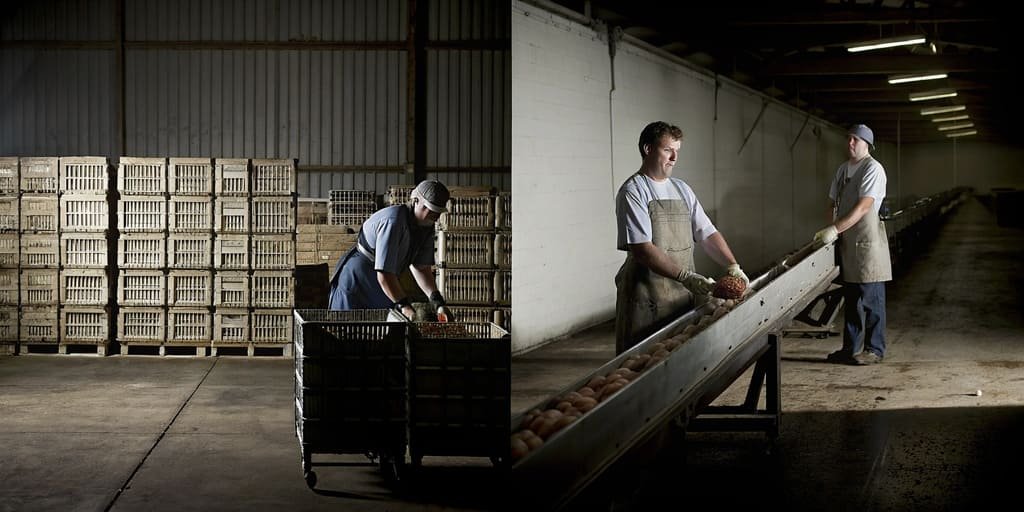
Struggling with inconsistent sorting and high labor costs? Your business might be losing money and efficiency with every manual sort, affecting your bottom line and brand reputation.
The best choice depends on your product. Intelligent grading scales are perfect for high-value items like seafood and premium fruits, providing unmatched efficiency and consistency. For products like common vegetables, where precision is less critical, a flexible hybrid of manual sorting and grading scales is often more practical and cost-effective.
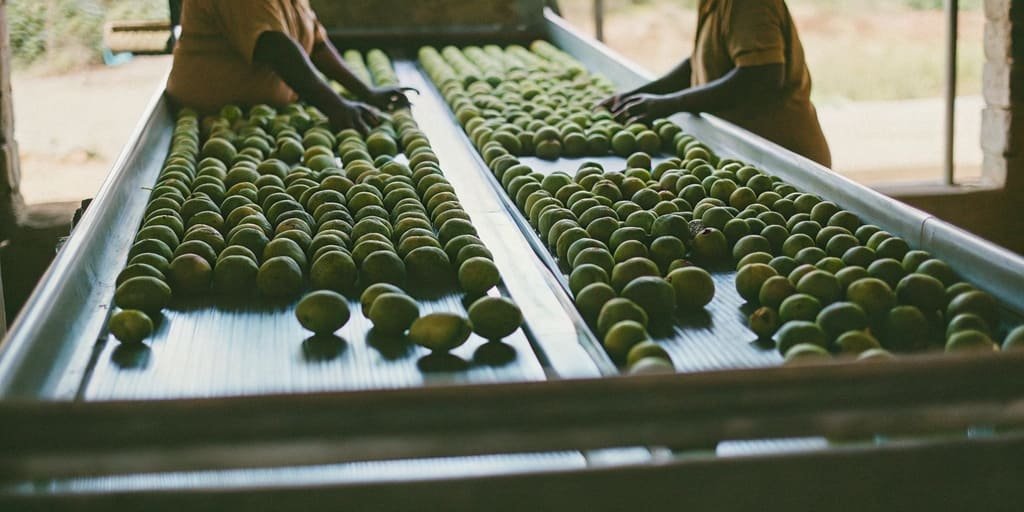
The decision between automation and manual labor isn't always straightforward. It involves weighing upfront investment against long-term gains, and considering factors like product type, volume, and quality standards. As a company with 19 years of experience in industrial weighing, I've helped many businesses navigate this choice. It’s about finding the right tool for the right job to ensure you stay competitive. In the following sections, I will break down the key advantages of automated systems, compare their performance against manual methods, and help you decide which approach is right for your business.
What are the advantages of intelligent grading scales compared to manual sorting in the seafood and fruit industries?
Manual sorting often leads to costly errors and slow production speeds. These inconsistencies can damage your brand's reputation and shrink your profits, problems that automation can directly solve.
Intelligent grading scales offer superior speed, accuracy, and consistency. They significantly reduce labor costs, minimize human error, and provide valuable data for production analysis, leading to a major boost in overall operational efficiency and profitability.
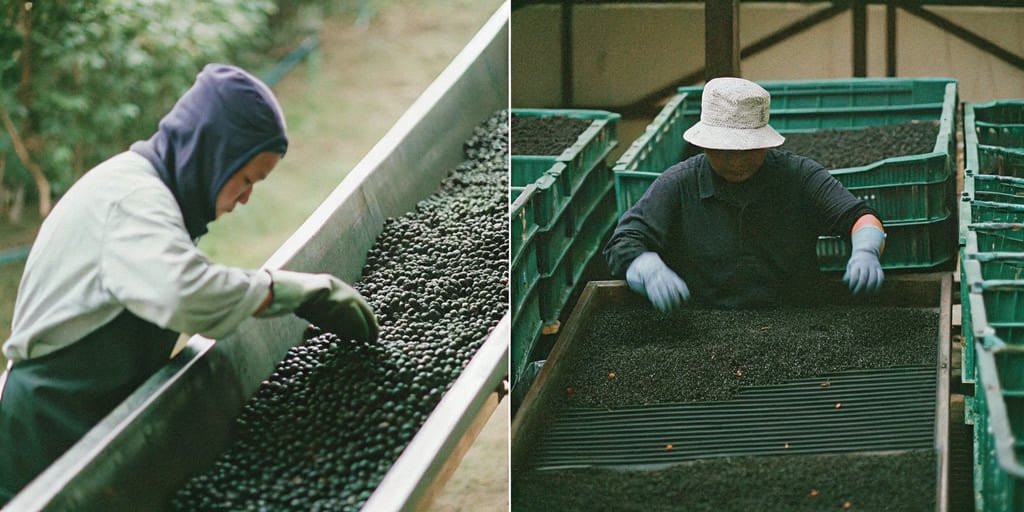
When I talk to clients, especially those of you who are software vendors or technical directors, the conversation often turns to data and efficiency. You understand the power of technology. Manual sorting is not just slow; it's a black box. You have no reliable data on throughput, grade distribution, or giveaway. Intelligent grading scales change that completely. They are not just sorting machines; they are data collection hubs.1 They provide real-time insights that can transform your operations. For example, knowing the exact weight distribution of a batch of sea cucumbers allows for better inventory management and sales forecasting. We've seen clients use this data to optimize their processes from harvest to packaging, achieving a much higher return on investment. The technology, which often includes AI and machine vision2, ensures every single item is graded to the exact same standard, something no team of human sorters can ever achieve.
Here is a simple breakdown of the core differences:
| Feature | Manual Sorting | Intelligent Grading Scale |
|---|---|---|
| Speed | Slow, dependent on worker skill | Extremely fast, processing thousands of items per hour3 |
| Accuracy | Prone to human error and inconsistency | Highly accurate and consistent due to sensors and AI4 |
| Labor Costs | High and continuously rising | Lowers long-term labor costs significantly |
| Data Collection | None or manual and unreliable | Automated, real-time data for analysis and traceability |
| Hygiene | Higher risk of contamination from handling | Reduced contact points, easier to clean and maintain5 |
| Product Damage | Higher risk, especially with delicate items | Gentle handling mechanisms minimize damage6 |
How do smart grading scales perform versus traditional manual sorting for aquatic products and fruits and vegetables?
Sorting delicate, high-value items like abalone or premium mangoes by hand is a gamble. A single mistake can easily damage these products, directly impacting your profits and customer satisfaction.
Smart grading scales excel with delicate products by using gentle handling systems and precise weight measurement. This minimizes damage and ensures every premium item is sorted correctly, a level of consistency and care that manual sorting simply cannot match.

In my experience, the difference in performance is most dramatic with high-value goods. Take premium fruits like durians or mangoes. Manual sorters grade based on subjective-feeling and visual cues, which vary from person to person and day to day. Our intelligent scales, however, use high-precision weight sensors to classify each fruit into predefined grades with near-perfect consistency. This ensures that your customers always receive a product that meets their expectations. The same is true for seafood. Sorting oysters or abalone by weight is crucial for market pricing.7 An automated grader can perform this task at a speed and accuracy that is impossible to replicate manually, handling the products gently to preserve their quality. For common vegetables where weight grading is less critical, manual sorting can still be part of the process. For instance, a preliminary manual check to remove obviously damaged or misshapen items can be a cost-effective first step before a scale performs the final weight grading. This hybrid approach offers a balance of flexibility and efficiency.
Should the seafood and fresh produce sector adopt intelligent grading machines or stick to manual sorting methods?
Are you hesitating to invest in new technology, worried about the upfront cost? While sticking with old methods might feel safe, it risks leaving you far behind more efficient competitors.
Adopting intelligent grading machines is a crucial strategic move for any business aiming for growth, superior quality control, and long-term cost savings. While manual sorting still has its place, automation is essential for scaling operations effectively.

As a purchasing manager or technical director, you're always focused on cost-effectiveness and ROI. The initial investment for an intelligent grading scale can seem high, but it's important to look at the bigger picture. We encourage our clients to think about the long-term savings. You reduce labor costs, minimize expensive product giveaway, and improve overall throughput. For example, one of our clients in the lemon industry saw a 6x increase in efficiency, from 400kg per hour with three workers to 800kg per hour with just one worker after implementing an automated system. That’s a powerful return. Furthermore, our products come with a 12-month after-sales service guarantee, and we provide professional technical support to ensure smooth integration and operation. The decision to automate ultimately depends on your specific needs. If you handle high volumes of value-sensitive products, the case for automation is clear. If you process smaller batches or less sensitive items, a hybrid approach might be best for now. We are here to help you analyze your needs and find the most cost-effective solution.
Conclusion
Ultimately, intelligent grading scales boost efficiency for premium goods, while a hybrid approach may suit others best. The right choice truly depends on your specific product, volume, and growth strategy.
-
"Machine Learning for Quality Control in the Food Industry - PMC", https://pmc.ncbi.nlm.nih.gov/articles/PMC12523314/. Literature on cyber-physical production systems and Industry 4.0 in food manufacturing identifies sensors, automated inspection, and connected equipment as sources of real-time operational data, which contextualizes the description of grading machines as data-collection nodes. Evidence role: mechanism; source type: paper. Supports: Intelligent grading scales can function as data collection hubs, not only sorting machines.. Scope note: The source would support the concept of connected automated equipment as data infrastructure; it may not address every commercial grading scale model. ↩
-
"Machine vision system: a tool for quality inspection of food and ...", https://pmc.ncbi.nlm.nih.gov/articles/PMC3550871/. Reviews of machine vision and artificial intelligence in agricultural product grading document their use for classifying fruits, vegetables, and other food products by size, color, defects, and quality attributes. Evidence role: definition; source type: paper. Supports: Modern intelligent grading technology often includes AI and machine vision.. Scope note: This establishes common technical approaches in the field; it does not prove that a specific product uses AI or machine vision. ↩
-
"Service Fees", https://www.ams.usda.gov/services/grading/fees. Technical studies and institutional descriptions of automated produce grading lines report high-throughput operation in which mechanized conveyors and sensor stations can inspect or sort large numbers of items per hour, supporting the plausibility of thousands-per-hour processing rates. Evidence role: statistic; source type: education. Supports: Intelligent grading scales can process thousands of items per hour.. Scope note: Throughput varies widely by commodity, item size, conveyor configuration, and grading criteria; a citation should match the relevant product category where possible. ↩
-
"Machine Learning for Quality Control in the Food Industry - PMC", https://pmc.ncbi.nlm.nih.gov/articles/PMC12523314/. Peer-reviewed work on sensor-based and AI-assisted food grading reports that calibrated sensors and classification algorithms can improve repeatability and reduce subjective variation in quality assessment. Evidence role: mechanism; source type: paper. Supports: Sensor- and AI-based grading can be highly accurate and consistent.. Scope note: Accuracy depends on training data, calibration, product variability, and validation method, so the citation should not be read as a universal accuracy guarantee. ↩
-
"Chapter 7: Equipment, Tools, Buildings, and Sanitation", https://www.fda.gov/media/117425/download. Food safety guidance for hygienic equipment design emphasizes minimizing product-contact surfaces, enabling cleanability, and reducing contamination risks, which supports the rationale that well-designed automated systems can improve hygiene when they reduce handling and are cleanable. Evidence role: mechanism; source type: government. Supports: Automated grading systems with fewer contact points and cleanable designs can support better hygiene.. Scope note: This supports hygienic design principles rather than proving that all grading scales are easier to clean or safer than all manual operations. ↩
-
"Minimizing Apple Bruising in the Packing Line", https://www.canr.msu.edu/uploads/resources/pdfs/minimizing_apple_bruising_in_the_packing_line_(e2290).pdf. Postharvest engineering literature shows that bruising and mechanical injury in fruits and delicate foods are influenced by impact, compression, and handling conditions, supporting the use of controlled, gentle handling mechanisms to reduce damage. Evidence role: mechanism; source type: paper. Supports: Gentle handling mechanisms in automated grading can minimize product damage.. Scope note: The evidence supports the handling-damage mechanism; actual damage reduction depends on the machine’s design and the sensitivity of the specific commodity. ↩
-
"Shellfish Aquaculture Production, Farm-gate Values and ...", https://www.coastal.msstate.edu/shellfish-aquaculture-production-farm-gate-values-and-prices-united-states. Aquaculture marketing and seafood grading sources commonly describe shellfish and abalone as being sold in size or weight grades, supporting the claim that weight classification affects market categories and pricing. Evidence role: historical_context; source type: institution. Supports: Sorting oysters or abalone by weight is important for market pricing.. Scope note: The source would support the pricing relevance of size or weight grades generally; exact pricing rules vary by market, species, and buyer specifications. ↩


Comments (0)