

Struggling to find a manufacturer for your small, custom order? You have a great product idea but feel stuck because big factories only seem to want massive orders. It’s frustrating.
Yes, absolutely. Many professional manufacturers will accept small batch orders for OEM or custom designs, with some even supporting one-off development projects. This is especially true for factories with independent R&D teams that can handle joint hardware and software design, eliminating high minimum order quantity (MOQ) barriers.
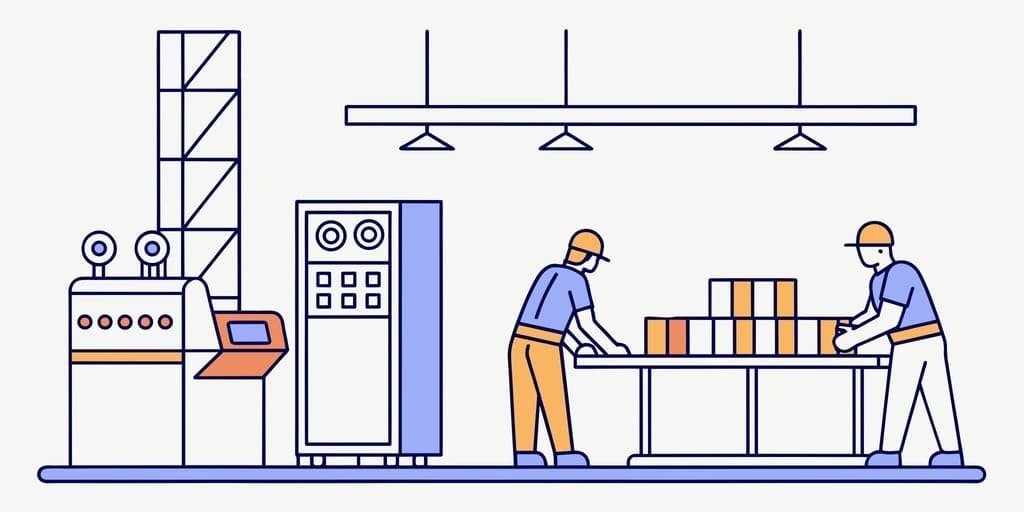
It's a common misconception that all manufacturers require huge orders. While some do, an increasing number of specialized factories see the value in flexibility1. As a manufacturer with 19 years of experience, I’ve seen firsthand how starting with a small, custom project can build a powerful, long-term partnership. The key is to find the right kind of partner, one that values collaboration over pure volume. This shift allows innovative companies, like yours, to get to market without needing massive upfront investment2.
Will manufacturers accept small batch orders for OEM private labeling or custom non-standard designs?
Worried your order is too small for a factory's attention? This fear stops many great ideas from ever becoming a reality, keeping your business from launching unique products.
Yes, many modern manufacturers welcome small batch OEM and custom orders. Factories with strong R&D departments see these projects as an opportunity to build partnerships and showcase their technical capabilities, rather than just a numbers game. They are equipped for flexibility and innovation.
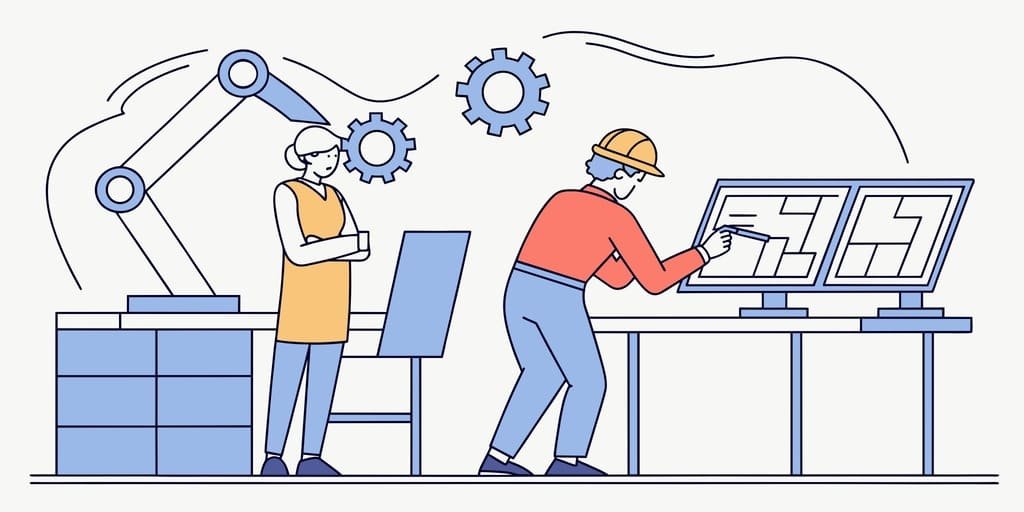
Let me break down why this is the case. In today's market, innovation is a key competitive advantage3. Manufacturers that invest in research and development (R&D) understand that groundbreaking products often start with a small pilot or a niche application4. They are structured differently from factories that only focus on mass production.
Here’s a look at the types of manufacturers and how they view small orders:
| Manufacturer Type | Approach to Small Custom Orders | Why? |
|---|---|---|
| Factory with R&D Team | Welcoming. Often no MOQ. | Views small orders as a gateway to innovation and long-term partnerships. Their R&D capability is a core service. |
| Mass Production Factory | Resistant. High MOQ requirements. | Their business model is built on economies of scale. Setup costs for custom jobs are too high for small runs. |
| Trading Company | Inconsistent. Depends on their network. | They don't manufacture anything themselves. They connect you to a factory, and most factories they work with prefer large volumes. |
At our company, we have an independent R&D department focused on industrial weighing, automation, and IoT solutions. This team is our engine for innovation. For us, a small order from a software company isn't a burden; it's a co-development opportunity. We can work together on hardware and software design, ensuring seamless integration. This kind of collaboration is simply not possible with a factory built only for volume.
How can you find a factory willing to handle small-scale OEM or customized production orders?
You know flexible factories exist, but finding them feels impossible. Sifting through endless online directories and getting "no" after "no" is exhausting and demoralizing. It’s a huge roadblock.
To find these factories, look for specific indicators of their capabilities. Focus your search on manufacturers that highlight their R&D services, custom solution case studies, and engineering expertise on their websites. These are the partners who are equipped and willing to take on small, custom projects.

Finding the right partner is less about luck and more about a targeted search. Instead of generic searches like "manufacturer," use more specific terms like "custom weighing system manufacturer" or "industrial scale OEM with R&D." Platforms like Alibaba or Thomasnet can be a starting point, but you have to dig deeper.
I remember a client from North America, a software provider for logistics, who was struggling with this. They had spent months talking to factories that either quoted an MOQ of 5,000 units or didn't understand their need for software integration.
Here are the green flags to look for when vetting a potential partner:
- A Detailed "R&D" or "Customization" Page: This shows that innovation is a core part of their business, not an afterthought. They should talk about their engineering team, their process, and their technology.
- Case Studies on Custom Projects: Look for examples of how they've helped other clients with unique needs. This is proof they can deliver.
- No Prominent MOQ: Factories that are proud of their flexibility often state "no MOQ" or "support for small batches" directly.
- Willingness to Discuss Technical Details: A good partner will want to schedule a call with their engineers to discuss your project. They see it as a technical challenge, not just an order.
By focusing on these signals, you can quickly filter out the volume-focused factories and identify the true innovation partners.
Are small batch orders feasible when requesting OEM or non-standard product customization?
The idea of custom production feels expensive and out of reach for a small batch. You might worry that even if you find a willing factory, the costs will be too high to be profitable.
Yes, small-batch custom orders are entirely feasible, but it depends on the manufacturer's production process and technical capabilities. Factories with in-house R&D teams, modular product designs, and flexible assembly lines can make small custom runs cost-effective by minimizing setup time and material waste.
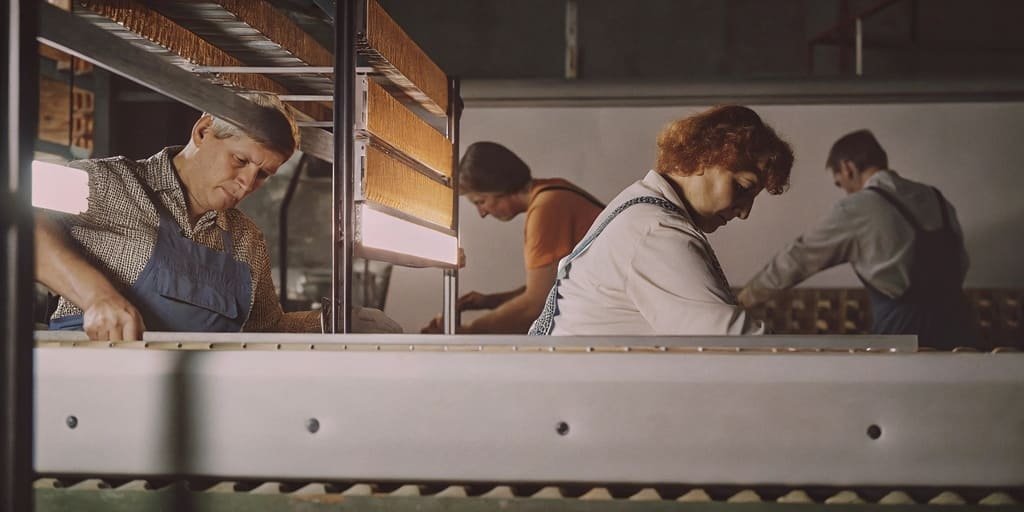
The reason many manufacturers demand high MOQs is because of their setup costs. Calibrating machines, sourcing specific materials, and training the assembly line for a new product has a fixed cost. That cost is easier to absorb over 10,000 units than it is over 10.
However, professional manufacturers like us have built our systems around flexibility. Here’s how we make it feasible:
- Independent R&D Team: Our engineers work with you from day one. This collaboration ensures the design is optimized for our production methods, which reduces costs and potential setbacks from the start. For a software vendor, this means we can co-design the hardware and software for perfect compatibility.
- Modular Product Architecture5: We don't have to redesign everything from scratch. Our industrial scales are built with a modular design. We can combine different sensors, displays, communication modules (like IoT), and software interfaces to create a "custom" product using standardized components. This DRASTICALLY reduces development time and cost.
- Flexible Production Lines: Our assembly processes are not rigid. We can easily switch between different product configurations without a complete line overhaul. This is essential for handling small, diverse orders efficiently. We might assemble 20 units of a custom IoT scale in the morning and 50 units of a standard bench scale in the afternoon.
This approach turns a daunting financial commitment into a manageable pilot project, allowing you to test your market without the risk of a massive inventory investment.
What should you consider when approaching manufacturers for OEM private labeling or custom small-batch production?
You're ready to talk to a manufacturer, but what do you need to prepare? Going into a discussion unprepared can lead to miscommunication, inaccurate quotes, and wasted time. This is your one shot to make a good impression.
Approach the conversation as a partnership discussion, not just a price inquiry. Prepare a clear product brief that outlines your technical specifications, software integration needs, target market, and expected order quantities. This shows you are a serious partner and helps the manufacturer give you an accurate assessment.

Having been on the other side of these calls for nearly two decades, I can tell you that the clients who get the best results are the ones who come prepared. It makes the entire process smoother and more effective for everyone. A clear brief helps us understand your vision and quickly determine if we are the right fit.
Here is a simple checklist to prepare before you contact a manufacturer:
- 1. Your Product Vision:
- What problem does it solve for your customer?
- What are the essential features? (e.g., must connect to our cloud via API)
- What are the "nice-to-have" features?
- 2. Technical Specifications:
- Do you have any drawings, CAD files, or sketches?
- What are the performance requirements (e.g., capacity, accuracy)?
- What are the software and hardware integration needs? This is critical for software vendors.
- 3. Business Case:
- Who is your target market?
- What is your estimated initial order quantity (even if it's just for a pilot)?
- What is your target unit cost?
When you have this information ready, you shift the conversation from "Can you make this?" to "How can we build this together?" You should also ask the manufacturer about their process, from prototyping to quality control and after-sales support. This is how you find a true partner, not just a supplier.
Conclusion
Finding a manufacturer for small, custom orders is possible. Focus on partners with strong R&D teams and flexible processes. Prepare your vision, and you will find a partner ready to build it with you.
-
"The relationship between mass customization and sustainable ...", https://pmc.ncbi.nlm.nih.gov/articles/PMC10950661/. Research on flexible manufacturing systems and mass customization can support that manufacturing strategy has increasingly emphasized flexibility to address product variety and changing customer demand. Evidence role: historical_context; source type: research. Supports: An increasing number of specialized factories value flexible production rather than only large-volume manufacturing.. Scope note: This would substantiate the general manufacturing trend, not quantify the exact number of specialized factories adopting it. ↩
-
"Lean startup", https://en.wikipedia.org/wiki/Lean_startup. A source on lean startup methods, prototyping, or pilot production can support that small pilot runs can reduce early capital commitment and market risk compared with full-scale production. Evidence role: mechanism; source type: paper. Supports: Small custom projects can help companies get to market without massive upfront investment.. Scope note: This supports the economic rationale for pilots generally, but actual investment requirements vary by product, tooling, certification, and supplier terms. ↩
-
"Innovation and Competitive Advantage", https://www.oecd.org/en/publications/innovation-and-competitive-advantage_344434438114.html. The OECD Oslo Manual and related innovation literature describe innovation as a major factor in firm performance, productivity, and competitive positioning. Evidence role: expert_consensus; source type: institution. Supports: Innovation is a key competitive advantage in modern markets.. Scope note: This supports the general importance of innovation, not the specific competitive position of any individual manufacturer. ↩
-
"Navigating new product development: Uncovering factors and ...", https://pmc.ncbi.nlm.nih.gov/articles/PMC10788447/. Product development and innovation diffusion literature can support that new products are commonly tested through prototypes, pilots, limited releases, or niche applications before broader commercialization. Evidence role: historical_context; source type: paper. Supports: Groundbreaking products often begin as small pilots or niche applications.. Scope note: The source would establish a common development pathway, not guarantee that all breakthrough products begin this way. ↩
-
"Product design for modularity: QFD approach (PDF)", https://www.academia.edu/79310913/Product_design_for_modularity_QFD_approach. Academic literature on modular product architecture can support that using standardized modules and interfaces can reduce design complexity and enable product variety with less redevelopment than fully bespoke designs. Evidence role: mechanism; source type: paper. Supports: Modular product architecture can reduce development time and cost for customized products.. Scope note: The source would support the design principle generally, not prove the cost or development-time reduction for the article’s specific products. ↩


Comments (0)