
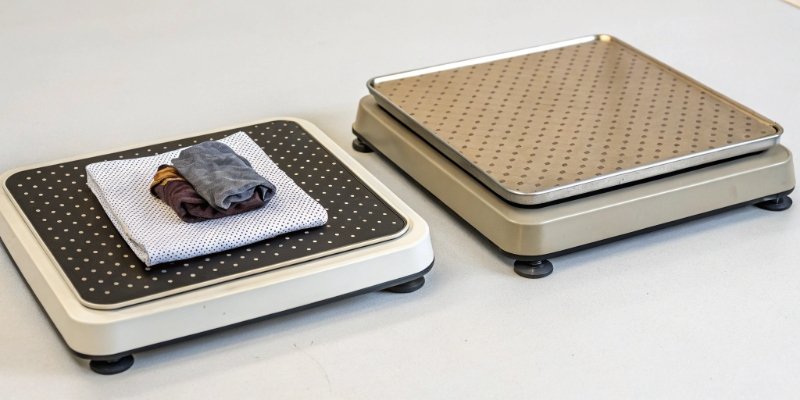
Are you tired of manual data entry errors and slow weighing processes? These mistakes cost time and money, disrupting your workflow. A printing platform scale offers a solution, but is it worth the investment?
Absolutely. A printing platform scale is worth the additional cost. It automatically prints labels or receipts during weighing and allows for scannable inventory management. This process eliminates manual recording and checking, which significantly reduces error rates and boosts overall workflow efficiency.
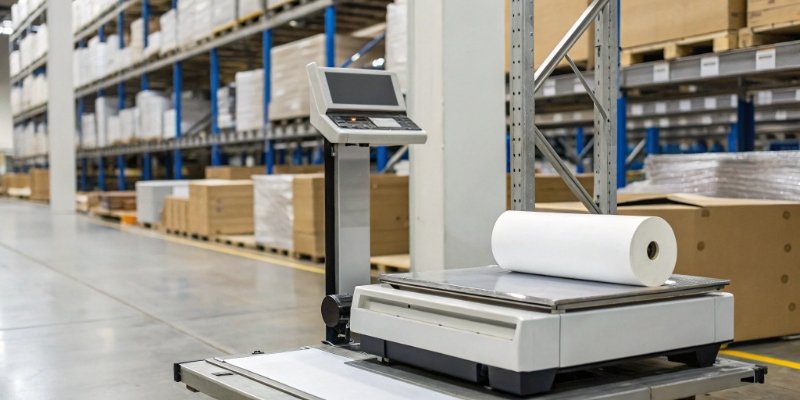
The price difference between a standard scale and a printing one can seem large at first. However, when you look past the initial cost, the real value becomes apparent. To understand if it's the right choice for your business, we need to examine the specific benefits. Let's explore how this investment can pay off in the long run.
What Are the Benefits of a Printing Platform Scale Compared to a Regular Platform Scale?
Is your operation slowed down by manual logging? Illegible handwriting and lost tickets can create daily chaos. Imagine a system where every weight is recorded perfectly and effortlessly every single time.
A printing platform scale provides major benefits. It increases accuracy by removing manual data entry. It boosts efficiency by merging weighing and labeling into one step. It also improves data management with printed records that can include barcodes, weights, and dates for simple tracking.
Eliminating Human Error
The biggest issue with manual recording is human error. An employee might write down a number incorrectly, or someone else might misread that handwriting later. A small typo can lead to incorrect inventory counts, shipping the wrong product, and lost profits. A printing scale eliminates this problem entirely. The weight is sent directly from the scale's sensor to the printer, ensuring the number on the label is always accurate. There is no manual entry, so there is no opportunity for transcription mistakes. This level of accuracy is critical in fast-paced environments where mistakes can be costly.
Streamlining Data Capture
A printing scale does more than just print a weight. Modern scales, especially those with IoT capabilities, can print a wide range of information on a single label. This includes scannable barcodes, product IDs, batch numbers, timestamps, and operator initials. This turns a simple weight measurement into a detailed data record that can be used throughout your operation. Instead of just knowing how much something weighs, you now have a complete data profile of that item, ready to be scanned into your Warehouse Management System (WMS) or Enterprise Resource Planning (ERP) system.
Creating an Instant Audit Trail
In many industries, especially pharmaceuticals and food, traceability is a legal requirement1. You must be able to track every component from receiving to final shipment. A printed label provides a physical, time-stamped record for every step of the process. This creates a clear and instant audit trail. If there is a quality control issue or a customer dispute, you have a physical record to verify weights and batch numbers. This helps ensure compliance with regulations and provides solid evidence if a discrepancy arises.
Is Investing in a Printing Platform Scale Worth the Extra Cost?
Are you worried about the high initial price of a printing scale? It can feel like a major expense for what seems like a small upgrade. But what if that "extra cost" could actually save you more money in the long run?
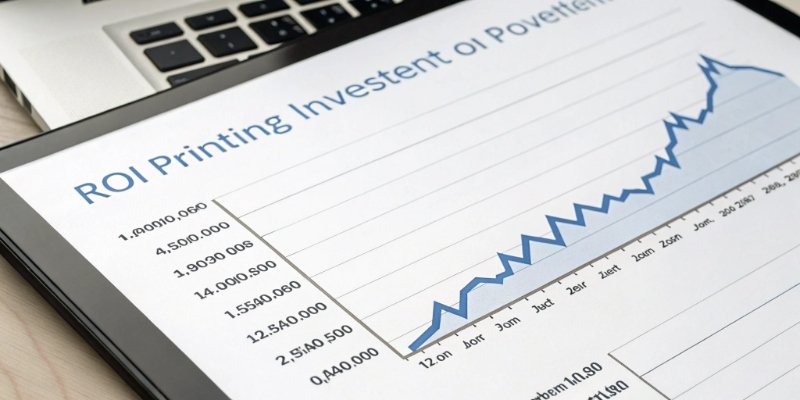
Yes, the investment is almost always worth it. The return on investment (ROI) comes from lower labor costs, fewer expensive errors, and faster throughput. For any business with a moderate to high volume of transactions, the scale can quickly pay for itself and start generating profit.
Calculating the Return on Investment (ROI)
To see the true value, you have to look beyond the purchase price and analyze the total cost of ownership. This includes labor, errors, and efficiency gains. A regular scale might be cheaper to buy, but it introduces ongoing costs that a printing scale eliminates. After 19 years in the scale manufacturing business, I've seen countless companies justify the investment by looking at the complete picture. Let's break down the hidden costs of a standard scale compared to the benefits of a printing scale.
| Cost Factor | Regular Platform Scale | Printing Platform Scale |
|---|---|---|
| Labor (per entry) | ~20-30 seconds (weigh, write, verify) | ~5 seconds (weigh and auto-print) |
| Error Rate | ~1-3% (manual data entry) | <0.1% (automated printing) |
| Cost per Error | ~$50+ (re-shipping, admin, returns) | ~$50+ (but occur far less often) |
| Throughput | ~120 units/hour | ~300+ units/hour |
When you process hundreds or thousands of items a day, these numbers add up fast. The time saved on labor alone can be substantial. More importantly, reducing your error rate means fewer incorrect shipments2, which saves money on returns and keeps your customers happy.
How Does a Printing Platform Scale Help Improve Workflow Efficiency?
Does your current workflow feel clunky and inefficient? Separate stations for weighing and labeling often create bottlenecks and wasted movement. There has to be a smoother way to run your warehouse or production line.
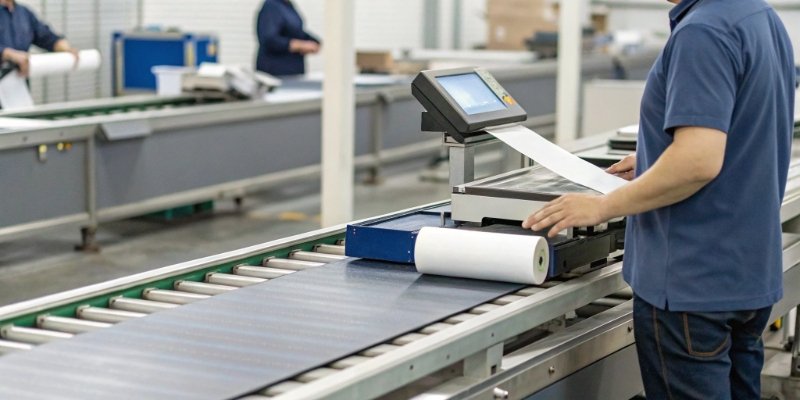
A printing scale improves workflow by combining two essential steps into one. An operator weighs an item, and a label is instantly printed at the same station. This approach reduces employee movement, gets rid of queues at separate labeling areas, and speeds up the entire process from receiving to shipping.
In the Receiving Department
An efficient workflow starts the moment goods arrive. With a printing scale, an operator can weigh an incoming pallet, scan the purchase order, and instantly print a goods-received label. This label, complete with weight, product code, and a barcode, can then be used for immediate put-away and inventory entry. There's no need to walk to a desk to manually enter data into the system, which greatly reduces receiving times and gets materials into stock faster3. This improves the accuracy of your inventory from the very beginning.
During Production and Kitting
In manufacturing, precision is key. When creating batches or kits, a printing scale ensures every component is weighed accurately. Operators can weigh an ingredient or a set of parts, and an identification label is printed on the spot. This label can include the exact weight, batch number, and time, ensuring traceability and quality control. This removes guesswork and prevents costly mistakes in production, like using the wrong amount of a critical material. For businesses that repackage bulk goods into smaller units, a printing scale makes the process fast and error-free.
In the Shipping Department
The shipping dock is where printing scales have the most dramatic impact. I've personally seen shipping departments transform with this one change. Instead of weighing a package on a scale, writing down the weight, and then walking to a computer to print a shipping label, the entire process happens in one seamless action. The operator places the box on the scale, and the correct shipping label with the precise weight, address, and tracking barcode is printed automatically. This single action eliminates multiple steps4, reduces worker fatigue5, and dramatically increases the number of packages that can be shipped per hour.
When Should You Choose a Printing Platform Scale Over a Standard Platform Scale?
Are you unsure if a printing scale is the right fit for your business? A standard scale might be working fine right now. But at what point does "fine" become not good enough for your growing operation?
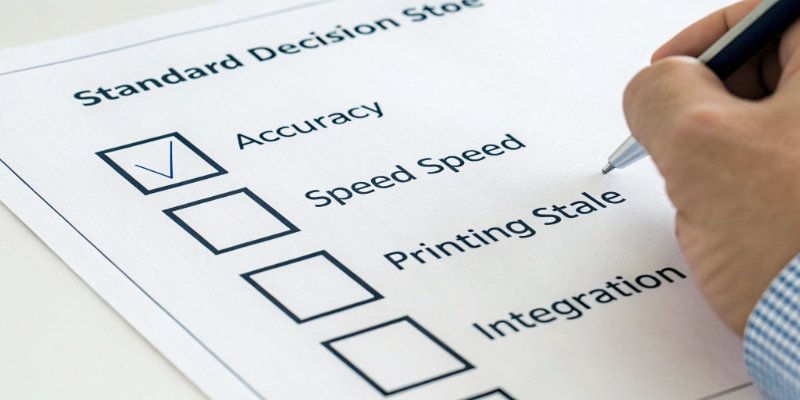
You should choose a printing platform scale when accuracy, speed, and data integration are critical to your success. If you process a high volume of items, require traceability for compliance, or want to connect weight data with your software, a printing scale is the clear choice.
Your Transaction Volume is High
A business weighing five or ten packages a day likely won't see a huge return from a printing scale. A manual process is manageable at that level. However, once your volume increases, the inefficiencies of manual recording become a major bottleneck. From my experience helping clients, the tipping point is usually around 50 to 100 transactions per day6. At this volume, the time saved and errors avoided by automating the labeling process begin to deliver a significant financial benefit, improving throughput and reducing labor costs.
Your Industry Demands Traceability
For some industries, traceability isn't just a good idea—it's a legal requirement. In the food and beverage, pharmaceutical, and chemical sectors, you must be able to track every ingredient and product from beginning to end. A standard scale simply can't provide the data needed for robust traceability. A printing scale creates a time-stamped, unchangeable record for every item weighed7. This printed label with a lot number or barcode is essential for meeting regulatory standards and is your best defense during an audit or recall.
You Use or Plan to Use a WMS/ERP System
A standard platform scale is a data island; the information it provides exists for only a moment before it has to be manually transferred. A modern printing scale, especially an IoT-enabled one, acts as a data bridge. At Weigherps, we specialize in creating custom weighing systems that integrate seamlessly with our clients' software. The scale can automatically send weight data directly to your WMS or ERP system via Wi-Fi or Ethernet. This eliminates manual data entry, ensures your central system is always accurate, and provides real-time visibility into your operations.
Conclusion
The initial cost is higher, but a printing scale is a strategic investment. It boosts efficiency, cuts costly errors, and provides a fast return, making your entire operation more productive and profitable.
-
"FSMA Final Rule on Requirements for Additional Traceability Records - FDA", https://www.fda.gov/food/food-safety-modernization-act-fsma/fsma-final-rule-requirements-additional-traceability-records-certain-foods. This source outlines industries where traceability is mandated by law, such as pharmaceuticals and food production. Evidence role: definition; source type: government. Supports: Traceability is a legal requirement in industries like pharmaceuticals and food production.. ↩
-
"How Shipping Automation Reduces Errors in Ecommerce ...", https://www.vesyl.com/blog/how-shipping-automation-reduces-errors-in-ecommerce-fulfillment. This source provides data on how automation reduces error rates in shipping and inventory management. Evidence role: statistic; source type: research. Supports: Reducing error rates through automation leads to fewer incorrect shipments and associated costs.. ↩
-
"How to Manage Your Inventory Effectively Using Scales", https://www.paradigmsoftware.com/Blog?title=How-to-Manage-Your-Inventory-Effectively-Using-Scales. This source discusses how integrated weighing and labeling systems streamline receiving processes and improve inventory management. Evidence role: mechanism; source type: research. Supports: A printing scale reduces receiving times and gets materials into stock faster by streamlining the weighing and labeling process.. ↩
-
"The 'productivity paradox' of AI adoption in manufacturing firms", https://mitsloan.mit.edu/ideas-made-to-matter/productivity-paradox-ai-adoption-manufacturing-firms. This source explains how integrated systems streamline processes by eliminating redundant steps. Evidence role: mechanism; source type: research. Supports: A printing scale eliminates multiple steps in the weighing and labeling process, streamlining operations.. ↩
-
"Automation in Health Care: The Need for an Ergonomics ...", https://pmc.ncbi.nlm.nih.gov/articles/PMC10838176/. This source explains how reducing repetitive tasks and movement in workflows can lower worker fatigue. Evidence role: mechanism; source type: research. Supports: A printing scale reduces worker fatigue by eliminating repetitive tasks and unnecessary movement in workflows.. ↩
-
"AI Automation KPIs for Finance Teams - Peakflo", https://peakflo.co/blog/ai-automation-kpis-finance-performance-metrics. This source provides benchmarks for transaction volumes where automation becomes cost-effective. Evidence role: statistic; source type: research. Supports: The tipping point for automation cost-effectiveness is typically around 50 to 100 transactions per day.. ↩
-
"What is Time Stamp Record?", https://www.hyperbots.com/glossary/time-stamp-record. This source explains how time-stamped labels contribute to traceability and compliance in regulated industries. Evidence role: mechanism; source type: education. Supports: A printing scale creates a time-stamped, unchangeable record for every item weighed, aiding traceability and compliance.. ↩



Comments (0)