
Your food traceability software is powerful, but data gaps create risk. This undermines your value and leaves clients exposed. The solution is integrating the right hardware to ensure complete data accuracy.
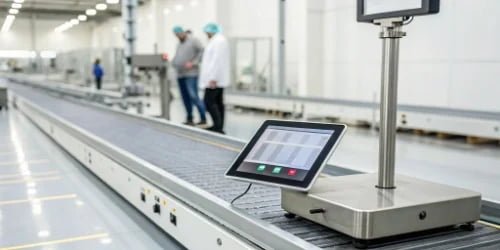
The key missing hardware is often an IoT-enabled industrial weighing scale. It captures precise weight data at critical points, automatically transmitting it to your software. This ensures real-time, accurate, and gap-free traceability from start to finish for your clients.
Great software runs on great data. For software vendors like you, the quality of the data your system processes directly reflects on the quality of your product. You can build the most sophisticated traceability platform in the world, but if it's fed by slow, manual, or inaccurate information, it will fail to deliver on its promise. This can damage your reputation and your clients' businesses. The secret to elevating your software from a simple tracking tool to an indispensable business intelligence platform lies in the hardware it connects with. Let's explore how the right hardware partnership can transform your traceability solution.
What Hardware Components Are Essential for Effective Food Traceability Software?
Identifying the right hardware can be confusing. Choosing the wrong components leads to wasted investment, poor system performance, and unhappy clients, reflecting poorly on your software's capabilities.
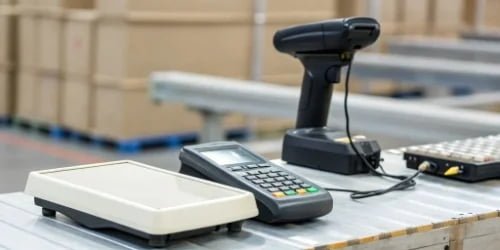
Essential hardware includes barcode scanners, RFID readers, temperature sensors, and crucially, IoT-enabled industrial scales. These devices automate data collection at key stages, providing the raw, accurate information your software needs to create a complete traceability record.
To build a robust food traceability ecosystem, your software needs to connect with hardware that captures data at every critical control point. While scanners and sensors are important, we've seen that the most impactful data often comes from the weighing stage. After all, most food products are measured, batched, or sold by weight.
The Core Data Capture Devices
A complete system relies on several pieces of hardware working together. Barcode and QR code scanners are vital for identifying products, batches, and locations. Temperature sensors are non-negotiable for monitoring cold chains. However, these devices often only tell part of the story. They identify what and where, but not always how much.
The Central Role of Weighing
This is where industrial weighing scales become the heart of the system. An IoT-enabled scale doesn't just measure weight; it acts as a critical data terminal. It captures precise measurements and can be configured to require a barcode scan before weighing. This instantly links a specific weight to a specific product or ingredient lot, creating a perfect, error-free data point that is automatically sent to your software. This seamless integration transforms a simple weighing station into a powerful data source for your traceability platform.
How Can Missing Hardware Impact the Performance of Food Traceability Systems?
You might notice occasional data errors or gaps in your system. These seemingly small issues can cause compliance failures, complicate recalls, and erode your clients' trust in your software.
Missing hardware, especially automated scales, forces manual data entry. This introduces human error, creates data gaps, and delays information flow. The result is an unreliable and inefficient traceability system that fails under pressure, like during a product recall.
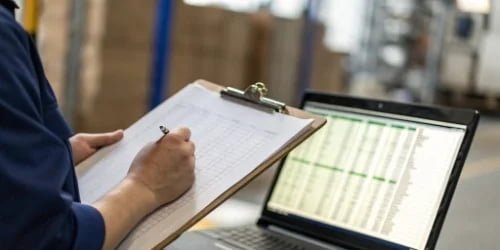
I remember working with a software provider whose platform was being used by a large-scale bakery. Their software was brilliant for tracking finished goods, but the bakeries were still having employees write down the weights of flour and other ingredients on paper sheets. One day, they ran a mock recall drill. It failed. They couldn't reliably trace a batch of dough back to its specific lot of flour because someone had written "15.0 kg" instead of "1.50 kg." The entire system's integrity was compromised by a simple manual error. This is a common story.
The High Cost of Data Inaccuracy
When an employee has to read a number from a scale and type it into a terminal, the risk of error is high. Transposed numbers, misplaced decimals, or simple forgetfulness can poison your data. Your software then operates on faulty information, making its reports and alerts untrustworthy.
Compliance and Recall Risks
During an audit or a real recall, regulators and customers demand fast, accurate data. A system that relies on manual entry is slow and prone to gaps. This can lead to larger, more expensive recalls and potential fines, making your client—and your software—look bad. The inability to produce a clean, verifiable digital trail instantly can have severe financial and reputational consequences.
What Key Hardware Should Be Integrated into Food Traceability Solutions?
You know you need to integrate hardware, but you're not sure what to prioritize. Integrating a wide range of devices can be expensive and complex, and you want to offer the most value.
You should prioritize integrating an IoT-enabled industrial weighing scale. It acts as a central data hub for receiving, batching, processing, and shipping. This single integration point provides the most valuable and frequently updated data for your traceability software.
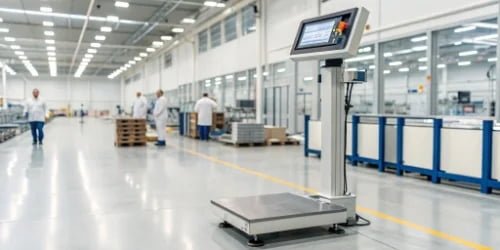
As a software vendor, your goal is to make your platform as "sticky" and indispensable as possible. The best way to do that is to become the central nervous system for your client's operation. Integrating with an IoT weighing scale is the most direct path to achieving this. Think about the food production lifecycle1: ingredients are received (by weight), they are batched for production (by weight), they are quality checked (by weight), and they are often packed and shipped (by weight).
The IoT Weighing Scale: A Data Powerhouse
A modern industrial scale from a manufacturer like us is more than just a scale. It's an intelligent edge device. Our scales can collect multiple data points beyond just weight, such as operator ID, product SKU (from a connected scanner), and timestamp. This data is then formatted and sent directly to the cloud or your server via Wi-Fi or Ethernet. It's a complete, verified data packet that your system can trust.
Seamless System Integration
This is where we focus our efforts. We design our IoT scales to meet the challenges of data collection2, processing, and uploading. More importantly, we ensure they can be seamlessly integrated into our customers' existing production management systems (like MES or ERP) and, of course, specialized software like yours. With clear APIs and documentation, connecting your software to our hardware is straightforward, allowing you to quickly enhance your offering.
How Do Hardware Choices Affect Food Traceability Software Efficiency?
Your software’s performance feels limited by slow or unreliable data input. This can make your platform seem sluggish to end-users, reducing its perceived value and making it harder to sell.
Your hardware choice directly determines your software's data quality and speed. Opting for smart, IoT-connected hardware like our scales provides real-time, accurate data. This eliminates bottlenecks from manual entry, boosting your software's overall efficiency and reliability.

The efficiency of your software is not just about processing speed; it's about the speed and quality of the entire data pipeline3, from the real world to the digital record. When you partner with hardware that automates and accelerates data capture, you fundamentally improve your own product's performance and value proposition.
Data Velocity and System Responsiveness
Legacy hardware or manual processes create a "stop-and-go" data flow. An operator weighs something, writes it down, walks to a terminal, and types it in. Minutes or even hours can pass. With an IoT scale, the data is sent to your software the moment the weight is stable. This real-time data flow makes your software feel more dynamic and responsive. Dashboards update instantly, alerts are triggered on time, and inventory levels are always accurate.
Enhancing Software Value Through Hardware
This efficiency directly translates into higher value for your customers and an easier sell for you. By recommending or bundling your software with proven, integration-ready hardware4, you are providing a complete, end-to-end solution5, not just a piece of the puzzle. This table shows the clear advantage:
| Feature | Manual / Legacy Hardware | Smart / IoT Hardware (Our Scales) |
|---|---|---|
| Data Speed | Slow, delayed (minutes to hours) | Real-time, instant |
| Data Accuracy | Low (prone to human error) | High (automated and verified) |
| Labor Cost | High (requires manual entry) | Low (fully automated capture) |
| Integration | Difficult, requires custom work | Simple, via modern APIs |
| System Value | Limited by poor data quality | Enhanced by reliable, fast data |
By choosing the right hardware partner, you are ultimately making your own software more powerful, efficient, and valuable to the market.
Conclusion
Your software needs reliable hardware, especially IoT scales, for accurate food traceability. This creates an unbeatable, complete solution that ensures safety and efficiency for your clients.
-
Learn about the key stages in food production and their impact on traceability. ↩
-
Explore effective strategies for accurate and efficient data collection. ↩
-
Understand the significance of a smooth data pipeline for operational efficiency. ↩
-
Explore the advantages of using integration-ready hardware for seamless operations. ↩
-
Discover the components that make up a comprehensive food traceability solution. ↩

Comments (0)