
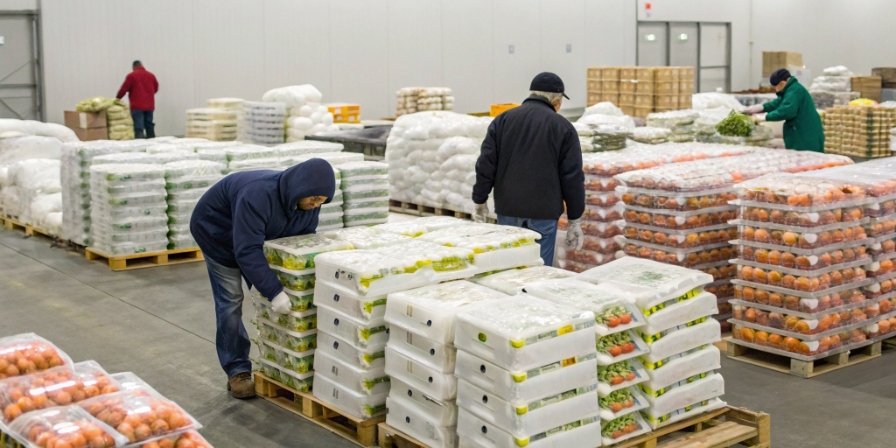
Are you drowning in a sea of different prepared and frozen food products? Manual inventory counts are slow and full of errors, causing major operational headaches and hurting your bottom line.
Automating your inventory process with a multi-functional smart PC scale is the answer. It uses RFID and barcode scanning to instantly capture data, providing real-time stock levels for every food category. This boosts accuracy, saves time, and gives you complete control over your warehouse operations.
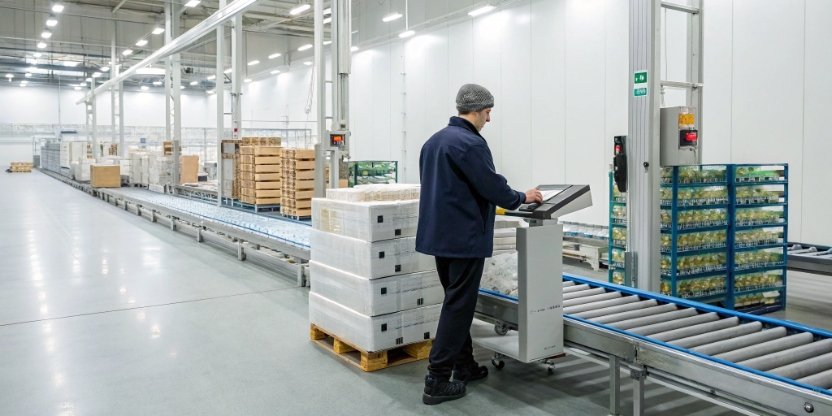
I’ve spent 19 years in the industrial scale manufacturing business, and I've seen countless companies struggle with the same problem: inefficient inventory management. The issue is especially challenging in the food industry, where product diversity and perishability add extra layers of complexity. Many of our clients, particularly software vendors who serve this market, are looking for robust, tech-driven solutions. They need something that not only works but also provides a clear return on investment. The good news is that technology has caught up with these challenges. Let’s dive into how you can solve these problems for good.
How Can Automation Improve Inventory Management for Frozen and Prepared Foods?
You’re trying to keep track of a constant flow of goods, but manual logs are failing you. Mistakes lead to stockouts on popular items or overstocking on others, both of which cost you money.
Automation is the key to improving inventory management for frozen and prepared foods. It replaces error-prone manual tasks with technology like RFID and barcode scanners. [3] This provides immediate, accurate data on stock levels, reduces labor costs, and empowers you with the real-time insights needed for total operational control.
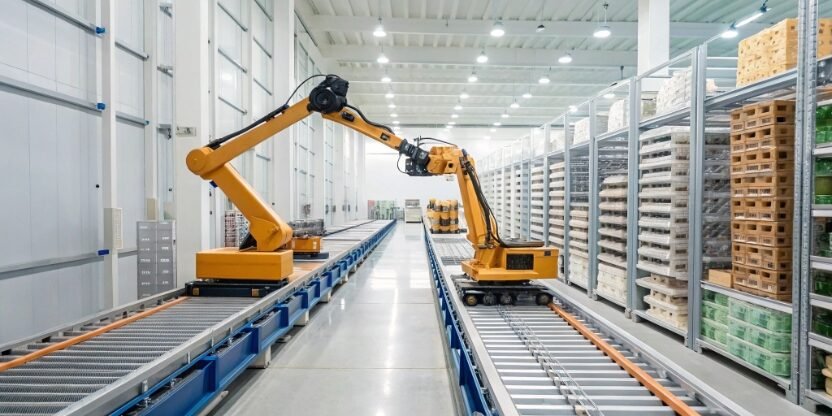
For years, I've watched businesses wrestle with traditional inventory methods. Traditional inventory management relies heavily on periodic stock counts and manual data entry, making it difficult to maintain an accurate, real-time view of what’s available. [2] This manual approach is not only slow but also incredibly prone to human error, which can lead to significant discrepancies. [21] I once visited a client whose team spent two full days each month just counting boxes in their freezer, a process that was both costly and often inaccurate. Automation changes this entire dynamic by providing tools that deliver visibility and efficiency.
The Problem with Manual Systems
Manual inventory tracking is a well-known source of operational challenges. [20] These systems are slow, require significant labor hours, and the data is often outdated by the time it's entered. For businesses dealing with perishable goods like frozen and prepared foods, this can lead to spoilage and waste. [22] Moreover, a lack of real-time data means managers make decisions based on assumptions rather than facts, which can result in poor forecasting and inefficient use of capital. [21]
The Automation Advantage
Automation eliminates these issues by integrating smart technology directly into the workflow. The main benefit of automation in the food industry is an increase in profits through faster, more efficient handling. [10] Here’s how it works:
| Technology | Manual Method | Automated Method |
|---|---|---|
| Data Capture | Writing on a clipboard, typing into a spreadsheet. | Instant scanning of barcodes or RFID tags. |
| Speed | Counting items one by one. | Scanning multiple items simultaneously without a direct line of sight (with RFID). [5] |
| Accuracy | High potential for human error in counting and data entry. [21] | Drastically reduces errors, ensuring data integrity from the start. [6] |
| Visibility | Data is only available after manual entry and compilation. | Real-time data is available instantly across the system. [4] |
By implementing technologies like smart scales that can weigh, identify, and log products in a single step, you transform inventory management from a periodic chore into a continuous, seamless process. [11]
What Are Effective Solutions for Streamlining Stock Taking in Diverse Food Categories?
Your warehouse has everything from frozen fish to ready-to-eat meals, each with its own SKU. Trying to manually count and categorize this vast assortment is a recipe for mix-ups and lost productivity.
An effective solution for diverse food categories is a unified system that combines multiple technologies. A smart PC scale that integrates both RFID for bulk scanning and barcodes for individual items is highly effective. This flexibility allows for rapid and accurate stock-taking across all product types.
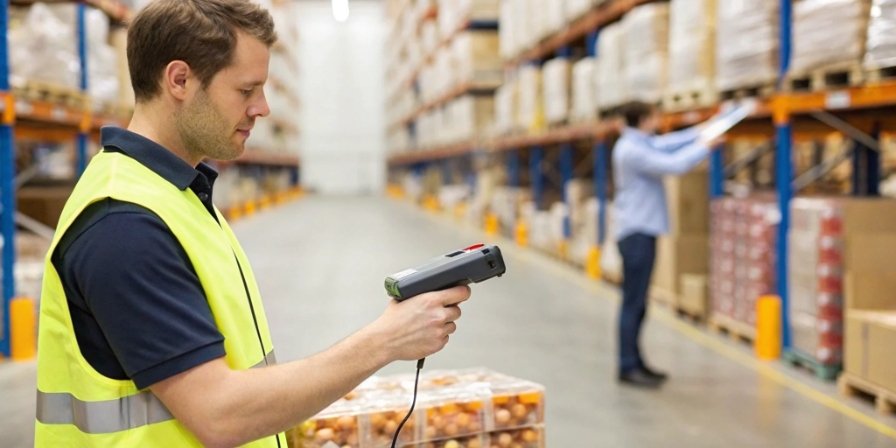
Managing a wide variety of products is a common pain point I hear from purchasing managers. One client, a software provider for grocery chains, was struggling to help their customers manage inventory that included everything from large cases of frozen chicken to individual gourmet desserts. A single-technology solution wasn't enough. This is where, as a manufacturer, we've focused on creating flexible solutions that adapt to the product, not the other way around.
A Unified Platform for All Data
The most powerful solutions bring all your inventory data into one place. When you use separate devices for scanning, weighing, and data entry, you create information silos. These disconnected systems make it almost impossible to get a clear picture of your overall inventory. [22] A multi-functional smart PC scale acts as a central hub, integrating with your existing warehouse management system (WMS) or ERP. [9] This ensures that all data—whether from a barcode scan, an RFID read, or a weight measurement—is collected and processed consistently, providing a single source of truth for your entire operation. [23]
Tailoring the Technology to the Product
The beauty of an integrated system is its ability to use the right tool for the right job. You don't need a one-size-fits-all approach. For food businesses, this flexibility is crucial. [27]
- RFID for Bulk and Case-Level Tracking: RFID technology is perfect for quickly scanning entire pallets or cases of goods as they pass through a receiving door or checkpoint.1 [25] Because it doesn't require a direct line of sight, you can read dozens or even hundreds of tags at once, making it ideal for high-volume items. [13]
- Barcodes for Item-Level Precision: For individual items, mixed cases, or point-of-sale transactions, barcode scanning remains a fast and reliable choice. [22] Our smart PC scales come equipped with high-speed scanners to handle these granular tasks, ensuring every single product is accounted for.
By offering both capabilities, a system can handle the full spectrum of products in a food warehouse, from bulk ingredients to finished goods. This adaptability is what truly streamlines stock-taking.
How Do You Enhance Efficiency in Manual Inventory Checks for Frozen and Ready-to-Eat Products?
You’re still reliant on manual counting for now, and the process is painfully slow. Every hour your team spends counting is an hour they could be spending on more productive tasks like order fulfillment.
To make manual checks more efficient, you can organize your storage space and divide counting tasks among team members. [24, 29] However, the most significant leap in efficiency comes from adopting technology, starting with barcode scanners and progressing to fully automated systems like smart scales that eliminate manual counting altogether.
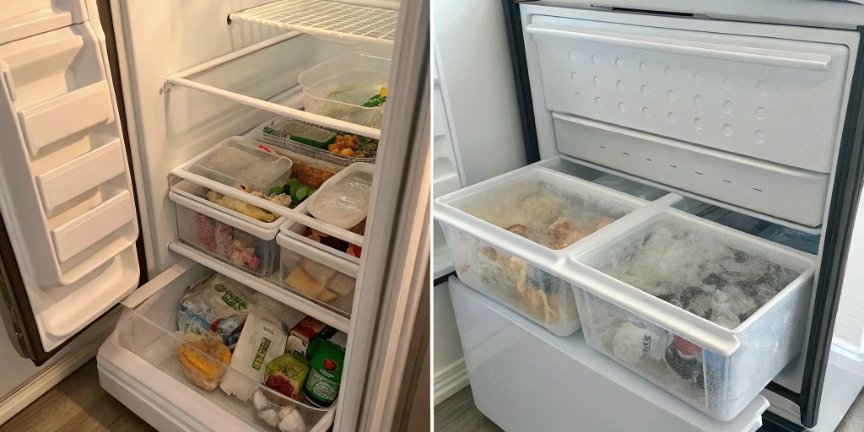
I often speak with technical directors who are looking for ways to improve their current processes without a complete overhaul. While I am a firm believer in the power of full automation, I understand that sometimes the transition needs to happen in stages. I worked with a mid-sized food distributor who wasn't ready for a full system upgrade. We started by helping them improve their existing manual process, which laid the groundwork for future automation.
Improving the Manual Process (The Stop-Gap)
Before you can automate, you need organization. A disorganized warehouse makes any process, manual or automated, inefficient. [21] Simple improvements can make a big difference:
- Zone-Based Counting: Divide your warehouse into smaller, manageable zones and assign teams to each one. [26]
- Clear Labeling: Ensure all products and shelves are clearly labeled. Label food with delivery and expiration dates to follow food hygiene practices. [29]
- Use Simple Scanners: The first step away from pure pen-and-paper is using basic barcode scanners connected to a tablet or laptop. [6] This reduces data entry errors and speeds up the process, even if the counting itself is still manual.
These small steps can help reduce the chaos and bring some order to your inventory checks, but they are ultimately just patches on a flawed system.
The True Enhancement: Automation
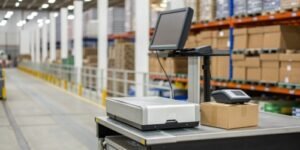
The real path to efficiency is to remove the "manual" part of the equation. Automation doesn't just speed up the existing process; it completely redefines it. A smart PC scale, for example, combines weighing, scanning, and data-logging into one fluid action. [15] An operator places a case of frozen vegetables on the scale, scans the barcode, and the system instantly updates the inventory with the correct item and quantity—no separate counting or data entry required. This is far more than an enhancement; it's a transformation of the entire workflow, moving your team from tedious counting to value-added activities. [6]
What Technologies Help Optimize Warehouse Management for Frozen and Processed Food Items?
Your warehouse can either be a well-oiled machine that drives profit or a major cost center. Without clear visibility into your operations, you're essentially flying blind and unable to make smart, strategic decisions.
To optimize warehouse management for food items, you need a combination of smart PC scales, RFID readers, barcode scanners, and an integrated inventory management system (IMS). These technologies work together to provide complete, real-time data visibility, empowering you to make smarter decisions and create a highly efficient workflow.

As a manufacturer serving a global market, we've seen firsthand how the right technology stack can revolutionize a business. The goal is to create a "smart warehouse" where data flows seamlessly from the receiving dock to the final shipment. For our clients who are software providers, this is especially critical. They need hardware that can reliably feed accurate data into their sophisticated management platforms. An optimized warehouse isn't just about speed; it's about making data-driven decisions.
The Core Technologies
A truly optimized warehouse is built on a foundation of interconnected technologies. Each piece plays a specific role:
- Smart PC Scales: This is the heart of the system. It's the central point for data capture at critical stages like receiving, packing, and shipping. These scales do more than weigh; they identify products, verify quantities, and communicate data instantly. [17]
- RFID Technology: For hands-free, bulk data collection, RFID is unmatched. [13] It's ideal for tracking pallets and cases throughout the warehouse, providing real-time location and movement data without manual intervention.
- Barcode Systems: Barcodes are essential for granular, item-level tracking. They are used to manage individual products, track production batches, and ensure picking accuracy for customer orders. [22]
- Integrated Management Software (WMS/ERP): All this hardware is only as good as the software that manages the data. [9] Our systems are designed to integrate seamlessly with leading WMS and ERP platforms, or they can function with our optional inventory reporting software.
The Power of Real-Time Data
The ultimate goal of these technologies is to provide real-time visibility. When your systems update inventory instantly, managers are no longer tied to their desks or clipboards. [1, 23] I find this is the feature that most excites technical directors. The ability to pull out a phone and see exact, up-to-the-minute stock levels for any product category is a game-changer. [6] This allows for proactive management—you can identify slow-moving products, prevent stockouts before they happen, and even analyze trends to optimize purchasing. [8, 17] This level of control transforms the warehouse from a cost center into a strategic asset.
Conclusion
Stop letting slow, error-prone manual inventory counts hold your business back. By embracing automation with smart PC scales, RFID, and barcode technology, you can achieve fast, accurate, and real-time control over your entire inventory.
-
"Beyond Barcodes: The Role Of RFID Technology In Inventory ...", https://www.forbes.com/councils/forbestechcouncil/2024/03/14/beyond-barcodes-the-role-of-rfid-technology-in-inventory-management/. This source explains how RFID technology enables bulk scanning of goods without requiring a direct line of sight. Evidence role: mechanism; source type: education. Supports: RFID technology allows for bulk scanning of pallets or cases, improving efficiency in warehouse operations.. ↩


Comments (0)