
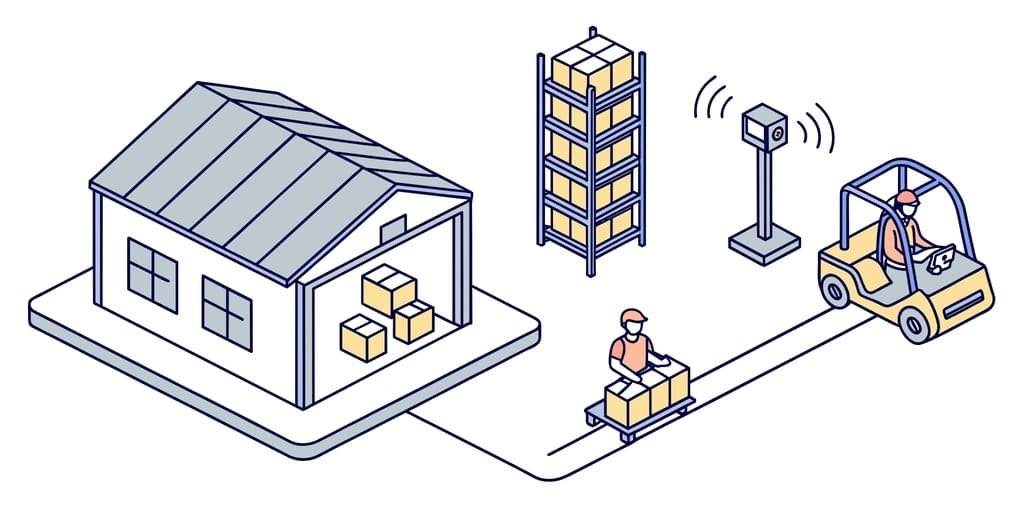
Struggling with data gaps between your scales and systems? Disconnected devices cause errors and slow you down. A unified solution is the answer to streamline your operations entirely.
Combining weighing products and IoT devices from one supplier ensures seamless integration and data accuracy. You get a purpose-built smart terminal that guarantees both weighing precision and full IoT connectivity, completely eliminating the compatibility issues that arise from separate vendors.

This all sounds great in theory, but you might be wondering what these advantages actually look like in your day-to-day operations. I've been in this industry for nearly two decades, and I've seen firsthand how challenging it can be to stitch together technology from different specialists. A few years ago, a client in the food processing business came to us completely frustrated. They had a top-of-the-line weighing system and a powerful new IoT platform, but the two just wouldn't talk to each other correctly. Their IoT provider blamed the scale's hardware, and the scale manufacturer blamed the IoT software. They were stuck in the middle with unreliable data and no single point of accountability. This experience highlighted for me the critical need for a unified approach. Let's break down the real-world benefits in more detail.
What are the advantages of combining weighing products with IoT devices from a single supplier?
Your IoT provider likely doesn't understand the nuances of precision weighing. Your scale maker probably doesn't specialize in robust data networking. This disconnect creates major integration headaches.
A single, expert supplier provides a pre-integrated solution that works right out of the box. This eliminates the blame game between different vendors and gives you one point of contact for support, ensuring both precision and connectivity work perfectly together.

The Expertise Gap: Why Specialization Matters
The core problem is simple: weighing scale manufacturers are experts in metrology, while IoT companies are experts in data. A scale isn't just a simple device; it's a precision instrument. We deal with load cells, strain gauges, calibration drift, and environmental factors like temperature and vibration that can affect accuracy1. IoT companies, on the other hand, focus on network protocols, cloud platforms, and API security. They might not understand why a scale in a dusty warehouse needs a specific type of enclosure or why a tenth of a gram matters so much in a chemical formula. Conversely, many traditional scale manufacturers offer only basic connectivity, like an old-school RS232 port, which is not enough for a modern, networked factory2. A supplier who understands both worlds can design a device where the precision hardware is built from the ground up to communicate flawlessly with a modern IoT platform.
Streamlined Support and Total Accountability
When an integrated system fails, who do you call? If you sourced the components separately, the scale vendor will blame the network, and the IoT vendor will blame the scale hardware. I saw this with a logistics client who had IoT gateways from one company and platform scales from another. When weight data was not appearing in their warehouse management system, both suppliers insisted their own equipment was working fine. The client spent weeks caught in the middle, losing time and money. With a single supplier like us, there is no finger-pointing. We are responsible for the entire solution, from the load cell sensor to the data appearing on your dashboard. This single point of accountability means faster problem-solving and less downtime for you.
A Quick Comparison
| Feature | Separate Suppliers | Single Integrated Supplier |
|---|---|---|
| Integration | Complex, high risk of failure. | Seamless, "plug-and-play" ready. |
| Support | Fragmented, potential for blame-shifting. | Consolidated, single point of contact. |
| Expertise | Specialized but siloed knowledge. | Holistic (Weighing + IoT) knowledge. |
| Accountability | Divided and unclear. | Total ownership of the solution. |
| Total Cost | High hidden integration and support costs. | Transparent and lower total cost of ownership. |
How can integrating IoT technology with weighing systems benefit your operations?
Are you still relying on manual data entry from your scales? This process is slow, prone to human error, and creates blind spots in your operation, leading to costly mistakes.
Integrating IoT with weighing systems automates data collection, providing real-time visibility into your operations. This reduces human error, saves time, and empowers you to make smarter, data-driven decisions that directly improve efficiency and profitability.
Make Decisions with Real-Time Data
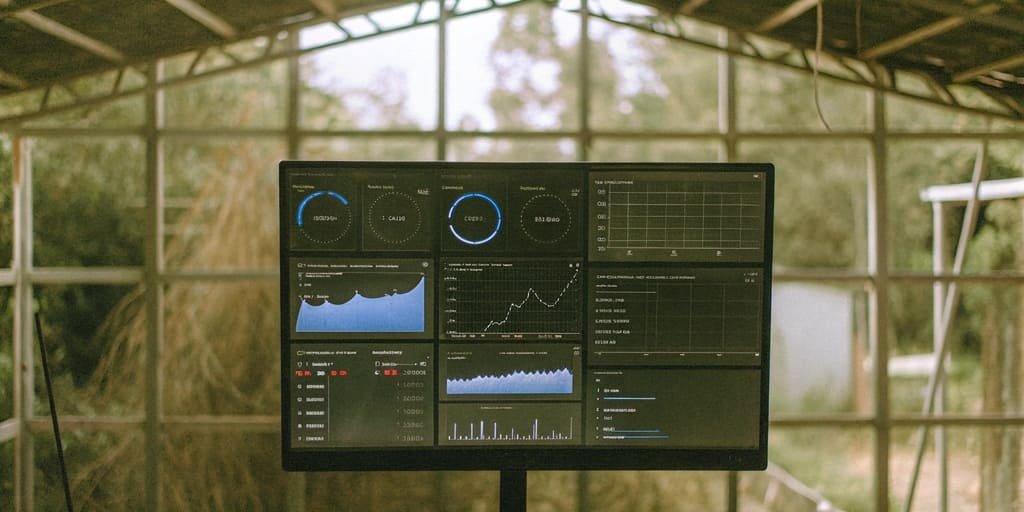
In a traditional setup, you might have to wait for someone to collect weight tickets and enter them into a spreadsheet at the end of the day. By then, the information is already old. An IoT-enabled weighing system changes this completely by sending data to your ERP or management software the moment a weight is registered3. Imagine a production manager seeing a live feed of output from every line, a warehouse supervisor getting instant alerts on inventory levels, or a shipping coordinator tracking truck weights as they happen. This real-time visibility allows you to be proactive, not reactive.4 You can spot a problem—like a machine under-filling packages—and correct it immediately, rather than discovering it hours later after thousands of units have been impacted. This immediate access to information is crucial for better forecasting and resource allocation.
Automate and Eliminate Human Error
Manual processes are not just slow; they are a major source of errors.5 A misplaced decimal point or a misread number on a scale's display can lead to incorrect inventory counts, wrong batch formulas, or costly shipping chargebacks. IoT weighing systems eliminate the need for manual data entry. Think about a busy shipping dock. Instead of a worker weighing a pallet, writing the weight on a form, and then walking to a computer to enter it into the system, the process becomes instant and error-free. The IoT scale captures the weight and sends it directly to the shipping software, often along with a barcode scan to identify the product. This automation frees up your team to focus on more valuable tasks and ensures your data is 100% accurate.
Unlock Predictive Maintenance Capabilities
A scale that provides inaccurate readings is a huge liability. A failure can shut down an entire production line. IoT technology allows scales to become truly "smart" by monitoring their own health. By tracking usage patterns, load cycles, and internal diagnostics, an IoT scale can predict when it's beginning to drift out of calibration or when a component is nearing the end of its life6. Instead of waiting for a scheduled maintenance check or a complete breakdown, the system can automatically send an alert to your technical team. This shifts you from a reactive or scheduled maintenance model to a predictive one, preventing costly, unplanned downtime7 and ensuring your measurements are always accurate and compliant.
What operational improvements can result from pairing IoT devices with weighing equipment?
Are you losing money from small inefficiencies that add up over time? It is difficult to improve what you cannot accurately measure, and integrated systems give you the precise data needed.
Pairing IoT devices with weighing equipment drives measurable operational improvements. It enhances supply chain efficiency, improves quality control with precise automated records, and optimizes resource management, all of which directly contributes to a healthier bottom line.

Achieve Total Supply Chain Visibility
An integrated weighing system gives you a clear view of your materials at every step. At the receiving dock, an IoT-enabled floor scale can instantly verify the weight of incoming shipments against the bill of lading, flagging discrepancies with suppliers immediately. In production, smart scales can track the exact amount of raw material used in each batch, providing granular data on consumption and yield. At the final shipping stage, the system ensures every pallet or package is the correct weight, which helps you avoid under-billing and optimize freight costs, which are often based on weight8. I worked with a beverage company that used our IoT scales to track syrup consumption in real-time. They discovered one line was consistently using 3% more syrup than specified—a small amount that added up to thousands of dollars in waste per month. That's the power of precise, real-time visibility.
Strengthen Quality Control and Compliance
For many industries, weight is a critical quality parameter and a key part of regulatory compliance. Manually logging weights on paper is not only error-prone but also difficult to manage during an audit. An IoT weighing system automatically creates a secure, digital, and time-stamped record of every measurement. This creates an irrefutable audit trail for compliance with standards like SOLAS (Safety of Life at Sea) for shipping container verification9 or for internal quality protocols. You can easily prove that every batch was mixed with the correct ingredient weights or that every outgoing shipment was accurately weighed. This level of automated documentation simplifies audits, reduces risk, and strengthens confidence in your quality control processes.
Drive Down Waste and Maximize Yield
In businesses that rely on bulk materials, such as food processing, chemicals, or agriculture, even small amounts of over-filling or material giveaway add up to significant financial losses10. IoT scales can be integrated directly with PLCs to control dispensing and filling processes with incredible precision. Imagine a system that automatically closes a valve the instant a tank reaches its target weight. This level of automation ensures exact amounts are used every single time, drastically reducing material waste and improving the consistency of your final product. For businesses that purchase raw materials by weight, accurate measurements ensure you are only paying for what you actually receive. These small savings accumulate quickly, directly impacting profitability.
Why choose a supplier offering both weighing products and IoT solutions?
Are you worried about the high costs, risks, and uncertain returns of a complex integration project? Piecing together solutions from different vendors often leads to budget overruns and project delays.
Choosing a single supplier with expertise in both weighing and IoT significantly lowers your total cost of ownership. You receive a purpose-built, reliable device with faster deployment, guaranteed compatibility, and a clear path for future upgrades, maximizing your return on investment.

Lower Your Total Cost of Ownership (TCO)
The initial price tag for a scale from one vendor and an IoT platform from another might seem attractive, but it hides the true cost. You must also account for the significant expense of the integration project itself—the engineering hours, custom software development, and testing required to make them work together. These projects are notorious for delays and budget overruns. Furthermore, you'll have ongoing administrative costs for managing two separate vendor relationships and support contracts. A single-supplier solution is more transparent. The price includes a device that is already designed to work perfectly, eliminating the unpredictable and often high costs of custom integration. This results in a much lower and more predictable TCO.
Future-Proof Your Technology Investment
Technology evolves quickly. What happens when your software provider updates their platform, or a new network technology emerges? If you have separate systems, you run the risk that your scale will become incompatible or obsolete. As a manufacturer with expertise in both hardware and software, we design our products on a unified roadmap. We ensure that our scales and our IoT platform evolve together. When we develop a new feature, like AI-powered predictive analytics, we make sure it is compatible with the equipment you already have. This provides you with a clear and secure upgrade path, protecting your investment for the long term instead of leaving you with a stranded asset.
De-Risk Your entire Project
The single biggest risk in any smart technology project is integration failure. When a project relies on two separate companies with different priorities and areas of expertise, the chances of something going wrong increase dramatically. Miscommunication and technical incompatibilities are common. By choosing a single partner who is an expert in both the physical instrument and the digital network, you are fundamentally de-risking the project. We take full responsibility for ensuring the entire system works as promised. Our experience in both weighing and IoT allows us to anticipate challenges and build robust, reliable solutions from the start. We guarantee our scales will connect and transmit data, because we designed the entire system to do just that.
Conclusion
Choosing a unified supplier for both weighing and IoT simplifies technology adoption. It ensures accuracy, provides reliable data, and future-proofs your operations for a true competitive advantage and business growth.
-
"Uncertainty analysis of a non-automatic weighing instrument ...", https://pmc.ncbi.nlm.nih.gov/articles/PMC7593520/. Legal metrology and weighing-instrument guidance recognizes temperature, vibration, installation conditions, and calibration as factors that can influence weighing performance and measurement accuracy. Evidence role: mechanism; source type: government. Supports: Temperature and vibration can affect the accuracy of weighing instruments.. Scope note: The source would support the mechanism generally; actual effects depend on the scale design, capacity, environment, and calibration procedure. ↩
-
"Smart Manufacturing", https://www.nist.gov/smart-manufacturing. Industry 4.0 and industrial IoT literature describes modern factories as relying on networked, interoperable data exchange among machines, control systems, and enterprise platforms, placing legacy point-to-point serial interfaces in a limited role. Evidence role: historical_context; source type: paper. Supports: Legacy RS-232 connectivity is often insufficient for modern networked factory architectures.. Scope note: This is contextual support; RS-232 can still be adequate for some simple or localized applications. ↩
-
"An Example of Industrial Internet of Things Cybersecurity", https://www.nccoe.nist.gov/sites/default/files/2022-02/es-iiot-nist-sp1800-32b-final.pdf. Industrial IoT reference architectures describe sensors and edge devices transmitting measurements to enterprise or management systems in near real time for monitoring and control. Evidence role: mechanism; source type: institution. Supports: IoT-enabled weighing systems can transmit measurement data to enterprise or management software when readings are captured.. Scope note: The source would support the architectural possibility; latency and reliability depend on network design, software integration, and device configuration. ↩
-
"What Is Real-Time Monitoring In Manufacturing", https://p3adaptive.com/what-is-real-time-monitoring-in-manufacturing/. Manufacturing and supply-chain research links real-time monitoring and operational visibility with earlier detection of process deviations and faster corrective action. Evidence role: expert_consensus; source type: paper. Supports: Real-time operational visibility helps organizations detect issues earlier and respond proactively.. Scope note: The support is general to real-time monitoring; it does not prove that every IoT weighing deployment will achieve proactive management. ↩
-
"Measuring the rate of manual transcription error in outpatient ...", https://pmc.ncbi.nlm.nih.gov/articles/PMC6351970/. Studies of manual data entry and transcription document measurable error rates and identify manual entry as a common source of data-quality problems in operational records. Evidence role: statistic; source type: paper. Supports: Manual data entry and manual recording processes are a significant source of errors.. Scope note: Published error rates vary by task, interface, training, and quality-control procedures, so they should not be treated as a universal rate for weighing operations. ↩
-
"Predictive Maintenance Management Using Sensor-Based ...", https://repository.gatech.edu/bitstreams/69e4df3a-147e-49df-bc3c-6f506a72d9be/download. Predictive-maintenance literature explains that condition monitoring and usage data can be analyzed to estimate degradation, detect anomalies, and forecast equipment failure or maintenance needs. Evidence role: mechanism; source type: paper. Supports: IoT monitoring can support prediction of calibration drift or component degradation.. Scope note: This supports the predictive-maintenance principle; scale-specific prediction of calibration drift requires validated sensors, diagnostics, and models. ↩
-
"(PDF) Reducing unplanned downtime using Predictive ...", https://www.researchgate.net/publication/363461706_Reducing_unplanned_downtime_using_Predictive_Maintenance_PdM. Reviews of predictive maintenance report that condition-based and predictive approaches are intended to reduce unexpected equipment failures and associated downtime compared with purely reactive maintenance. Evidence role: general_support; source type: paper. Supports: Predictive maintenance can reduce unplanned downtime.. Scope note: The magnitude of downtime reduction is context-specific and depends on asset criticality, model accuracy, and maintenance execution. ↩
-
"Package Dimensions, Size Limits and Weight Guide", https://www.ups.com/us/en/support/shipping-support/shipping-dimensions-weight. Transportation and logistics guidance explains that freight charges commonly incorporate shipment weight, dimensional weight, or weight-based rating factors. Evidence role: definition; source type: government. Supports: Freight costs are often calculated using shipment weight or weight-related factors.. Scope note: Freight pricing also depends on distance, service level, mode, class, fuel surcharges, and carrier-specific tariffs. ↩
-
"Verification of the gross mass of a packed container", https://www.imo.org/en/OurWork/Safety/Pages/Verification-of-the-gross-mass.aspx. The International Maritime Organization’s SOLAS verified gross mass requirements establish that packed export containers must have a verified gross mass before loading onto a ship. Evidence role: case_reference; source type: institution. Supports: SOLAS requires verified gross mass information for shipping containers.. Scope note: This supports the regulatory example for container shipping; it does not apply to all industries or all weighing records. ↩
-
"Product Giveaway in Food Manufacturing: What It Costs", https://matrixcontrols.com/product-giveaway-food-manufacturing/. Process-control and packaging literature notes that overfill or product giveaway in filling operations creates cumulative material losses because excess product is distributed across repeated units or batches. Evidence role: mechanism; source type: paper. Supports: Small overfills or material giveaway can accumulate into significant financial losses in high-volume production.. Scope note: The financial impact depends on production volume, material cost, target tolerances, and process capability. ↩



Comments (0)