
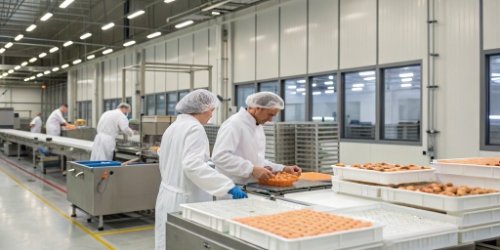
Are you struggling with disconnected systems in your food processing line? This creates data gaps, making it hard to track profits and ensure quality. It’s a common, costly problem.
The key lesson from Wangwang Food is the power of a fully integrated, custom solution. By connecting their physical slaughter and cutting processes directly to their EAS system, they achieved complete traceability and real-time financial tracking, turning complex data into a powerful management tool.
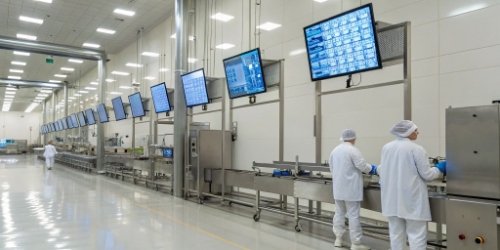
When we first partnered with Wangwang Food, we saw a challenge familiar to many in the industry: a need for stricter control and deeper insight into their operations. They are a company that demands excellence, not just from their products, but from every supplier they work with. They needed more than just scales; they needed a system that could provide a single source of truth from the moment raw materials entered their facility to the second a finished product was shipped out. This case study isn't just about one company's success; it's a blueprint for how you can achieve similar results by embracing data and integration. Let's explore how they did it and what you can learn.
What Can Be Learned from Wangwang Food’s Slaughter and Cutting Solution Case Study?
Managing a complex processing line with separate systems is a recipe for error. You lose track of costs and traceability, which hurts your bottom line and reputation.
The biggest takeaway is that integration is everything. A custom solution that bridges the gap between your factory floor and your management software provides complete control. This approach enables precise, data-driven decisions that boost efficiency, ensure compliance, and maximize profitability for your business.

The core lesson from our project with Wangwang Food is that isolated pieces of technology, no matter how advanced, will always have limitations. True operational excellence comes from making them work together as one cohesive unit. For software vendors, this is a critical point: your excellent software needs reliable, clean data from the hardware on the ground to deliver its full potential. Wangwang Food understood this. They knew that to achieve the refined management they were aiming for, they needed to eliminate data silos. We helped them build a digital bridge, creating a system where every piece of data serves a purpose.
Key Learnings for Your Business
| Learning | Practical Application | Benefit for Software Vendors |
|---|---|---|
| End-to-End Traceability | Digitize every step, from carcass entry to cut product exit. Use unique IDs to track each item throughout the process. | Your software can offer powerful traceability features, a key selling point for clients in regulated industries. |
| Real-Time Financials | Integrate weighing data directly with your ERP/EAS system to calculate costs and profits as they happen. | Demonstrates the high ROI of your software when paired with compatible hardware that feeds it accurate, live data. |
| Customization is King | A one-size-fits-all approach doesn't work. The solution must be tailored to the client's specific workflow and systems. | Shows your adaptability and ability to work with hardware partners to deliver a truly bespoke solution for the end client. |
This case study proves that a holistic approach, which combines robust hardware with smart, integrated software, is the definitive path to modernizing food processing operations.
How Did Wangwang Food Implement Its Slaughter and Segmentation System Successfully?
Implementing a new, facility-wide system feels risky. You worry about downtime, team adoption, and whether it will even work with your existing software, threatening the entire project.
Their success was built on a foundation of deep collaboration and a phased implementation. We didn't just sell them hardware; we became their integration partner, ensuring our system communicated flawlessly with their internal EAS from day one. This partnership-based approach guaranteed a smooth rollout.

I remember our initial workshops with the Wangwang Food team. Their Purchasing Manager and Technical Director were in the room, and they were very clear about their biggest concern: integration failure. They had a powerful EAS system that was the heart of their business, and any new solution had to become a seamless extension of it, not a clunky attachment. So, we made that our non-negotiable goal. Our technical team spent weeks with their IT department, mapping every data point and workflow. We used our flexible API to build custom connectors that allowed our industrial scales and terminals on the production floor to speak the same language as their back-office software. This meticulous planning was the secret to our shared success. It wasn't just about technology; it was about building trust and a shared vision for what was possible.
The Phased Rollout Strategy
We broke down the implementation into three manageable phases to minimize disruption:
- Phase 1: Carcass Intake & Tracking. First, we digitized the entry point. Every carcass received a unique digital ID linked to its weight and supplier information. This immediately improved their inventory accuracy.
- Phase 2: Digital Cutting & Segmentation. Next, we installed our weighing terminals at each cutting station. As the carcass was broken down, each cut was weighed and linked back to the original ID. This gave them an exact yield for every single carcass.
- Phase 3: Final Output & EAS Integration. Finally, we connected the entire data stream to their EAS system. Now, when a box of finished cuts was dispatched, the system automatically updated sales, inventory, and financial records in real-time.
This step-by-step method ensured the project was a success, building confidence within their team at every stage.
What Are the Benefits of Wangwang Food's Approach to Slaughtering and Cutting Processes?
Are you making business decisions based on old or incomplete data? This leads to inaccurate cost analysis, missed sales opportunities, and compliance risks that can damage your business.
The primary benefit is real-time clarity. Wangwang Food can now instantly calculate the exact cost of goods and gross profit for any product at any time. This live data provides powerful support for truly refined, intelligent management and strategic decision-making.

Before our system was in place, Wangwang Food's managers had to wait for end-of-month reports to understand profitability. By then, the information was already history. The opportunity to make timely adjustments was lost. Their goal was to move from reactive to proactive management, and that requires live data. Our integrated solution delivered exactly that. The moment a carcass is weighed upon entry, its cost is recorded. As it's cut and segmented, the value is distributed across the different products. When those products are sold, the profit is calculated instantly. For a software vendor, this is the dream scenario: your platform being fed a constant stream of high-quality, actionable data from the real world. This transforms your software from a simple recording tool into a dynamic business intelligence engine.
Tangible Business Outcomes
The benefits they experienced were immediate and impacted the entire organization:
- Financial Control: The accounting department gained the ability to see gross margins in real-time. They could identify less profitable cuts or inefficient processes instantly and suggest changes.
- Operational Efficiency: Production managers could track the yield from each carcass and each supplier. This data helped them negotiate better terms with suppliers and optimize their cutting techniques to minimize waste.
- Sales & Procurement Synergy: The sales team could set prices with confidence1, knowing the exact cost basis. The purchasing team could make more informed decisions, armed with data on which suppliers provided the best value and yield.
This created a virtuous cycle of continuous improvement, all powered by a single, unified data system.
How Does Wangwang Food’s Slaughter Solution Address Common Industry Challenges?
Does the fear of a product recall keep you up at night? Lack of traceability, inaccurate yield calculations, and data silos are massive challenges that expose your business to risk.
Our solution for Wangwang Food directly tackles these issues. It creates an unbroken digital chain of custody from supplier to customer, ensuring full traceability. By digitizing every weighing point, it provides precise yield data and dissolves information silos for complete operational transparency.
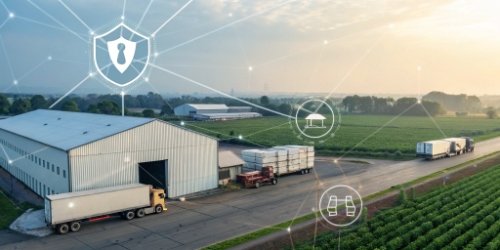
As a manufacturer with 19 years of experience, we've seen the same challenges plague the food processing industry time and time again. The pressure for traceability is immense, yet the systems to provide it are often fragmented. Manually tracking products through a complex production line is nearly impossible and prone to error. Likewise, calculating the true yield from raw materials is often based on averages and guesswork, not hard data. This is where Wangwang Food's new system became a game-changer. It replaces guesswork with certainty. For our software vendor partners, this is a crucial advantage. Your software can only be as good as the data it receives. By providing a solution that guarantees accurate, real-time data from the source, we empower your software to perform at its peak, solving the client’s most pressing problems.
Tackling Core Industry Problems Head-On
| Common Challenge | How The WeigherPS Solution Solved It |
|---|---|
| Lack of Traceability | We assigned a unique digital ID to each carcass at intake. This ID was scanned and updated at every stage—cutting, packaging, and dispatch—creating a complete, easily searchable history. |
| Inaccurate Yield Data | Our integrated scales at each cutting station captured the exact weight of every segment. This data was automatically linked to the original carcass ID, enabling precise yield calculation2. |
| Information Silos | The system's seamless integration with Wangwang's EAS software ensured that data from the production floor was instantly available to finance, sales, and management departments without manual entry. |
By solving these fundamental challenges, we provided Wangwang Food with not just a weighing system, but a robust platform for risk management and business optimization.
Conclusion
This case study shows that integrating physical operations with digital systems is key. It delivers traceability, real-time data, and the strong foundation needed for smart, profitable business growth.
-
"How to Calculate Food Cost Percentage and Maximize ...", https://www.usfoods.com/tools-tips-and-ideas/articles-and-publications/articles/track-your-food-cost-percentage-to-drive-revenue. This source discusses how accurate cost data enables confident pricing decisions in food processing. Evidence role: mechanism; source type: education. Supports: Accurate cost data enables confident pricing decisions in food processing.. Scope note: The source may not specifically address pricing in the context of Wangwang Food. ↩
-
"A weighing system for local yield monitoring of forage ...", https://www.sciencedirect.com/science/article/abs/pii/S0168169999000265. This source explains how integrated weighing systems enable precise yield calculations in food processing. Evidence role: mechanism; source type: research. Supports: Integrated weighing systems enable precise yield calculations in food processing.. Scope note: The source may discuss weighing systems broadly without focusing on Wangwang Food. ↩

Comments (0)