
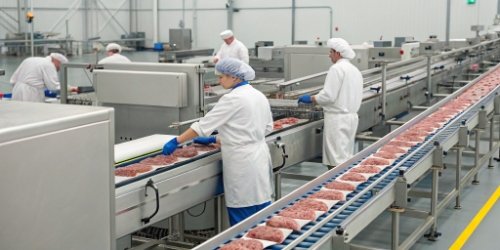
Struggling with disconnected production data? This chaos slows growth and hurts profits. Our integrated system for Kangjian Food provided the clarity they needed to expand their business confidently.
We implemented a full-process slaughter and cutting management system for Kangjian Food. This system integrated everything from procurement to sales, providing stable, accurate data. This helped them quickly scale their operations across multiple large-scale facilities, connecting seamlessly with their financial software.
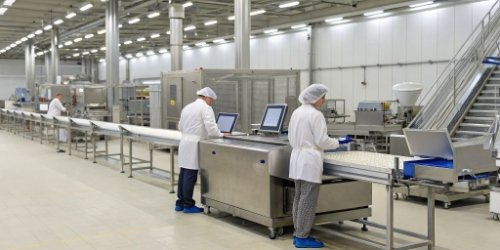
Our journey with Kangjian Food, a leading meat processing company, is a story we are proud to tell. They are a giant in their industry, with a daily slaughter volume that puts them at the top. When they needed to scale their operations even further, they came to us. They needed a system that was not just a tool, but a backbone for their growth. We worked closely with them to deploy a system that would manage everything. This case study shares the key lessons and successes from that major project. It shows how the right technology partner can make a huge difference.
What Are the Key Lessons from Kangjian Food’s Slaughter and Cutting System Implementation?
Your business is expanding, but your systems can't keep up. Inaccurate data and inefficient workflows are holding you back. You need a solution that grows with you, not against you.
The key lessons are the importance of full-process integration, the feasibility of rapid deployment, and the absolute need for data accuracy. By connecting procurement, production, and sales with financial systems, Kangjian Food gained complete control and supported their fast business expansion effectively.
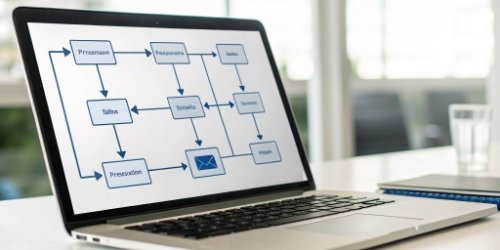
When we started this project, the main goal was to create a single source of truth for Kangjian Food. The lessons we learned together are valuable for any large-scale production business, especially for software vendors looking for reliable hardware integration.
The Power of Full Integration
A disconnected system is an inefficient one. Kangjian Food's previous process had gaps between departments. Our first step was to map their entire workflow. We needed to connect their live pig procurement and settlement, the slaughtering line, the cutting and segmenting process, warehouse management, and final sales. By bringing all these stages under one system, we eliminated manual data entry errors. This integration extended to their EAS financial system, which was a critical requirement. This meant that production data flowed directly into their accounting, giving them real-time financial visibility1.
The Need for Scalability and Speed
One of the most surprising parts of this project was the speed. We successfully launched the system at one of their sites in just half a month. This was possible because our system is designed for modularity. We also used a parallel implementation strategy, running our new v1 and v2 systems alongside their existing processes. This phased approach minimized disruption and allowed their team to adapt quickly. This proves that a complex, full-scale system overhaul doesn't have to take years.
How Did Kangjian Food Optimize Its Processes Through a Slaughter and Cutting System?
Managing a high-volume production line feels chaotic. You have waste, inaccurate tracking, and slow financial reporting. It's difficult to see where you are losing money or efficiency.
Kangjian Food optimized its processes by implementing our unified management system. It provided end-to-end tracking from livestock procurement to sales. This reduced manual errors, improved data accuracy for costing and settlement, and gave them real-time control over their entire operation.
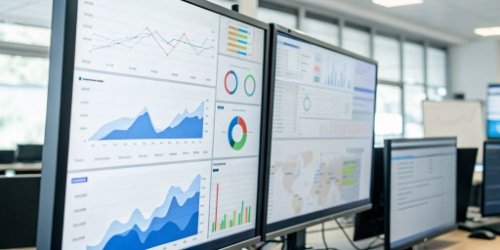
The goal was not just to install software and scales, but to fundamentally improve how Kangjian Food operates. Optimization meant looking at every step of their process and finding ways to make it smarter, faster, and more accurate. I remember walking through their facility and seeing the potential for data to transform their work. The new system we built brought that potential to life.
From Manual to Automated Workflow
Before our system, many key data points were recorded manually or in separate spreadsheets. This was slow and led to frequent mistakes. Our solution automated data capture at every critical point2 using our industrial scales and terminals.
| Process Step | Old Method (Before System) | New Method (With WeigherPS System) |
|---|---|---|
| Procurement | Manual weight recording and settlement sheets. | Automated weighing, direct data entry for settlement. |
| Slaughtering | Tally counts, estimated weights for initial processing. | Real-time tracking of each carcass with unique IDs. |
| Cutting | Manual sorting and weighing of cuts, paper-based tracking. | Scales at each station record weight of specific cuts, linked to carcass ID. |
| Warehousing | Manual inventory counts, delayed updates. | Barcode scanning for put-away and picking, real-time inventory levels. |
| Sales & Finance | Sales orders matched manually with inventory and production. | System automatically links sales orders to available stock, generates invoices. |
Gaining Real-Time Business Intelligence
With the new system, managers at Kangjian Food no longer had to wait for end-of-day reports. They could see production yields, inventory levels, and sales data live on their dashboards. This allowed them to make faster decisions. For example, if a particular cut of meat was in high demand, they could adjust their cutting plans immediately. This level of agility was impossible before and became a major driver of their profitability and ability to respond to market changes.
What Challenges Were Overcome in Kangjian Food’s Slaughter System Deployment?
Implementing a new enterprise system feels risky. You worry about operational downtime, employee resistance to change, and integrating with existing legacy software. These challenges can derail the entire project.
We successfully overcame challenges by managing a parallel deployment of two system versions (v1/v2) across multiple sites. We also ensured seamless integration with the client's existing EAS financial system and conducted rapid, effective training to ensure smooth user adoption without disrupting their operations.

No project of this size is without challenges. For Kangjian Food, the complexity was high. They were not just upgrading one factory; they were rolling out a new standard across multiple major projects, including their facilities in Heyuan and Inner Mongolia. I recall the planning sessions where we mapped out the risks. Our 19 years of experience helped us anticipate and solve these problems head-on.
Managing Multiple System Versions and Locations
One unique challenge was that Kangjian Food needed to run two different versions of our system in parallel, v1 and v2. This was because different sites had slightly different operational needs and timelines for upgrading. Our technical team had to ensure that data from both systems could be consolidated correctly for corporate oversight. We managed this by creating a robust data-sharing protocol between the versions. Deploying across distant locations like Heyuan and Inner Mongolia also required careful coordination. We used a combination of remote support and on-site expert teams to ensure the implementation in Inner Mongolia went as smoothly as the one closer to our home base.
Ensuring Seamless Financial Integration
The connection to their EAS financial system was a make-or-break requirement. Any errors in data transfer could cause significant accounting problems. Our engineers worked very closely with Kangjian Food's IT department and their EAS provider. We conducted extensive testing in a sandbox environment before going live. We simulated thousands of transactions to ensure every piece of data—from pig procurement costs to final product sales revenue—flowed accurately and automatically into their financial ledger. This attention to detail prevented any financial disruption during the transition.
How Can Other Companies Learn from Kangjian Food’s Case Study on Slaughter and Segmenting Systems?
You are a software vendor, and your clients need complete solutions. Integrating your software with unreliable hardware creates support nightmares. You need a hardware partner who understands technology and can deliver robust, integrated systems.
Other companies, especially software vendors, can learn the value of partnering with an experienced hardware manufacturer like us. We provide reliable, certified scales and systems that integrate seamlessly. This allows you to offer a complete, stable, and cost-effective solution to your own clients, reducing integration problems.

This case study is more than just a success story for a meat processor; it's a blueprint for successful B2B technology partnerships. As a software provider, your reputation depends on the entire solution you deliver, including the hardware it runs on. The lessons from Kangjian Food show how choosing the right partner for physical equipment is critical.
Focus on a Holistic, Integrated Solution
Your clients don't want to buy software from you and then struggle to find hardware that works with it. They want a single, functioning system. The Kangjian Food project succeeded because we provided a holistic solution. We didn't just sell them scales; we delivered an entire information management system built around those scales. As a software vendor, you can partner with us to do the same. We handle the complexities of industrial weighing, automation, and IoT integration. You can then focus on your software's core features, confident that the hardware foundation is solid. This makes your offering more attractive and reduces your clients' integration pain points.
Prioritize Reliability and Expert Support
The client feedback for Kangjian Food was clear: the system is stable, and the data is accurate. This is the result of 19 years of manufacturing experience and a dedicated quality control department that tests every single product3. When you partner with us, you are not just getting a product; you are getting a guarantee of quality and a team of experts. We provide comprehensive technical support and documentation. This means if your client has an issue, you have a reliable partner to help you resolve it, strengthening your own customer service reputation. We empower you to deliver solutions that help your clients achieve real growth, creating a win-win situation.
Conclusion
The Kangjian Food project shows how a strong partnership and an integrated weighing system can support rapid business growth, data accuracy, and operational efficiency for any large-scale enterprise.
-
"This chapter provides a bird's-eye view of financial integration ...", https://www.elibrary.imf.org/downloadpdf/display/book/9781589066236/ch002.pdf. This source discusses how integrated systems provide real-time financial visibility in production environments. Evidence role: mechanism; source type: research. Supports: Integration with financial systems provides real-time financial visibility for businesses.. Scope note: The applicability may depend on the specific financial software used. ↩
-
"How Automation Reduces Production Errors", https://mtlcraftautomationgroup.com/blog/how-automation-reduces-production-errors. This source explains the role of automated data capture in reducing errors and improving efficiency in production systems. Evidence role: mechanism; source type: research. Supports: Automated data capture reduces errors and improves efficiency in production systems.. Scope note: The effectiveness may vary depending on the type of automation technology used. ↩
-
"How Quality Control Drives Customer Satisfaction", https://www.icertglobal.com/blog/quality-control-the-key-to-customer-satisfaction. This source highlights the role of quality control departments in ensuring product reliability and customer satisfaction. Evidence role: mechanism; source type: research. Supports: Quality control departments ensure product reliability and customer satisfaction through rigorous testing processes.. Scope note: The effectiveness of quality control may depend on the specific processes and standards implemented. ↩


Comments (0)