
Struggling with messy paperwork and inaccurate payments in your procurement process? This chaos costs you money and supplier trust. An automated system brings order and precision to your operations.
A hog procurement and settlement module is a system that digitizes and manages the entire process from supplier registration to final payment. It captures data on contracts, weighing, quality, and settlement, forming the reliable data foundation for all slaughterhouse operations and cost accounting.

This gives you a high-level view. But the real value is in the details of how this system works day-to-day. You need to understand how each part functions to truly see the benefits for your facility. Let's break down the entire process to see how it can transform your procurement and settlement operations from a headache into a streamlined process.
How Does the Pig Procurement Settlement Module Operate in a Slaughterhouse?
Is your settlement process a tangled web of spreadsheets, manual entries, and handwritten notes? This confusion leads to frequent payment disputes and unreliable financial records, undermining your efficiency and profitability.
The module operates by creating a seamless digital path. It starts with registering suppliers and logging contracts. When hogs arrive, it records their weight directly from scales. After quality grading, it automatically calculates payments, generates invoices, and creates detailed reports for accounting and settlement.
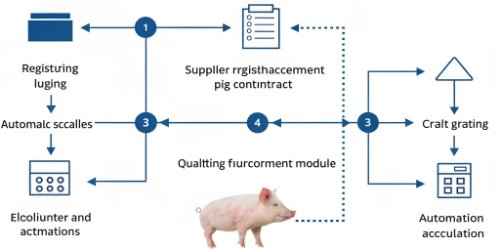
Let's dive deeper into how this actually works on the ground. The operation is a logical sequence of events, where data from one step automatically flows to the next. This replaces the need for someone to re-enter information, which is where most errors happen. I remember visiting a client before they installed our system; their office had stacks of paper, and the procurement manager spent half his day reconciling tiny discrepancies. After implementation, his desk was clean, and he was focused on negotiating better contracts. The core of the operation revolves around a few key phases.
From Supplier to System
First, all supplier information is entered into the system, creating a digital profile. This isn't just a name and address; it includes bank details, certifications, and past performance data. Then, purchase contracts are logged with specific terms, like price per pound or per head, and any quality bonuses or penalties.
The Automated Handshake
When a truck arrives, the system is ready. The driver is identified, and the associated contract is pulled up. The truck is weighed (gross weight), the hogs are unloaded, and the empty truck is weighed again (tare weight). Our WeigherPS scales send this data directly to the module, instantly calculating the net weight. No manual writing, no chance of a number being transposed. This single, accurate weight becomes the foundation for everything that follows.
| Stage | Manual Process | Automated Module Operation |
|---|---|---|
| Arrival | Clerk writes down truck ID, looks up paper contract. | System scans ID, pulls up digital contract. |
| Weighing | Operator reads scale, writes weight on a ticket. | Scale sends weight data directly to the system. |
| Data Entry | Clerk types ticket info into a spreadsheet. | No data entry needed; data is already in the system. |
| Result | High risk of error, slow, data is delayed. | No errors, fast, data is available in real-time. |
What Are the Step-by-Step Functions of the Hog Purchasing and Payment System in Slaughter Facilities?
Do you find it difficult to track every single step of your purchasing and payment process? This lack of clear oversight can hide significant inefficiencies and potential losses within your operations.
The main functions cover the entire cycle. They include creating supplier profiles, logging purchase contract details, accurately weighing hogs upon arrival (gross, tare, and net), performing quality grading, calculating the final payment with automated rules, and generating all necessary settlement statements and financial reports.
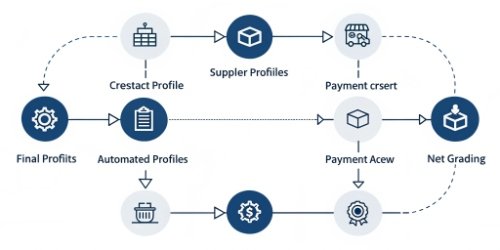
To really understand the power of a dedicated system, it helps to walk through each function one by one. Each step is designed to build upon the last, creating a chain of data that is secure, accurate, and transparent. We designed our WeigherPS system to mirror the real-world workflow of a busy slaughterhouse, but with digital precision. Let's break down those steps.
Step 1: Supplier and Contract Management
This is the starting point. The system acts as a central database for all your suppliers. You can store contact information, payment terms, and historical data on quality and volume. When you create a purchase contract, you link it to a supplier's profile. The contract details, such as the pricing model (e.g., by weight, by head) and any specific clauses, are entered here. This ensures that all transactions with that supplier are governed by the correct and agreed-upon terms, preventing any confusion later on.
Step 2: On-Site Weighing and Data Capture
This is where the magic happens. When the hogs arrive, the system captures their weight directly from the industrial scale. Our scales are designed for this. They record the gross weight of the truck, the tare weight after unloading, and instantly calculate the net weight of the livestock. This data is time-stamped and linked to the specific contract and supplier.1 It eliminates human error from reading scales or writing down numbers incorrectly, which used to be a major source of disputes for many of our clients.
Step 3: Quality Assessment and Grading
After weighing, the hogs are typically assessed for quality. A grader can input the grade (e.g., A, B, C) directly into the system using a ruggedized tablet or terminal. The system then automatically applies any bonuses or deductions associated with that grade, as defined in the original contract. This connects the physical inspection to the financial calculation in real-time.
Step 4: Automated Settlement and Billing
Once weighing and grading are complete, the system has all the data it needs. It automatically calculates the final amount owed to the supplier based on the net weight, the price from the contract, and any adjustments from the quality grading.2 It then generates a detailed settlement statement and a supplier-facing bill. This report can be automatically emailed to the supplier and the accounting department, creating a transparent, auditable trail and drastically speeding up the payment process.
| Function | Input | Processing | Output |
|---|---|---|---|
| Supplier Mgmt | Supplier Info | Store data in a central database. | Digital supplier profiles. |
| Weighing | Scale data | Calculate net weight from gross/tare. | Accurate, time-stamped net weight. |
| Grading | Inspector's input | Apply contract rules for bonuses/deductions. | Adjusted value per unit. |
| Settlement | Weight, Grade, Price | Calculate total payment automatically. | Settlement statement, invoices, reports. |
How Can Slaughterhouses Optimize Pig Procurement and Settlement Processes Using Specialized Modules?
Are you concerned that your current procurement methods are leaving money on the table? Outdated, manual processes often conceal inefficiencies that lead to lost profits, wasted time, and strained supplier relationships.
Slaughterhouses optimize by using a module to automate data capture, which drastically cuts down on human error. The system provides real-time data for smarter buying decisions, directly links procurement data to production costs for accurate accounting, and improves supplier relations with transparent, fast payments.
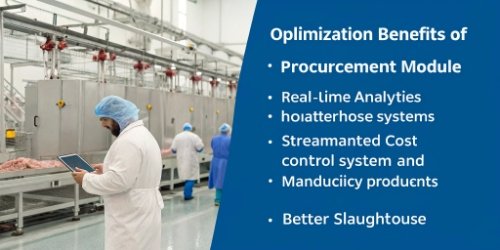
Optimization isn't just about going faster; it's about becoming smarter and more efficient in every aspect of the operation. A specialized module like the one we integrate with our WeigherPS systems provides the tools to achieve this. From my years of experience helping facilities upgrade, the biggest "aha" moment for managers is when they stop seeing the system as just a record-keeper and start using it as a strategic tool. Here’s how you can leverage it to truly optimize your business.
Gaining Real-Time Control and Insights
With a manual system, you only know what your total purchases were at the end of the day or week. A digital module gives you a real-time dashboard. You can see how many hogs have been received, from which suppliers, and at what cost, right now. One of our clients in Europe uses this feature to make mid-day adjustments. If a supplier delivers underweight hogs, they can immediately call their next supplier and adjust the next order, ensuring they meet their daily production targets without guesswork.
Integrating Procurement with Cost Accounting
This is a game-changer. The module doesn't just track what you spend; it provides the foundational data for your production cost.3 The exact cost of the raw material (the hogs) from the procurement module is automatically fed into your enterprise resource planning (ERP) or accounting system. This means your cost-of-goods-sold (COGS) is based on precise, real-time data, not weekly estimates. This leads to far more accurate profit margin analysis on a daily or even per-batch basis.
Enhancing Supplier Relationships
Nobody likes payment disputes. They damage trust and take time to resolve. By automating calculations and providing crystal-clear settlement statements, the module eliminates the root cause of most disputes: incorrect data. When suppliers know they will be paid accurately and on time, your relationship strengthens. They see you as a reliable partner, which can lead to better pricing and more consistent supply for you in the long run.
| Problem | Solution with Specialized Module | Business Outcome |
|---|---|---|
| Data Entry Errors | Direct data capture from scales. | 99%+ accuracy, no more disputes over weight. |
| Delayed Decisions | Real-time dashboard of all procurement activities. | Ability to react instantly to supply variations. |
| Inaccurate Costing | Automatic data feed to accounting systems. | Precise profit and loss tracking. |
| Supplier Disputes | Transparent, automated settlement reports. | Stronger supplier trust and partnership. |
Conclusion
In short, a specialized module digitizes your entire hog procurement workflow. It ensures accuracy, boosts efficiency, and gives you the clear, real-time data needed for smarter business decisions.
-
"Why Real-Time Data Matters in Procurement", https://www.tradogram.com/blog/why-real-time-data-matters-in-procurement. This source discusses the importance of time-stamped data in ensuring accuracy and traceability in procurement systems. Evidence role: mechanism; source type: research. Supports: Time-stamped data ensures accuracy and traceability in procurement systems.. Scope note: The source may not address hog procurement specifically. ↩
-
"The Vital Role of Quality Assurance in Digital Payments", https://www.linkedin.com/pulse/vital-role-quality-assurance-digital-payments-himali-joshi-idzee. This source explains how automated systems calculate payments based on weight, contract terms, and quality adjustments. Evidence role: mechanism; source type: education. Supports: Automated systems calculate payments based on weight, contract terms, and quality adjustments.. Scope note: The evidence may focus on general automated systems rather than hog-specific modules. ↩
-
"The Importance of the Slaughterhouse in Surveilling Animal and Public ...", https://pmc.ncbi.nlm.nih.gov/articles/PMC9959654/. This source explains how procurement modules contribute to accurate production cost tracking. Evidence role: mechanism; source type: education. Supports: Procurement modules contribute to accurate production cost tracking.. Scope note: The evidence may focus on general procurement modules rather than hog-specific systems. ↩


Comments (0)