
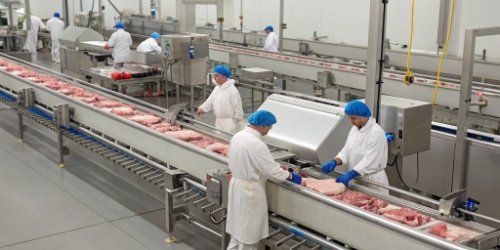
Your production line is slow, and manual weighing is the bottleneck. This inefficiency directly cuts into your profits and creates delays that ripple through your entire operation, costing you money.
The best way to speed up carcass weighing is by integrating automated systems like overhead rail scales with data management software. This combination minimizes manual work, captures data instantly, and provides real-time insights for grading. The whole process becomes faster, from the kill floor to the cooler.
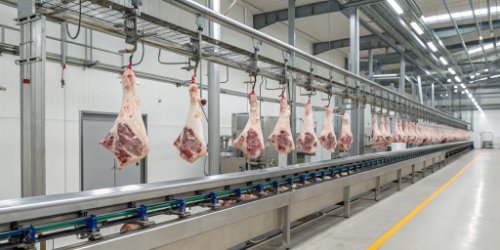
This combination of hardware and software is a powerful solution. But you probably want to know exactly how these pieces fit together to create such a big impact on speed and efficiency. It is important to understand the details to see the true value for your operation. Let's break down the technologies and strategies that make this speed possible. Understanding them will help you make a better decision.
How Can Technology Accelerate Carcass Weighing and Grading Processes?
Manual data entry is slow and filled with human errors. These simple mistakes can lead to incorrect inventory, inaccurate payments, and lost time, which all hurt your bottom line.
Technology like IoT-enabled scales and RFID tags can automatically identify and weigh each carcass. The data is sent instantly to a central system. This eliminates manual logbooks and speeds up decisions for grading and sorting. It dramatically shortens the time from the processing line to the cooler.
The Role of IoT and RFID
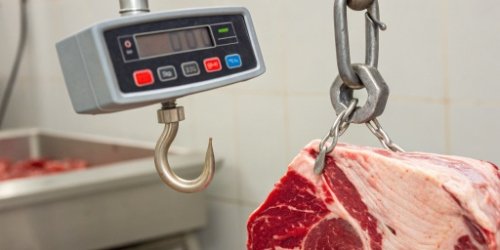
The process is simple but very effective. An RFID tag is attached to the carcass or the hook it hangs on. As the carcass moves along the rail, it passes a weighing station. The RFID reader identifies the tag automatically. At the same moment, our IoT-enabled overhead rail scale captures the exact weight. Both the ID number and the weight are sent instantly to your central database or ERP system1. There is no need for someone to write anything down. This single step removes the biggest source of delays and errors in the traditional weighing process. It turns a stop-and-go workflow into a smooth, continuous flow2.
Data Integration is Key
This technology is about more than just speed; it is also about having better data. This direct data flow opens up huge possibilities. It can link directly to your inventory management3, production planning4, and even your accounting systems. For example, at Weigherps, we specialize in creating weighing solutions that connect directly with our clients' existing software. We provide clear APIs that your developers can use. This seamless flow of information provides a level of control that manual processes can never match.
| Feature | Manual Process | Technology-Accelerated Process |
|---|---|---|
| Identification | Visual check, manual tag reading | Automatic RFID/Barcode scan |
| Weighing | Static scale, operator writes down weight | In-motion dynamic rail scale |
| Data Entry | Pen and paper, manual keyboard entry | Automatic transfer via IoT |
| Error Rate | High (transcription, reading errors) | Extremely Low |
| Speed | Slow, requires stopping the line | Continuous, high-throughput |
What Strategies Increase Efficiency in Carcass Weighing and Grading?
You see bottlenecks on your production floor. This idle time and congestion kills your plant's overall throughput and means you are processing fewer carcasses per hour than you should be.
Key strategies include optimizing your plant layout to reduce how far carcasses travel. You can also use dynamic in-motion weighing to avoid stopping the line. Implementing a tiered grading system based on instant weight data also helps. These steps minimize delays.
Workflow Optimization
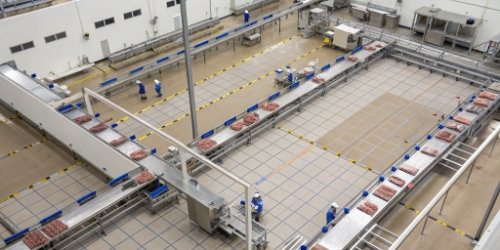
The physical layout of your plant is very important. You can gain a lot of efficiency just by thinking about where you place your equipment. For example, placing a weighing station immediately after evisceration and before the carcass enters the chiller gives you critical data points without creating a traffic jam. The goal is to create a continuous, logical flow. But I know that not every part of a plant can be a single automated line. For areas requiring fine, manual deboning, a different strategy is needed. We have designed individual meat-cutting and printing scales for these workstations. An operator can weigh a specific cut, print a label with weight and price, and that data is sent right to the main system. This helps skilled workers stay productive and can even link to piece-rate payroll systems, which is a great motivator.
Data-Driven Sorting
When you have accurate weight data in real-time, you can start automating your sorting process. The system can make decisions for you. Based on the weight data captured by the scale, carcasses can be automatically diverted onto different rails. For example, heavier carcasses can go to one cutting line, while lighter ones go to another. This removes human guesswork and the delays that come from manual decision-making. The system applies the pre-set rules instantly, every time. This ensures each carcass goes to the most profitable processing path, maximizing your yield and revenue without slowing down production. This is a very smart way to increase efficiency.
How Do Automated Systems Enhance Speed in Carcass Weighing and Grading?
Relying on human judgment for every weighing and grading decision is slow. People get tired, and their opinions can be inconsistent, which affects your product quality and your profits.
Automated systems use integrated hardware and software to weigh, grade, and sort carcasses with little to no human help. In-motion scales capture weight on a moving conveyor, and software applies grading rules instantly. The system then directs carcasses to the correct path, boosting throughput.
The Brains of the Operation: The Software
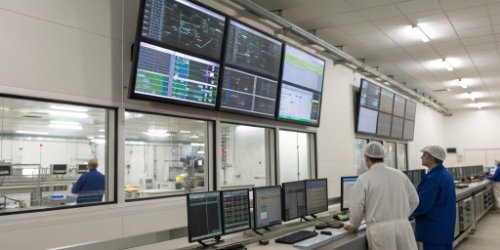
As a software expert, you know the hardware is only one part of the solution. The software acts as the central nervous system for the entire operation. It takes the raw weight data from the scale and turns it into useful, actionable information. This is where my company, Weigherps, has focused for years. We do not just build scales; we build IoT weighing systems. We design our technology for easy integration. This is a major concern for software providers like you. You worry about compatibility. That is why we build our solutions with flexible APIs and provide strong technical support5, making the connection to your ERP or MES software smooth and painless. Our goal is to make our hardware work perfectly with your software.
Linking Weighing to Grading
A truly automated system does more than just weigh. It connects that weight data to other grading metrics. The system can take a weight from the scale and combine it with data from a vision system that measures fat content, for example. The software then applies a grade automatically. This is a game-changer. It is not just faster; it is far more consistent than a human grader. A person can get tired or have a bad day, but the system applies the same logic perfectly every time. The speed and consistency this provides are enormous.
| Aspect | Manual Grading | Automated Grading |
|---|---|---|
| Speed | ~1-2 minutes per carcass | Seconds per carcass |
| Consistency | Variable (human factor) | 100% consistent logic applied |
| Data Logging | Manual, prone to errors | Automatic and perfectly accurate |
| Integration | Difficult, needs extra steps | Seamless with other plant systems |
What Innovations Aid Faster Carcass Weighing and Grading?
Your current technology is probably old and holding you back. Your competitors are likely adopting newer, faster methods, and you risk falling behind if you do not keep up.
Major innovations include IoT-enabled scales for real-time data streaming and AI-powered vision systems for automated grading. Cloud-based platforms also allow managers to monitor production from anywhere. These tools give you incredible speed and control.
AI and Machine Vision
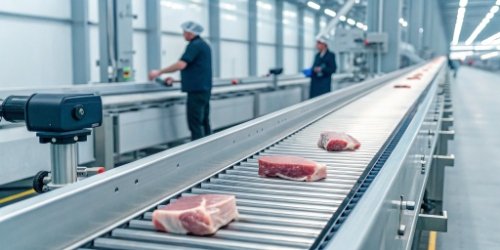
This is where the future is heading. Imagine a high-definition camera positioned over the production line. As a carcass passes the weigh station, this camera analyzes its marbling, fat cover, and muscle color. An AI algorithm, which has been trained on thousands of images, instantly assigns a quality grade. This grade is immediately combined with the precise weight data from the scale. This entire process happens in a fraction of a second. Ten years ago, this level of automation was like science fiction. Today, it is a real competitive advantage6. We work with partners to ensure our scales can provide the weight data needed to power these advanced AI systems.
The Power of the Cloud and IoT
This brings everything together, especially for a software-focused company. With our IoT scales sending data directly to a cloud platform, a plant manager can see everything that is happening in real-time. They can access dashboards and reports from their phone or laptop, whether they are in the office or at home. They can track yields per hour, monitor throughput on different lines, and spot problems the moment they happen. This technology helps your operation shift from being reactive to proactive. At Weigherps, we are not just selling a piece of metal that measures weight. We are providing the critical hardware foundation for these modern, data-driven solutions7. We make sure our products are ready for this connected future.
Conclusion
Upgrading to automated weighing and data systems is the single best way to improve your operation. It boosts speed, improves accuracy, and drives efficiency, giving you a powerful competitive advantage.
-
Discover how ERP systems can streamline operations and improve data management. ↩
-
Discover the advantages of continuous flow manufacturing in improving efficiency. ↩
-
Learn effective strategies for optimizing inventory management in manufacturing. ↩
-
Discover the importance of production planning in enhancing manufacturing efficiency. ↩
-
Understand the role of technical support in ensuring smooth software integration. ↩
-
Explore how leveraging technology can provide a significant competitive edge. ↩
-
Learn how data-driven solutions can transform business operations and decision-making. ↩



Comments (0)