
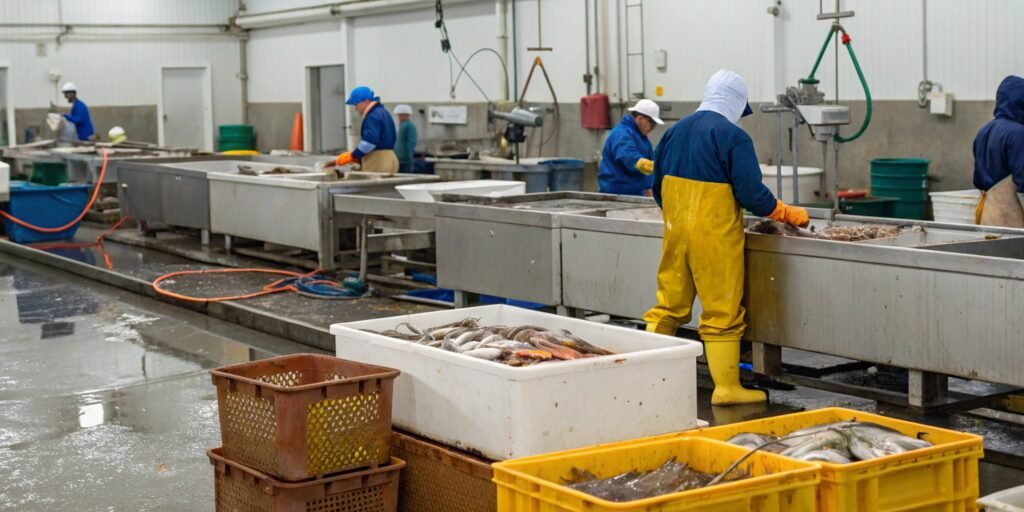
Are your operations constantly halted by failing scales? The salt, water, and humidity in your seafood facility are relentless, causing standard scales to break down and eating into your profits. You need a solution that can survive.
For severe salt spray corrosion in seafood workshops, the best solution is a scale designed for this exact environment. Choose a full 304 stainless steel model with an IP68 waterproof rating. Its heavy-duty construction resists salt fog corrosion, saving you significant costs over the long run compared to repeatedly replacing cheaper scales.
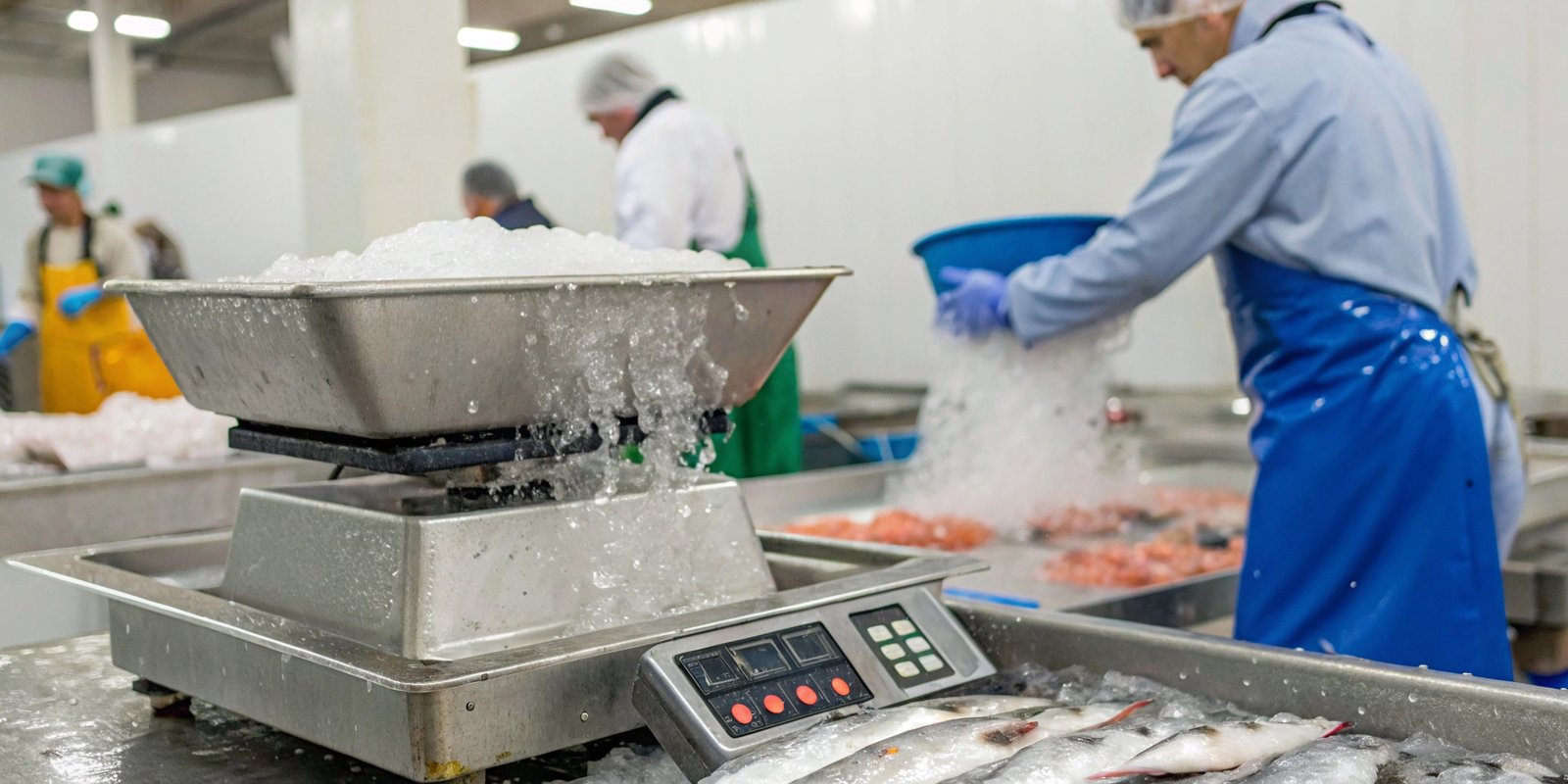
It sounds simple, but selecting the right scale involves understanding why certain models resist corrosion and what specific features you must look for. I've spent years helping clients in the toughest industrial settings, and the story is always the same: investing in the right tool for the job pays for itself. Let’s break down how you can protect your investment and ensure your operations run without a hitch. We will explore the key features that make a scale truly "seafood-proof."
How Can Electronic Scales Resist Salt Fog Corrosion in Seafood Processing Plants?
Are you struggling to find a scale that lasts more than a few weeks? Salt fog relentlessly seeps into every crack, destroying sensitive electronics. You need a reliable weighing solution that doesn't surrender to this harsh environment.
Electronic scales resist salt fog through a combination of smart material choices and completely sealed designs. Using corrosion-resistant materials like 304 stainless steel and pairing it with a high waterproof rating like IP68 ensures that sensitive internal components are totally protected from moisture and salt.
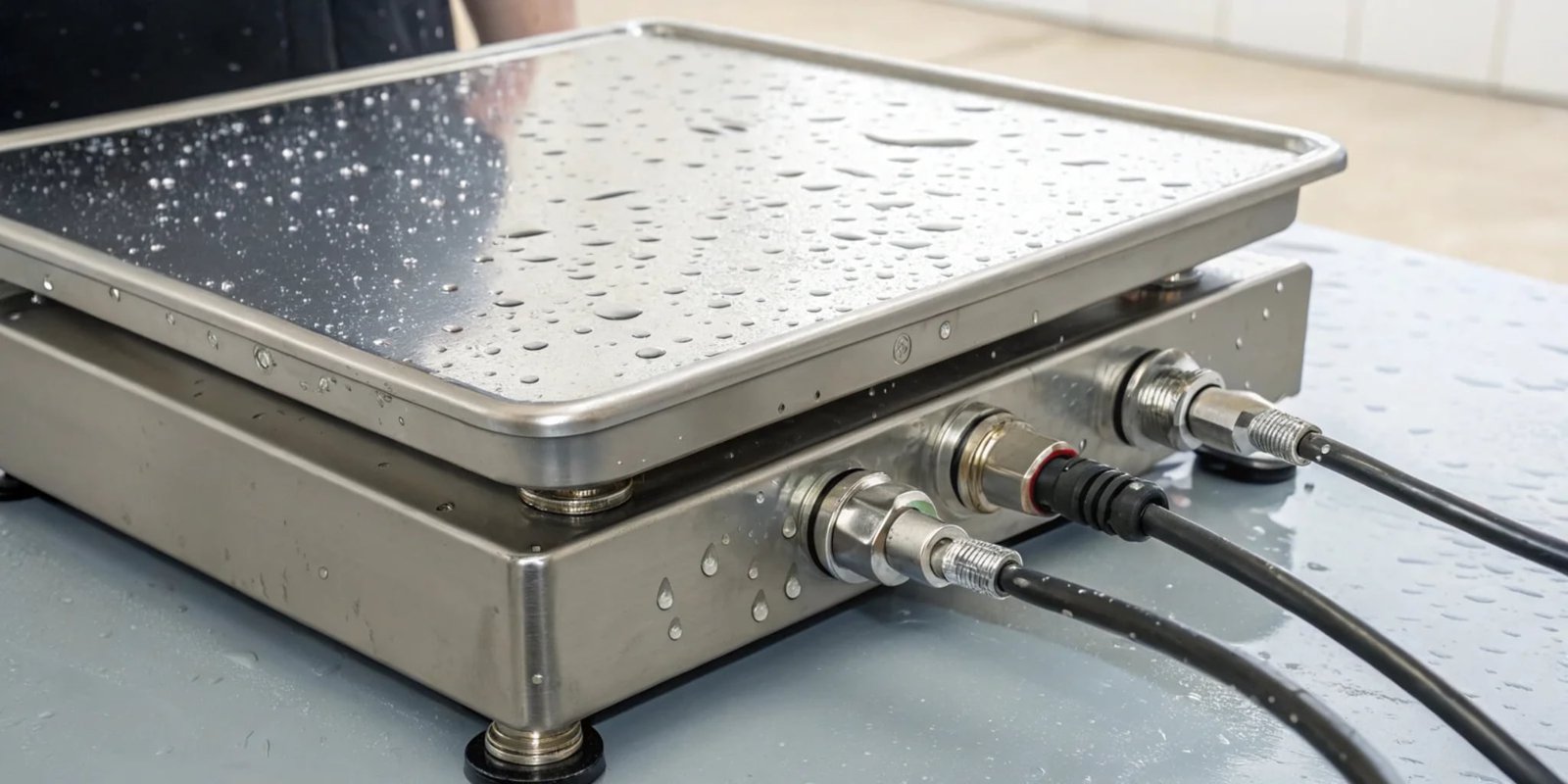
Let me dive deeper into what makes a scale tough enough for your plant. It’s not just about a simple stainless steel look; the science behind it is what provides the real protection.
The Critical Role of Materials
The first line of defense is the material itself. You’ll often see "stainless steel" advertised, but the grade makes all the difference. For seafood environments, 304 stainless steel is the go-to choice. It contains high amounts of chromium and nickel, which form a passive, non-reactive layer on the surface that prevents rust and corrosion.1 For even more extreme conditions with constant saltwater exposure, 316 stainless steel is a superior option. It includes molybdenum, an element that specifically enhances resistance to chlorides (like salt), making it the premium choice for marine applications.2 Standard carbon steel or lower-grade stainless will quickly rust and fail, making the initial saving on cost a very short-term gain.
The Power of Sealing (IP Ratings)
Even the best material won't protect the electronics inside if the scale isn't sealed properly. This is where Ingress Protection, or IP ratings, are crucial. For a seafood workshop, you need to look for an IP68 rating. The first digit, '6', means the enclosure is completely dust-tight. The second digit, '8', means it's protected against continuous immersion in water.3 This high level of sealing is essential to withstand not only the humid, salty air but also the high-pressure hose downs required for daily cleaning.4 A proper seal ensures no salt-laden moisture reaches the load cell and internal wiring, which are the parts that fail first on a standard scale.
What Type of Scales Are Best for Severe Corrosion in Seafood Workspaces?
You need precise measurements, but your workspace is a scale's worst nightmare. Finding the right type of scale can feel overwhelming. You're looking for a specific recommendation that guarantees both durability and accuracy for your operation.
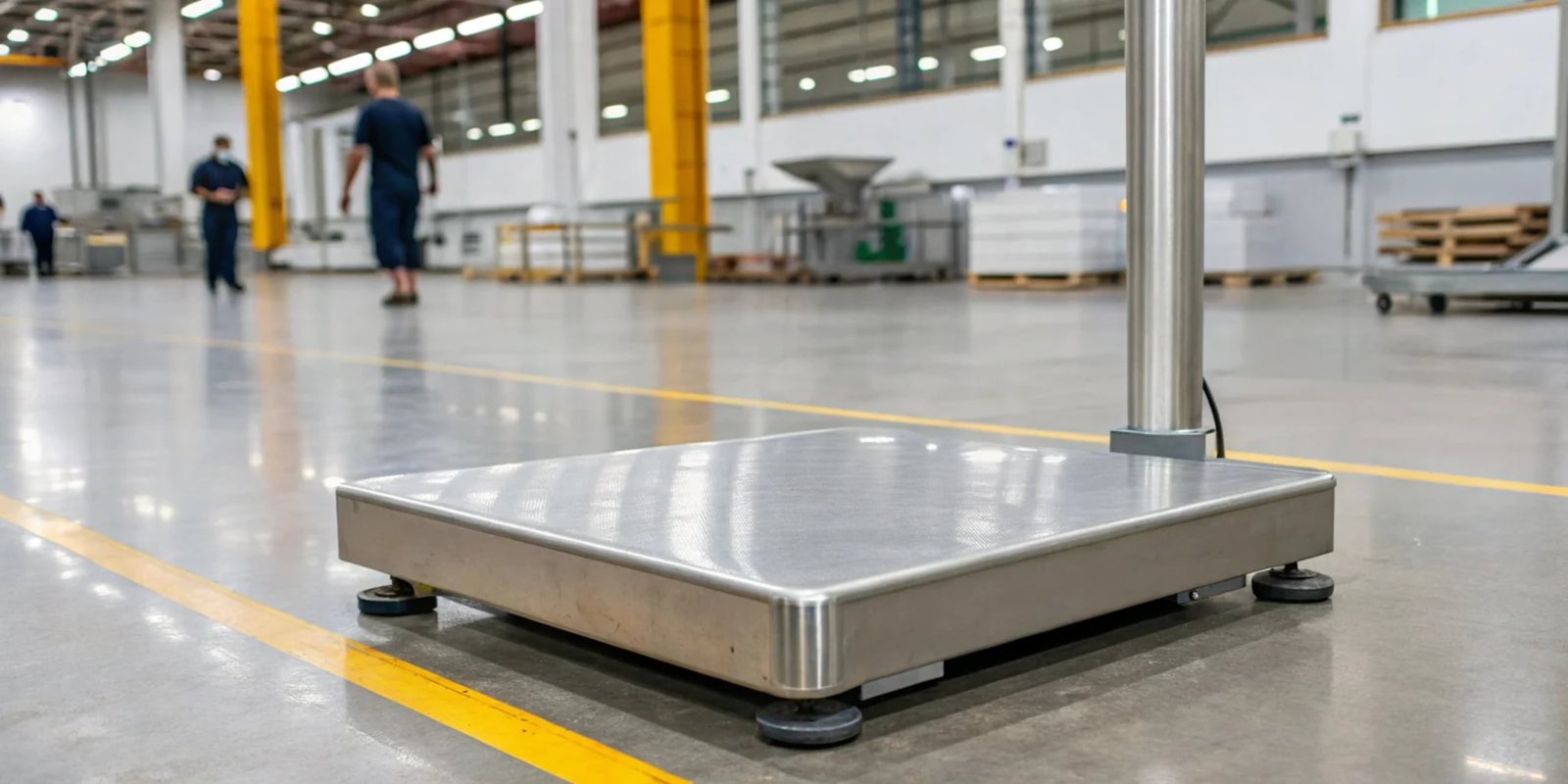
The best scales for severely corrosive seafood environments are IP68-rated, full stainless steel washdown scales. These can be either bench or floor models. They are designed specifically for intense, daily cleaning and constant exposure to corrosive agents. For the ultimate protection, look for models with hermetically sealed load cells.
When I visit seafood processing plants, I see the same issues again and again. Equipment not designed for the environment fails, causing downtime. Let’s look at the specific types of scales that solve this problem and compare their components.
Washdown Bench and Floor Scales
These scales are the workhorses of the food industry. They are characterized by their robust and often open-frame designs, which prevent water and fish debris from getting trapped.5 The entire unit—platform, frame, indicator, and even the feet—should be made of 304 stainless steel to ensure there are no weak points for corrosion to attack. This construction is vital because it allows for the aggressive cleaning protocols that are standard in any hygienic facility. You can spray them down, scrub them, and be confident that they are not only clean but also undamaged. This ease of cleaning is just as important as the scale's ability to resist corrosion.
Comparing Key Components
Not all "waterproof" scales are created equal. The difference lies in the details of their construction. A purchasing manager needs to understand these details to make a cost-effective choice. Here is a simple table to show what to look for.
| Feature | Standard Scale | Recommended Seafood Scale | Benefit in a Salty Environment |
|---|---|---|---|
| Casing Material | Painted Steel or Plastic | 304 or 316 Stainless Steel | Resists rust and chemical corrosion from salt and cleaning agents. [3] |
| IP Rating | IP54 or None | IP67 / IP68 | Fully protected from dust ingress and high-pressure water or submersion. |
| Load Cell | Aluminum, Environmentally Sealed | Stainless Steel, Hermetically Sealed | A hermetic seal is welded shut, making it impossible for moisture to enter and cause drift or failure.6 |
| Design | Many crevices, hard to clean | Open frame, smooth surfaces | Prevents debris and bacteria buildup, allowing for fast and effective sanitation. |
| Cable Entry | Standard plastic gland | Waterproof stainless gland | Stops water from entering the indicator through the cable, a common failure point. |
How Do You Prevent Regular Scales from Breaking Down in Salty, Humid Environments?
Are you trying to make your current scales last, but it feels like a losing battle? The constant repairs and replacements are disrupting your workflow and hurting your budget. You’re likely looking for practical steps to protect your equipment.
Frankly, preventing a regular scale from breaking down in a salty, humid environment is a temporary and often futile effort. While measures like daily fresh-water rinsing can help, they don’t address the core problem. The most effective "prevention" is to invest in a purpose-built, IP68 stainless steel washdown scale from the start.
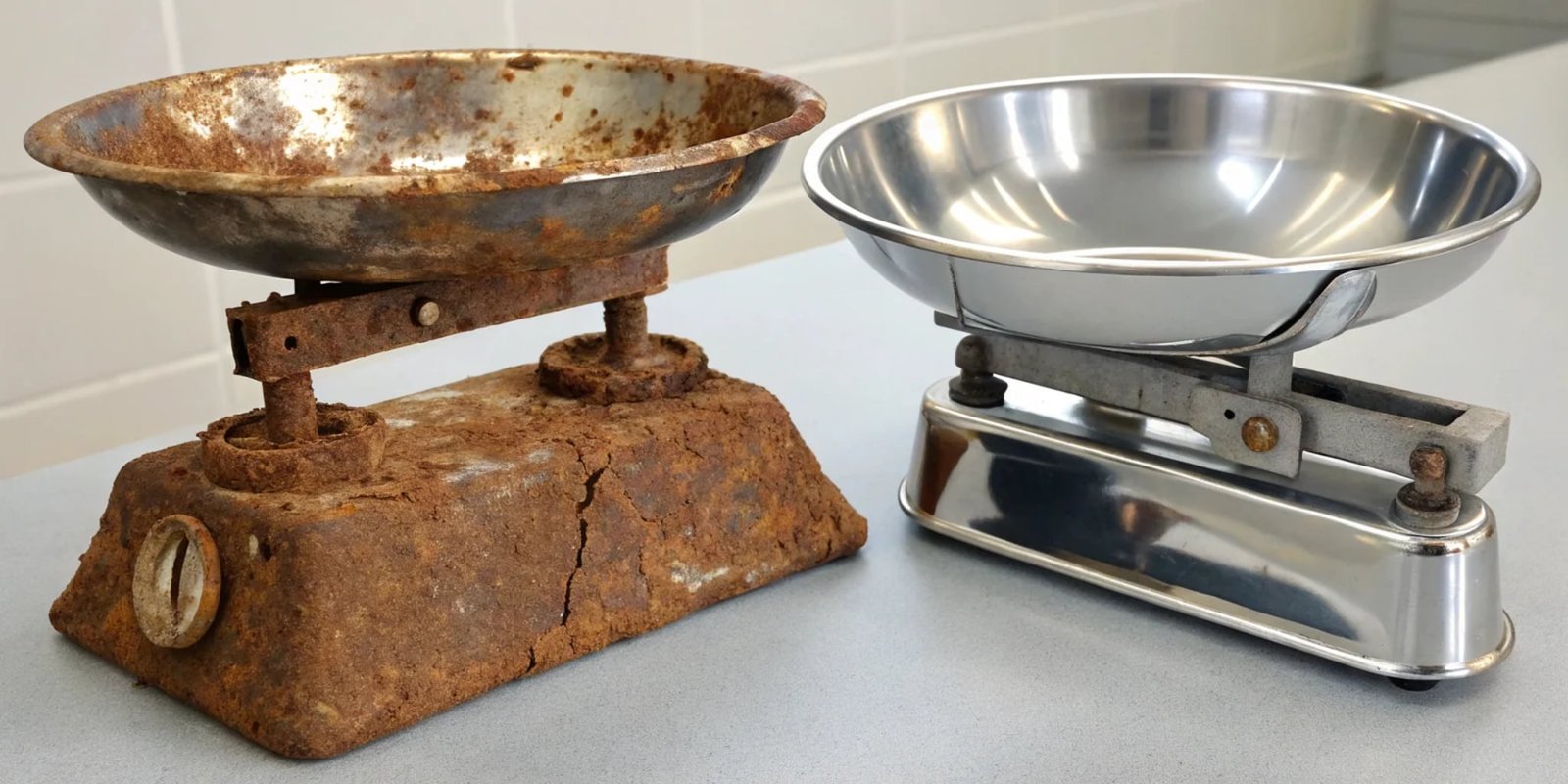
I understand the pressure to manage budgets and get the most out of existing assets. I was recently talking to a plant manager who was buying a new $150 scale every month. He thought he was saving money, but a quick calculation proved otherwise. Let’s explore this further.
Short-Term Fixes vs. Long-Term Solutions
If you absolutely must try to make a standard scale last, there are a few things you can do. At the end of each day, rinse the scale thoroughly with fresh water to remove salt deposits.7 Dry it completely and, if possible, store it in a less humid area. Some people use plastic covers, but be warned: these can trap moisture and make the problem worse. But these are only short-term fixes. The salt in the air is an aerosol, meaning it’s everywhere. It will eventually find its way into the electronics. The constant labor spent on cleaning and moving the scale also adds up. These mitigation efforts delay the inevitable failure but don't prevent it.
Calculating the True Cost of "Saving Money"
The real issue here is total cost of ownership. The initial purchase price is just one part of the equation. Let’s look at the numbers based on the client I mentioned.
-
Option A: Regular Scales
- Scale Price: $200
- Lifespan: 2 months
- Annual Cost: $200 x 6 = $1,200
-
Option B: Proper Washdown Scale
- Scale Price: $1,200
- Lifespan: 5+ years
- Annualized Cost: $1,200 / 5 = $240
As you can see, the "cheaper" option costs five times more each year. This calculation doesn't even include the hidden costs of downtime, a line stoppage waiting for a new scale, inaccurate weights that lead to product giveaway, or the labor spent swapping out broken equipment.8 Investing in the right scale from the beginning is the most financially sound decision.
Are There Specialized Scales Designed for Saltwater and High-Corrosion Conditions?
You suspect there must be a better way than constantly budgeting for replacement scales. So, is there equipment specifically engineered for the extreme conditions of saltwater and high humidity? You’re right to be searching for a specialized solution.
Yes, absolutely. Specialized scales, commonly known as washdown scales or marine-grade scales, are designed from the ground up for these conditions. They feature full 304 or 316 stainless steel bodies, IP68 waterproof ratings, and specially sealed components to provide maximum protection against saltwater corrosion and high-pressure cleaning.
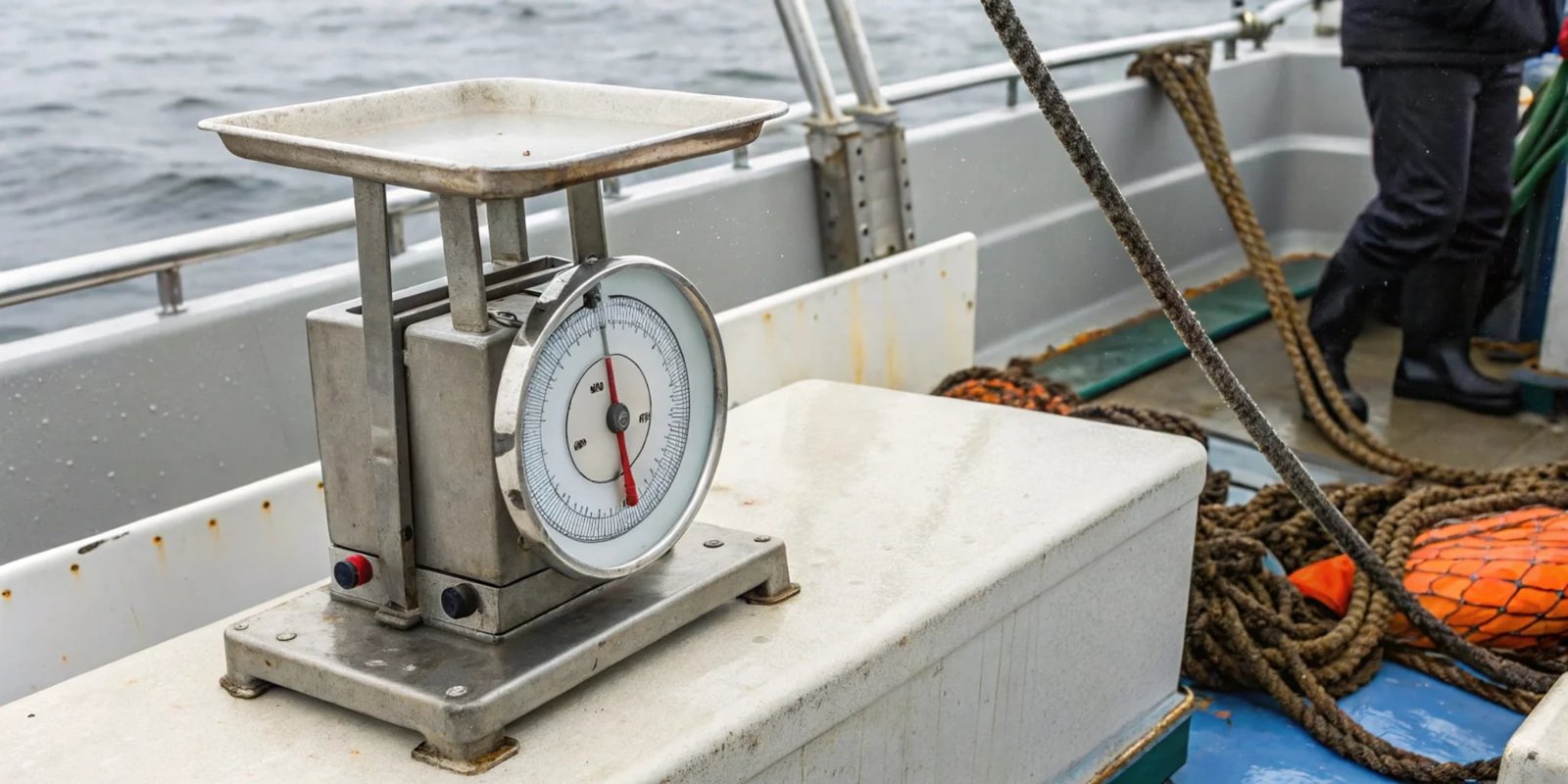
Our expertise at Weigherps lies in creating weighing solutions for challenging industries. We don't just sell scales; we provide systems that solve operational problems. I remember a client in the seafood export business who was losing money due to inaccurate glaze measurements on frozen fish—their scales were failing from condensation. Let’s talk about the features that define a true marine-grade scale.
Key Features of a "Marine-Grade" Scale
A truly specialized scale goes beyond just a basic stainless steel platform.
First, it must have hermetically sealed load cells. Unlike "environmentally sealed" cells that just use a potting compound, a hermetically sealed load cell is welded completely shut. This creates an impenetrable barrier that is impervious to moisture, ensuring long-term accuracy.
Second, look for heavy-duty construction. This means a thicker gauge of stainless steel for the frame and platform, which not only provides more structural integrity for heavy loads but also offers more material to resist corrosion over time.9
Finally, the indicator and electronics must also be waterproof. The display unit should be housed in a 304 stainless steel case with an IP68 rating and use waterproof cable glands to prevent any water intrusion.
Beyond the Scale: Custom Weighing Systems
In many cases, a standard off-the-shelf scale is only part of the solution. For that client I mentioned, we developed a custom in-motion checkweigher. We integrated an IP68 scale into his conveyor line and paired it with software that automatically tared the initial weight to calculate the exact percentage of water glaze being added. This system not only withstood the wet and cold environment but also optimized his process, ensuring he met export regulations and didn't give away product. This is where our 19 years of OEM/ODM experience comes into play. We can tailor a solution, from a simple bench scale to a fully integrated IoT weighing system, to meet your specific market needs and conquer your environmental challenges.
Conclusion
Stop the cycle of replacing cheap scales. Investing in a full 304 stainless steel, IP68-rated washdown scale is the only way to guarantee reliability and actually lower your total costs in a corrosive seafood environment.
-
"Reconstruction of the Passive Layer of AISI 304 and 316 Steel After ...", https://pmc.ncbi.nlm.nih.gov/articles/PMC11678228/. Surface studies attribute stainless steel passivity principally to a chromium-enriched oxide film that reduces corrosion rates but can break down in chloride-containing environments. Evidence role: mechanism; source type: paper. Supports: Chromium and nickel in 304 stainless steel form a passive surface layer that prevents rust and corrosion.. Scope note: Passivity is not absolute immunity to corrosion, and nickel does not play the same film-forming role as chromium. ↩
-
"Marine grade stainless - Wikipedia", https://en.wikipedia.org/wiki/Marine_grade_stainless. Comparative corrosion studies associate the molybdenum addition in type 316 stainless steel with greater resistance to chloride-induced localized corrosion than type 304 under comparable test conditions. Evidence role: mechanism; source type: paper. Supports: Molybdenum in 316 stainless steel improves chloride-corrosion resistance relative to 304 stainless steel.. Scope note: Type 316 can still undergo pitting and crevice corrosion, particularly in stagnant, warm, or concentrated saline conditions. ↩
-
"IP code - Wikipedia", https://en.wikipedia.org/wiki/IP_code. IEC 60529 defines IP6X as dust-tight protection and IPX8 as protection against the effects of continuous immersion under specified conditions. Evidence role: definition; source type: institution. Supports: IP68 denotes dust-tight construction and protection against continuous water immersion.. Scope note: IPX8 does not imply protection at arbitrary depths, temperatures, or exposure conditions, and it does not certify salt-corrosion resistance. ↩
-
"IP code - Wikipedia", https://en.wikipedia.org/wiki/IP_code. Ingress-protection standards classify immersion and water-jet exposure separately, so an IPX8 immersion classification alone does not establish high-pressure washdown performance. Evidence role: definition; source type: institution. Supports: IP68 sealing establishes resistance to high-pressure cleaning in humid, salty seafood facilities.. Scope note: This evidence qualifies rather than confirms the claim; actual washdown suitability depends on the relevant jet rating and specified cleaning conditions. ↩
-
"[PDF] Manual on Assuring Food Safety Conditions in Fish Landing and ...", https://repositorio.iica.int/bitstreams/5be7ce63-0633-4d1d-b8eb-fccb6146e3a5/download. Hygienic equipment-design guidance identifies accessible surfaces, effective drainage, and avoidance of crevices and dead spaces as measures that reduce retained product residues and facilitate cleaning. Evidence role: expert_consensus; source type: institution. Supports: Open-frame washdown scale designs prevent retention of water and fish debris.. Scope note: These principles support reduced retention, not a guarantee that every open-frame scale prevents debris accumulation. ↩
-
"[PDF] NASA Electronic Parts and Packaging", https://ntrs.nasa.gov/api/citations/20140011782/downloads/20140011782.pdf. Hermeticity testing evaluates leakage against defined limits, while load-cell metrology standards assess performance under environmental stresses rather than assuming immunity from welded construction. Evidence role: general_support; source type: institution. Supports: Welded hermetic load-cell seals make moisture ingress and resulting drift or failure impossible.. Scope note: General sealing and testing principles do not verify any particular load cell or demonstrate zero moisture ingress and zero drift over its lifetime. ↩
-
"NPS.gov Homepage (U.S. National Park Service)", https://www.nps.gov/. Conservation guidance identifies removal of soluble salt contamination and control of residual moisture as ways to reduce corrosion risk on compatible metal objects. Evidence role: general_support; source type: government. Supports: Daily freshwater rinsing is an appropriate way to protect a standard scale from salt deposits.. Scope note: Metal-conservation guidance does not authorize rinsing an assembled electrical scale; water exposure must remain within the equipment's documented cleaning limits. ↩
-
"Manufacturing Machinery Maintenance - NIST", https://www.nist.gov/el/applied-economics-office/manufacturing/topics-manufacturing/manufacturing-machinery-maintenance. Life-cycle-cost analysis includes maintenance, replacement, and operating consequences alongside acquisition costs; weighing-related overfill can also contribute to production losses. Evidence role: general_support; source type: research. Supports: Scale ownership costs extend beyond purchase price to downtime, weighing-related product losses, and replacement labor.. Scope note: These cost categories support a broader comparison but do not establish fivefold savings or demonstrate that a particular scale is the lowest-cost option. ↩
-
"Web tension field action of a stainless steel section with stiffened ...", https://pmc.ncbi.nlm.nih.gov/articles/PMC11814150/. Structural mechanics relates section thickness to stiffness and load capacity, while corrosion engineering distinguishes additional material allowance from an alloy's resistance to corrosion initiation and propagation. Evidence role: mechanism; source type: education. Supports: Thicker stainless steel improves load-bearing integrity and extends corrosion resistance over time.. Scope note: Greater thickness may provide a margin against material loss but does not prevent chloride pitting, crevice attack, or failure of thinner ancillary components. ↩


Comments (0)