
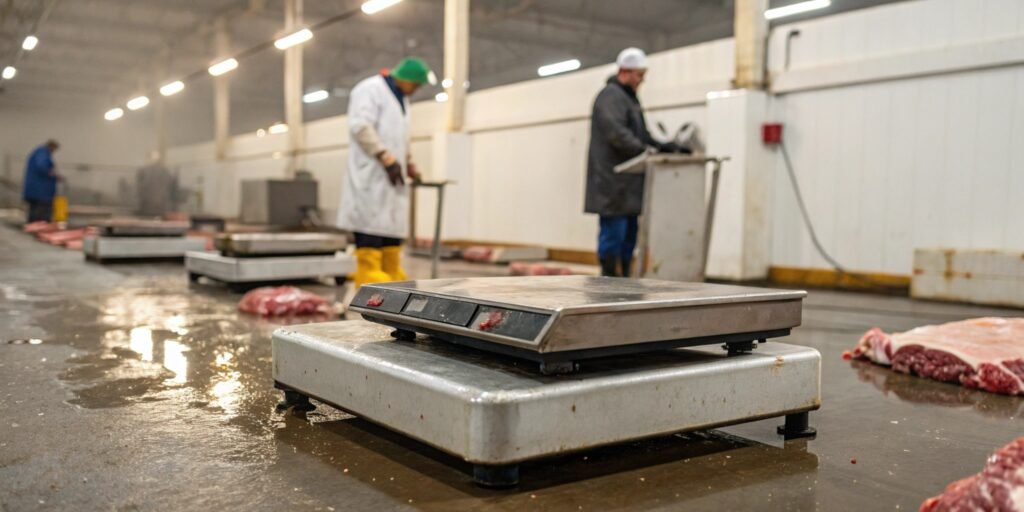
Your slaughterhouse floor is a brutal environment for any piece of equipment. With constant moisture, blood, and harsh cleaning chemicals, standard electronic scales don't stand a chance, leading to costly failures.
To survive, an electronic scale must have a high waterproof rating (IP68 or IP69K), a full stainless steel body, hermetically sealed components, and a hygienic design. These features ensure it withstands daily high-pressure washing and corrosive exposure for years of reliable service.
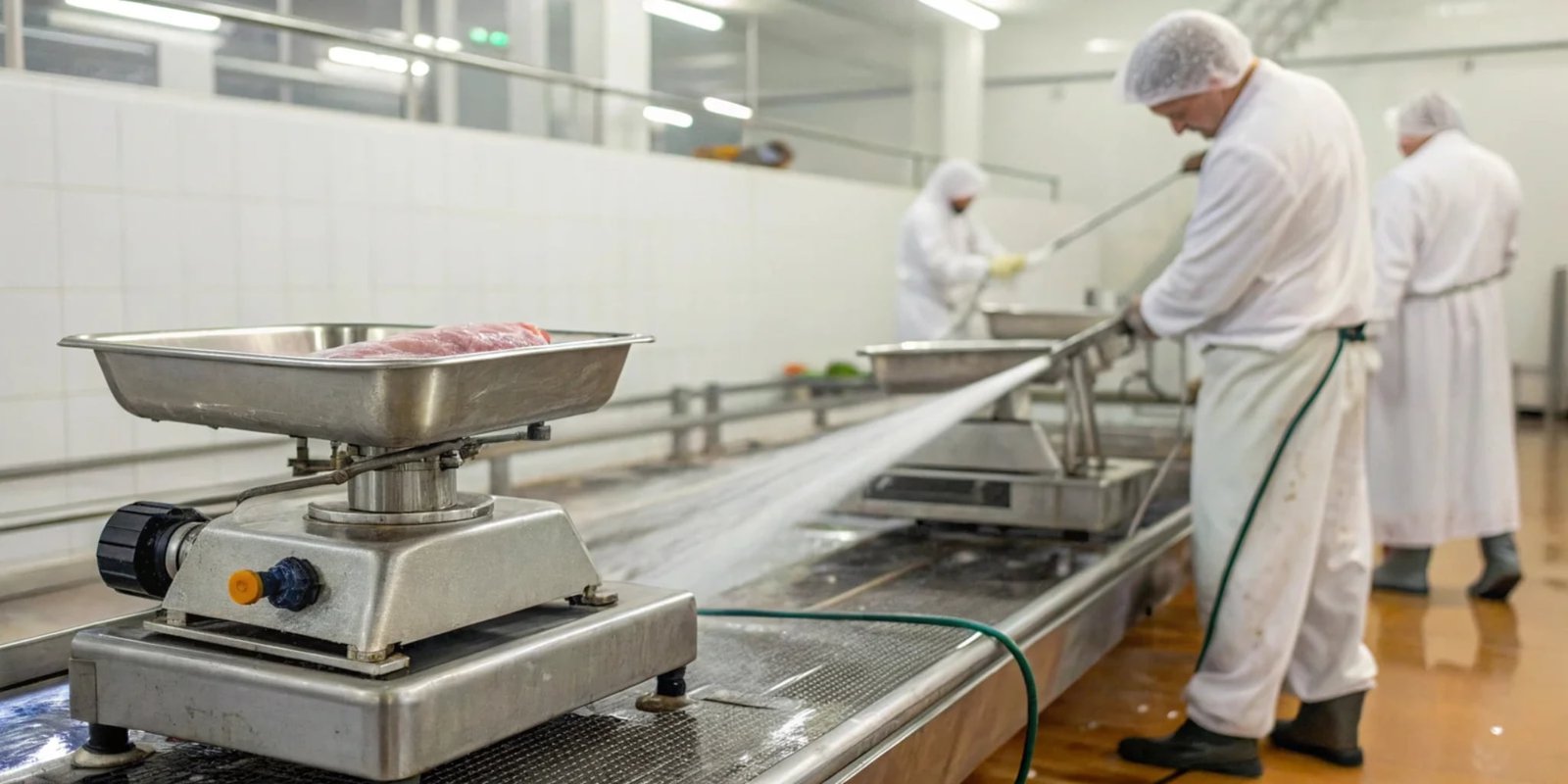
I've seen it firsthand in my 19 years in the industrial scale business. A client once tried to save money by using a standard commercial scale in their cutting room. It was destroyed in under three months. The constant humidity and corrosive effects of blood and salt simply ate away at its internal components. They learned a tough lesson: in a slaughterhouse, "good enough" is never good enough. You need a scale that is purpose-built for the challenge. Let’s explore what makes a scale truly resilient in these harsh conditions.
Are Electronic Scales Durable Enough for Wet and Harsh Conditions in Meat Processing Plants?
Are you concerned that any electronic device, no matter how tough, will inevitably fail in your wet, corrosive processing plant? You worry about endless repairs and operational halts.
Yes, they are, but only if they are engineered specifically for this purpose. Scales with high ingress protection ratings like IP68 and IP69K, combined with corrosion-resistant stainless steel construction, are designed to endure the daily abuse of high-pressure cleaning and exposure to blood and sanitizers.
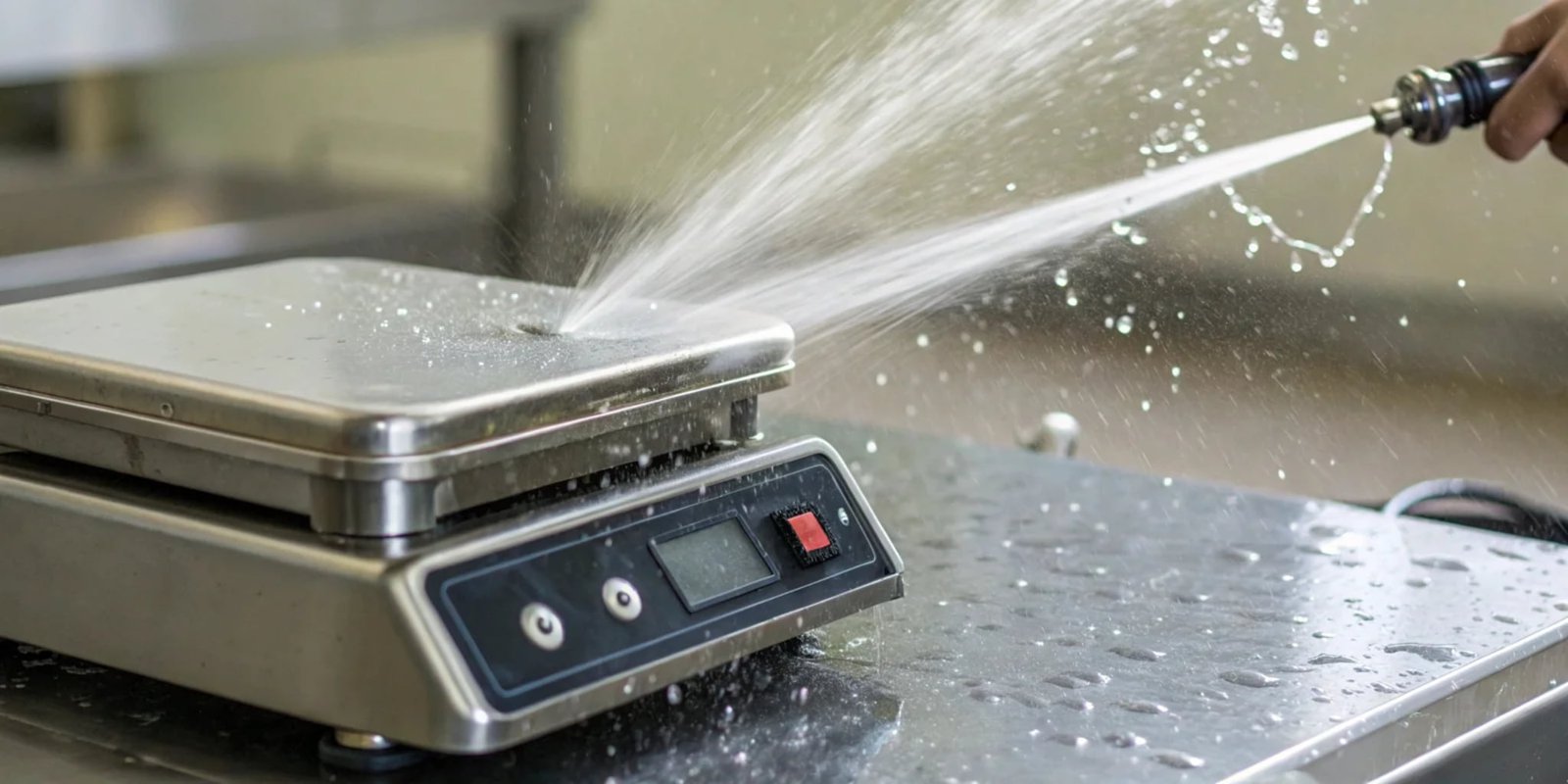
The environment in a meat processing plant is uniquely aggressive. It’s not just about water; it's about high-pressure, high-temperature water jets used for sanitation, often mixed with strong cleaning agents. Blood, salt, and other organic materials create a highly corrosive mixture that can degrade standard equipment rapidly.1 Using a scale not designed for this environment leads to frequent failures, inaccurate readings, and significant downtime, which directly impacts your yield and profitability. In contrast, a purpose-built washdown scale is designed to thrive here. With a high-quality industrial scale, you can expect a lifespan of 10 years or more, whereas lower-quality scales might only last 1 to 3 years in such conditions.2
Let's compare a standard scale to a proper washdown scale:
| Feature | Standard Commercial Scale | Slaughterhouse Washdown Scale |
|---|---|---|
| IP Rating | Low (e.g., IP54) or None | High (IP68/IP69K) |
| Body Material | Painted Mild Steel or Plastic | 304 or 316 Stainless Steel |
| Load Cell Seal | Environmentally Sealed | Hermetically Sealed |
| Design | Many crevices, hard-to-clean | Hygienic, smooth surfaces, no crevices |
| Lifespan | Months | Years |
Investing in the right scale from the start prevents the cycle of replacement and repair, ensuring your operations remain compliant and efficient.
What Features Make an Electronic Scale Suitable for Slaughterhouse Environments?
When you’re buying a new scale, how do you know you're not just throwing money away on a unit that will fail in six months? The specifications can be confusing.
The most critical features are a high waterproof rating (IP68 for immersion, IP69K for high-pressure jets), a full 304 or 316 stainless steel body, and hermetically sealed load cells. These elements work together to lock out moisture and resist corrosion.
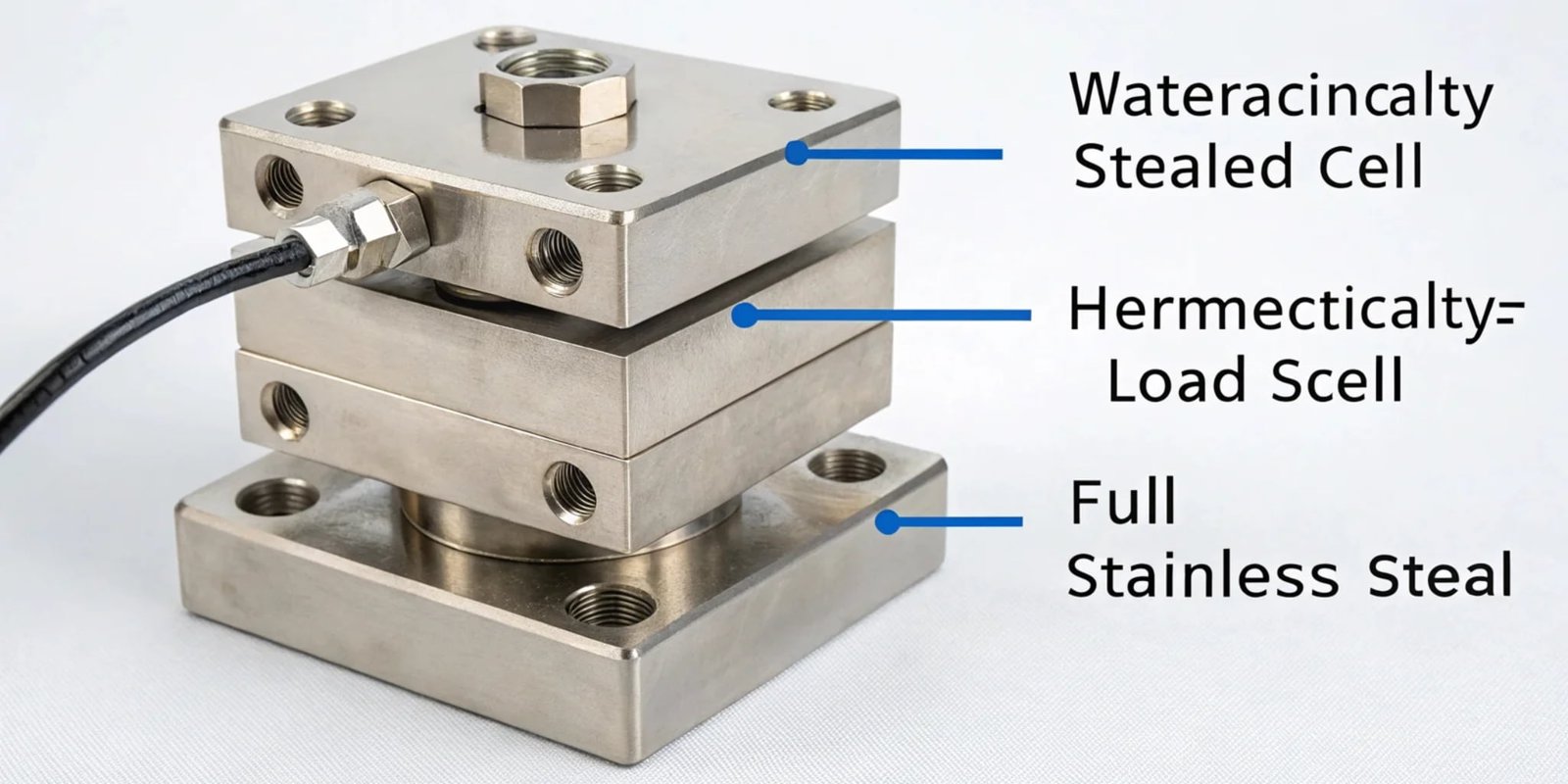
To make the right choice, you need to understand what these features mean in practice. It's not just about a single specification but how they combine to create a truly resilient machine.
The IP Rating Explained
The Ingress Protection (IP) rating is a universal standard that defines how well a device is sealed against solids and liquids. The first digit is for solids (like dust), and the second is for liquids.3 For a slaughterhouse, you need the highest levels of liquid protection.
- IP68 means the scale can be fully submerged in water under conditions specified by the manufacturer. This is great for environments with standing water.
- IP69K is the highest rating and is specifically for equipment that needs to withstand high-pressure, high-temperature washdowns. For any facility that uses pressure washers or steam cleaning for sanitation, IP69K is essential. It is important to note that IP69K tests for high-pressure jets, not submersion, so a scale with both IP68 and IP69K ratings offers the most complete protection.
The Importance of Stainless Steel
The choice of material is just as important as the sealing.
- 304 Stainless Steel is a common, cost-effective choice for many food-grade applications and offers good corrosion resistance.
- 316 Stainless Steel contains molybdenum, which significantly increases its resistance to corrosion from chlorides, such as salt and aggressive cleaning chemicals. For slaughterhouses where salt and harsh sanitizers are common, 316 stainless steel provides a longer lifespan and is the superior choice, though it comes at a higher initial cost.
Load Cell and Component Protection
The load cell is the heart of the scale, and it's highly sensitive to moisture and corrosion.
- Hermetically Sealed Load Cells are the gold standard. They are made of stainless steel and are laser-welded to be completely airtight, preventing any moisture, dust, or gas from entering and affecting the sensitive internal components.4
Hygienic Design
Finally, the physical design must support easy and thorough cleaning to prevent bacteria buildup. This includes smooth, polished surfaces, rounded corners, and the elimination of crevices or exposed threads where material could get trapped. Some floor scales even feature a hinge-top for easy cleaning underneath the platform.
How Can You Protect Your Investment in a Slaughterhouse Scale?
You've finally invested in a high-quality, IP69K stainless steel scale. But you're still worried—can daily abuse and improper handling ruin even the best equipment?
Your protection strategy starts with choosing the right IP-rated, stainless steel scale. After that, proper installation, careful cleaning protocols, scheduled calibration, and a design that withstands shock are all critical for maximizing its lifespan and ensuring a great return on investment.
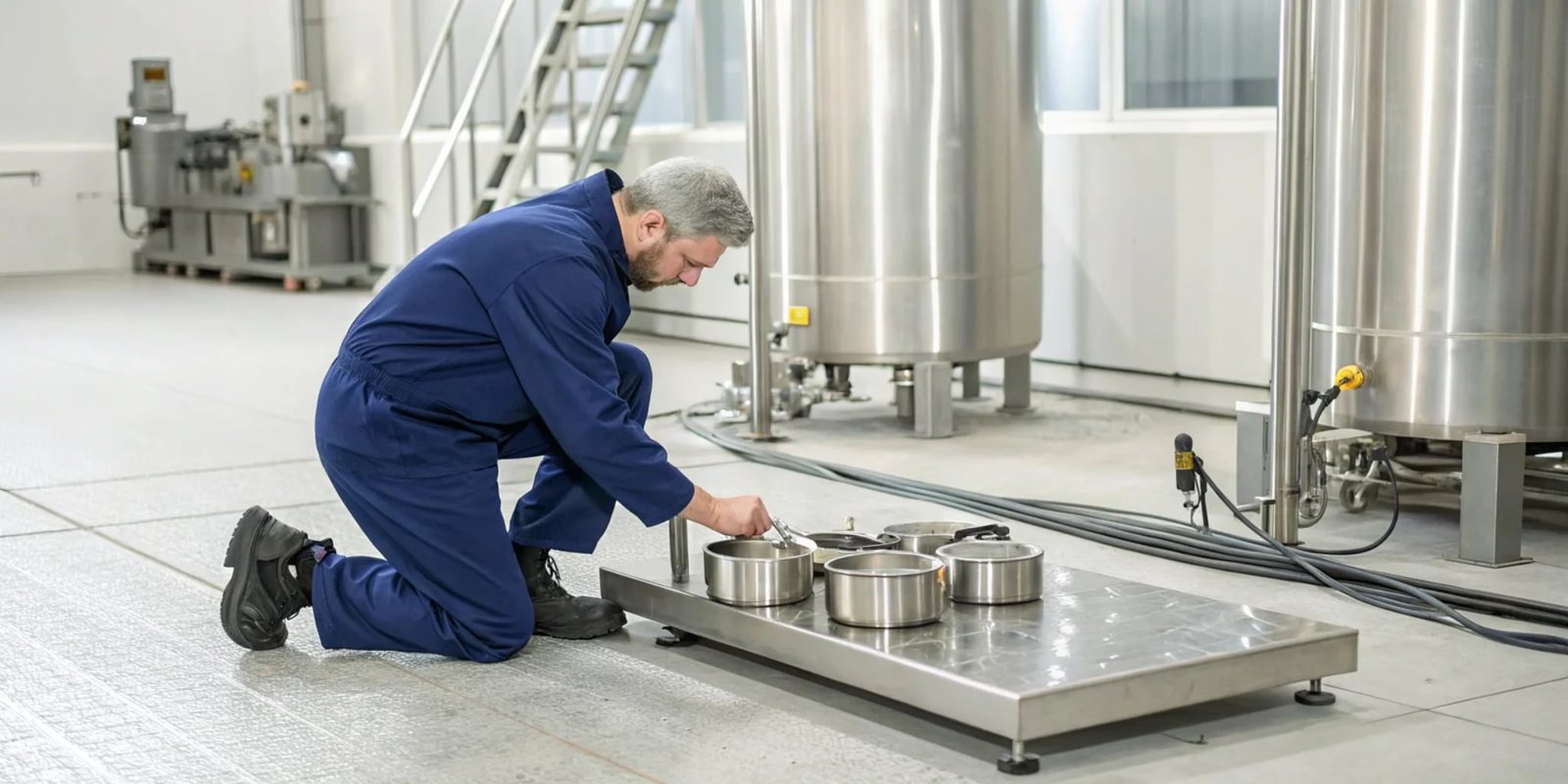
Buying the right scale is only half the battle. As a manufacturer, we see how after-purchase care determines whether a scale lasts 5 years or 15. The daily reality of a processing plant—with impacts, vibrations, and constant washing—requires a clear plan.
Smart Installation and Placement
Where you place the scale matters. Install it on a flat, stable surface away from areas with heavy machinery or frequent movement to minimize vibrations that can disrupt measurements. The stability of the scale's readings can be significantly impacted by even subtle vibrations that you might not feel yourself.5
Anti-Vibration and Shock-Absorbing Design
In a slaughterhouse, carcasses can be dropped onto the scale, creating shock loads that can damage the delicate load cells.6 An anti-vibration design is crucial. This can include using vibration-damping mounts or pads made of materials like rubber or neoprene to absorb shock. This protects the sensitive weighing components from sudden impacts and ensures the scale's long-term accuracy.
Proper Cleaning Protocols
"Washdown" doesn't mean you can be careless. While an IP69K-rated scale can handle high-pressure jets, you should still follow best practices.
- Use mild detergents, as harsh chemicals can still damage components over time.
- Avoid directing high-pressure spray directly at cable entry points or the indicator screen as a precaution.
- Ensure the power adapter is in a dry, protected location, as it is not waterproof.
- Regularly lift the weighing pan to clean any debris that has accumulated underneath.
The Crucial Role of Calibration
Even the most robust scale can experience drift over time due to environmental stress and heavy use. Regular calibration with certified test weights is essential to ensure your measurements remain accurate. This is not just a maintenance task; it's a core requirement for regulatory compliance and accurate yield calculation in the meat industry.7
Conclusion
To guarantee longevity and accuracy in a slaughterhouse, you must select an electronic scale with at least an IP68 rating, a full stainless steel body (preferably 316), and a shock-resistant design. This ensures your investment is protected and your operations run smoothly.
-
"Study of the Corrosion Behavior of Stainless Steel in Food ...", https://pmc.ncbi.nlm.nih.gov/articles/PMC11012613/. Corrosion research on food-processing equipment explains how chloride exposure, cleaning chemistry, and persistent wetness can promote material degradation; it does not establish that blood and organic residues universally cause rapid corrosion. Evidence role: mechanism; source type: paper. Supports: Wet, chloride-containing meat-processing environments can corrode susceptible equipment materials.. Scope note: Corrosion rates depend on material grade, chemical concentration, temperature, and exposure duration; the specific mixture described requires direct evidence. ↩
-
"Industrial Weighing Scales and Systems", https://www.mt.com/us/en/home/products/Industrial_Weighing_Solutions.html. Field reliability data for industrial weighing equipment can support service-life estimates only for the equipment populations and operating conditions studied; general maintenance evidence does not establish the stated 10-year versus 1–3-year comparison. Evidence role: statistic; source type: research. Supports: High-quality industrial scales have a service life of 10 years or more, compared with 1–3 years for lower-quality scales under comparable meat-processing conditions.. Scope note: The numerical comparison requires a directly relevant longitudinal dataset; otherwise the lifespan figures remain unsupported. ↩
-
"IP code - Simple English Wikipedia, the free encyclopedia", https://simple.wikipedia.org/wiki/IP_code. IEC 60529 classifies enclosure protection against access to hazardous parts, ingress of solid foreign objects, and harmful water ingress, with the characteristic numerals identifying the relevant protection levels. Evidence role: definition; source type: institution. Supports: The first IP numeral describes protection against access and solid-object ingress, while the second describes protection against water ingress.. Scope note: An IP classification does not establish resistance to every liquid, cleaning chemical, or corrosion mechanism. ↩
-
"[PDF] NASA Electronic Parts and Packaging", https://ntrs.nasa.gov/api/citations/20140011782/downloads/20140011782.pdf. Hermetic-packaging literature describes sealed enclosures and feedthroughs as barriers to environmental ingress, with hermeticity evaluated through defined leak-test criteria rather than an assumption of zero leakage. Evidence role: mechanism; source type: research. Supports: Hermetic sealing can protect sensitive load-cell components against environmental moisture ingress.. Scope note: General sealing evidence does not establish that every hermetic load cell uses stainless steel or laser welding, or remains leak-free indefinitely. ↩
-
"[PDF] nistir 6919 | nist", https://www.nist.gov/document/nistir6919pdf. Weighing metrology guidance identifies mechanical vibration as a source of indication instability and measurement uncertainty, supporting the use of stable installation conditions. Evidence role: mechanism; source type: government. Supports: Environmental vibration can impair the stability of scale readings.. Scope note: Evidence from precision laboratory balances may not establish the magnitude of the effect on lower-resolution industrial floor scales. ↩
-
"Key Considerations for Overload Protection in Load Cells", https://www.interfaceforce.com/key-considerations-for-overload-protection-in-load-cells/. Impact mechanics and load-cell overload studies explain how sudden loading can produce transient forces above the static load and damage sensing elements when allowable limits are exceeded. Evidence role: mechanism; source type: paper. Supports: Impact loading can exceed a load cell's allowable force and cause damage.. Scope note: General impact evidence does not establish incident frequency in slaughterhouses or prove that rubber or neoprene mounts will preserve long-term accuracy in a particular installation. ↩
-
"[PDF] NIST Handbook 44: Specifications, Tolerances, and Other Technical ...", https://www.nist.gov/system/files/documents/2022/11/30/2023%20NIST%20Handbook%2044.pdf. Legal-metrology requirements and recalibration guidance support testing weighing instruments against suitable traceable standards to assess accuracy; mandatory procedures and intervals depend on jurisdiction and use. Evidence role: general_support; source type: government. Supports: Periodic checks against appropriate weight standards support weighing accuracy, while applicable regulations may require specified testing or verification.. Scope note: Calibration establishes measurement performance at the time of testing rather than guaranteeing future accuracy, and regulatory verification is not interchangeable with calibration. ↩


Comments (0)