
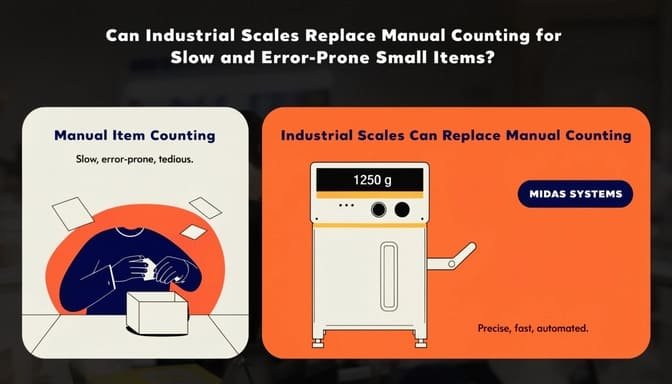
Tired of slow, error-prone manual counting? Costly mistakes from a single miscount can disrupt your entire operation, leading to unhappy customers and financial losses. There's a better way.
Yes, an industrial electronic scale is the definitive solution for replacing manual counting. It offers superior accuracy, speed, and reliability, eliminating human error and immediately boosting your operational efficiency and quality control.
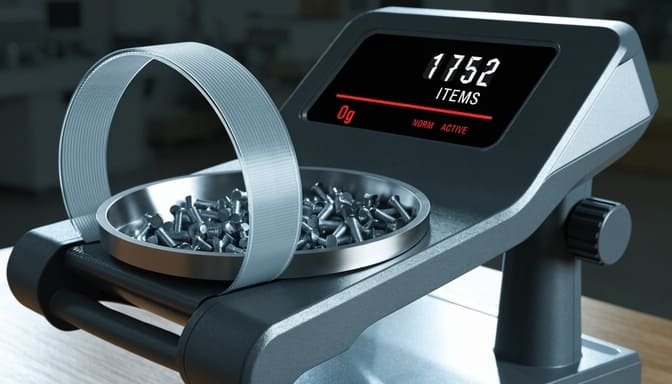
I’ve been in the industrial weighing industry for nearly two decades. I’ve visited countless factories and warehouses. The story is always the same: good people trying their best with an outdated process. I've seen firsthand how a simple switch from manual counting to an electronic counting scale can transform a company's entire workflow. It’s not just about getting a number; it’s about trusting that number. This trust is the foundation of an efficient and profitable operation, and it's what we empower our customers to achieve.
Can an industrial electronic scale replace manual counting for small items efficiently and accurately?
Is your team wasting precious hours counting tiny bolts and screws? These tedious tasks not only slow down production but also open the door for costly human errors.
Absolutely. An industrial electronic scale uses high-precision sensors and smart algorithms to count thousands of small parts in seconds. It's a game-changer for both efficiency and accuracy, far surpassing what's possible by hand.
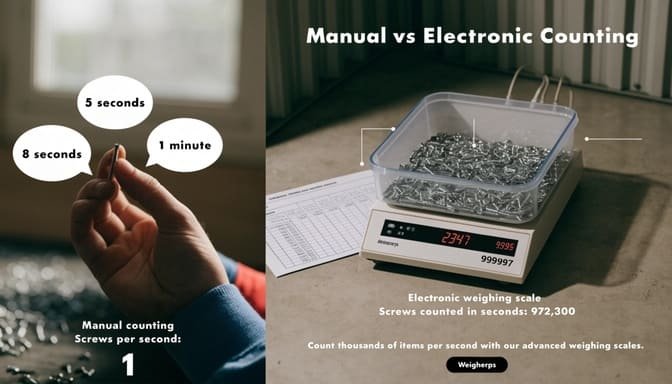
To truly grasp the difference, let’s break down how these scales achieve such remarkable results. At their core, modern digital scales use a component called a load cell. This is a transducer that converts the force of an object's weight into a tiny electrical signal.1 Our scales are engineered with high-precision load cells that can detect minuscule differences in weight.
The process is called "counting by weight"2 and it's brilliantly simple:
- You take a small, known sample of items (say, 10 screws) and place them on the scale.
- The scale registers the total weight of the sample and calculates the Average Piece Weight (APW).
- You can then place a large, unknown quantity of the same screws onto the scale.
- The scale divides the total weight by the APW to give you an instant and accurate count.
This method is not only faster but also significantly more accurate than manual counting, which is prone to fatigue and distraction3. For any business dealing with inventory, from a software vendor managing electronic components to a hardware supplier, this leap in efficiency and precision is transformative.
| Feature | Manual Counting | Industrial Scale Counting |
|---|---|---|
| Speed | Slow, varies by person | Extremely fast, consistent |
| Accuracy | Prone to human error, fatigue | Highly accurate, up to 99.75% or better4 |
| Labor Cost | High, ties up staff | Low, frees up staff for valuable tasks |
| Data | Manual recording, risk of entry errors | Automatic, can be sent to ERP/WMS |
How reliable is an industrial electronic scale in reducing errors when verifying quantities of small parts?
Are you constantly dealing with the fallout from small counting errors? Even a single missing component can lead to customer complaints, returned shipments, and a damaged reputation.
Industrial electronic scales are exceptionally reliable for eliminating these errors. By automating the process, they remove the primary source of inaccuracies—human error. This ensures that every package and inventory check is consistently precise, boosting your quality control to a new level.
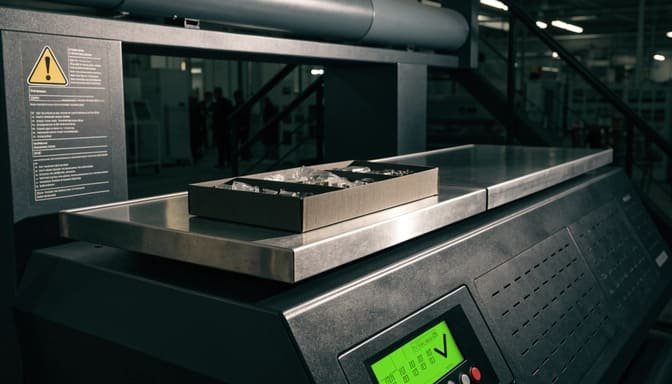
I've seen the fastest packaging team count three boxes a minute, but the cost of one wrong piece is enough to buy half an industrial scale. This is a critical insight. The cost of error, including rework, reshipping, and lost customer goodwill, is often much higher than the initial investment in good equipment.5 That's why we believe in a simple philosophy: let workers do what they do best—physical tasks—and let technology handle the judgment calls.
We design our systems so that a worker's job is simplified to just two actions: placing the box on the scale and tearing off the label. The scale does the "thinking." This approach drastically reduces the cognitive load on your staff, minimizing the chances of error even during a long shift6.
For my clients in the software services industry, this reliability is paramount. They handle sensitive electronic components where a wrong count isn't just an inconvenience; it can halt a production line. A key aspect of our reliability comes from our rigorous quality assurance. Every single scale we ship has been through comprehensive testing by our quality control department for weight, battery, and software performance.
Furthermore, reliability extends to data. For a Technical Director, data integrity is non-negotiable. Our scales can be integrated directly with your Warehouse Management System (WMS) or Enterprise Resource Planning (ERP) system. This means the count is not only accurate on the platform but is also transmitted flawlessly to your central database, eliminating manual data entry mistakes and ensuring data compliance.
Is using an electronic scale a faster alternative to manual counting for small components?
Is your team's productivity being held back by the slow, repetitive task of counting small components by hand? That time could be refocused on tasks that generate more value.
Absolutely. Using an electronic counting scale is dramatically faster than manual counting. A task that takes minutes by hand can be completed in mere seconds with a scale. It provides an instant quantity count, massively increasing throughput.

Let's look at a direct, step-by-step comparison to see where the speed comes from. As an OEM/ODM manufacturer for 19 years, we've analyzed these workflows countless times to design better solutions for our clients.
The Old Way: Manual Counting
- A worker picks up a handful of small parts.
- They begin counting them one by one, often grouping them into tens or twenties.
- They might lose their place and have to restart.
- Once counted, they write the number down on a piece of paper.
- Later, someone has to transfer that number into a computer system, creating another opportunity for error.
This process is not only slow but also mentally draining, which makes errors more likely as the day goes on7.
The New Way: Electronic Scale Counting
- A worker places a small sample of the parts (e.g., 10 pieces) on the scale to get the unit weight.
- They pour the entire bulk batch of parts onto the scale platform.
- The scale instantly displays the total quantity. The work is done.
The time saved isn't just on one task. This speed creates a ripple effect across your entire operation. Faster inventory audits mean less downtime.8 Faster order fulfillment means happier customers. Faster receiving checks mean materials get to the production line sooner. For a Purchasing Manager, this translates directly to a lower cost per unit handled and better overall cost-effectiveness. For a Technical Director, it represents an optimized, more efficient workflow.
Can electronic scales streamline the process of counting and verifying quantities of small items?
Is your current inventory process a series of disconnected steps? Manual counting, handwritten notes, and separate data entry create friction and introduce errors into your workflow.
Yes, electronic scales are the key to streamlining this entire process. They consolidate counting, verifying, and data logging into a single, fluid operation, minimizing handling and eliminating manual data entry errors.
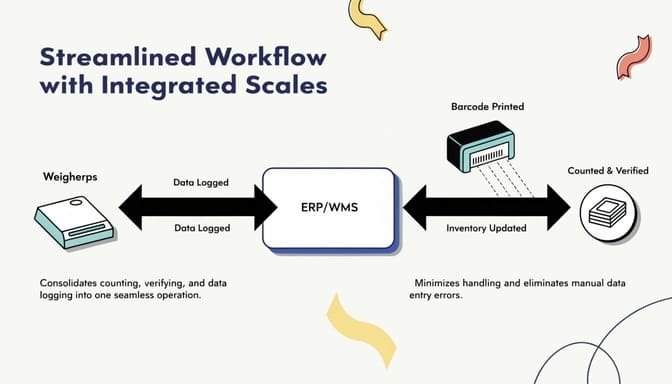
Streamlining is more than just speed; it's about reducing the number of steps and touches required to complete a task. In my experience providing customized solutions, a streamlined process is what separates good companies from great ones.
This is especially critical for our clients who are software vendors. Their success depends on seamless integration, and they expect the same from their operational tools. Our R&D team specializes in IoT weighing and automation control, so we understand this need deeply. Our scales are designed not as standalone devices, but as data hubs in a larger ecosystem.
Here’s how we help you streamline:
- Flexible Connectivity: Our scales come with multiple communication options like RS232, USB, and Ethernet. This allows for a direct link to a PC, a label printer, or your company's network.
- ERP/WMS Integration: We don't just sell a scale; we provide a bridge to your existing systems. The accurate weight and count data can be fed directly into your SAP, Oracle, or custom software via an API, eliminating the need for manual entry. This is a huge win for any Technical Director concerned with data integrity and automation.
- Customized Solutions: As an OEM/ODM partner, we build weighing systems tailored to your specific workflow. Whether you need to integrate with barcode scanners for part identification or connect to a cloud platform for remote monitoring, we provide targeted, cost-effective solutions.
| Old, Disjointed Workflow | New, Streamlined Workflow with Scale |
|---|---|
| 1. Manually count all items. | 1. Place items on the scale. |
| 2. Write quantity on a paper log. | 2. Scale counts and verifies instantly. |
| 3. Walk to a terminal. | 3. Data is sent automatically to the system. |
| 4. Manually type data into the ERP/WMS. | |
| 5. Hope there were no typos. |
By integrating a smart scale, you transform a multi-step, error-prone task into a single, automated, and reliable action.
Conclusion
Switching from manual counting to an industrial electronic scale is a crucial step for growth. It increases accuracy, boosts speed, and provides reliability, turning a tedious chore into a streamlined, data-driven process.
-
"Design and Shape Optimization of Strain Gauge Load Cell for ...", https://pmc.ncbi.nlm.nih.gov/articles/PMC9571206/. A technical reference on load cells supports that a load cell is a force transducer that converts applied force or weight into an electrical signal for measurement. Evidence role: definition; source type: education. Supports: A load cell is a transducer that converts the force of an object's weight into a tiny electrical signal.. ↩
-
"Counting", https://www.dataweigh.com/media/13297/countmanual.pdf. A neutral metrology or weighing reference supports that counting scales estimate item quantity by determining an average piece weight from a known sample and dividing total weight by that value. Evidence role: mechanism; source type: institution. Supports: Counting by weight uses a known sample to calculate average piece weight and then estimates quantity from total weight.. Scope note: This supports the general counting-by-weight method, not the accuracy of any specific scale model. ↩
-
"Associations Between Interruptions and Medication ... - PMC", https://pmc.ncbi.nlm.nih.gov/articles/PMC12994643/. Human factors research supports that fatigue, distraction, and repetitive tasks can increase human error, providing context for why automated counting may reduce errors compared with manual counting. Evidence role: expert_consensus; source type: research. Supports: Manual counting is vulnerable to fatigue and distraction, while automation can reduce those human-error sources.. Scope note: This would support the human-error mechanism generally rather than proving that every counting-scale application is more accurate than manual counting. ↩
-
"Accuracy of Smart Scales on Weight and Body Composition", https://pmc.ncbi.nlm.nih.gov/articles/PMC8122302/. An independent study, standards document, or metrology guide would be needed to support reported counting-scale accuracy levels and the conditions under which such accuracy is achievable. Evidence role: statistic; source type: research. Supports: Industrial scale counting can achieve accuracy of up to 99.75% or better under appropriate conditions.. Scope note: The figure is likely conditional on calibration, sample size, scale resolution, and uniformity of the counted pieces. ↩
-
"Reducing the Costs of Poor Quality: A Manufacturing Case ...", https://scholarworks.waldenu.edu/cgi/viewcontent.cgi?article=6608&context=dissertations. Quality-management literature on cost of poor quality supports that errors can generate internal and external failure costs such as rework, returns, warranty handling, and customer dissatisfaction. Evidence role: general_support; source type: paper. Supports: Counting errors can impose costs through rework, reshipping, returns, and customer dissatisfaction that may exceed prevention costs.. Scope note: This supports the cost categories and general economic logic, not a specific return-on-investment figure for electronic scales. ↩
-
"Human Mental Workload: A Survey and a Novel Inclusive ...", https://pmc.ncbi.nlm.nih.gov/articles/PMC9201728/. Ergonomics and human-factors research supports that high cognitive workload and prolonged task duration can increase error risk, while simplifying task demands can reduce error opportunities. Evidence role: mechanism; source type: research. Supports: Reducing cognitive load in repetitive industrial tasks can reduce the likelihood of human error, especially during long shifts.. Scope note: This supports the cognitive-workload principle generally, not the measured error reduction of this specific workflow. ↩
-
"Fatigue and Sleepiness of Clinicians Due to Hours of Service", https://www.ncbi.nlm.nih.gov/books/NBK603621/. Occupational fatigue research supports that longer work periods and fatigue can impair attention and increase the probability of human error in repetitive tasks. Evidence role: expert_consensus; source type: research. Supports: Manual counting errors can become more likely over time as workers experience fatigue during repetitive tasks.. Scope note: This supports the fatigue-error relationship generally, not a measured error curve for manual component counting specifically. ↩
-
"The Updated Guide to Cycle Counting in 2025 for Modern ...", https://ibmi.workoutloud.com/Blog/touchpath/the-updated-guide-to-cycle-counting-in-2025-for-modern-inventory-management. Operations-management literature supports that more efficient inventory counting and cycle-counting processes can reduce disruption to normal operations compared with slower physical counts. Evidence role: general_support; source type: paper. Supports: Faster inventory audit or counting processes can reduce operational downtime.. Scope note: This provides contextual support; the amount of downtime reduction depends on the facility’s inventory process and audit method. ↩



Comments (0)