

Tired of customer complaints about missing parts? These disputes consume time, drain resources, and damage your reputation, turning a profitable shipment into a loss. Your industrial scale holds the key to ending these costly arguments for good.
An industrial scale can provide undeniable proof of a shipment's contents. By creating a detailed data log for every package—including weight, item count, operator ID, and a timestamp—it offers a complete and traceable record. Advanced systems even add photos or videos, making it easy to resolve disputes with factual evidence.
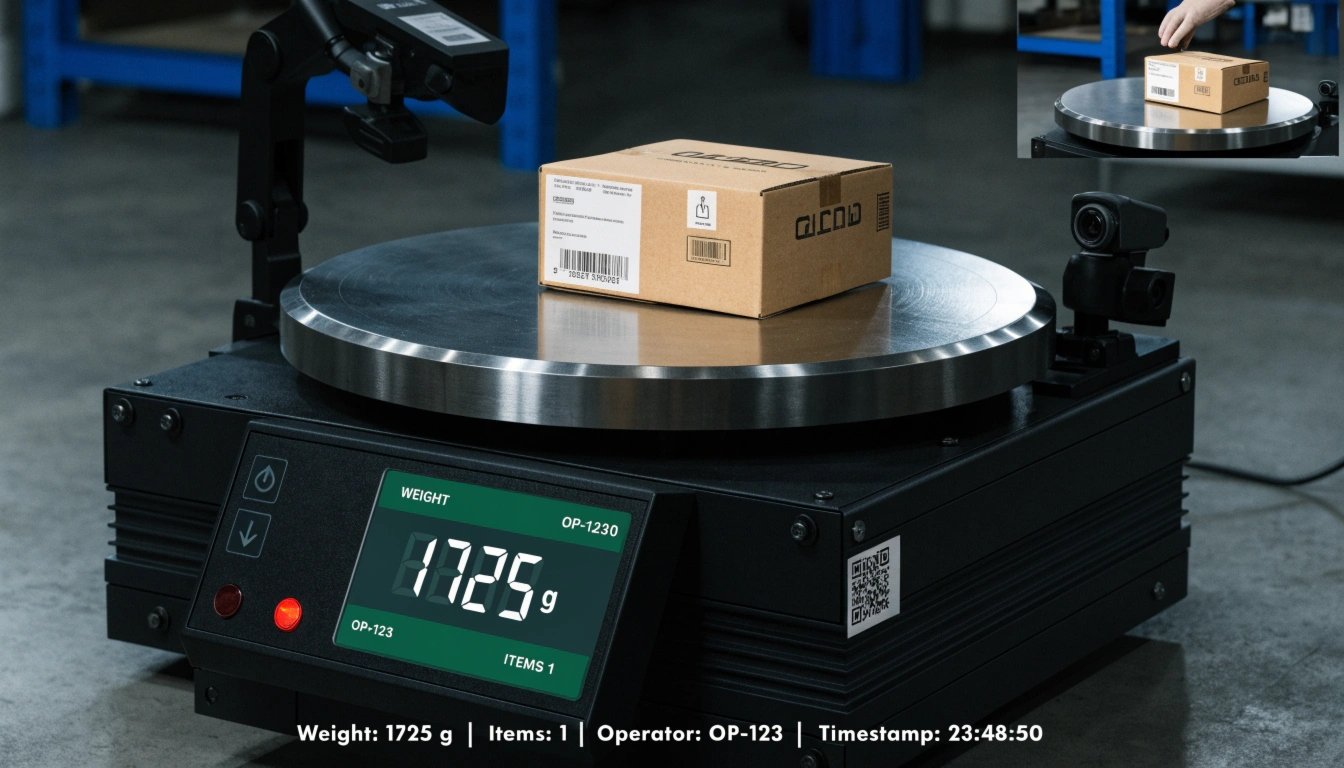
This technology transforms a simple scale into a powerful quality control tool that protects your business. Instead of dealing with frustrating customer claims, you have a system that provides clear, objective evidence. We've seen firsthand how this shift helps companies improve efficiency and build customer trust. Let's explore exactly how this works and what kind of proof you can gather.
What evidence can an industrial scale provide to address customer complaints about missing parts?
Another complaint about a missing part arrives. You feel certain the order was complete, but without solid proof, it's just your word against your customer's. This uncertainty is expensive.
An industrial scale provides a layered evidence package to verify every shipment. It captures essential data points like gross weight, pre-set piece counts, and exact timestamps. Integrating a camera or barcode scanner further links the shipment to a specific order, operator, and even a photograph of the final packed contents.
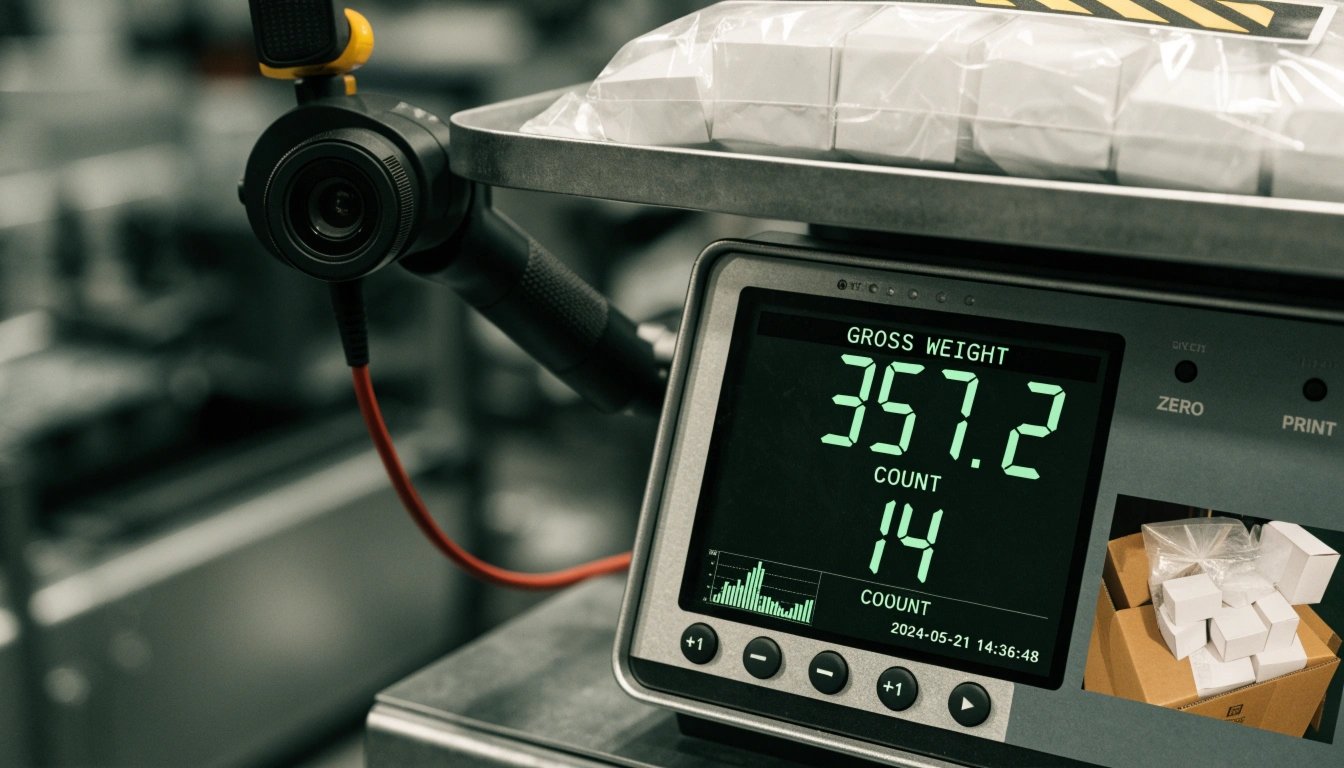
As a manufacturer with over 19 years of experience, I’ve seen how this evidence ends disputes. Instead of a difficult conversation, you can simply pull up a complete record. The scale logs the exact weight, the counting function confirms the number of pieces, the barcode scanner ties it to an order, and a camera can even show the items in the box. This data can be automatically stored in your own system for easy retrieval. This detailed log confirms what was in the box when it left your facility. It provides concrete proof that resolves claims quickly and professionally.
| Evidence Type | Description | How It Resolves Disputes |
|---|---|---|
| Weight Record | The total measured weight of the packed box. | Compares the actual shipping weight to the expected weight of a complete order. A significant difference indicates an error. |
| Piece Count | The quantity of items calculated by a counting scale. | Directly verifies if the correct number of parts was included, eliminating guesswork. |
| Timestamp | An automatic log of the date and time the package was weighed. | Provides a precise record of when the order was processed and finalized for shipment. |
| Operator ID | The ID of the employee who packed and weighed the order. | Assigns accountability and helps trace the source of any recurring issues for retraining. |
| Barcode Scan | Data captured from the product or order barcode. | Links the physical package directly to a specific order number in your system, preventing mix-ups. |
| Image/Video | A photo or video of the package contents taken at the time of weighing. | Offers irrefutable visual proof of what was inside the box just before it was sealed. |
How can an industrial weighing system document proof of completeness in shipments?
Manual packing logs are prone to mistakes. A single handwritten error or forgotten check can lead to a customer dispute you can't win. You need an automated process that documents completeness without fail.
An industrial weighing system documents proof by creating a "digital fingerprint" for each package. By integrating with barcode scanners, the system identifies the order, weighs the contents, and confirms it matches the expected weight, logging everything automatically.
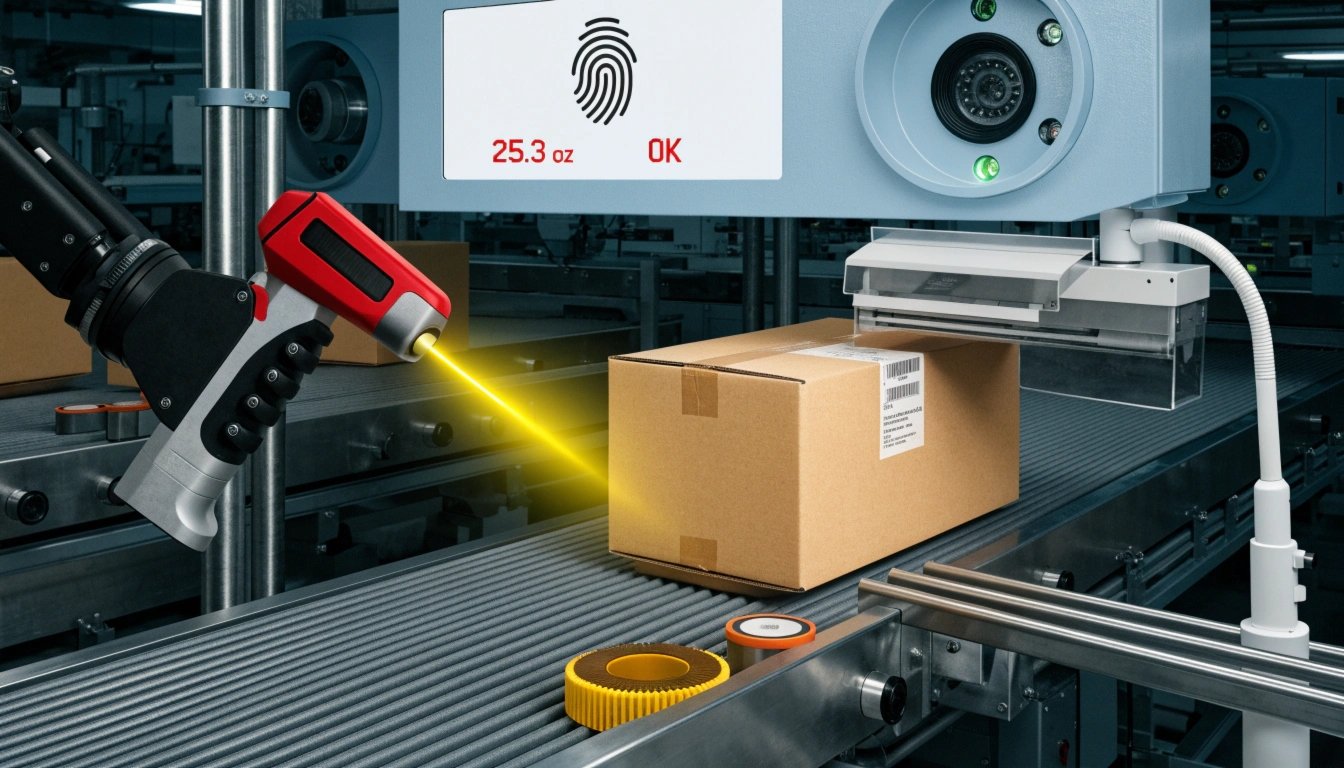
The process becomes simple and error-proof. An operator scans a barcode, and the system instantly knows what the final package should weigh. After packing, the box is placed on the scale. If the weight is correct, the system generates a unique shipping label and logs the data—weight, time, and operator ID. If the weight is wrong, the system flags it immediately1, preventing an incomplete order from ever leaving your facility2. This automated workflow eliminates manual data entry and provides a reliable, unchangeable record3 for every shipment. For one of our clients in the software industry, this meant they could finally prove their hardware shipments were complete, reducing their high-value item disputes to nearly zero.
Can industrial scales generate records to resolve disputes over missing components?
He-said, she-said arguments over shortages are a nightmare. Without a factual record, you often have to bear the cost of replacing items just to maintain goodwill, even if you suspect the original order was correct.
Yes, modern industrial scales are excellent record-keepers that can definitively resolve these disputes. They are designed to function as data collection points, creating secure, time-stamped logs for every single weighing transaction that happens on your production line.
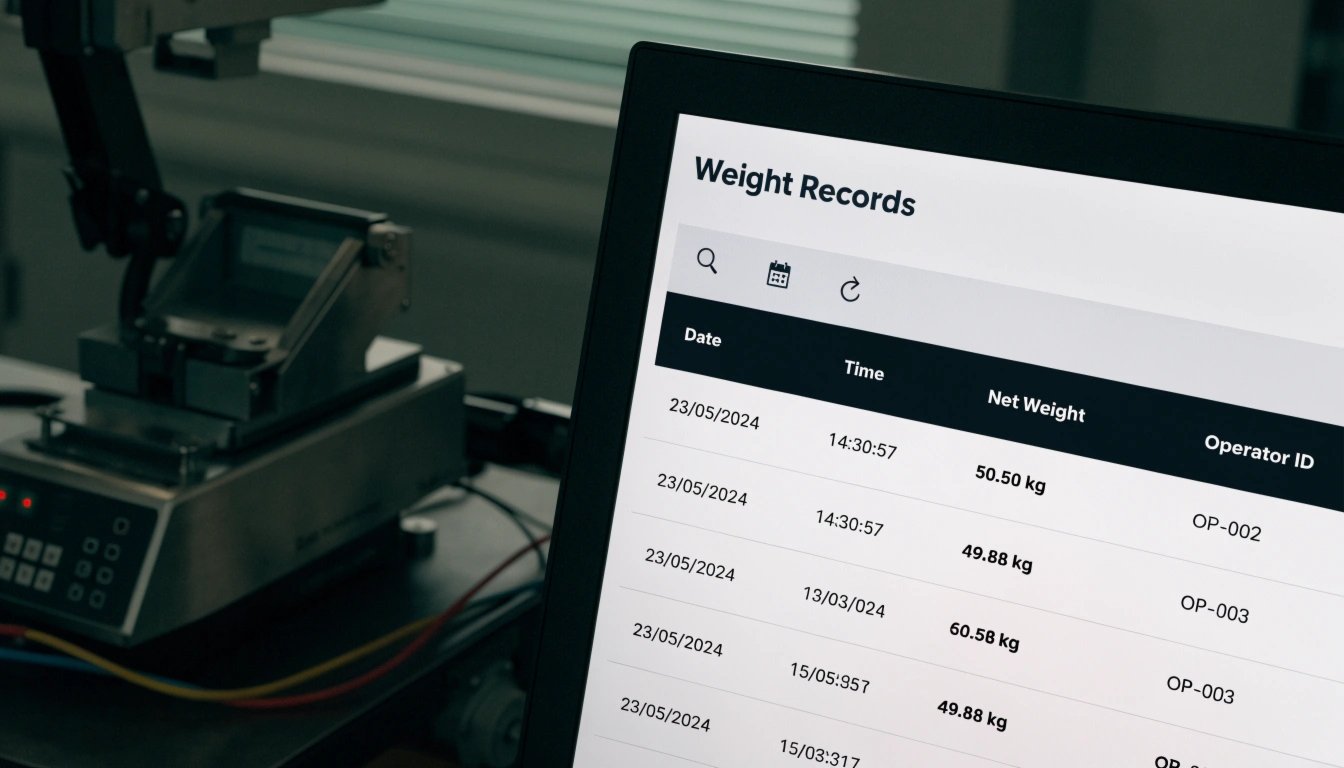
Think of it as your own private detective. Each time a package is weighed, the scale generates a data entry that can be as simple or as detailed as you need. A typical record might look like this: [Timestamp: 2026-11-16T08:30:05Z, OrderID: 8721, Employee: 104, SKU: ABC-123, Expected_Pieces: 50, Actual_Weight: 2.15kg, Status: MATCH]. This isn't just a number on a screen; it's a tamper-proof record stored in a database. When a customer calls, you don't have to argue. You can simply retrieve this data and show them a complete, auditable trail proving the order was correct when it was sealed. This data-driven approach replaces frustrating disputes with clear, factual resolutions.
What role does an industrial scale play in preventing or resolving missing item complaints from customers?
Resolving complaints is one thing, but preventing them is far better. If your team is constantly putting out fires over shipping errors, you're losing money and efficiency that could be reinvested into growth.
An industrial scale serves two roles: it is both a reactive tool for resolving disputes and a proactive checkpoint for preventing them. Its primary role shifts from just weighing to actively enforcing quality control before a box is even sealed.
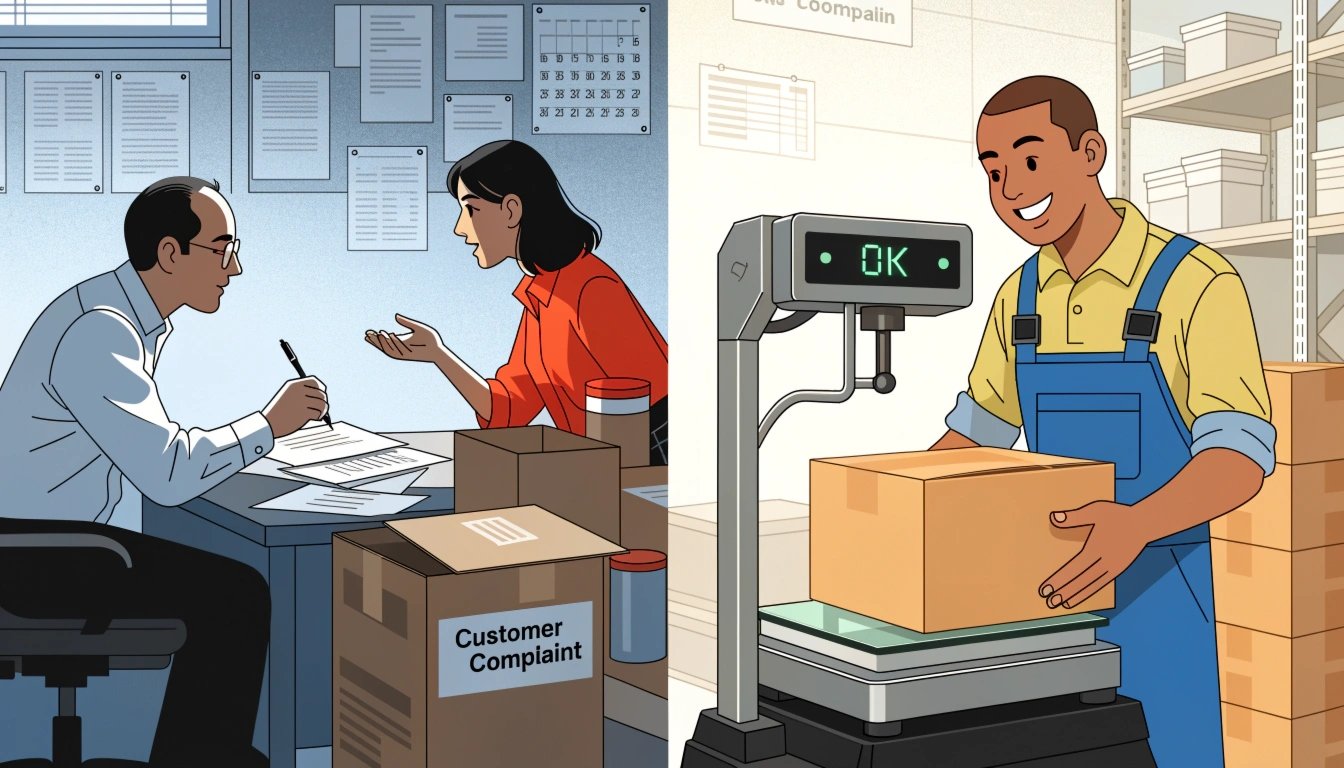
I remember a client who was struggling with constant complaints about missing fasteners in their kits. We helped them install a checkweighing system. The system was programmed with the exact weight of a complete kit. Now, if an operator places a box on the scale that is underweight, an alarm sounds and the screen flashes red. The box cannot move to the next station until the weight is correct. This simple change cut their shortage complaints by over 90% in the first month. The scale became a gatekeeper, ensuring accuracy in real-time. This proactive approach is far more powerful than just having records to solve problems after they've already occurred. It stops errors at the source, saving inventory, shipping costs, and your company's reputation.
| Role of the Scale | Description |
|---|---|
| Proactive (Prevention) | The scale acts as a real-time quality checkpoint on the production line. It flags underweight or overweight packages instantly, preventing errors before they are shipped. |
| Reactive (Resolution) | The scale provides a historical, tamper-proof data log for every package. This record is used as objective evidence to investigate and resolve customer complaints quickly. |
Conclusion
Industrial scales are no longer just for weighing. They are your key to error-free shipping, undeniable proof, and fewer customer complaints, protecting your bottom line and your brand's reputation.
-
"2023 NIST Handbook 44.pdf", https://www.nist.gov/system/files/documents/2022/11/30/2023%20NIST%20Handbook%2044.pdf. Checkweigher references describe automated comparison of measured package weight with preset limits and rejection or alarm actions for out-of-tolerance products, supporting the mechanism by which a system can flag incorrect package weights in real time. Evidence role: mechanism; source type: institution. Supports: Checkweighing systems can automatically flag packages whose measured weight falls outside preset tolerances.. Scope note: Weight-based flagging detects deviations from expected weight but may not identify the exact missing or extra component. ↩
-
"Mistake proofing: changing designs to reduce error - PMC - NIH", https://pmc.ncbi.nlm.nih.gov/articles/PMC2464876/. Quality-control literature on poka-yoke and in-process inspection supports that error-proofing checkpoints can prevent nonconforming items from moving to later process stages; applied to weighing, this supports prevention in principle but not absolute prevention in every case. Evidence role: mechanism; source type: paper. Supports: Real-time checkpoints and error-proofing can prevent some incomplete or nonconforming shipments from advancing in a process.. Scope note: The evidence supports risk reduction, not a guarantee that incomplete orders can never ship. ↩
-
"Audit trails", https://csrc.nist.gov/publications/nistbul/itl97-03.txt. Standards and guidance on electronic records and audit trails support that controlled systems can preserve reliable records through access controls, timestamps, and audit trails; this supports the concept of record integrity but not a guarantee that all scale records are inherently unchangeable. Evidence role: expert_consensus; source type: government. Supports: Automated weighing records can be made reliable and resistant to alteration when governed by electronic-record controls and audit trails.. Scope note: Record immutability depends on system design, permissions, audit-trail configuration, and governance controls. ↩



Comments (0)