
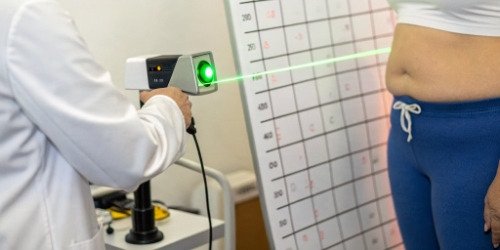
Struggling with inconsistent carcass grading? This subjectivity can lead to pricing errors and lost revenue. Modern technology offers a way to get precise, reliable data for your operations.
A laser fat measurement device uses a focused light beam to quickly scan and measure pig backfat thickness at a single point. In contrast, visual grading employs cameras and smart algorithms to analyze the entire back area, offering a more complete and objective picture of fat distribution.

Choosing the right technology can feel complex.1 You see different systems on the market, but you're not sure which one truly fits your needs for accuracy, budget, and ease of use. As a manufacturer who has helped integrate countless weighing and measurement systems over the past 19 years, I've seen what works and what doesn't. You need to look beyond the sales pitch and understand the core principles of each method. Let's dig into the details to see which technology is the right investment for your business.
What Are the Key Differences Between Laser Fat Measurement and Visual Grading Methods?
You hear about various grading technologies, but it's hard to tell them apart. Picking the wrong one can be a costly mistake, leading to wasted investment and continued inaccuracies in your processing line.
The main difference is the scope of measurement. A laser device provides a single-point thickness measurement. A visual grading system captures a complete image of the carcass, allowing software to analyze fat distribution across a wide area for a more comprehensive and representative assessment.
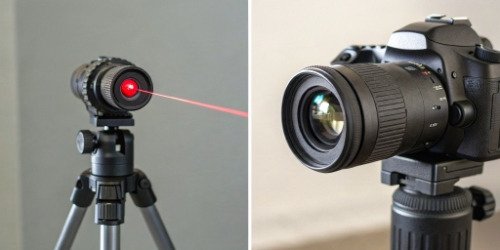
Let's break down these differences further. The distinction between a single point and a whole area is critical. I remember visiting a client’s facility a few years ago. They were using handheld laser probes and were frustrated because two different operators would get different readings on the same carcass. We found the issue was that one person was placing the probe just a centimeter away from where the other person did. This tiny change was enough to create inconsistent data. This operator dependency was a major pain point for them. Visual grading, on the other hand, automates the measurement location.2 The camera captures the whole back, and the software algorithm identifies the correct points to measure every single time, removing that human variability.
Here’s a simple table to show the main differences:
| Feature | Laser Fat Measurement | Visual Grading |
|---|---|---|
| Method | Single-point laser scan | Full image capture & analysis |
| Data Type | A single thickness value (mm) | 2D/3D image data, fat distribution map |
| Operator Impact | High (placement is critical) | Low (system is automated) |
| Data Scope | One spot | Entire back area |
| Objectivity | Good, if placed correctly | Very high, algorithm-based |
| Initial Cost | Lower | Higher |
How Does Laser Technology Improve Fat Measurement Accuracy Compared to Visual Grading?
You need precise data for pricing and quality control because every millimeter matters. Inaccurate measurements can cause disputes with suppliers or customers, directly hurting your bottom line and reputation.
Laser technology improves accuracy over traditional manual tools like calipers by providing a fast, non-contact digital reading. However, its accuracy is limited to a single spot. Advanced visual grading is often more accurate overall because it analyzes the entire carcass, giving a truer picture of total fat.
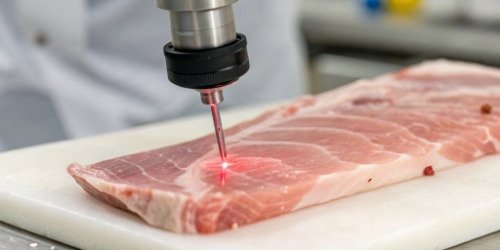
The word "accuracy" can be tricky here. A laser is very accurate at measuring the exact spot it is pointed at. Its great advantage is that it replaces the human error of reading a manual ruler or caliper. It gives you a clean digital number. However, the biggest source of error shifts from reading the tool to placing the tool. If the operator places the laser probe on a thicker or thinner part of the back, the "accurate" reading will not represent the whole carcass.
Visual grading systems approach accuracy differently. They use a camera to get the big picture. The software then uses an algorithm, which we've helped clients develop and integrate, to analyze that picture. This software is trained on thousands of images to identify the entire back and distinguish fat from muscle. It can then measure fat thickness at hundreds of points automatically. By averaging these points or creating a complete fat map, it delivers a much more reliable and representative assessment of the carcass's true condition. One of our software partners switched from laser integration to a camera-based system for this very reason—their customers found the overall grading data far more consistent and trustworthy.
What Is the Operating Principle of Laser Fat Measuring Instruments in Comparison to Visual Assessment?
The technical jargon behind grading systems can be confusing. You don't want to invest in a "black box" that you don't understand, especially when you are responsible for its performance and maintenance.
A laser fat instrument works by sending out a light beam and converting its reflection into an electrical signal to calculate a single depth measurement. A visual system uses a camera to capture a full image, and then powerful software analyzes that image's pixels to measure fat across many points.
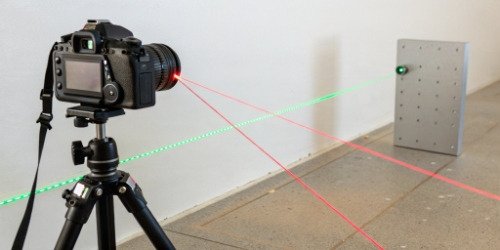
To make an informed decision, it helps to understand how these technologies work under the hood. As an expert in industrial measurement, I believe in demystifying the process for our partners. Let’s look at the step-by-step mechanics.
How the Laser Measures
The operating principle of a laser device is quite direct and hardware-focused. It's a process of sending and receiving a signal.
- An operator places the device against the carcass.
- It emits a safe, low-power laser beam into the tissue.
- The light penetrates the fat and reflects off the boundary between the fat and muscle layers.
- A sensor in the device detects this reflection.
- A processor measures the time or angle of this reflected light and converts that data into an electrical signal.
- This signal is then translated into a precise thickness measurement, usually in millimeters, and displayed to the operator.
How the Camera and Software Measure
Visual assessment is more software-centric.3 The real intelligence is in the algorithm.
- A camera, often a 3D one, is mounted above the processing line.
- It takes a high-resolution picture of the entire back of the carcass as it passes underneath.
- This image is fed into a computer.
- This is where the magic happens. A software algorithm, which is the core of the system's value, processes the image. It identifies key landmarks, separates skin from fat and fat from muscle based on differences in color and texture, and then digitally measures the fat layer's thickness at thousands of points. The system provides a comprehensive data set, not just a single number.
As a software provider, you'll recognize that the hardware is just the eye; the software is the brain.
Conclusion
Both laser and visual grading improve on manual methods. Your choice depends on balancing your budget against the need for objective, comprehensive data to drive your business decisions and profitability.
-
"USDA Announces Approved Instruments for Beef Grading", https://www.ams.usda.gov/content/usda-announces-approved-instruments-beef-grading. This source discusses the factors that make selecting carcass grading technology complex, including accuracy, cost, and ease of use. Evidence role: general_support; source type: education. Supports: Choosing the right technology for carcass grading can be complex due to various factors.. ↩
-
"A review of robotic and automated systems in meat processing - PMC", https://pmc.ncbi.nlm.nih.gov/articles/PMC12141337/. This source explains how visual grading systems automate measurement locations to reduce human error. Evidence role: mechanism; source type: research. Supports: Visual grading systems automate measurement locations to reduce human error.. ↩
-
"Carcass Beef Grades and Standards", https://www.ams.usda.gov/grades-standards/carcass-beef-grades-and-standards. This source explains the software-centric approach of visual assessment systems in carcass grading. Evidence role: mechanism; source type: research. Supports: Visual assessment systems in carcass grading are software-centric.. ↩


Comments (0)