
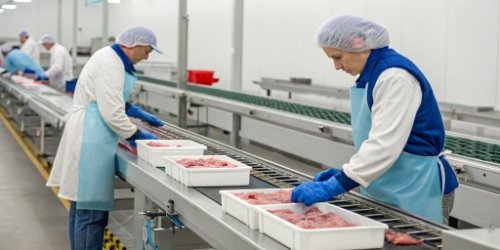
Struggling with messy by-product management? This chaos leads to lost profits and inaccurate accounting. A unified system is the answer to bringing order and boosting your bottom line.
The best way to manage slaughterhouse by-products is to integrate weighing, scanning, and cost accounting into one unified system. This connects by-product data with main product data on a single platform, ensuring accurate cost allocation and transforming a poorly managed area into a clear profit center.
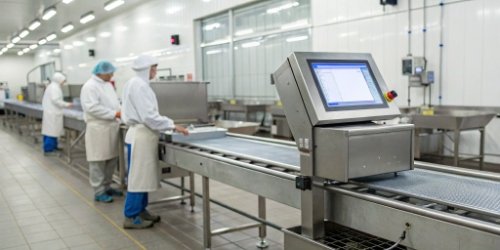
Over my 19 years in the industrial weighing industry, I've visited countless meat processing plants. I've seen firsthand how by-products like blood, skin, and offal are a significant source of income1. But I’ve also seen how they are often the most poorly managed part of the entire operation. This oversight isn't just a minor issue; it's a constant leak of potential revenue and a major headache for accounting departments. The good news is that with the right technology and processes, you can plug this leak. Let's break down how you can take control of your by-product management and turn it into a streamlined, profitable part of your business.
How to Effectively Manage By-Product Weighing in Slaughterhouse Operations?
Manual by-product tracking is slow and full of errors. These small mistakes add up, causing big financial losses and creating a compliance nightmare when it comes to traceability.
To effectively manage by-product weighing, you must automate the process. Use an integrated system where industrial scales are directly linked to your inventory software. This ensures every by-product is weighed and its data is captured accurately and instantly, providing real-time oversight from production to storage.
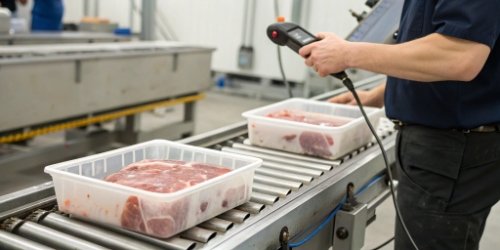
Moving from manual logs to an automated system is a game-changer. The core of this change is connecting your physical weighing equipment directly to your digital management platform. This simple connection eliminates the human error that comes with writing down weights and manually entering them into a spreadsheet or system later.
Automating Data Capture
When a container of pig's blood or a bin of offal is placed on the scale, the system shouldn't just show a weight. It should capture that weight, pair it with a product identifier (usually a barcode), and log it instantly. This creates a permanent, unchangeable record. This is crucial for traceability. If there is ever a quality issue, you can trace that specific batch back to its exact time of creation and weight2. This level of detail is almost impossible to achieve with manual systems.
Handling Diverse By-Products
Slaughterhouses produce a wide range of by-products, each with its own challenges3. Liquids like blood need different handling and container management than solids like skin or bones. An effective system must be flexible enough to handle this diversity.
| By-Product Type | Manual Tracking Challenge | Automated System Benefit |
|---|---|---|
| Liquids (Blood) | Estimating volume, spillage, container weight confusion. | Tare weight functions automatically subtract container weight. |
| Solids (Offal, Skin) | Inconsistent batch sizes, difficulty in tracking small lots. | Each lot gets a unique barcode and precise weight record. |
| Bones | Low value but high volume, often ignored in tracking. | Automation captures all data, providing a true cost/profit picture. |
By automating this process, you treat every by-product with the same level of accuracy as your primary cuts of meat.
What Are the Best Practices for Weighing and Managing By-Products in Meat Processing Plants?
Inconsistent data from your by-products makes cost analysis a guessing game. You can't be sure which by-products are profitable and which are costing you money, making strategic decisions difficult.
The best practice is to adopt a unified system that supports multiple cost accounting methods. This allows you to assign the correct method—like selling price cost or value allocation—to each by-product category, ensuring your financial reports reflect the true value and cost of your entire operation.

At Weigherps, we built our system knowing that one size does not fit all, especially in accounting. Your financial strategy for high-value hides will be different from that for lower-value bones. A robust management system must provide the flexibility to reflect these business realities in your accounting. This is not just about tracking weight; it's about tracking value correctly.
Choosing the Right Costing Method
Your system should allow you to choose from several standard costing methods. This enables your accounting team to model your business accurately. Our platform, for example, supports the main methods used in the industry. This flexibility ensures your financial data is not only accurate but also meaningful for business planning.
| Costing Method | Description | Best For |
|---|---|---|
| Selling Price Cost | Costs are allocated based on the final selling price of the by-product. | High-value by-products with a stable market price, like hides. |
| Value Allocation | The total production cost is distributed among main products and by-products based on their relative market value. | Operations where by-products represent a significant portion of total revenue. |
| Fixed Cost | A predetermined, standard cost is assigned to each unit of the by-product. | Low-value, high-volume by-products where individual tracking is inefficient. |
Integrating Sales Revenue
A truly advanced system takes this a step further. It allows the sales revenue from by-products to be allocated back against the production costs of the main products4. This gives you a more accurate Net Landed Cost for your primary cuts. It shows the true profitability of your core business by factoring in the financial contribution of everything you produce, not just the main items. This holistic view is essential for making smart pricing and production decisions.
How Can Slaughterhouses Streamline By-Product Production and Weighing Processes?
Disconnected processes for handling by-products create bottlenecks and slow down your entire plant. When the main production line has to wait for by-products to be cleared, efficiency drops and costs rise.
Streamline the process by placing barcode-enabled weighing stations at key points where by-products are generated. As soon as a by-product is separated, it can be immediately weighed, labeled with a barcode, and entered into the central system, creating a seamless, real-time workflow.
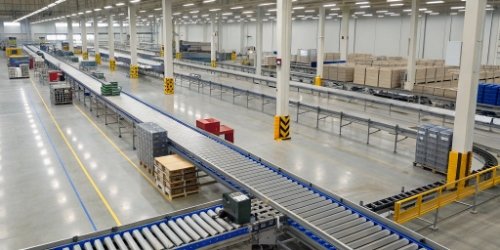
Efficiency in a slaughterhouse comes from flow. Every stop, every manual step, and every delay is an opportunity for improvement. In my experience, the biggest gains come from integrating tasks directly into the production line. Instead of moving by-products to a separate area to be weighed and processed later, you should deal with them right where they are created.
Strategic Placement of Weighing Stations
Think about your production flow. Where is offal separated? Where is blood collected? Where are hides removed? These are the exact spots where you need a weighing station. By placing a durable, easy-to-clean industrial scale at each of these points, you eliminate the need to transport materials before they are logged. The operator can weigh the container, scan a barcode, and the data is in the system. The container can then move directly to storage or shipping. The process becomes part of the production rhythm, not an interruption to it.
The Role of Barcode Scanning
A scale alone is not enough. The key to this streamlined flow is the barcode.
| Step | Action | Result |
|---|---|---|
| 1. Generation | By-product is separated from the carcass on the line. | Material is ready for processing. |
| 2. Weigh & Scan | Operator places the container on the scale and scans a pre-printed barcode for that product type. | Weight, product type, time, and date are captured instantly. |
| 3. Labeling | The system prints a unique label with a new barcode for that specific batch/container. | The container is now uniquely identified and traceable. |
| 4. Movement | The container is moved to the warehouse or a shipping dock. | The central system knows its exact location and status. |
This process removes ambiguity and paperwork. It creates a simple, repeatable workflow that new employees can learn quickly, and it provides management with a perfect, real-time view of by-product inventory as it's being created.
What Is an Efficient By-Product Weighing and Management Solution for Slaughterhouses?
You need a complete solution, not just a scale or a piece of software. Trying to patch together different hardware and software from multiple vendors often leads to compatibility issues and system failures.
An efficient solution is a fully integrated platform, like the WeigherPS system. It combines rugged industrial scales, barcode technology, and powerful management software into a single, cohesive unit. This provides end-to-end control over your by-product management, from weighing to accounting, all in real time.
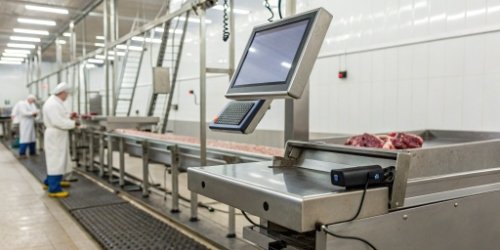
As a manufacturer of weighing systems for nearly two decades, we've learned that our clients—especially software vendors and system integrators—are not just buying a product. They are buying a reliable solution that solves a complex business problem. A piecemeal approach, where you buy scales from one company and software from another, creates headaches. Integration fails, support is slow, and no one takes full responsibility. That's why we champion a unified approach.
The Power of a Single Platform
A single, unified platform ensures that every component is designed to work together perfectly. The hardware talks to the software without any glitches. This integrated design is what makes a system truly efficient and reliable. For a software provider, this means faster deployment for your clients and fewer support calls. For the slaughterhouse, it means a system that just works.
| Feature | Fragmented System | Unified Platform (WeigherPS) |
|---|---|---|
| Accuracy | Risk of data transfer errors between systems. | Seamless data flow from scale to software, ensuring 100% accuracy. |
| Efficiency | Operators may need to use multiple interfaces5. | A single, intuitive interface for all tasks. |
| Maintenance | Multiple vendors to contact for support. | One point of contact for hardware and software support. |
| Security | Potential security gaps between different components. | A secure, closed-loop system designed for data integrity. |
Future-Proofing Your Operations
An integrated system is also easier to upgrade and scale6. As your business or your client's business grows, you can add more weighing stations or new software modules without worrying about compatibility. With the WeigherPS system, we can even provide customized solutions to meet specific market needs, whether it's integrating with existing ERP systems or developing new functionalities like AI-driven analytics. This builds a foundation for future growth, allowing you to innovate rather than just maintain7.
Conclusion
In short, integrating by-product weighing and management into a unified system turns a chaotic process into a controlled, profitable operation. It guarantees accuracy, boosts efficiency, and provides clear financial data.
-
"Slaughterhouse and poultry wastes: management practices ... - PMC", https://pmc.ncbi.nlm.nih.gov/articles/PMC8830992/. This source provides data on the economic value of slaughterhouse by-products, supporting their role as a significant revenue stream. Evidence role: statistic; source type: research. Supports: Slaughterhouse by-products such as blood, skin, and offal contribute significantly to revenue.. Scope note: The data may vary by region and market conditions. ↩
-
"Tracking and Tracing of Food - FDA", https://www.fda.gov/food/new-era-smarter-food-safety/tracking-and-tracing-food. This source discusses traceability systems in food production, supporting the importance of batch-level tracking. Evidence role: mechanism; source type: institution. Supports: Batch-level tracking in slaughterhouses enhances traceability and operational control.. Scope note: The source may focus on food safety rather than operational efficiency. ↩
-
"Challenges, Health Risks and Recommendations on Meat Handling ...", https://pmc.ncbi.nlm.nih.gov/articles/PMC11580086/. This source categorizes common slaughterhouse by-products and their handling challenges, supporting the claim. Evidence role: definition; source type: encyclopedia. Supports: Slaughterhouses generate diverse by-products, each requiring specific handling methods.. Scope note: The categorization may not cover all types of by-products globally. ↩
-
"Estimation of production cost and revenue - processdesign", https://design.cbe.cornell.edu/index.php?title=Estimation_of_production_cost_and_revenue. This source discusses cost allocation methods in manufacturing, supporting the integration of by-product revenue into main product costing. Evidence role: mechanism; source type: research. Supports: Allocating by-product revenue to main product costs improves financial accuracy in slaughterhouses.. Scope note: The source may focus on general manufacturing rather than slaughterhouses. ↩
-
"The real challenges of industrial human-machine interfaces - Motilde", https://motilde.com/en/challenges-industrial-human-machine-interfaces/. This source explains the inefficiencies caused by using multiple interfaces in industrial systems. Evidence role: mechanism; source type: education. Supports: Using multiple interfaces in slaughterhouse systems reduces operational efficiency.. Scope note: The findings may not be specific to slaughterhouse operations. ↩
-
"[PDF] Scalability in manufacturing systems design and operation", https://ykoren.engin.umich.edu/wp-content/uploads/sites/122/2014/05/Scalability-2013.pdf. This source discusses the scalability and upgrade benefits of integrated systems in industrial operations. Evidence role: expert_consensus; source type: education. Supports: Integrated systems in slaughterhouses are easier to upgrade and scale compared to fragmented systems.. Scope note: The source may not specifically address slaughterhouse systems. ↩
-
"Integration as innovation in healthcare systems - PMC - NIH", https://pmc.ncbi.nlm.nih.gov/articles/PMC11849255/. This source explains how integrated systems support innovation and long-term growth in industrial operations. Evidence role: expert_consensus; source type: research. Supports: Integrated systems in slaughterhouses support innovation and long-term growth.. Scope note: The source may focus on general industrial systems rather than slaughterhouses. ↩



Comments (0)