

A customer complaint about an underweight product can trigger fines, recalls, and lasting brand damage. To avoid this, you need a reliable system to catch weight discrepancies before your products ever leave the facility. The cost of a single quality issue can be monumental.
The most effective way to prevent underweight products from reaching the market is by using an automated in-line checkweigher. This system weighs 100% of your products as they move along the production line, automatically identifying and rejecting any item that falls outside the preset weight tolerance, ensuring compliance and protecting your brand.

This might seem straightforward, but implementing the right quality control is key to protecting your business. Manual spot checks are often not enough, as they only inspect a tiny fraction of your total output. For example, checking just 15 packages out of a 6,000-unit run means 99.75% of your products go uninspected. I remember a time early in my career when a client relied on manual checks; a small calibration error on their scale resulted in an entire shipment being returned, a costly and embarrassing mistake. We need to move beyond simple checks and build a comprehensive system that guarantees accuracy for every single item. This is where modern technology makes all the difference.
How Can You Detect Weight Issues in Packaged Products Before They Reach Supermarkets?
Worried that a few underweight packages might slip through your current quality control? This small oversight can escalate into a major issue, damaging customer trust and your bottom line. The solution is to implement an automated and foolproof detection method.
You can detect weight issues by integrating an in-motion checkweigher directly into your production line. These systems weigh every product dynamically without slowing down operations. If a product is under or over the specified weight, an automatic rejection device, like an air jet or a pusher arm, immediately removes it from the line.
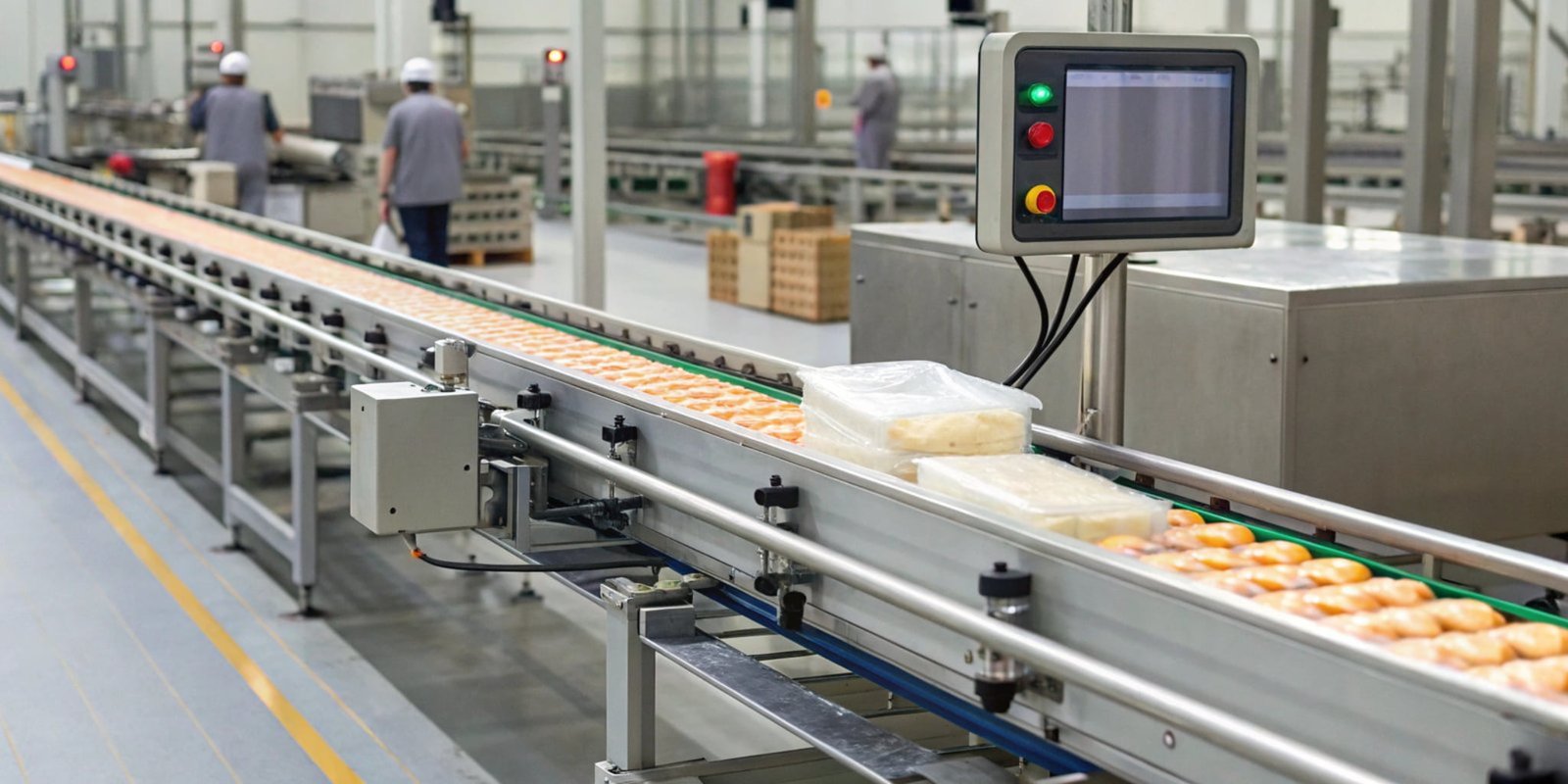
To truly dive deeper into detection, it's important to understand how these systems operate. An in-line checkweigher consists of three main parts: an infeed conveyor to space the products correctly, a weighing conveyor with a highly sensitive load cell, and an outfeed conveyor with a rejection mechanism. As a package moves onto the weighing conveyor, the load cell converts the force of its weight into an electrical signal.1 This data is instantly compared against the target weight range you have programmed into the system.
Any deviation triggers the rejection system. This provides 100% inspection, a level of accuracy that manual sampling can never achieve. This not only catches errors but also helps you comply with strict weights and measures regulations, which often require that the average weight of a batch is not below the labeled weight and that no single package falls outside a maximum allowable variation2. It’s a fast, reliable, and essential tool for any modern production facility.
What Methods Ensure Packaged Products Meet Weight Standards Before Distribution?
Relying solely on manual spot checks is like gambling with your brand's reputation. A tired operator or a slight measurement error can lead to thousands of non-compliant products being shipped. A more robust, multi-layered approach is needed to guarantee compliance.
To truly ensure products meet weight standards, combine the power of automated in-line checkweighers with regular static scale calibration and Statistical Process Control (SPC). This blend of 100% automated inspection and systematic verification creates a comprehensive quality control program that leaves no room for error.

Let's break down these methods to see how they work together to ensure products are ready for distribution. While each method has its place, combining them provides the most robust defense against weight-related issues.
| Method | Description | Pros | Cons |
|---|---|---|---|
| Manual Spot-Checking | Periodically pulling a few products from the line to be weighed on a static scale. | Low initial cost; simple to implement. | Inconsistent; prone to human error; only inspects a small sample of products. |
| Statistical Process Control (SPC) | Analyzing weight data over time to monitor the stability and capability of the filling process. | Identifies trends and process shifts before they become major problems.3 | Requires data analysis; doesn't catch individual random errors in real-time. |
| In-Line Checkweighing | Automatically weighing 100% of products as they move down the production line without stopping. | Provides complete inspection; automatically rejects non-compliant items; collects real-time data for SPC. | Higher initial investment compared to manual methods. |
As a manufacturer with 19 years of experience, we've seen that the most successful companies build their quality assurance around a powerful in-line checkweigher. It acts as the core of the system, providing the comprehensive data needed for effective SPC and validating that processes are in control. This integrated approach not only ensures compliance but also significantly improves overall efficiency.
How Do You Prevent Weight Shortages in Packaged Goods Sold in Supermarkets?
Detecting and rejecting underweight products is crucial, but it's a reactive measure. Every rejected item represents wasted material, time, and money. A proactive approach that prevents shortages from occurring in the first place is far more profitable.
The best way to prevent weight shortages is by creating a feedback loop between your checkweigher and your filling machine. When the checkweigher detects a trend of decreasing weights, it automatically sends a signal to the filler to adjust its settings, correcting the issue in real-time before it results in out-of-spec products.
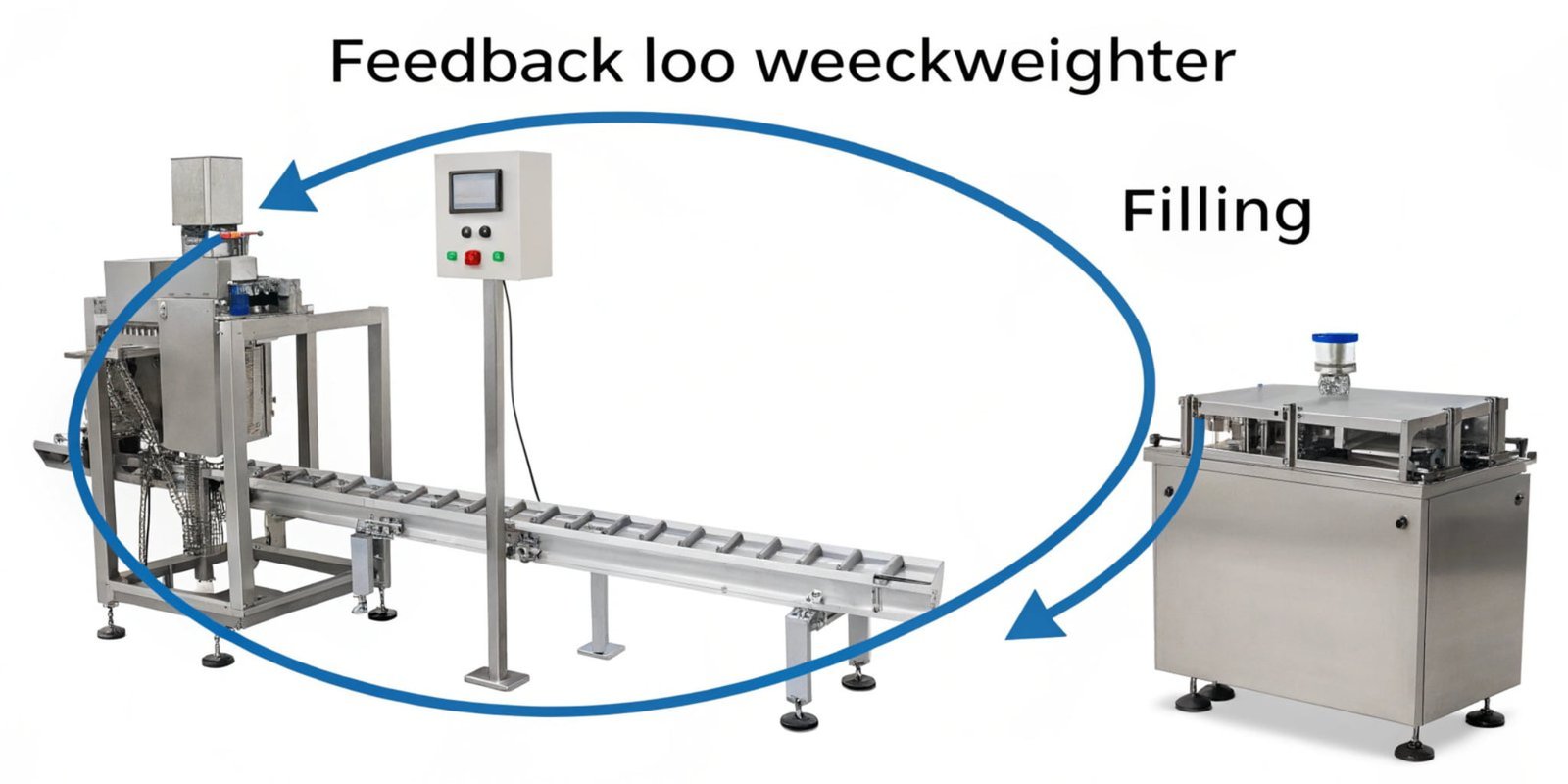
This closed-loop system is a game-changer for production efficiency and a core feature of IoT-enabled weighing. Here’s a closer look at how it functions. The checkweigher doesn't just check individual packages; its software analyzes the average weight of a set number of recent packages. If this moving average starts to drift away from the target weight, even slightly, the system identifies it as "filler drift." This could be caused by changes in product density, temperature, or minor mechanical wear.4
Once a trend is detected, the checkweigher's controller sends an electronic signal directly back to the filling equipment. This signal instructs the filler to make a precise micro-adjustment—for example, to increase the fill volume slightly. The process is continuous and automatic, ensuring that fill levels remain accurate throughout the entire production run. This not only prevents underfilling and potential regulatory fines but also minimizes overfilling, which is essentially giving away free product.5 By maintaining tight control over fill levels, you maximize your product yield and protect your bottom line.
What Quality Control Techniques Help Identify Weight Deficiencies in Packaged Products Early?
Finding a weight problem at the final stage of packaging, right before boxing, is better than a customer finding it, but it's still inefficient. The product is already in its final wrap, and any rework adds cost. The key is to catch deficiencies as early as possible.
The most effective technique is to place an in-line checkweigher at a Critical Control Point (CCP) immediately after the filling station but before final sealing. This allows you to identify and correct fill-level issues instantly, before additional value like expensive packaging is added to a non-conforming product.
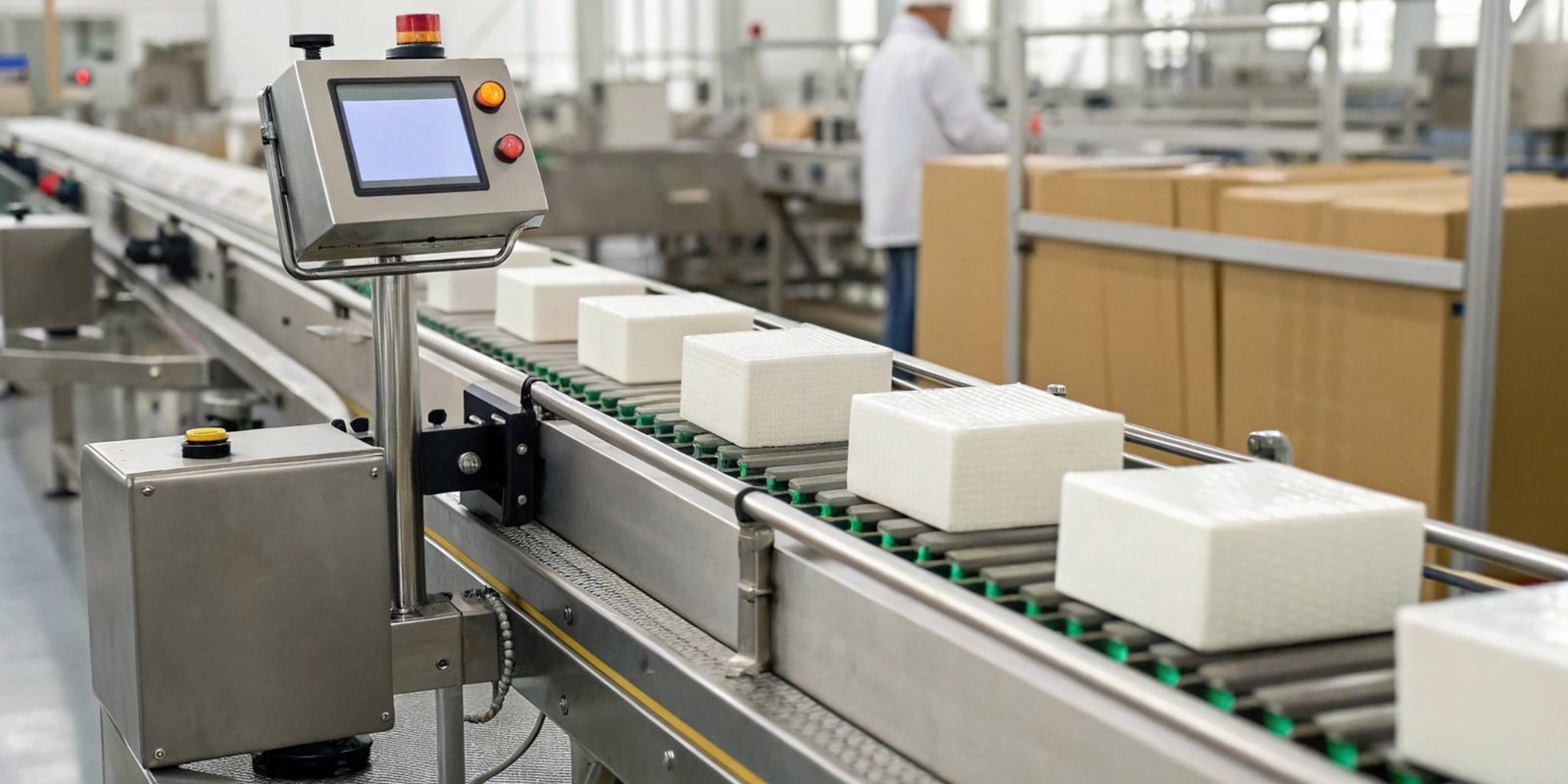
This strategy is about smart placement and smart data utilization. By positioning a checkweigher right after the filler, you get an immediate confirmation that the correct amount of product has been dispensed. If an underfilled container is detected, it can be topped up or removed with minimal waste. In contrast, finding an underweight sealed package at the end of the line often means the entire package and its contents are scrapped.
Furthermore, modern checkweighers are powerful data collection tools. They log the weight of every single product, creating a detailed digital record.6 This data can be exported in various formats for your quality control department, allowing for trend analysis, batch tracking, and compliance reporting. As a software vendor, you'll appreciate that this data can be integrated with enterprise systems like MES or ERP. This traceability is crucial for audits and for providing reconciliation reports to clients, proving that your processes are under control and protecting your professional reputation.
Conclusion
Ultimately, integrating an automated in-line checkweigher is the most reliable way to prevent underweight products. It safeguards your brand's reputation, ensures regulatory compliance, and optimizes production efficiency, protecting your profits.
-
"[PDF] Automation of strain-gauge load-cell force calibration", https://nvlpubs.nist.gov/nistpubs/Legacy/IR/nistir4823.pdf. OIML R 60 defines a load cell as a transducer that produces an output in response to an applied load, providing the metrological basis for converting package loading into a weighing signal. Evidence role: mechanism; source type: institution. Supports: A conveyor checkweigher measures package weight through a load cell that converts applied force into an electrical signal.. Scope note: The load-cell definition alone does not establish a conveyor system's dynamic accuracy. ↩
-
"[PDF] 2023 NIST Handbook 133 Checking the Net Contents of Packaged ...", https://www.nist.gov/system/files/documents/2023/02/10/2023%20NIST%20Handbook%20133.pdf. NIST Handbook 133 distinguishes average net-content requirements from individual-package requirements and specifies maximum allowable variations and sampling procedures for evaluating packaged goods. Evidence role: general_support; source type: government. Supports: Packaged-goods regulations commonly impose both an average net-content requirement and limits on individual package shortages.. Scope note: Handbook 133 is a U.S. testing reference; applicable adoption, permitted exceptions, and sampling rules must be checked before treating its requirements as universal. ↩
-
"6.3. Univariate and Multivariate Control Charts", https://www.itl.nist.gov/div898/handbook/pmc/section3/pmc3.htm. The NIST/SEMATECH statistical handbook explains how control charts detect departures from stable process behavior and how EWMA and CUSUM methods improve sensitivity to small sustained shifts. Evidence role: mechanism; source type: government. Supports: Statistical Process Control can identify developing trends and shifts in a filling process.. Scope note: Detection is probabilistic and depends on chart design, sampling frequency, and shift magnitude; warning before defective output is not assured. ↩
-
"Measuring the mass, volume, and density of microgram-sized ...", https://pmc.ncbi.nlm.nih.gov/articles/PMC5381818/. For volumetric dosing, delivered mass depends on dispensed volume and product density, so density variation can change package weight even at a fixed volume setting; temperature and wear effects require evidence for the particular filler and material. Evidence role: mechanism; source type: paper. Supports: Changes in product density, temperature, or equipment wear can cause filling-weight drift.. Scope note: The density relationship does not independently verify temperature-induced drift or mechanical-wear effects in every filling technology. ↩
-
"Accurate and Precise Filling Saves on Giveaways", https://www.foodengineeringmag.com/articles/103230-accurate-and-precise-filling-saves-on-giveaways. Studies of fill-target optimization can relate lower process variability and better mean control to reduced excess fill while maintaining specified shortage risks; these trade-offs do not establish elimination of underfilling or legal penalties. Evidence role: general_support; source type: paper. Supports: Closed-loop fill control reduces underfilling and excess product giveaway from overfilling.. Scope note: Benefits depend on the baseline variability, target setting, controller performance, and applicable net-content requirements. ↩
-
"Supply Chain Traceability Principles: A Manufacturing Meta ...", https://www.nist.gov/publications/supply-chain-traceability-principles-manufacturing-meta-framework. An independently documented checkweighing implementation with per-package data acquisition can demonstrate individual weight-record retention, but establishes that capability only for the evaluated hardware, software, and configuration. Evidence role: case_reference; source type: research. Supports: Modern checkweighers retain a digital weight record for every individual product.. Scope note: Per-item storage is not inherent to all checkweighers, and weight records alone do not establish full traceability or regulatory compliance. ↩



Comments (0)