
Struggling with slow and inefficient raw material receiving? These bottlenecks cost you time and money daily, creating frustrating delays. Choosing the right industrial scale can completely streamline your warehouse intake process.
Ultimately, forklift scales dramatically increase efficiency by combining weighing and transport into a single action, eliminating unnecessary travel to a fixed scale. Platform scales are best for high-volume, centralized receiving docks where maximum capacity and durability are key. For many, using both is the most effective strategy.
Choosing the right scale seems simple, but this decision deeply impacts your daily operations, labor costs, and overall productivity. The wrong choice can create bottlenecks that ripple through your entire supply chain1. Let's break down the details to help you make the best investment for your business. As a company with 19 years of experience in OEM/ODM production of industrial scales, we've helped countless partners navigate this exact decision.
Which Is Better for Incoming Raw Materials: Platform Scales or Forklift Scales?
You're looking at your receiving dock and wondering how to speed things up. Making the wrong choice in weighing equipment can lock you into an inefficient workflow, costing you daily. Let's compare these scales directly for your receiving needs.
A forklift scale is the clear winner for mobile operations where you move incoming materials to various storage locations. It allows you to weigh on the go, saving valuable time. A platform scale excels in static, high-volume receiving areas where you bring every pallet to one central point for weighing.
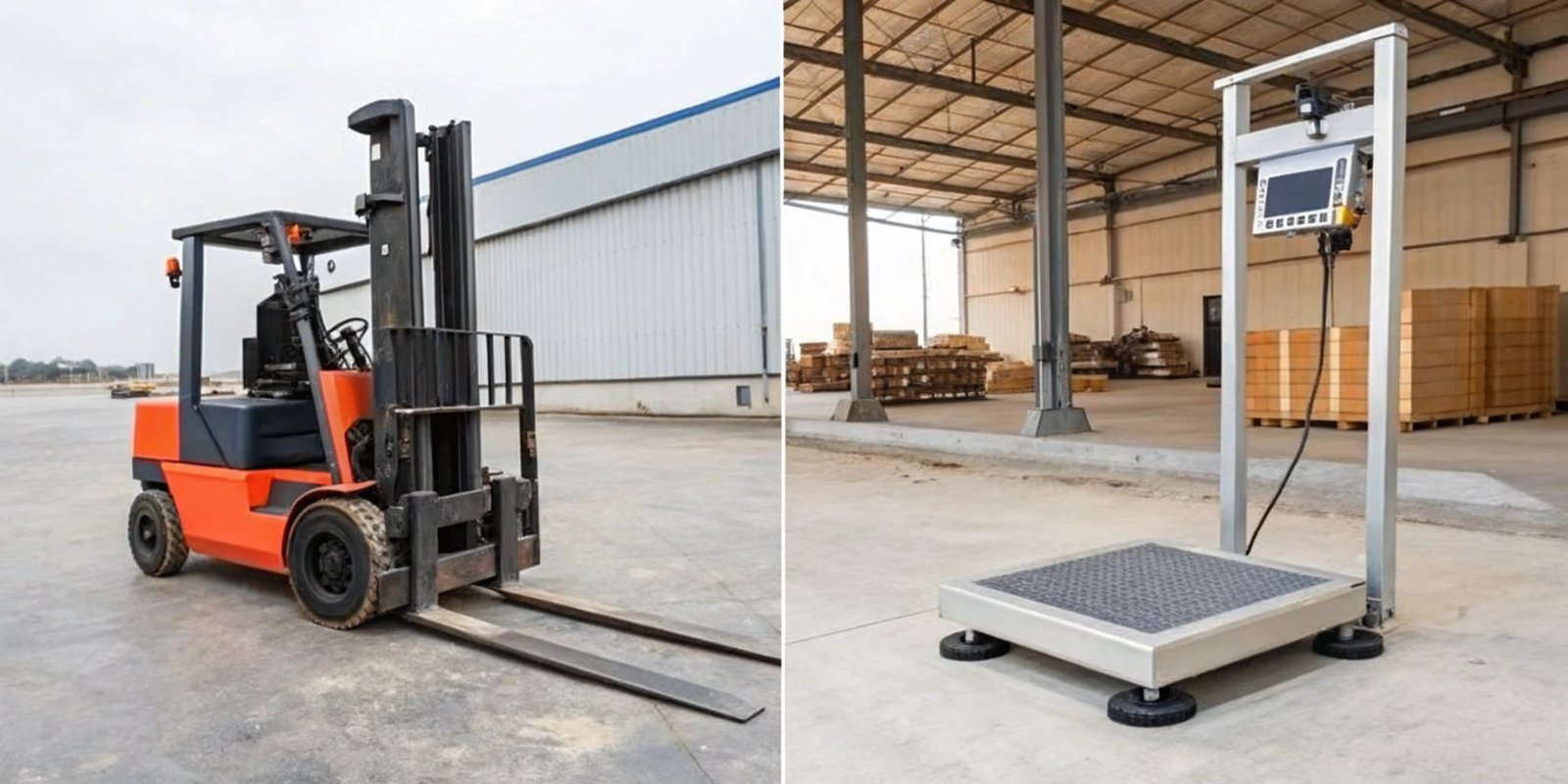
The decision between a forklift scale and a platform scale depends entirely on your warehouse workflow. I've worked with software vendors who need to track assets accurately and efficiently, and the choice of scale is a surprisingly critical part of their internal logistics. Let's dig deeper into how they differ in practical terms, because seeing the contrast in workflow, space, and cost makes the right choice obvious. As your partner, our goal is to provide a targeted and cost-effective solution, not just a product.
Workflow Integration
Integrating a scale into your process should make things smoother, not add steps. Forklift scales achieve this by making weighing part of the transit process. An operator picks up a pallet, the weight is captured, and they drive directly to the storage rack. Platform scales, on the other hand, create a dedicated weighing station. This can be highly efficient if it's placed strategically at the receiving point, as it streamlines high-volume check-ins. For your business, which focuses on software, think about how you receive hardware. If servers or components arrive and are distributed across a data center, a forklift scale saves countless steps.
Space and Cost Considerations
Your floor space is valuable. A platform scale requires a permanent, dedicated footprint.2 While cost-effective, it can create congestion if your receiving area is tight. Forklift scales require no extra floor space, as the technology is integrated into your existing equipment. However, the initial investment for a forklift scale can be higher, and it may slightly reduce the forklift's lifting capacity. It’s a trade-off between the upfront cost and long-term operational savings on labor and time.
| Feature | Platform Scale | Forklift Scale |
|---|---|---|
| Mobility | Stationary, fixed point | Fully mobile, weighs anywhere |
| Workflow | Adds a step (travel to scale) | Integrates weighing into travel |
| Footprint | Requires dedicated floor space | No additional space needed |
| Best For | Centralized, high-volume receiving | Dispersed storage, reducing handling |
| Cost | Lower initial cost | Higher initial cost, long-term labor savings |
How Do Platform Scales and Forklift Scales Compare in Terms of Efficiency?
Is your current weighing process slowing everything down? Those extra minutes spent moving pallets to a scale and back add up, costing you real money in labor and lost productivity every single day. Let's see where the efficiency gains really come from.
Efficiency with forklift scales comes from eliminating steps; you lift, weigh, and transport in one continuous motion. This is a huge time-saver in large facilities. Platform scales are efficient for processing many pallets quickly at a single, dedicated station, especially when weighing in bulk.
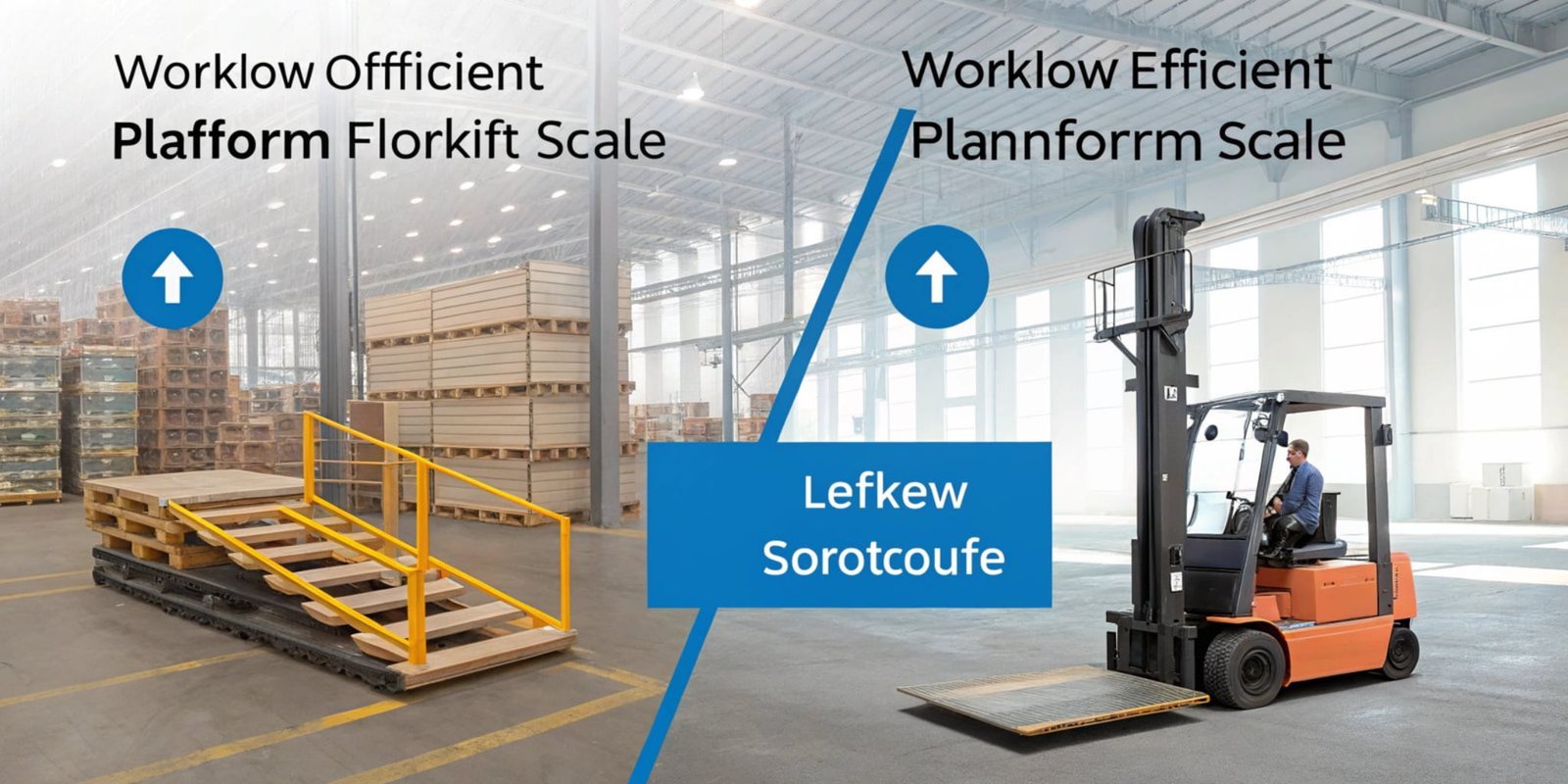
The difference in efficiency boils down to analyzing the number of "touches" or movements required for each pallet. When I consult with clients, particularly those in the tech space like software providers, I always ask them to map their process. They are often shocked to see how many wasted steps exist in their current receiving workflow. Let's walk through what these workflows actually look like.
The Platform Scale Workflow
A traditional platform scale process involves several distinct steps, which creates opportunities for delay.
- Pick Up: A forklift operator retrieves a pallet from the delivery truck.
- Travel: The operator drives the pallet to the stationary platform scale.
- Weigh: The pallet is placed on the scale, and the operator waits for the reading.
- Pick Up Again: The operator lifts the pallet off the scale.
- Final Travel: The operator drives the pallet to its final storage location.
This sequence is simple, but the travel to and from the scale is non-value-added time3.
The Forklift Scale Workflow
A forklift scale fundamentally changes the process by removing the dedicated weighing step.
- Pick Up & Weigh: An operator lifts a pallet, and the integrated scale instantly captures the weight.
- Travel: The operator drives the pallet directly to its final storage location.
By cutting out the trip to the floor scale, you eliminate three distinct steps from the old process. This integration is where the major efficiency gains are found, reducing handling time significantly. We can even integrate these scales with IoT systems to send data directly to your WMS, a feature our software vendor clients find invaluable.
What Are the Efficiency Differences Between Using Platform Scales and Forklift Scales?
You need solid numbers and clear benefits to justify a new equipment purchase to your team. Without clear ROI data, it's difficult to get approval for upgrading your process, even if you know it's slow. Let's look at the measurable impact of each scale type.
The most significant efficiency difference is the reduction in handling steps and time. A forklift scale can slash the time it takes to weigh a pallet by up to 50% simply by removing the need to travel back and forth to a stationary scale. This translates directly into substantial labor cost savings.
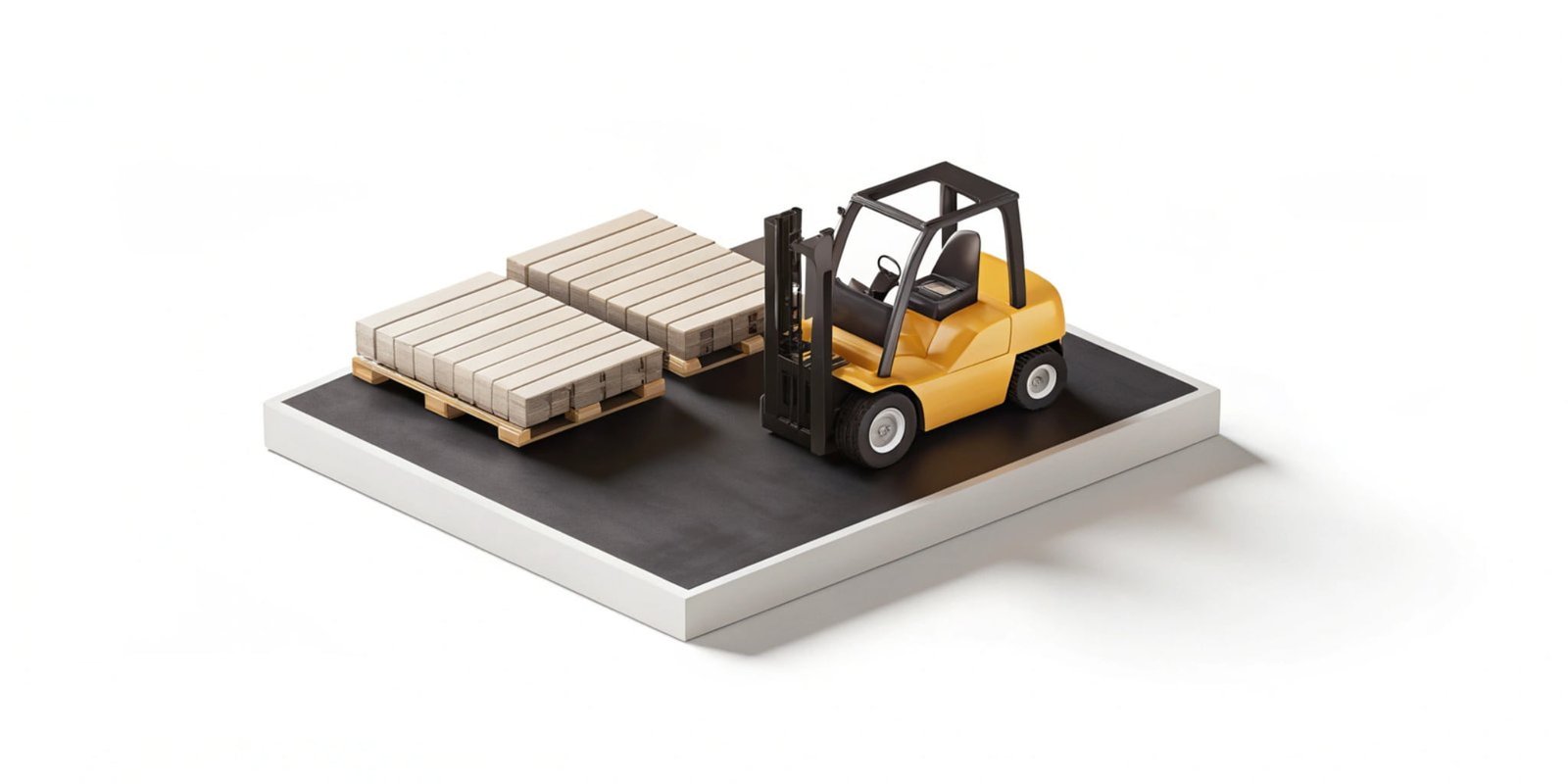
Let's put this into a real-world context that a purchasing manager or technical director can appreciate. We're not just talking about moving faster; we're talking about quantifiable savings that impact your bottom line. I once had a client in the smart device industry who was hesitant about the cost of retrofitting their forklifts. After we ran the numbers, the decision became easy. They were focused on cost-effectiveness, and the long-term savings were impossible to ignore.
Time and Labor Savings
The most direct metric is time per pallet. If a workflow with a platform scale takes 90 seconds per pallet and a forklift scale workflow takes 45 seconds4, you've just doubled your weighing throughput. Over an eight-hour shift, that tiny time saving per pallet adds up to hundreds of extra pallets processed or significant labor hours saved. This directly addresses the pain point of high costs with uncertain returns.
Throughput and Accuracy
Increased throughput is a direct result of time savings. By handling each pallet faster, your receiving dock can process more trucks per day and move materials into inventory more quickly. Beyond speed, forklift scales improve accuracy by capturing weight data at the point of handling, which can be sent directly to your inventory system. This reduces manual data entry errors5, a concern for any company managing physical assets alongside software.
| Metric | Platform Scale Workflow | Forklift Scale Workflow | Estimated Savings & Impact |
|---|---|---|---|
| Time per Pallet | ~90 seconds | ~45 seconds | 50% Reduction in Weighing Time |
| Pallets Processed per Hour | ~40 Pallets | ~80 Pallets | 100% Increase in Throughput |
| Labor Cost per Pallet | High (more steps, travel) | Low (fewer steps, no travel) | Lower Operational Costs |
| Data Entry Errors | Possible with manual logging | Reduced with WMS integration | Improved Inventory Accuracy |
When Should You Choose Platform Scales Over Forklift Scales for Material Handling?
Now you know the key differences, but the most important question remains: which one is right for your specific facility? Choosing the wrong scale for your unique workflow could be a costly mistake that creates new problems. Let's match the ideal scale to your situation.
Choose a platform scale when you have a dedicated, high-volume receiving dock where heavy capacity and durability are top priorities. Opt for a forklift scale when your workflow involves moving incoming goods to multiple, dispersed storage locations and your priority is minimizing handling steps.
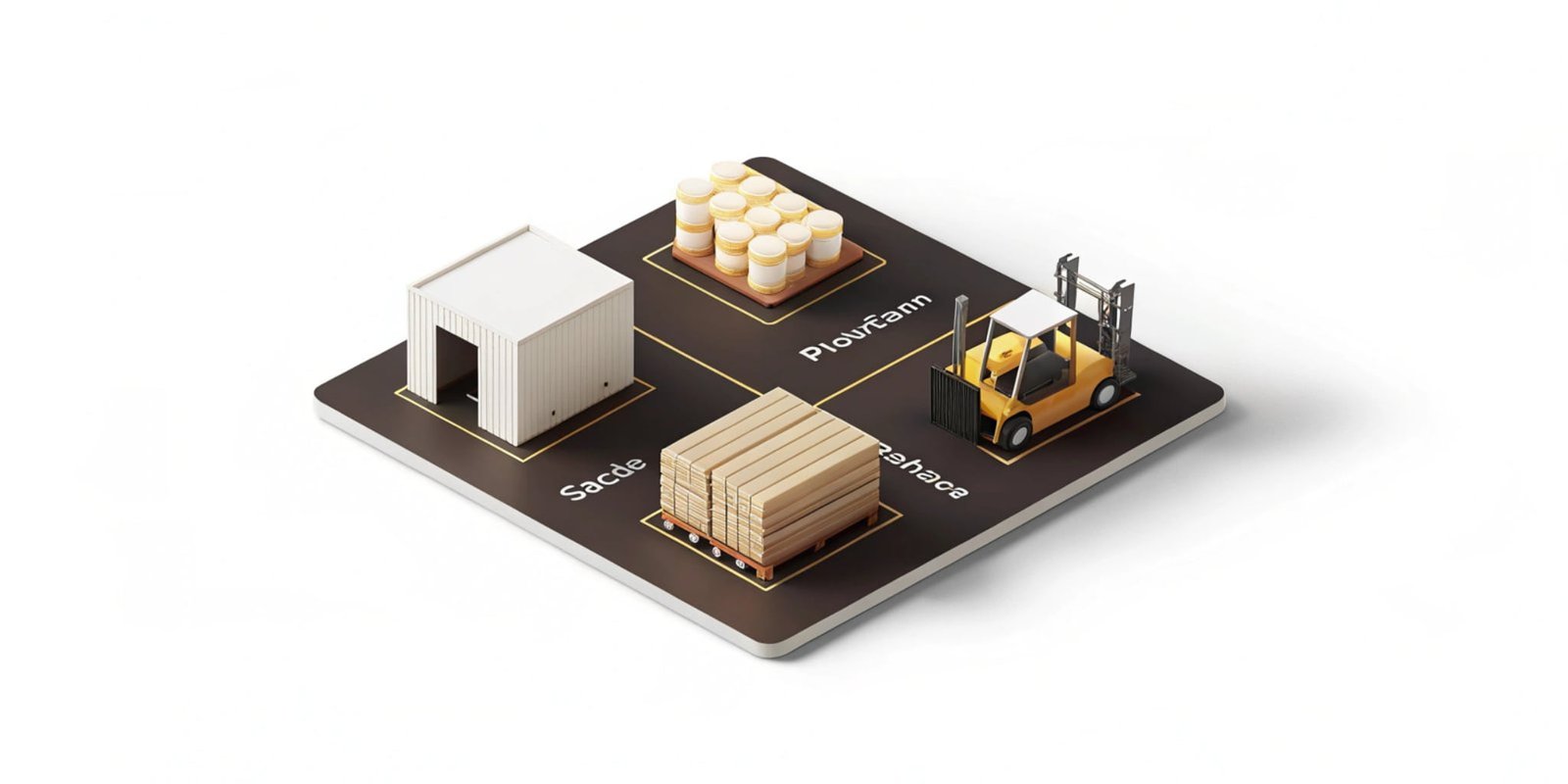
As a manufacturer who provides customized solutions, I can't stress this enough: it's not about which scale is "best," but which is best for you. I remember a client with a massive, multi-building campus who was struggling with bottlenecks. Their receiving process was a mess. By analyzing their material flow, the choice became clear. Let's look at a few common scenarios.
Scenario 1: The Centralized Warehouse
Imagine a warehouse with a few busy receiving bays where all incoming raw materials arrive. Pallets are unloaded and checked in at this one spot before being stored in nearby racking. In this environment, a heavy-duty platform scale (or floor scale) is often a perfect fit. It’s durable, can handle immense weight, and creates a controlled, repeatable weighing station. Since travel distance to storage is short, the extra step of moving to the scale is less of a bottleneck. Its high accuracy and reliability make it a workhorse.
Scenario 2: The Sprawling Facility or Multi-Location Warehouse
Now, picture a large distribution center or a campus with multiple buildings. A pallet might be unloaded at Dock A but need to be stored in Building C, a few minutes' drive away. In this case, forcing the operator to drive to a central platform scale is incredibly inefficient. A forklift scale becomes a game-changer. The operator can weigh the pallet immediately upon pickup and head directly to the distant storage location, saving immense amounts of time and fuel. This is ideal for operations that prioritize flexibility and minimizing travel time.
The Ultimate Solution: A Hybrid System
For many of our clients, the answer isn't "either/or" but "both." This is the key insight many people miss. The most efficient operations often use a hybrid approach.6 They install a large, robust platform scale at the main receiving dock for quick, high-volume verification of entire shipments. Then, they equip their forklifts with scales for efficient put-away, inventory cycle counts, and order picking. This combination gives you the best of both worlds: the durability and high capacity of a platform scale at your busiest checkpoint and the mobility and efficiency of forklift scales for all other movements.
Conclusion
Ultimately, the right choice depends on your specific workflow. Forklift scales save time by weighing on the move, while platform scales excel at fixed checkpoints. Combining both often creates the most efficient system.
-
"Supply Chain Vulnerability Assessment: A Network Based ...", https://dr.lib.iastate.edu/bitstreams/b53ca56f-553c-45c3-a57a-5edab9596139/download. A supply-chain management source explains that delays at one node can propagate through downstream processes, supporting the claim that receiving bottlenecks may affect broader supply-chain performance. Evidence role: mechanism; source type: paper. Supports: Operational bottlenecks in receiving can propagate through the supply chain.. Scope note: The evidence is contextual and would not establish that every weighing bottleneck causes system-wide disruption. ↩
-
"7601.4010 - MN Rules Part", https://www.revisor.mn.gov/rules/7601.4010/. Industrial-scale installation guidance identifies floor or platform scales as stationary weighing systems requiring allocated floor space and installation clearance, supporting the claim about dedicated footprint. Evidence role: definition; source type: institution. Supports: Platform scales generally require dedicated warehouse floor space.. Scope note: Exact space requirements vary by model, pit or surface mounting, and site layout. ↩
-
"Identifying Waste in Business Processes - Cornell CALS", https://cals.cornell.edu/pro-dairy/our-expertise/business/lean-management/identifying-waste-business-processes. Lean operations literature classifies unnecessary transport and movement as forms of waste, supporting the characterization of extra travel to a stationary scale as non-value-added activity. Evidence role: expert_consensus; source type: paper. Supports: Extra travel to and from a stationary scale can be considered non-value-added time.. Scope note: Whether a specific trip is non-value-added depends on process requirements and control needs. ↩
-
"Mastering Dock-to-Stock Cycle Times", https://www.veryableops.com/blog/the-first-step-to-faster-fulfillment-mastering-dock-to-stock-cycle-times. A time-and-motion source for warehouse pallet handling could substantiate or contextualize the assumed 90-second and 45-second cycle times used in the throughput example. Evidence role: statistic; source type: paper. Supports: The example cycle times used to compare platform and forklift scale workflows are realistic under some warehouse conditions.. Scope note: These timings are illustrative unless the cited source reports comparable equipment, distances, and operating conditions. ↩
-
"Inventory Management Strategies: Integrate, Automate ...", https://www.artsyltech.com/blog/inventory-management-automation. Research on automated data capture in logistics and inventory systems shows that direct electronic capture can reduce transcription and manual entry errors, supporting the claim about WMS-connected weighing data. Evidence role: mechanism; source type: paper. Supports: Sending scale data directly to an inventory or warehouse management system can reduce manual data entry errors.. Scope note: The evidence supports automated data capture generally; error reduction for forklift scales specifically depends on integration quality and user procedures. ↩
-
"Chapter 13. Material Handling Systems", https://www2.isye.gatech.edu/~mgoetsch/cali/logistics_systems_design/material_handling_systems/material_handling_systems.pdf. Warehouse design and material-handling literature emphasizes matching equipment to distinct process flows and using multiple handling technologies where workflows differ, providing contextual support for a hybrid weighing strategy. Evidence role: general_support; source type: education. Supports: Using both fixed and mobile weighing equipment can be appropriate when a facility has different receiving, put-away, and picking workflows.. Scope note: This supports the design principle behind a hybrid approach, not a universal finding that hybrid weighing systems are most efficient. ↩



Comments (0)